
Pruning
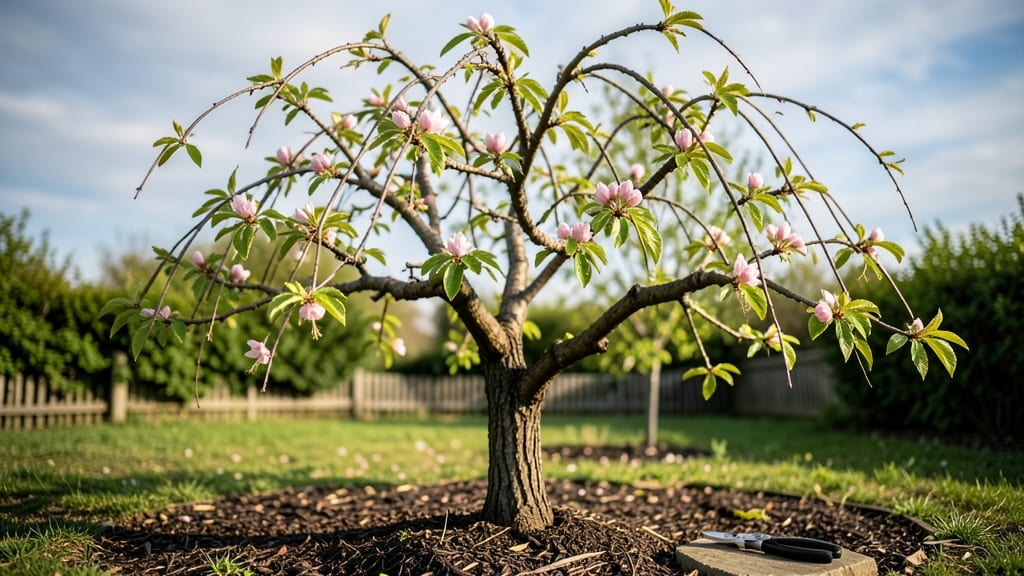
Those heavy peach tree branches can snap under fruit weight—or worse, leave your tree looking like a tangled mess. ✂️ I’ve spent years perfecting just three strategic cuts that turn weak growth into a sturdy framework, and the difference in fruit quality is night-and-day.
The key isn’t just cutting; it’s understanding which branches to keep, which to remove, and exactly when to do it.
Most people over-prune or cut at the wrong time, both of which stress the tree. You only need basic tools—a sharp bypass pruner, loppers for thicker branches, and rubbing alcohol to sterilize cuts—and 30 minutes of focused work.
The timing matters too: late winter or early spring, before buds swell, gives your peach tree the best chance to heal and produce fruit efficiently.
What you’ll end up with is a tree that supports heavier fruit loads without breaking, plus better airflow to prevent fungal diseases. The branches will grow straighter, and you’ll see fruit develop more evenly along the scaffold.
It’s not just about more peaches—it’s about better-quality fruit that ripens consistently. Ready to transform that tangled mess into a productive powerhouse?
This method works for both young trees you’re training and mature trees needing rejuvenation. The same principles apply whether you’re dealing with a single branch or a whole canopy. Let’s get those cuts right the first time—no guesswork, just results.
📚 In This Guide
- What you need
- Instructions
- Tips and common mistakes
- Wrapping up and next steps
What you need
- ● Bypass pruning shears – Sharp, clean, and disinfected (7–10" blades, ideal for small branches).
- ● Loppers – For branches ½" to 2" thick (long-handled for reach!).
- ● Pruning saw – For thick branches 2" or larger (bow or folding saw recommended).
- ● Rubbing alcohol (70% or higher) – 1 small bottle to sterilize tools between cuts.
- ● Garden gloves – Heavy-duty, cut-resistant (thorns are no joke!).
- ● Disposable pruning bags – 1–2 bags (13-gallon size) for debris.
- ○ Marking twine or paint – Optional but helpful for tagging branches to remove.
- ● Pole saw or extendable pruner – For high branches (save your back!).
- ● Sealant (pruning wax) – Small jar to coat large cuts and prevent disease.
- ● Ladder (4–6 ft) – If your tree towers over you (safety first!).
- ● Spray bottle with water – Keeps cuts clean and reduces splintering.
- ● Notebook & pen – Track cuts, growth patterns, or notes for next year!
How to prune peach tree branches for bigger harvests
Here's the simple pruning system I use every winter to boost fruit production.
✂️ Step 1: Remove Dead or Diseased Wood First
Start by cutting out any branches that are completely dead, broken, or showing signs of disease. You'll know a branch is dead if it's hollow when you tap it or has no buds along its length. Use clean, sharp pruning shears to make a clean cut just outside the branch collar—the swollen area where the branch meets the trunk.
I always prune dead wood first because it can harbor pests and diseases that will spread to healthy branches. Make your cuts at a 45-degree angle about ¼ inch above a bud that's facing outward. This encourages new growth in the right direction. If you see any sawdust-colored powder on the cut surface, that's a sign of fungal infection—sterilize your tools immediately with rubbing alcohol.
🌿 Step 2: Thin Out Crossing or Rubbing Branches
Next, look for branches that are crossing each other or rubbing against one another. These will eventually create wounds that invite disease. You'll spot them easily—they'll have rough bark where the branches touch. Always remove the smaller of the two branches, cutting back to the branch collar.
Here's the thing—peach trees naturally grow with some crossing branches, but we want to keep the strongest ones. I like to leave the branch that's growing more upright or has better sunlight exposure. After removing these, step back and check the tree's overall shape. You want sunlight to reach all branches evenly—no dense clusters where light can't penetrate.
☀️ Step 3: Open the Center for Better Airflow
Peach trees need good airflow to prevent fungal diseases like brown rot. Cut back branches that grow inward toward the center of the tree, removing about ⅓ of the oldest wood each year. Start with the largest branches growing straight up from the trunk—these are often the oldest and block light from reaching the center.
Make your cuts just above an outward-facing bud, and try to create an open vase shape. This lets sunlight reach all parts of the tree and air circulate freely. You'll see the difference immediately—your tree will look more balanced and less crowded. Just don't remove more than 25% of the tree's foliage in one season, or you'll stress the plant.
Tips & tricks for pruning peach tree branches
Want to maximize your peach harvest? These simple tricks will help you prune like a pro.
Tool Prep: Always sterilize your pruning shears with rubbing alcohol between cuts, especially when dealing with diseased wood. I keep a small bottle of 70% isopropyl alcohol in my toolkit—it's a game-changer for preventing fungal spread between branches. Sharp tools make cleaner cuts that heal faster, so take a minute to hone your blades before starting. A dull blade crushes tissue instead of making a clean incision, which invites infection.
Bud Direction Matters: When making cuts in Step 1 and Step 3, focus on outward-facing buds. These buds will grow away from the center of the tree, creating an open vase shape that lets sunlight reach all branches. I like to visualize the tree's future shape—each cut should work toward that open center goal. If you're unsure which way a bud faces, gently bend the branch to see which direction it naturally wants to grow.
Season Timing: Late winter or early spring is ideal for pruning peach trees, just before buds begin to swell. This timing gives the tree time to heal before the growing season begins. I usually prune in February when the ground is still frozen—it's easier to see the tree's structure without leaves obscuring the view. Avoid pruning during wet conditions, as moist cuts take longer to heal and are more susceptible to disease.
Shape Check: After completing all three steps, step back and evaluate your tree's shape from multiple angles. The goal is balanced sunlight exposure and airflow. I often prune in stages, removing about 25% of the foliage each year to avoid over-stressing the tree. Look for areas where branches are too dense—these spots need more thinning to allow light penetration. Remember, you can always remove more later, but you can't put back what you've cut!
Pro Tips for Peach Tree Branches
- Want to maximize your peach harvest? These simple tricks will help you prune like a pro.
- Tool Prep: Always sterilize your pruning shears with rubbing alcohol between cuts, especially when dealing with diseased wood.
- Bud Direction Matters: When making cuts in Step 1 and Step 3, focus on outward-facing buds.
Frequently asked questions
Got questions about pruning peach tree branches? You’re not alone! Here are some of the most common queries—plus quick, actionable answers to keep your tree thriving.
When is the best time to prune peach tree branches?
Prune your peach tree in late winter or early spring (before buds swell) to avoid disease spread. Avoid heavy pruning in fall, as wounds heal slower and pests love the open cuts. For light maintenance (like removing dead wood), summer is fine—but wait until after harvest!
How do I know if I’m making the right cuts?
Look for these signs of a good cut:
- Angle it right: Cut just outside the branch collar (the swollen area where the branch meets the trunk).
- Avoid leaving stubs: Stubs invite disease. Cut cleanly, flush to the collar.
- Open the canopy: Aim for an open center (like an umbrella) to improve airflow and sunlight.
Will pruning reduce my peach harvest?
Not if done correctly! Pruning increases fruit quality by:
- Reducing overcrowding (more sunlight = bigger peaches).
- Encouraging stronger branches to bear fruit.
- Removing diseased or weak wood (prevents wasted energy).
What if my peach tree branches break during a storm?
Act fast! Remove broken branches immediately to prevent disease and pests from entering the wound. Cut back to the branch collar, then:
- Seal larger cuts (2"+) with pruning sealant (optional for peaches—focus on clean cuts first!).
- Monitor the tree for signs of stress (wilting, oozing sap).
- Fertilize lightly in spring to help recovery.
Can I use peach tree branches for anything else besides pruning?
Repurpose pruned branches with these ideas:
- Compost: Chop small branches into mulch or add to your compost pile (they break down slowly).
- Firewood: Dry branches for kindling (peach wood burns hot!).
- Art/crafts: Twist branches into wreaths or use as natural trellises.
- Wildlife: Leave some branches in the garden to attract birds and beneficial insects.
Wrapping up and next steps
Pruning your peach tree branches might seem tricky, but with the right cuts—heading, thinning, and renewal cuts—you’ll unlock a bounty of juicy peaches while keeping your tree healthy and strong. 🌱 Remember, timing and sharp tools are your best friends, so don’t hesitate to roll up your sleeves and give your tree the care it deserves!
Ready to transform your peach tree into a fruit-bearing powerhouse? Grab your pruners, mark your calendar for late winter or early spring, and start pruning today! Your future peach pies will thank you!