
Pruning
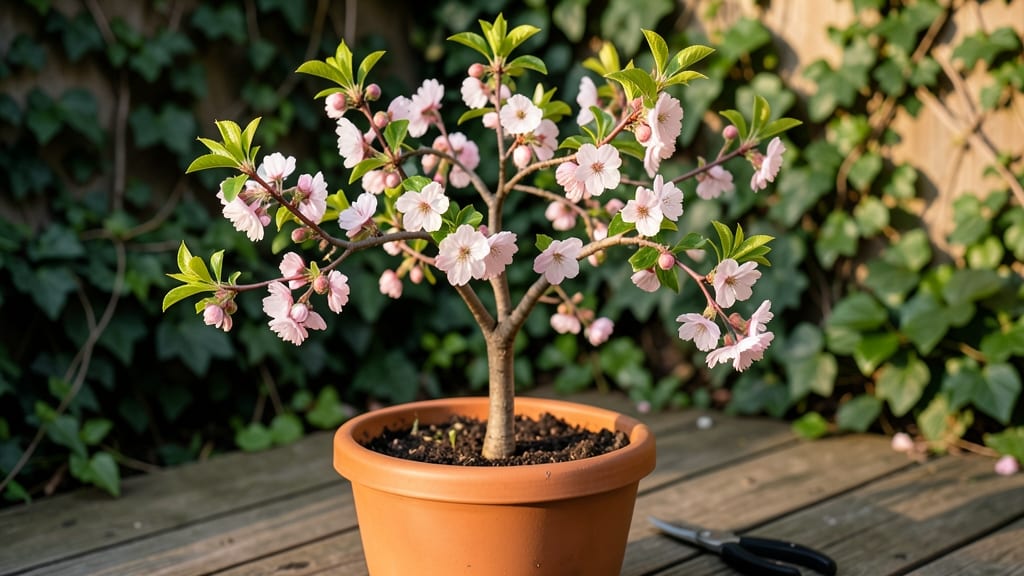
A patio peach tree in your backyard isn’t just a dream—it’s a sun-drenched reality with the right dwarf variety and pruning plan. I’ve grown three different patio peaches, and the ‘Bonanza’ keeps producing fruit even in a 15-gallon container on my small deck.
The key isn’t just the tree itself, but how you shape it to thrive in tight spaces where roots can’t spread.
You’ll need a dwarf variety (like ‘Bonanza’ or ‘Redhaven’) planted in a large container with drainage holes, plus at least 6-8 hours of direct sun daily. Wind protection is critical—my first tree lost half its blossoms until I moved it beside a brick wall.
The soil mix matters too: equal parts potting soil, perlite, and compost keeps roots happy without waterlogging.
Three strategic prunes a year—winter shaping, spring thinning, and summer cleanup—transform a leggy sapling into a fruit-loaded bush by summer. You’ll harvest sweet, juicy peaches from June through September, and the pruning process itself becomes meditative once you get the rhythm.
The first harvest tastes like victory after months of careful nurturing.
Urban challenges like limited root space or fruit drop? We’ll tackle those too—plus how to hand-pollinate if bees are scarce, and when to harvest for peak flavor. Your patio will soon smell like an orchard, and neighbors will ask how you fit a tree in that tiny space.
📚 In This Guide
- What you need
- Instructions
- Tips and common mistakes
- Wrapping up and next steps
What you need
- ● Patio peach tree (dwarf variety): Choose a self-pollinating or pollinator-friendly variety (e.g., 'Bonanza,' 'Redhaven,' or 'Elberta'). Ensure it’s grafted for container growth.
- ● Large container (15–25 gallons): Use a pot with drainage holes and a diameter of at least 18–24 inches for mature roots.
- ● High-quality potting mix: A blend of 60% well-draining soil (e.g., cactus/succulent mix), 30% compost, and 10% perlite/pumice for aeration.
- ● Pruning tools: Bypass pruners (sharp, clean for cuts)
- ● Loppers (for thicker branches)
- ● Hand saw (for stubborn branches)
- ● Organic mulch: Wood chips or straw (2–3 inches thick) to retain moisture and regulate soil temp.
- ● Fertilizer: Balanced 10-10-10 or fruit-tree-specific fertilizer (follow package rates).
- ○ Support stake (optional but helpful): A 5–6 ft tall bamboo or metal stake to secure young trees.
- ● Tree ties or soft garden twine (to secure stakes).
- ● Slow-release fertilizer tablets (for convenience).
- ● Drip irrigation kit (for consistent watering).
- ● Fruit thinning shears (to manage overproduction).
- ● Pest/disease control: Neem oil or copper fungicide (preventative).
How to prune a patio peach tree for maximum fruit production
Here's the pruning method that keeps your patio peach tree healthy, productive, and compact—without sacrificing fruit quality.
Perform the Winter Dormant Prune for Structure
Start in late winter while the tree is still dormant, typically between mid-February and early March when temperatures average 40-50°F. This is the most critical trim—the foundation for the entire year. Focus on removing dead, diseased, or crossing branches first. Cut these back to the collar, where the branch meets the trunk, using clean, sharp pruners to prevent tearing.
Next, open up the center of the tree by removing suckers and water sprouts—those vigorous upright shoots growing from the trunk or lower branches. These compete with fruit-bearing branches for energy. Aim to create an open vase shape, allowing sunlight and air to reach the center. You'll know you've done well when you can see light filtering through the canopy from all sides.
Leave 3-5 main scaffold branches evenly spaced around the trunk, cutting back any that grow too close together. These branches should be at least 6 inches apart and angled outward. If a branch is too long, shorten it by one-third to encourage bushier growth. Avoid leaving stubs—cut just outside the branch collar for a clean wound that heals faster.
Light Summer Prune to Encourage Fruit Set
About 6-8 weeks after flowering, typically in late June or early July, perform a second, lighter prune. This time, focus on thinning out overcrowded fruit clusters and removing weak or spindly growth. Start by identifying branches with too many peaches—these will produce small, poor-quality fruit. Snip off every other peach, leaving only the largest, healthiest ones spaced 4-6 inches apart along the branch.
Next, look for shoots growing straight up from the main branches—these are called "whipper" growth and rarely bear fruit. Cut these back to a bud or side branch to redirect energy into fruit production. You'll notice the tree's overall shape becoming more balanced, with fewer vertical shoots and more horizontal branches where fruit develops.
This is also the time to remove any suckers that sprouted from the graft union (the bump where the peach scion was attached to the rootstock). These are genetically weaker and will drain energy from your desired fruit-bearing branches. Use sharp pruners to cut them at the base, and dispose of them immediately to prevent regrowth.
Post-Harvest Trim for Winter Preparation
After harvesting peaches in late August or early September, give the tree a final trim to clean up and prepare for dormancy. Remove any dead or diseased branches that may have developed over the summer, as well as broken or damaged wood. Cut these back to healthy tissue, sterilizing your pruners with rubbing alcohol between cuts to prevent spreading disease.
Next, prune back last year’s fruit-bearing branches by one-third to encourage new growth for next season. Focus on branches that produced fruit this year—shortening them will stimulate lateral branches where next year’s peaches will form. You’ll see new buds forming along these pruned branches by late fall, signaling the tree is preparing for next year’s harvest.
Finally, thin out any overly dense foliage to improve airflow and reduce humidity, which can lead to fungal issues. Aim for a 6-8 inch gap between branches where possible. This final trim ensures the tree enters winter strong and resilient, ready to burst into bloom come spring.
Tips & tricks for perfect patio peach tree pruning
Here's what nobody tells you about pruning your peach tree—these are the details that separate a struggling bush from a fruit-loaded treasure.
Timing is Everything: The winter dormant prune between mid-February and early March at 40-50°F temperatures is non-negotiable for structural health. I've seen trees with perfect pruning techniques fail because they were done too early or late—buds can start swelling before you finish, and that weakens the tree's foundation. If you miss this window, wait until the following winter rather than trying to prune during active growth. This is when the tree's energy is focused on healing wounds rather than producing fruit.
The Branch Collar Technique: When cutting back branches in Step 1, always target the branch collar—the swollen area where the branch meets the trunk. This is the tree's natural healing point, and cutting here prevents unsightly stubs that can rot or invite pests. I learned this the hard way after seeing several pruning wounds fail to heal properly. Use sharp pruners and make clean cuts just outside the collar—never leave a stub or tear the bark. This single technique will transform your tree's long-term health.
Thinning vs. Topping: During the summer prune, resist the urge to "top" your tree by cutting the main branches back drastically. Instead, focus on strategic thinning—removing every other peach to create space and selecting the strongest shoots to redirect energy. I've seen gardeners accidentally turn their productive trees into dense, shade-filled bushes by over-pruning. Leave those 6-inch gaps between branches and you'll create an environment where sunlight reaches every fruit, resulting in larger, sweeter peaches.
Seasonal Disease Prevention: After the post-harvest trim, sterilize your pruners between cuts with rubbing alcohol to prevent spreading fungal spores. I've had to replace entire pruning tools when I skipped this step during a particularly wet season. The 6-8 inch gaps you create during this final trim also work wonders for airflow, dramatically reducing humidity levels that encourage fungal growth. This is your last chance to set up the tree for a healthy winter dormancy period.
Pro Tips for Patio Peach Tree
- Here's what nobody tells you about pruning your peach tree—these are the details that separate a struggling bush from a fruit-loaded treasure.
- Timing is Everything: The winter dormant prune between mid-February and early March at 40-50°F temperatures is non-negotiable for structural health.
- The Branch Collar Technique: When cutting back branches in Step 1, always target the branch collar—the swollen area where the branch meets the trunk.
Frequently asked questions
Got questions about growing a patio peach tree? You’re not alone! Here are answers to the most common concerns—from pruning to pests and beyond.
When is the best time to prune a patio peach tree for maximum fruit?
The key is three strategic trims: late winter (before buds swell), early summer (after harvest), and light shaping in fall. This keeps airflow strong, boosts sunlight, and prevents overcrowding—critical for patio trees with limited space. Avoid heavy pruning in fall, as it can stress the tree before winter.
Can a patio peach tree survive winter in cold climates?
Most patio peach trees thrive in USDA Zones 6-9, but cold snaps can damage them. Protect young trees with burlap wraps or a mini greenhouse (like a cold frame). Dwarf varieties are hardier—opt for ‘Bonanza’ or ‘Redhaven’ if you’re in Zone 5 or colder. Mulch heavily around the base for extra insulation!
What pests should I watch for, and how do I treat them?
Peach trees often face aphids, peach tree borers, or spider mites. For aphids, spray with neem oil or a strong water jet. Borers? Prune infested branches immediately and treat cuts with pruning paint. Prevention tip: Keep the area under the tree weed-free and water deeply to reduce stress.
Why aren’t my patio peach tree’s fruits ripening evenly?
Uneven ripening usually stems from inconsistent sunlight or poor pollination. Move the tree to a sunnier spot (peaches need 6+ hours of direct sun) and hand-pollinate with a soft brush if bees are scarce. Over-fertilizing with nitrogen can also delay fruit maturity—balance with potassium-rich fertilizer instead.
What’s a good alternative if I don’t have space for a full peach tree?
Consider dwarf peach trees (like ‘Bonanza’ or ‘Contender’) or peach bush varieties (e.g., ‘Peach Melba’). These stay under 6 feet tall, perfect for patios! For even smaller options, try peach tree espalier—train it along a trellis or fence for a vertical harvest. Pro tip: Container-growing works too—just use a 15-gallon pot with drainage!
Wrapping up and next steps
Growing a patio peach tree is a rewarding journey that blends patience with precision—especially when it comes to those three strategic trims that unlock year-round fruit loads. With the right tools, timing, and techniques, you’ll transform a small-space tree into a bountiful, low-maintenance producer.
Now that you’re armed with knowledge, there’s no better time to roll up your sleeves and start pruning!
🌱 Next step: Pick a sunny weekend, grab your pruners, and give your tree the care it deserves. Watch as your patio peach tree thrives—and soon, you’ll be savoring homegrown fruit with pride! 🍑