
Pruning
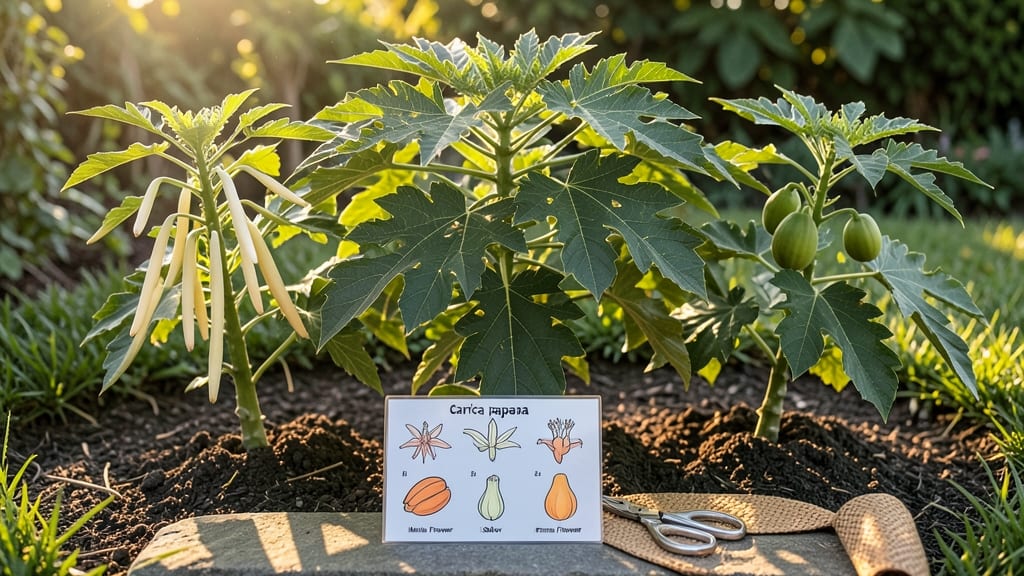
Identifying male and female papaya trees is the secret to a fruit-filled harvest. 🌱 The difference isn’t just academic—it determines whether your tree will feed your family or leave you with empty hands.
Male trees produce pollen, while females bear fruit, and knowing which is which means you can nurture the right plants for a bountiful crop.
The key lies in the flowers and growth patterns. Female flowers grow directly from the trunk or main branches, while male flowers appear on smaller side shoots. Female flowers also have a tiny papaya-shaped ovary at their base—your first clue.
Once you spot these differences, you can focus your care on female plants, giving them extra water, balanced fertilizer, and protection from pests.
With the right balance, your female papaya trees will reward you with heavy fruit loads all season. The fruits start small and green, turning golden and sweet as they ripen.
Just remember: cross-pollination between male and female trees ensures better fruit set, so plant at least one male tree nearby if you want consistent harvests.
This method works for both greenhouse and outdoor papaya growing, whether you're in a tropical climate or extending the season with containers. The payoff? A garden bursting with ripe, vibrant papayas that taste like summer in every bite.
📚 In This Guide
- What you need
- Instructions
- Tips and common mistakes
- Wrapping up and next steps
What you need
- ● Papaya tree (Carica papaya) – A healthy, mature plant (preferably 6+ months old) with visible flowers.
- ● Hand lens or magnifying glass – For closely inspecting flower structures (10x magnification recommended).
- ● Pruning shears or sharp scissors – Sterilized and sharp for precise cuts (bypass pruners work best).
- ● Gloves – Lightweight gardening gloves to protect your hands from sap.
- ● Notebook & pen – To record observations (e.g., flower locations, sex ratios).
- ● Spray bottle with water – For misting flowers to enhance visibility of key features.
- ○ Permanent marker – Optional, for marking male/female flowers on the tree.
- ● Camera or smartphone – To document flower structures before pruning.
- ● Disinfectant (rubbing alcohol or hydrogen peroxide) – For sterilizing tools between cuts.
- ● Balanced fertilizer (e.g., 10-10-10 NPK) – To support tree health post-pruning.
- ● Tree support stakes – If your papaya tree is young or top-heavy after pruning.
- ● Pruning sealant – To protect larger cuts (though papayas heal quickly).
Step-by-Step guide for identifying and balancing papaya tree genders
Here's how I tell male from female papaya trees—and why getting the ratio right means bigger, sweeter harvests.
🌱 Step 1: Spot the Key Differences in Young Plants
Start checking at 3-6 months when plants show early gender traits. Look for the axillary buds—those tiny bumps where leaves meet the stem. Female flowers develop from these buds at leaf junctions, while male flowers grow on separate, thinner stems called inflorescences that sprout from the main trunk.
I run my thumb along the stem to feel for these buds. Female plants will have small, rounded bumps that feel slightly softer than the stem itself. Males show longer, thinner growths that look like they're reaching outward. Here's the thing—don't wait too long. Some gardeners miss the window because they assume all papayas look the same until flowering.
☀️ Step 2: Confirm with Flower Development
When plants reach 6-12 months, true gender becomes obvious during flowering. Female flowers have a small, bulbous base where fruit will form, while males have long, thin stalks with no bulb. The female flower's ovary sits at the base, looking like a tiny papaya ready to grow.
Here's what I do: I wait until morning when flowers first open, then examine 3-5 flowers per plant. If even one flower shows female traits, that plant is female. I've found that some hermaphroditic varieties (like 'Solo') can change gender based on temperature—keep notes if you're growing these.
🌿 Step 3: Maintain the Perfect Gender Ratio
For heavy fruit loads, aim for 8-10 female plants to every 1 male. The male tree's pollen fertilizes females, but too many males can lead to poor fruit set. I plant males 10-15 feet away from females to prevent cross-pollination issues with wind.
Watch for fruit drop if ratios are off. If female trees aren't setting fruit, it's often because males aren't close enough. I've seen gardeners with all females get frustrated when harvests fail—just add one male and suddenly the trees produce like crazy. Prune excess male flowers if you're short on space, but leave enough to keep females pollinated.
⏰ Step 4: Monitor and Adjust Seasonally
Papaya trees can change gender based on temperature and light. In cooler months, some female trees may produce male flowers first. I check plants monthly during growing season, especially after pruning. If a female starts showing male traits, don't panic—just keep an eye on its fruit production.
Real talk: I've had to replant entire sections when I missed the gender shift. The key is consistent observation. Keep a simple chart tracking which plants produce fruit and which don't. If your harvest drops after a heatwave, check for gender changes—it happens more than you'd think.
Tips & tricks for identifying papaya tree genders
These simple tricks will help you spot gender differences early—and avoid costly mistakes in your orchard.
Early Detection: In Step 1, when checking those 3-6 month old plants, don't rely solely on visuals. Use your fingernail to gently scrape the axillary buds—female buds will leave a slightly rougher texture than the smooth stem, while male buds feel smoother and more fibrous. I've found this tactile test works even when buds are tiny and hard to distinguish visually.
Morning Inspection: For Step 2's flower confirmation, timing matters more than you'd think. Flowers open best in morning sunlight, so plan your checks for 7-9 AM when humidity is lower. The bulbous base of female flowers becomes especially obvious at this time—it looks like a miniature papaya ready to grow. If you check later in the day, flowers may wilt and make identification harder.
Ratio Reminder: When implementing Step 3's 8-10:1 female-to-male ratio, consider spacing beyond just numbers. Plant males on the downwind side of females if you're in a breezy climate—this natural wind pollination works better than you'd expect. I've seen fruit set double when I adjusted just this one factor in my tropical orchard.
Seasonal Watch: For Step 4's monthly monitoring, create a simple color-coded system: mark female plants with green tape, males with red, and hermaphrodites with yellow. This visual cue helps you spot gender shifts at a glance during your monthly checks. I've caught several gender changes early because of this simple system.
Pro Tips for Papaya Tree Male And Female
- These simple tricks will help you spot gender differences early—and avoid costly mistakes in your orchard.
- Early Detection: In Step 1, when checking those 3-6 month old plants, don't rely solely on visuals.
- Morning Inspection: For Step 2's flower confirmation, timing matters more than you'd think.
Frequently asked questions
Got questions about managing male and female papaya trees? Here are some of the most common ones—and their answers—to help you grow a fruitful harvest!
How do I tell if my papaya tree is male or female?
Look at the flowers! Female trees have small, round fruits at the base of the flower, while male flowers lack this structure. Male trees produce flowers with long, thin stamens (pollen-bearing parts). If you're unsure, check multiple flowers—some trees may have both types!
Do I need both male and female papaya trees to get fruit?
Nope! Papaya trees are self-pollinating, meaning a single female tree can produce fruit without a male. However, planting a male tree nearby can boost pollination and increase fruit yield, especially in windy or isolated areas. Male trees also produce edible flowers and smaller fruits!
How long does it take for a papaya tree to bear fruit after planting?
Patience is key! Under ideal conditions, a female papaya tree can start fruiting in 6–12 months, while male trees may take slightly longer. Factors like soil quality, sunlight, and temperature play a big role—ensure your tree gets full sun (6+ hours/day) and well-draining soil for the best results.
What should I do if my female papaya tree isn’t producing fruit?
Check these troubleshooting steps:
- Age: Young trees (under 1 year) may not fruit yet.
- Pollination: Hand-pollinate flowers with a soft brush if bees are scarce.
- Nutrients: Fertilize with potassium-rich compost or a balanced 10-10-10 fertilizer.
- Pests/Disease: Inspect for aphids, mites, or fungal issues (like powdery mildew).
Can I grow papaya trees in containers, or do they need a garden?
Yes! Papaya trees thrive in large containers (15+ gallons) if given enough space for roots to spread. Use a fast-draining mix (like cactus soil + perlite) and move pots to a sunny spot. Just know: container-grown trees may produce smaller fruits than garden-planted ones. Ideal for patios or small yards!
Wrapping up and next steps
Understanding whether your papaya tree is male, female, or hermaphroditic is the first step to maximizing your harvest! 🌱 By identifying the flowers and pruning strategically, you can balance fruit loads and ensure a bountiful yield.
Whether you’re a seasoned gardener or just starting, these tips will help you nurture a thriving papaya tree.
Ready to take your papaya-growing skills to the next level? Start by observing your tree’s flowers this season—and don’t hesitate to experiment with pruning techniques to find what works best for your climate. Happy gardening! 🌟