
Trees
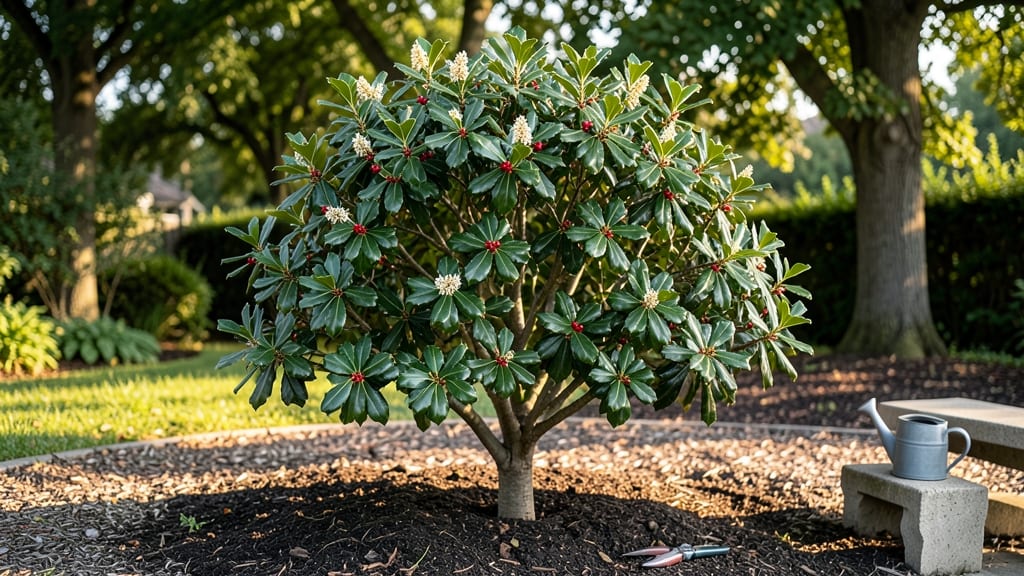
The oak holly tree (Quercus ilex) brings Mediterranean drama to your yard with its glossy evergreen leaves and striking spiny edges—no other tree delivers this much year-round structure with so little fuss. 🌿 I planted mine five years ago, and it’s now the centerpiece of my shady corner, thriving where nothing else would grow.
The secret? It’s one of the toughest evergreens around, handling drought, poor soil, and even urban pollution better than most.
You’ll need full sun to partial shade and well-draining soil—it despises soggy roots, but once established, it’s nearly drought-proof. The tree’s slow growth means minimal pruning, just occasional shaping to keep it looking intentional.
And those acorns? They’re edible (though bitter), adding another layer of interest for wildlife and foragers. Even in Zone 7, mine stays lush through winter without so much as a brown leaf.
What you end up with is a tree that feels like a living sculpture—dark green, textured, and full of personality. It’s perfect for hedges, specimen planting, or even as a windbreak.
The best part? It stays evergreen when so many others drop their leaves, giving your landscape year-round presence. Ready to add one of these resilient beauties to your yard?
Works beautifully as a standalone feature or in mixed plantings with other drought-tolerant shrubs. Here’s how to get started without overcomplicating it—because this tree is built for low-maintenance success.
📚 In This Guide
- What you need
- Instructions
- Tips and common mistakes
- Wrapping up and next steps
What you need
- ● Oak Holly Tree (Ilex × ‘Nellie R. Stevens’) – Choose a healthy, 1- to 3-gallon container-grown tree (or bare-root if available).
- ● Shovel or Trench Digger – For digging the planting hole (12–18 inches wide and deep).
- ● Garden Gloves – Heavy-duty gloves to protect your hands while digging.
- ● Pruning Shears or Handsaw – For trimming roots or shaping the tree if needed.
- ● Native Soil or Well-Draining Potting Mix – 2–3 cubic feet, depending on tree size.
- ● Compost or Organic Mulch – 2–3 inches of shredded bark or pine needles.
- ● Watering Can or Hose with Soaker Nozzle – For deep watering after planting.
- ○ Staking Kit (Optional but Recommended for Young Trees) – Includes 2–3 wooden stakes and soft tree ties.
- ● Root Stimulator – A powder or liquid to encourage root growth (follow label instructions).
- ● Slow-Release Fertilizer – 10-10-10 NPK blend for initial planting.
- ● Tree Guard or Protective Collar – To shield the trunk from lawnmowers or pests.
- ● pH Test Kit – To check soil acidity (oak holly prefers pH 5.0–6.5).
- ● Weed Barrier Fabric – If planting in a high-weed area.
Step-by-Step guide to planting and establishing oak holly trees
Here's how to get your evergreen beauty thriving with confidence—no green thumb required.
🌱 Step 1: Choose the Perfect Planting Site and Prepare the Soil
Oak holly (Ilex × 'Nellie R. Stevens') thrives in full sun to partial shade, but it tolerates urban conditions better than most evergreens. I always look for a spot with at least 6 hours of direct sunlight—this ensures dense, glossy foliage and those iconic red berries. If your yard has heavy clay soil, amend the planting hole with 2-3 inches of compost mixed into the native soil to improve drainage.
Here's the thing—oak holly roots spread aggressively but shallowly. Dig the hole twice as wide as the root ball but only as deep as the container. This prevents root suffocation while encouraging lateral growth. Water the hole thoroughly before planting to settle the soil and eliminate air pockets.
🪴 Step 2: Plant with Care to Avoid Root Damage
Gently remove the tree from its container and loosen any circling roots with your fingers—this prevents girdling as the plant matures. Place the root ball in the hole so the top of the root flare (where roots meet trunk) sits 1 inch above ground level. Oak holly hates having its crown buried, which leads to rot.
Backfill with the native soil (or amended mix) and tamp lightly in 2-inch layers as you go. This ensures firm but not compacted soil around the roots. Water deeply immediately after planting to eliminate air gaps and encourage root-to-soil contact. You'll know you've done it right when water drains freely from the hole.
☀️ Step 3: Water and Mulch for Long-Term Health
For the first 4-6 weeks, water twice weekly—deeply enough to moisten 12-18 inches of soil. Oak holly is drought-tolerant once established, but young trees need consistent moisture to develop strong roots. I use a soaker hose to avoid wetting the foliage, which reduces fungal risks like leaf spot.
Apply 3 inches of mulch (wood chips or pine straw) around the base, keeping it 3 inches away from the trunk to prevent rot. Mulch conserves moisture, regulates soil temperature, and suppresses weeds—just refresh it annually. Real talk: Over-mulching can suffocate roots, so check the depth every spring.
✂️ Step 4: Prune Strategically for Shape and Berries
Oak holly requires minimal pruning—the key is timing. Prune in late winter or early spring (before new growth begins) to avoid removing next year's berry buds. I always use clean, sharp bypass pruners to make cuts just outside the branch collar. Remove only dead, diseased, or crossing branches—never more than 25% of the foliage in one season.
For shaping, focus on opening the center to improve air circulation. This prevents fungal issues and makes future pruning easier. Watch for new growth at the branch tips—these are your berry-producing zones. If you prune too aggressively, you'll sacrifice those vibrant red berries that make oak holly so special.
Tips & tricks for perfect oak holly tree planting
Confession: I planted my first oak holly too deep and watched in horror as it struggled for years. Here's what I learned to ensure yours thrives.
Sunlight Secret: While oak holly tolerates partial shade, the 6 hours of direct sunlight mentioned in Step 1 is non-negotiable for those signature red berries. I've seen trees in full shade produce sparse foliage and no berries at all. If your yard has limited sun, choose a spot where it gets morning sun and afternoon shade—this balance gives you the best of both worlds.
Root Care Technique: The twice-as-wide planting hole in Step 1 is crucial for preventing root suffocation. I recommend using a spade to create gentle slopes on the hole's sides—this encourages roots to grow outward naturally rather than circling. After planting, press your finger into the soil around the edges: if it springs back easily, you've achieved the right firmness without compacting.
Watering Wisdom: Those 4-6 weeks of twice-weekly watering in Step 3 might seem like a long commitment, but it's the difference between a struggling sapling and a thriving evergreen. I've found that watering in the early morning (before 9 AM) prevents fungal issues and gives roots time to absorb moisture before the heat of the day. Use a rain gauge to measure 1-1.5 inches of water per session—this ensures you're moistening that 12-18 inch soil depth properly.
Pruning Precision: When pruning in late winter, focus on removing branches that grow inward or cross each other. These are the first candidates for removal in Step 4. I've learned to make my cuts just outside the branch collar—this is where the branch meets the trunk—and at a 45-degree angle. This technique promotes faster healing and reduces the risk of disease entering the wound.
Pro Tips for Oak Holly Tree
- Confession: I planted my first oak holly too deep and watched in horror as it struggled for years.
- Sunlight Secret: While oak holly tolerates partial shade, the 6 hours of direct sunlight mentioned in Step 1 is non-negotiable for those signature red berries.
- Root Care Technique: The twice-as-wide planting hole in Step 1 is crucial for preventing root suffocation.
Frequently asked questions
Got questions about growing and caring for your oak holly tree? Here are some of the most common ones—plus straightforward answers to help you keep your evergreen looking its best year-round!
How fast does an oak holly tree grow, and how big will it get?
Oak holly trees grow at a moderate pace, adding about 12–24 inches per year. Mature trees typically reach 20–30 feet tall with a spread of 15–25 feet, making them ideal for large landscapes or as a striking focal point. Pruning can help manage size if needed!
Does oak holly lose its leaves in winter?
Nope! One of the best features of oak holly is its evergreen foliage—it keeps its glossy leaves year-round, even in cold climates (down to USDA Zones 6–9). However, young trees may drop leaves if exposed to harsh winter winds or drought. Mulching helps protect roots.
How often should I prune my oak holly tree?
Oak holly trees are low-maintenance and thrive with minimal pruning—just 1–2 times per year (early spring and late winter). Focus on removing dead, diseased, or crossing branches to maintain shape. Avoid heavy pruning, as it can stress the tree. Use sharp, sterilized tools to prevent damage.
What pests or diseases should I watch for with oak holly?
Common issues include spider mites, scale insects, and holly leaf miner. Watch for yellowing leaves, webbing, or sawdust-like frass. Treat infestations early with neem oil or insecticidal soap. Fungal diseases like anthracnose can occur in wet climates—improve airflow by pruning densely packed branches.
Can oak holly grow in containers, or is it better planted in the ground?
While oak holly prefers ground planting for long-term health, young trees can thrive in large containers (15+ gallons) for 3–5 years with well-draining soil and regular watering. If container-grown, repot every 2–3 years and move indoors during extreme cold. Roots need space to expand!
Pro Tip: Berries or not?
Oak holly trees produce red berries (if male and female trees are nearby), but they’re not edible for humans. Birds and wildlife love them! If you want berries, plant at least one male and one female tree—pollination is key.
Wrapping up and next steps
The oak holly tree is a stunning, low-maintenance evergreen that brings year-round color and structure to any landscape—with minimal pruning required! 🌿 Whether you're drawn to its glossy leaves, vibrant berries, or resilient nature, this tree is a fantastic choice for both beginners and seasoned gardeners.
Now that you’re armed with the right materials and answers, it’s time to roll up your sleeves and plant your oak holly with confidence.
Ready to transform your outdoor space? Start by selecting the perfect spot, then follow the steps above to nurture your new tree. Watch it thrive—and enjoy the beauty it brings for decades to come! 🌟