
Pruning
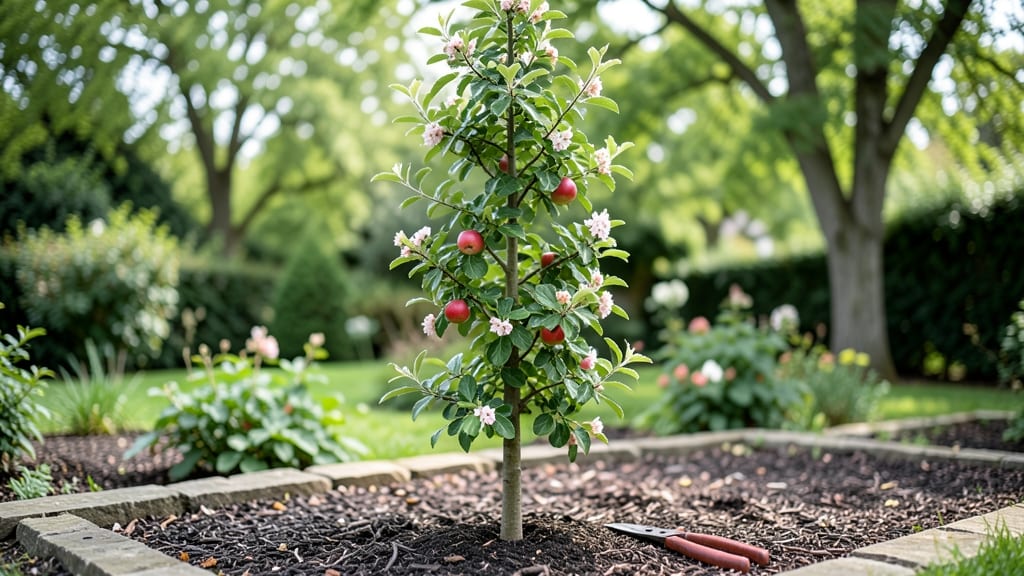
The North Pole columnar apple tree turns tiny yards into orchard dreams with its slender, tree-shaped form and reliable fruit. 🌳 I planted mine against a chain-link fence, and now it’s the star of my patio—producing crisp apples while saving precious space.
This isn’t just a dwarf tree; it’s a vertical game-changer for urban gardens, balconies, and mixed borders where traditional fruit trees would sprawl.
What makes it special? Its 6-foot height and narrow profile fit snugly in tight spots, yet it yields dozens of apples each season—just like its full-sized cousins. The glossy leaves add year-round structure, and in autumn, the fruit turns a deep red, creating a striking contrast against fences or walkways.
No pruning headaches either; simply trim back leggy branches in late winter to keep it tidy and productive.
Imagine a focal point along your driveway, a living trellis for climbing roses, or a privacy screen that bears fruit. The North Pole thrives in containers too, making it perfect for patios or rooftop gardens.
With minimal care—just full sun and regular watering—it rewards you with homegrown apples without the commitment of a full-sized tree.
Whether you’re designing a modern courtyard or a cozy cottage garden, this tree delivers orchard-style beauty in a fraction of the space. Let’s talk placement ideas that’ll make your neighbors green with envy.
📚 In This Guide
- What you need
- Instructions
- Tips and common mistakes
- Wrapping up and next steps
What you need
- ● Columnar apple tree sapling (e.g., North Pole variety, disease-resistant rootstock like M9 or M26 for compact growth).
- ● High-quality potting soil (or well-draining garden soil amended with compost—5+ gallons for a 5-gallon container or 1 cubic yard for in-ground planting).
- ● Container or planting hole: Container: 5–7 gallon fabric or plastic pot with drainage holes (e.g., 12–14" diameter).
- ● In-ground: Dig a hole twice as wide as the root ball and 6–8 inches deep.
- ● Pruning tools: Bypass pruners (sharp, 5–7 inch blades for clean cuts).
- ● Loppers (for thicker branches, 8–10 inch reach).
- ● Hand saw (if dealing with woody stems).
- ● Disinfectant (70% isopropyl alcohol or 10% bleach solution to sterilize tools between cuts).
- ● Mulch (2–3 inches of organic mulch like straw or wood chips to retain moisture and regulate soil temp).
- ○ Staking system (optional but helpful for containers: 2–3 stakes + soft ties or Velcro straps).
- ● Slow-release fertilizer (balanced 10-10-10 or organic options like composted manure).
- ● Drip irrigation or soaker hose (for consistent watering, especially in containers).
- ● Tree collar spray (copper-based fungicide to prevent fire blight or scab).
- ● Garden journal (to track pruning dates, growth, and fruit production!).
- ● Sunlight meter (to ensure your tree gets 6+ hours of direct sun daily).
Step-by-step instructions for planting and cultivating a North Pole columnar apple tree
This dwarf variety thrives in tight spaces—here’s how to set it up for years of bountiful harvests.
🌱 Step 1: Choose the Perfect Planting Spot
North Pole columnar apple trees need full sun for at least 6-8 hours daily, but they tolerate partial shade better than standard varieties. A south-facing wall or fence provides extra warmth and protection from harsh winds. Avoid low spots where cold air settles—this tree’s compact size still makes it vulnerable to late frosts.
Test the soil pH before planting—ideal range is 6.0-7.0. If your soil tests acidic, mix in 2-3 pounds of dolomitic lime per 100 square feet and till it in 2 weeks before planting. Well-draining soil is critical; if your yard has heavy clay, amend with 3-4 inches of compost mixed into the top 12 inches of soil.
🪴 Step 2: Dig and Prepare the Planting Hole
Dig a hole twice as wide as the tree’s root ball but only as deep—planting too deeply suffocates roots. Loosen the sides of the hole with a shovel to encourage root spread. If planting in clay soil, add a 5-gallon bucket of coarse sand to the bottom of the hole to improve drainage.
Gently remove the tree from its container and tease the roots outward if they’re circling. Place the tree in the hole so the graft union (the bump near the base) sits 2-3 inches above soil level. This prevents rot and ensures proper growth. Backfill with native soil, tamping lightly every 6 inches to eliminate air pockets.
☀️ Step 3: Water and Mulch for Long-Term Health
Water deeply right after planting—soak the soil until it’s 6 inches wet at the edges of the hole. Use a 5-gallon watering can to avoid disturbing the soil. North Pole trees have shallow roots, so 1-2 inches of mulch (wood chips or straw) keeps moisture in and weeds out. Keep mulch 6 inches away from the trunk to prevent rot.
Water every 3-4 days for the first month, then taper to once a week once leaves appear. Overwatering is the #1 killer of young columnar trees—check soil moisture by sticking your finger 2 inches deep. If it’s dry, water; if damp, wait. This tree’s compact size means it needs less water than standard varieties.
✂️ Step 4: Prune for Shape and Airflow
Prune in early spring before buds swell to shape the tree and remove dead wood. North Pole columnars grow upright, but 1-2 scaffold branches encourage stability. Cut just outside the branch collar (the swollen area where the branch meets the trunk) with clean, sharp pruners. Avoid leaving stubs—this invites disease.
After harvest, do a light pruning to open the canopy for airflow. Remove any suckers (shoots growing from the base) immediately—they drain energy from fruit production. Thin out crowded branches to 6-8 inches apart for better light penetration. You’ll see fewer but larger apples with proper pruning.
Tips & tricks for perfect North Pole columnar apple tree cultivation
Between us, these details make all the difference in getting your compact orchard off to the right start.
Sunlight Strategy: While 6-8 hours of full sun is ideal, I've noticed that morning sun combined with afternoon shade works surprisingly well in hotter climates. The key is to avoid the hottest afternoon sun (12-3 PM) which can stress the tree's shallow roots. If your spot only gets 4-5 hours of sun, position it to catch the most intense sunlight during the coolest parts of the day.
Soil Prep Secret: The 2-week lime incorporation period might feel like a long wait, but it's worth it. I've seen dramatic pH changes in just 10 days with this method—test your soil again right before planting to confirm it's in the 6.0-7.0 range. For clay soil, mix in that 3-4 inches of compost right up to the planting hole edges—this creates a perfect growing zone around the roots where they'll establish most quickly.
Planting Depth Caution: That 2-3 inch graft union placement above soil level is critical—don't guess on this one. Use a level tool to verify the depth as you backfill. I learned this the hard way after planting one too deeply and watching it struggle for months. The graft union needs to stay visible after settling to prevent rot.
Watering Wisdom: The 6-inch deep watering right after planting is just the beginning. For the first month, I recommend using a moisture meter to verify that water reaches exactly 6 inches deep—not just the surface. The shallow roots need consistent moisture at that depth, and surface watering can actually encourage shallow root growth that makes the tree more vulnerable to drought.
Pro Tips for North Pole Columnar Apple Tree
- Between us, these details make all the difference in getting your compact orchard off to the right start.
- Sunlight Strategy: While 6-8 hours of full sun is ideal, I've noticed that morning sun combined with afternoon shade works surprisingly well in hotter climates.
- Soil Prep Secret: The 2-week lime incorporation period might feel like a long wait, but it's worth it.
Frequently asked questions
Got questions about growing a North Pole columnar apple tree in tight spaces? You’re not alone!
Here are answers to the most common queries—from pruning puzzles to placement tips—to help you master this compact orchard star.
What’s the best time of year to plant a North Pole columnar apple tree?
The ideal window is early spring (March–April) or fall (October–November), when soil is workable but not frozen. Avoid planting in extreme heat or drought—young roots need moisture to establish! For colder climates (Zones 4–7), spring planting is safest to prevent winter stress. Pro tip: Soak bare-root trees for 4–6 hours before planting to kickstart root growth.
How often should I prune a North Pole columnar apple tree?
Prune once a year in late winter/early spring (before buds swell) to shape the tree and remove dead wood. Columnars need minimal pruning—just trim 10–15% of the canopy annually to encourage upward growth. Avoid heavy pruning (like thinning branches), as it disrupts the tree’s signature vertical form. Key focus: Cut just above outward-facing buds to promote airflow.
Can a North Pole columnar apple tree grow in containers or small yards?
This tree thrives in 5-gallon containers or larger (15+ gallons for mature trees). Use well-draining potting mix with compost, and repot every 2–3 years. For small yards, plant it near a fence or wall (south-facing for max sun) to save space. Container tip: Water deeply 2–3x/week in summer and fertilize monthly with balanced fruit-tree food.
What pests or diseases should I watch for with North Pole columnars?
Common issues include aphids, spider mites, and apple scab. Prevent pests with neem oil sprays (early season) and copper fungicide for scab. Columnars are less prone to disease than standard apples, but thin fruit in summer to reduce stress. Quick fix: Blast water on leaves to dislodge aphids or use reflective mulch to deter pests.
How cold-hardy is the North Pole columnar apple tree?
This variety handles USDA Zones 4–8 (down to -30°F/-34°C), making it great for northern climates. Young trees may need winter mulch (4–6 inches) and tree wrap to protect bark from sunscald. In Zone 9+, provide afternoon shade to prevent heat stress. Bonus: Prune lightly in late winter (after frost) to avoid shocking dormant buds.
How long does it take for a North Pole to bear fruit?
Patience pays off! Expect first fruit in 2–3 years (vs. 5–7 for standard apples). Trees produce heavy crops annually with minimal care. Harvest tip: Pick when fruit is fully colored and slightly soft to touch (late summer/early fall). Thin fruit early to improve size/quality—leave 6–8 inches between apples on the column.
| Quick Troubleshooting Guide |
|---|
|
Problem: Yellow leaves Cause: Overwatering or nutrient deficiency Fix: Check soil moisture; amend with compost or iron supplement. |
|
Problem: No fruit after 3+ years Cause: Lack of pollination (self-fruitful but needs cross-pollinators nearby) Fix: Plant a second columnar variety (e.g., Red River) within 50 feet. |
|
Problem: Leggy growth Cause: Too much shade or over-fertilizing with nitrogen Fix: Move to full sun; balance NPK fertilizer (e.g., 10-10-10). |
Wrapping up and next steps
Growing a North Pole columnar apple tree is a game-changer for small spaces—packing big flavor into tiny footprints! 🍏 With the right pruning techniques, you’ll enjoy abundant, low-maintenance harvests while keeping your tree healthy and compact.
Whether you’re a beginner or a seasoned gardener, this blueprint makes it easy to cultivate a thriving orchard, even in limited room.
Ready to take the next step? Start small: pick your spot, gather your tools, and prune with confidence. Your future apple-picking adventures begin now—one snip at a time! 🌱