Pruning
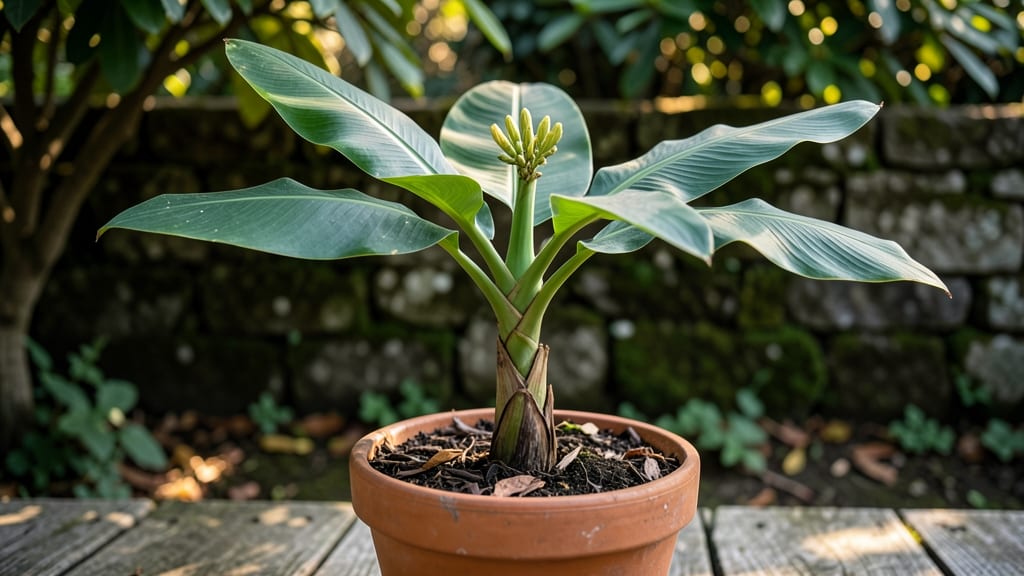
Your miniature banana tree won’t just survive indoors—it’ll thrive with the right pruning, producing year-round harvests that taste sweeter than grocery store bananas.
I’ve grown mine in a sunny kitchen corner for three years, and the secret isn’t fancy tools but understanding how these compact plants respond to light and space. The first time I saw tiny bananas hanging from my 3-foot-tall pot, I nearly dropped my pruners.
This isn’t just about trimming; it’s about shaping growth for bigger, healthier fruit.
Start with sharp pruners and a clean workspace—no need for anything fancy. The real work happens in late winter when the plant finishes its dormant phase.
You’ll remove dead fronds first (they’re easy to spot—they’re brown and crispy), then cut back any fronds that are yellowing or leaning awkwardly. The goal is to keep 3-5 healthy fronds at a time; more than that, and the plant spreads energy too thin.
Container-grown trees need extra care here—they’re root-bound and can’t recover from over-pruning like their outdoor cousins.
Within 6-8 weeks, you’ll see new shoots pushing through, and those are your future fruit producers. The plant will look bushier, leaves will stay glossy green, and—best of all—you’ll notice smaller but more frequent blooms.
My tree now produces 4-6 bananas every 3 months, and they’re the perfect size for snacking. The key is consistency: prune the same way every year, and the tree will reward you with compact growth and steady harvests without taking over your space.
This method works for Musa acuminata ‘Dwarf Cavendish’ and similar varieties, whether you’re growing in a 15-gallon pot or a ground bed in warmer climates. Indoor growers should watch for leggy growth (a sign of insufficient light) and supplement with a grow light if needed.
Outdoor plants in zones 9-11 can stay in the ground year-round, but bring potted trees inside before temperatures drop below 50°F to protect the roots. The first year is about establishing the plant; after that, it’s all about maintenance pruning and enjoying the fruit.
📚 In This Guide
- What you need
- Instructions
- Tips and common mistakes
- Wrapping up and next steps
What you need
- ● Miniature banana tree: A dwarf variety (e.g., Musa basjoo, Musa 'Dwarf Brazilian', or Musa 'Ice Cream') from a nursery or online plant shop. Pro tip: 💡 Choose a healthy, potted plant with no signs of pests or disease.
- ● Well-draining potting mix: 5-10 gallons (depending on pot size), blended with perlite or orchid bark (50/50 ratio) for aeration.
- ○ Container: A sturdy, roomy pot (12-18 inches in diameter) with drainage holes. Optional: A cache pot for aesthetic appeal.
- ● Pruning tools: Bypass pruners (sharp, clean, and sterilized with rubbing alcohol).
- ● Sterilized hand pruners or small saw for thicker stems (if needed).
- ● Gloves: Heavy-duty gardening gloves (banana sap can irritate skin!).
- ● Fertilizer: Balanced liquid fertilizer (10-10-10 or 20-20-20) or slow-release organic granules (e.g., banana tree-specific formula).
- ● Mulch: Organic mulch (e.g., shredded bark or coconut coir) to retain moisture and regulate temperature.
- ● Support stake or trellis (for taller varieties to prevent flopping).
- ● Grow lights (LED or fluorescent) for indoor cultivation or low-light spaces.
- ● Humidity tray or pebble tray to maintain 60-80% humidity.
- ● Plant food (e.g., banana tree-specific supplements like potassium or magnesium).
- ● Pruning sealant (e.g., tree wound dressing) for large cuts to prevent disease.
How to prune miniature banana trees for compact growth
This method keeps your dwarf banana plant lush, productive, and perfectly sized for containers.
Identify and Prepare for Pruning Season
Prune your miniature banana tree during its natural dormant phase, typically in late winter or early spring before new growth begins. Look for the oldest, largest leaves—these are your first targets. Healthy dwarf varieties like 'Dwarf Cavendish' or 'Lady Finger' respond best to pruning when they've finished flowering or fruiting, usually after 6-8 weeks of harvest.
Gather your tools: sharp, sterilized pruning shears (to prevent disease spread) and rubbing alcohol (for cleaning between cuts). I always wipe down blades between cuts—banana sap can harbor bacteria that cause rot. Work on a dry day when temperatures are between 60-75°F to reduce stress on the plant.
Remove Dead or Damaged Leaves and Pseudostems
Start by removing any yellowed, brown, or torn leaves—these are energy drains. Cut them at the base where they meet the pseudostem (the "trunk" made of leaf sheaths). For healthy but mature leaves, leave only the youngest, innermost leaves—typically 3-5 per plant. These will form the new growth center.
Next, trim back any damaged pseudostems that show blackened or mushy tissue. Use your shears to make a clean cut 1-2 inches above healthy tissue. Never leave stubs—this invites fungal infections. After removing old growth, you'll notice the plant's growth point (the tight cluster of new leaves at the center). This is where all future energy will focus.
Shape the Plant for Compact Growth
To encourage bushier growth, prune the outermost leaves back by one-third of their length. This redirects energy toward producing multiple suckers (new shoots) from the base. For a 4-plant system, aim to leave 2-3 suckers per mother plant—these will become your future harvesters.
Watch for sucker development in 4-6 weeks. These small shoots appear at the base of the pseudostem. Once they reach 6-8 inches tall, you can separate them for transplanting or let them grow as backup plants. If you're keeping the plant in one container, thin to your desired number—overcrowding leads to weak, stunted growth.
Post-Pruning Care for Recovery
After pruning, water deeply to help the plant recover. Use lukewarm water to avoid shocking the roots, and apply 1 inch of water at the base. Avoid wetting the leaves to prevent fungal issues. In the following 2-3 weeks, keep the plant in bright, indirect light—direct sun can stress newly exposed tissue.
Apply a balanced fertilizer (10-10-10) at half-strength 2 weeks after pruning to support new growth. You'll see new fronds emerging from the center within 3-4 weeks. This is your signal that the plant is healing and preparing for its next growth cycle. Monitor for pests like spider mites, which thrive on stressed plants—treat with neem oil if needed.
Tips & tricks for pruning miniature banana trees
Pruning your dwarf banana plant properly transforms it from a struggling specimen into a thriving, compact powerhouse. Here’s how to maximize your success without stressing the plant.
Timing is Everything: The dormant phase in late winter or early spring is critical—this is when your plant naturally conserves energy. If you prune during active growth, you risk shocking the plant and stunting future harvests. I’ve seen plants recover beautifully when pruned after the 6-8 week post-harvest period, but timing outside this window can lead to weak regrowth. For container-grown plants, this window might shift slightly depending on your climate, so observe your plant’s cycle closely.
Tool Preparation Matters: Sterilizing your pruning shears between cuts is non-negotiable. Banana sap contains sugars that attract bacteria and fungi, which can cause rot or infections. I keep a small bottle of rubbing alcohol handy and wipe down blades after every 2-3 cuts. If you’re working with multiple plants, consider using a fresh pair of shears for each to minimize cross-contamination. The 60-75°F temperature range isn’t just for comfort—it ensures the plant isn’t stressed by extreme heat or cold during the procedure.
Visual Cues for Healthy Pruning: When trimming the outermost leaves back by one-third, focus on the plant’s natural shape. Look for leaves that are fully extended but still flexible—these are ideal candidates. If you’re unsure whether a leaf is healthy, gently tug on it. A healthy leaf will resist slightly, while a dying one will pull away easily. The goal is to leave the youngest, innermost leaves (3-5 per plant) to form the new growth center. This creates a balanced canopy that maximizes sunlight exposure and air circulation.
Post-Pruning Recovery Strategy: The 2-3 weeks of bright, indirect light after pruning are just as important as the pruning itself. Direct sunlight can scorch newly exposed tissue, while too little light slows recovery. I’ve found that placing plants near an east-facing window or under a sheer curtain provides the perfect balance. The deep watering (1 inch at the base) is crucial—it replenishes moisture lost during pruning and helps the roots absorb nutrients more efficiently. This step is where many gardeners cut corners, but it’s the foundation for strong regrowth.
Pro Tips for Miniature Banana Tree
- Pruning your dwarf banana plant properly transforms it from a struggling specimen into a thriving, compact powerhouse.
- Timing is Everything: The dormant phase in late winter or early spring is critical—this is when your plant naturally conserves energy.
- Tool Preparation Matters: Sterilizing your pruning shears between cuts is non-negotiable.
Frequently asked questions
Got questions about keeping your miniature banana tree thriving while pruning for compact growth? Here are answers to the most common curiosities—so you can harvest year-round without the hassle!
How often should I prune a miniature banana tree for compact growth?
Prune your miniature banana tree every 4–6 weeks during active growth (spring to fall). Focus on removing overly long leaves (trim to 2–3 feet) and suckers to redirect energy to fruit production. Avoid heavy pruning in winter unless your tree is dormant—it needs rest too!
Can I prune a miniature banana tree too much?
Yes! Over-pruning stresses the plant, leading to stunted growth, fewer flowers, or even death. Never trim more than 1/3 of the foliage at once, and always leave at least 3–4 healthy leaves per stem. Think of it like a haircut—you want shape, not a buzz cut!
Will pruning a miniature banana tree speed up fruit production?
Pruning removes competition for nutrients, so your tree focuses energy on flowering and fruiting. Target leafy suckers (remove them) and long, unproductive leaves (trim back). Within 2–3 months, you’ll often see more blooms—and tastier bananas!
Can I grow a miniature banana tree in a pot indoors?
Yes, but it needs bright, indirect light (south-facing window or grow lights) and a well-draining pot (15+ gallons). Use a balanced fertilizer (10-10-10) every 4–6 weeks. Watch for yellowing leaves (overwatering) or crispy edges (underwatering). A humidifier helps too!
What should I do if my miniature banana tree stops flowering after pruning?
If your tree skips blooming, check these fixes:
- Light check: Move it to 6+ hours of sunlight daily (indoors or out).
- Fertilizer boost: Switch to a high-potassium fertilizer (like 5-10-10) to encourage flowering.
- Temperature shift: Banana trees often bloom when days cool slightly (60–70°F at night).
- Patience: Some varieties take 1–2 years to mature enough to flower.
Wrapping up and next steps
Growing a miniature banana tree is a rewarding journey that brings tropical charm and fresh fruit to your space—no matter how small!
By mastering pruning techniques, you’ll encourage compact growth, maximize harvests, and keep your plant thriving year-round. 🌱 With the right tools, patience, and care, your little banana tree will flourish like a pro.
Ready to take the next step? Start small:
- Pick a sunny spot and gather your supplies.
- Follow the pruning blueprint to shape your tree.
- Monitor growth and adjust as needed—your green thumb is growing stronger every day!