
Pruning
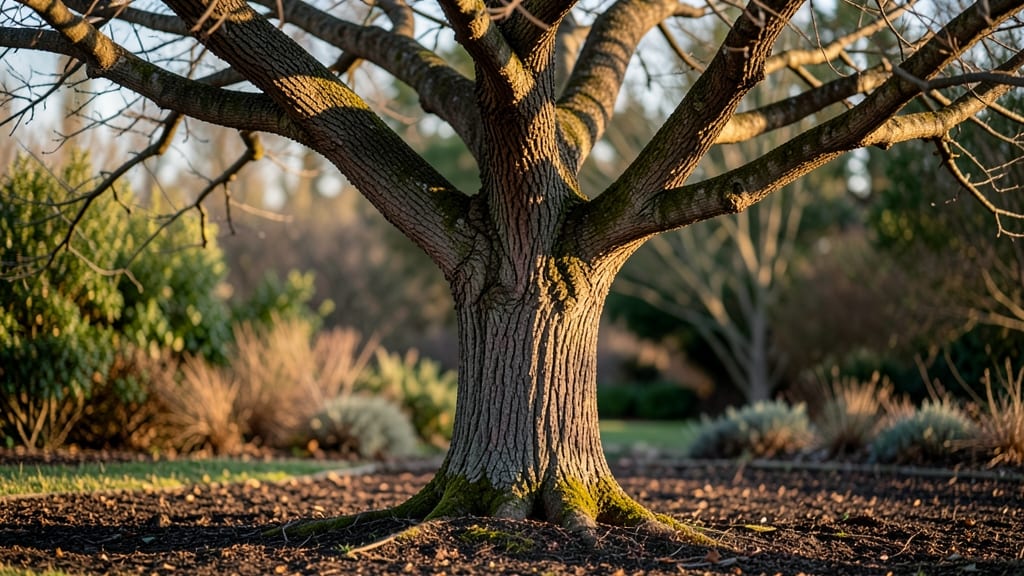
A magnolia tree trunk isn’t just a sturdy backbone—it’s the foundation for your tree’s glory. Cracks, fungal spots, or pest holes can turn that smooth, silvery bark into a structural weak point, and I’ve seen how quickly problems escalate when ignored.
The good news? Most trunk issues are fixable with the right tools and timing, and prevention is simpler than you’d think.
Start by inspecting your trunk for vertical cracks (common in older trees) or dark, sunken patches—signs of anthracnose or bark beetle damage.
A clean pruning saw and copper fungicide (for fungal issues) are your first line of defense, but the real game-changer is proper watering and mulching to keep the trunk healthy year-round.
I’ve stopped cracks from spreading by wrapping damaged areas with tree wound dressing and monitoring for pests after heavy rains.
What you’ll achieve is a trunk that stays strong for decades, supporting those iconic blooms without compromise. The key is acting early—small cracks sealed now mean no major repairs later.
Plus, a healthy trunk means fewer branches falling unexpectedly, which is worth the effort alone. Let’s get your magnolia’s foundation back in top shape.
This works for both young and mature trees, though older trunks may need extra support like cabling for weak branches. The same principles apply whether you’re dealing with a Southern magnolia or a star magnolia—just adjust the tools to the scale of the damage.
Ready to make your tree’s trunk as resilient as its reputation?
📚 In This Guide
- What you need
- Instructions
- Tips and common mistakes
- Wrapping up and next steps
What you need
- ● Pruning shears (bypass or anvil type) – Choose sharp, clean shears (10-12" blade length) for clean cuts.
- ● Loppers (for thicker branches) – Opt for bypass loppers (18-24" handles) for branches ½" to 2" in diameter.
- ● Pruning saw (for large limbs) – A curved-tooth pruning saw works best for branches >2" in diameter.
- ● Disinfectant (70% isopropyl alcohol or bleach solution) – 1 part bleach to 9 parts water to sterilize tools and prevent disease.
- ● Gloves (cut-resistant & heavy-duty) – Protects hands from thorns and rough bark.
- ● Safety glasses & long sleeves/pants – Essential for eye and skin protection.
- ● Ladder (if needed) – A stable, extendable ladder (20-30 ft) for high branches.
- ● Tarp or drop cloth – To collect fallen debris and protect the ground.
- ○ Pruning sealant (optional for large cuts) – Tree wound pruning paste to minimize sap loss on major wounds.
- ● Pole pruner (for hard-to-reach branches) – Extends reach up to 20 ft.
- ● Marking spray or tape – Helps identify branches to remove before cutting.
- ● First-aid kit – Just in case of minor scratches or thorn pricks!
How to assess and strengthen your magnolia tree trunk for longevity
Here’s how to evaluate and reinforce a magnolia’s core structure before weak branches become a problem.
Inspect the Trunk for Structural Weaknesses
Start by examining the trunk from the base to the first major branch. Look for cracks wider than ¼ inch, deep furrows, or peeling bark—these signal potential structural failure. Run your hand along the trunk to feel for soft, spongy areas under the bark, which indicate rot or decay. Magnolias are prone to bacterial cankers and heart rot, so check for oozing sap or sunken lesions.
Use a small pruning knife to gently scrape away loose bark near suspicious spots. Healthy wood beneath should appear firm and light brown. If you find dark, crumbly tissue or a foul odor, the trunk’s integrity is compromised. Note the location and severity of any issues—this will guide your reinforcement strategy later.
Evaluate Branch Attachment Points
Focus on where major branches (thicker than 2 inches in diameter) meet the trunk. These junctions, called branch collars, should form a smooth, rounded swell where the branch emerges. If the collar is flat, cracked, or sunken, the branch may eventually split or fall during storms. Use a measuring tape to check the branch diameter-to-trunk ratio: branches should never exceed ⅓ the trunk’s diameter at the point of attachment.
Test stability by gently shaking each branch—if it wobbles or feels loose, it’s a high-risk candidate for future failure. Pay special attention to co-dominant stems (two equally sized trunks growing upward). These create V-shaped crotches that are inherently weak. Mark these branches for potential removal or bracing in the next step.
Prune Weak Branches Using Proper Techniques
Remove dead, diseased, or structurally unsound branches first, using clean, sharp pruning shears. Make cuts just outside the branch collar—never leave a stub, as this invites decay. For branches thicker than 1 inch, use a three-cut method: start with an under-cut about 12 inches out on the branch, then make a top-cut slightly farther out, and finally twist the branch away to avoid tearing the bark.
For co-dominant stems, prioritize removing the weaker of the two—look for signs like smaller diameter, poor leaf vigor, or previous storm damage. If both stems are equally strong, consider cabling or bracing the junction to distribute weight. Avoid topping the tree or making flush cuts, as these accelerate decay and weaken the trunk.
Reinforce the Trunk with Supportive Practices
Apply tree wound dressing (like Tanglefoot Tree Wound Pruning Sealer) to large pruning wounds or deep cracks to protect against pests and disease. For moderate rot, inject a mycorrhizal fungus treatment (such as MycoApply) into the base of the trunk to stimulate beneficial root associations. Water the soil deeply but infrequently—magnolias hate soggy roots, which accelerate rot.
Install tree supports if needed: use steel cables anchored into the ground and wrapped around the trunk to compress weak branch unions. For young magnolias, stake the trunk at a 45-degree angle to encourage stronger wood formation. Mulch the base with 3 inches of organic mulch (like pine bark) to maintain consistent soil moisture and protect against temperature fluctuations, which stress the trunk.
Monitor and Maintain Long-Term Health
Check the trunk twice yearly—once in early spring (before bud break) and again in late fall (after leaf drop). Look for new cracks, peeling bark, or increased sap flow, which signal ongoing stress. If you notice fungal growth (like shelf fungi) on the trunk, treat with a copper-based fungicide immediately. Avoid over-fertilizing, as excess nitrogen promotes weak, fast growth that’s prone to splitting.
Train new shoots to grow in a single leader (one central trunk) by tying them to a stake in their first year. This prevents multi-trunk competition, which weakens the overall structure. If the tree is mature and already multi-stemmed, focus on pruning to reduce weight in the upper canopy—remove 10-15% of the smallest branches annually to ease stress on the trunk.
Tips & tricks for assessing and strengthening magnolia trunks
A few key insights can transform your magnolia's structural integrity from vulnerable to resilient. Here's what I've learned from years of working with these majestic trees.
Inspection Precision: When examining the trunk in Step 1, focus on the bark's texture as much as its appearance. Healthy magnolia bark should have a slightly rough, pebbled texture—like elephant skin—rather than smooth or peeling surfaces. Use a small pruning knife to carefully lift a small section of bark (about the size of a quarter) to check for internal rot. If the wood beneath is darker than light brown or has a hollow sound when tapped, you're dealing with decay that requires immediate attention.
Branch Attachment Geometry: The ⅓ rule for branch diameter-to-trunk ratio in Step 2 is non-negotiable, but here's the deeper insight: pay attention to the angle where branches meet the trunk. Ideal attachment points form a U-shaped collar rather than a flat junction. If you see a flat or V-shaped attachment, that branch is at high risk of splitting during storms. For branches thicker than 2 inches, consider using a digital caliper for precise measurements—standard measuring tapes can be too imprecise for these critical assessments.
Pruning Technique Nuances: In Step 3, when making your three-cut for branches thicker than 1 inch, position your under-cut slightly higher than 12 inches out—closer to 14-16 inches—to create a cleaner break. This prevents bark tearing and leaves a smoother wound that heals better. For co-dominant stems, if removal isn't an option, consider spreaders instead of cables—they distribute weight more evenly over time and reduce stress on the junction.
Long-Term Monitoring Strategy: The twice-yearly checks in Step 5 are essential, but here's how to make them more effective: photograph the trunk at each inspection from the same angle and distance. This creates a visual record that makes it easier to spot subtle changes in bark texture, crack progression, or fungal growth over time. Store these photos in chronological order—the visual progression often reveals patterns you might miss in individual inspections.
Pro Tips for Magnolia Tree Trunk
- A few key insights can transform your magnolia's structural integrity from vulnerable to resilient.
- Inspection Precision: When examining the trunk in Step 1, focus on the bark's texture as much as its appearance.
- Branch Attachment Geometry: The ⅓ rule for branch diameter-to-trunk ratio in Step 2 is non-negotiable, but here's the deeper insight: pay attention to the angle where branches meet the trunk.
Frequently asked questions
Got questions about keeping your magnolia tree trunk strong and healthy? You’re not alone! Here are some of the most common concerns—and their answers—to help you care for your tree with confidence.
How do I know if my magnolia tree trunk is healthy?
A healthy magnolia trunk should be firm, upright, and free of deep cracks, oozing sap, or soft spots. Look for smooth bark (though some varieties have wrinkled or scaly textures) and vibrant green leaves. If you notice peeling bark or fungal growth (like black mold), it’s a sign of stress or disease—address it promptly with pruning or treatment.
When is the best time to prune my magnolia tree trunk or branches?
Prune your magnolia after flowering (late spring to early summer) to avoid cutting off next year’s blooms. Avoid heavy pruning in fall or winter, as it can stress the tree. For structural shaping, focus on removing dead, crossing, or weak branches—never prune more than 25% of the canopy at once!
What should I do if my magnolia trunk has a large crack?
Small cracks (under 1 inch) are often harmless, but deep or widening cracks may signal structural weakness. If the crack is oozing sap or exposing inner wood, seal it with tree wound pruning sealant or prune the affected branch. For severe damage, consult an arborist—some cracks can compromise the trunk’s integrity over time.
Can I prune the trunk itself, or should I only trim branches?
Never prune the main trunk of a magnolia—this can kill the tree! Focus on branches instead: Remove water sprouts (shoots growing straight up), deadwood, and branches rubbing against each other. Use clean, sharp tools to make cuts at a 45-degree angle just outside the branch collar for the cleanest heal.
Are there any alternatives to traditional pruning for trunk health?
Yes! Thinning cuts (removing entire branches back to the trunk) improve airflow and reduce disease risk. For weak trunks, cabling or bracing (using supports) can help stabilize heavy branches. Mulching around the base (but not touching the trunk) also promotes root health—just keep it 2–4 inches deep and organic!
Wrapping up and next steps
A healthy magnolia tree trunk is the foundation of a stunning, long-lived tree—one that thrives with strong branches and vibrant blooms. By understanding its structure, addressing common issues, and applying proper care, you’re already on the path to nurturing a resilient magnolia. 🌿
Now that you’re equipped with the knowledge, take the next step: schedule a seasonal checkup for your magnolia. Whether it’s pruning dead branches, reinforcing weak trunks, or simply observing for early signs of stress, your proactive care will keep your tree flourishing for years to come. Happy gardening! 🌱