
Pruning
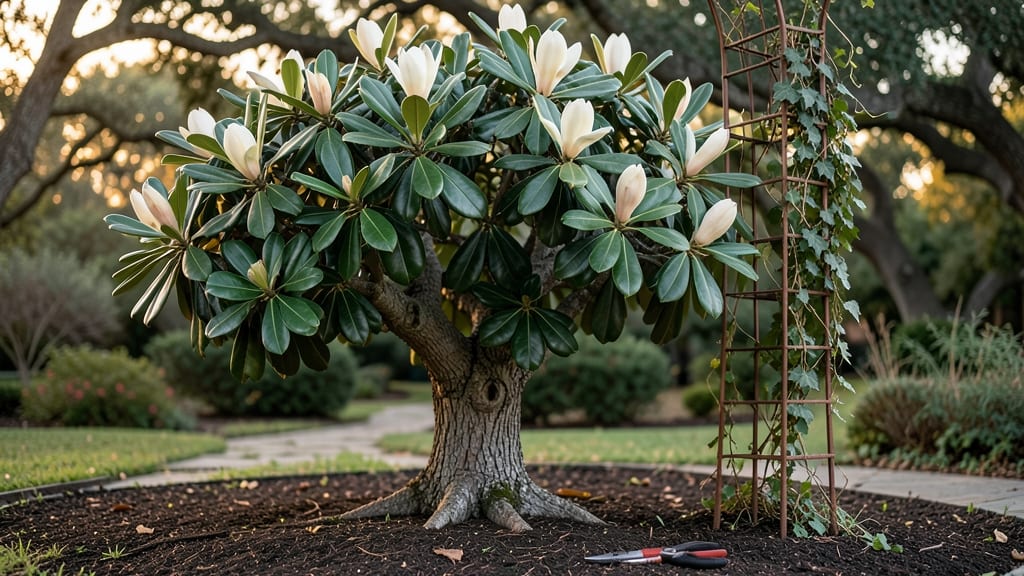
The southern magnolia tree bark isn’t just protective—it’s a textured masterpiece that tells the tree’s story through deep ridges and silvery-gray hues. I’ve spent years admiring how this iconic bark transforms from smooth and cinnamon-toned in youth to rugged, elephant-skin-like armor as it matures.
The key to preserving its beauty? Pruning with precision to avoid stripping away those signature grooves.
Healthy bark should feel firm and resist peeling, while damaged areas reveal cracks, black streaks, or oozing sap—clear signs of disease or pest stress. Pruning in late winter or early spring minimizes harm, letting the tree heal before summer’s heat.
A sharp pair of loppers and a ladder (for higher branches) are your only tools, but the real skill lies in knowing where to cut without scarifying the trunk.
What makes this tree a showstopper? That cinnamon-brown bark glows against winter’s bare branches, while summer’s lush foliage makes it a year-round focal point. Even when leafless, the bark’s dramatic texture draws the eye—proof that evergreens aren’t the only stars of the winter garden.
The right pruning keeps the tree’s structure strong and its bark looking its best.
Southern magnolias thrive in Zones 6-10, but their bark’s aesthetic appeal makes them worth the effort anywhere. Whether you’re shaping a specimen tree or cleaning up storm damage, focus on preserving the bark’s natural character—it’s the tree’s most underrated feature.
Let’s get those pruners ready without compromising that stunning silhouette.
📚 In This Guide
- What you need
- Instructions
- Tips and common mistakes
- Wrapping up and next steps
What you need
- ● Pruning shears: Bypass pruners (for cuts up to ½ inch thick) – one pair (look for sharp, stainless-steel blades for clean cuts).
- ● Loppers: For branches ½ to 1½ inches thick – one pair (choose ratcheting or bypass types for precision).
- ● Pruning saw: For larger branches (1½+ inches) – one (folding saws with a fine-tooth blade work best).
- ● Ladder: Extendable aluminum or fiberglass (avoid wood) – one (ensure it’s tall enough to reach the highest branches safely).
- ● Disposable gloves: Heavy-duty, cut-resistant – one pair (nitrile or leather for extra protection).
- ○ Pruning sealant: Tree wound dressing (optional but recommended for large cuts) – small jar (look for products with natural ingredients like beeswax or linseed oil).
- ● Disinfectant: 70% isopropyl alcohol or bleach solution (1 part bleach to 9 parts water) – small spray bottle (to sterilize tools between cuts).
- ● Heavy-duty trash bags: For collecting debris – 2-3 bags (10-gallon size or larger).
- ● Safety gear: Safety glasses, long sleeves, and closed-toe shoes – as needed (protect yourself from bark chips and falling debris!).
- ● Extension pole: For pruning shears or loppers – one (great for high branches without a ladder).
- ● Sharpener: File or sharpening stone – one (to keep blades in top condition).
- ● Marking twine or flags: For tagging branches to remove – small roll (helpful for planning ahead).
- ● Wheelbarrow or tarp: For hauling debris – one (saves your back from heavy lifting!).
Step-by-Step guide for pruning southern magnolia trees
Here's how to maintain your magnolia's majestic bark while keeping it healthy all year long.
Time Your Pruning for Optimal Growth
Prune southern magnolias during late winter or early spring, just as new growth begins. This timing ensures you remove dead wood before buds swell, while avoiding the stress of summer heat or winter dormancy. I always check for swollen buds—that's your cue the tree is waking up and ready for pruning.
Never prune in fall, as it stimulates tender new growth that won't survive winter. If you must remove dead branches outside this window, do it immediately—they'll only become heavier and more dangerous with time. The goal is to shape the tree while preserving its natural form and protecting that stunning textured bark from damage.
Assess and Remove Dead or Damaged Branches
Start by examining the tree for dead, diseased, or crossing branches—these are your top priorities. Dead branches will snap under snow or wind, while diseased wood can spread pathogens. Look for branches with no leaves, hollow centers when tapped, or blackened, crumbling bark.
Use clean, sharp pruning shears for cuts up to ½-inch diameter, and a pruning saw for thicker branches. Cut just outside the branch collar—the swollen area where the branch meets the trunk—to prevent unsightly stubs. Avoid flush cuts, which leave wounds that heal poorly and can invite decay.
Thin the Canopy for Better Airflow and Light
Southern magnolias develop dense canopies, which can trap moisture and encourage fungal issues. Selectively remove 10-20% of the smallest branches from the interior to improve airflow. Focus on branches growing inward or rubbing against others—these compete for resources and create weak points.
Make cuts at the branch collar, and avoid "heading back" (cutting back to a lateral branch)—this encourages dense, weak regrowth. Step back frequently to visualize the tree's shape. The goal is to maintain an open center while preserving the magnolia's natural pyramid form, which showcases its distinctive, ridged bark.
Shape the Tree for Year-Round Appeal
To highlight the magnolia's textured bark, avoid heavy pruning of mature branches—these provide the tree's signature character. Instead, lightly trim overgrown lower branches to create a clean trunk line, especially if you want to showcase the bark up close.
Use hand pruners for precise cuts, and avoid removing more than 25% of the canopy in a single season. Prune gradually over 2-3 years if needed, and always make cuts at a 45-degree angle for branches thicker than 1 inch to encourage proper healing. Seal larger cuts with pruning sealant if they exceed ½ inch in diameter to prevent disease entry.
Clean Up and Monitor for Recovery
After pruning, remove all debris from the area to prevent fungal growth. Sterilize your tools with rubbing alcohol between cuts to avoid spreading disease. Water the base of the tree deeply to help it recover, especially if you've made significant cuts.
Monitor the tree over the next 4-6 weeks for signs of stress, such as yellowing leaves or oozing sap. If you see excessive dieback, you may have pruned too aggressively. Southern magnolias are resilient, but they thrive with light, strategic pruning—never drastic cuts. The result should be a healthier tree with better airflow, more sunlight reaching the lower branches, and a stronger structure to support its iconic bark.
Tips & tricks for pruning southern magnolia trees
Here's what I've learned after years of shaping these majestic trees without damaging their signature bark.
Timing is Everything: The late winter to early spring window is non-negotiable for southern magnolias. This is when the tree's natural defenses are strongest, and you're removing dead branches before the buds swell. If you must prune outside this window, do it immediately after noticing dead branches—waiting only increases the risk of them becoming hazardous. The swollen buds are your clear signal that the tree is ready for shaping.
Branch Collar Precision: When making cuts in Step 2, focus on cutting just outside the branch collar—the swollen area where the branch meets the trunk. This ensures proper healing and prevents unsightly stubs that can trap moisture and invite decay. For branches thicker than ½ inch, use a pruning saw and make the cut at a 45-degree angle to promote faster healing and reduce the risk of disease entry.
Canopy Thinning Strategy: In Step 3, aim to remove only 10-20% of the smallest interior branches to improve airflow without compromising the tree's natural pyramid shape. These branches often grow inward or rub against others, creating weak points. Step back frequently to visualize the tree's structure—this helps maintain the open center that highlights the distinctive bark while preventing dense regrowth that can lead to fungal issues.
Gradual Pruning Approach: Avoid removing more than 25% of the canopy in a single season, as specified in Step 4. If your magnolia needs more extensive shaping, spread it over 2-3 years. This gradual approach reduces stress on the tree and allows it to recover properly. For larger cuts exceeding ½ inch, apply pruning sealant immediately to protect against disease and promote faster healing.
Pro Tips for Southern Magnolia Tree Bark
- Here's what I've learned after years of shaping these majestic trees without damaging their signature bark.
- Timing is Everything: The late winter to early spring window is non-negotiable for southern magnolias.
- Branch Collar Precision: When making cuts in Step 2, focus on cutting just outside the branch collar—the swollen area where the branch meets the trunk.
Frequently asked questions
Got questions about pruning and caring for southern magnolia tree bark? You’re in the right place! Here are some of the most common concerns—plus straightforward answers to keep your tree thriving.
When is the best time to prune a southern magnolia for healthy bark?
The ideal time is late winter or early spring (just before buds swell), when the tree is dormant but about to wake up. Avoid pruning in fall—it can stimulate late-season growth vulnerable to frost damage. If you must prune in summer, do it early to minimize stress.
Can I prune southern magnolia bark in any season, or does timing matter?
Timing absolutely matters! Pruning in summer or fall can stress the tree, weaken bark resilience, and invite pests. Late winter/early spring pruning promotes faster healing and stronger bark regeneration. Need to remove dead branches? Do it anytime, but prioritize the dormant season for structural cuts.
What should I do if my southern magnolia’s bark starts peeling or cracking after pruning?
Peeling or cracked bark is usually normal for magnolias (especially older trees), but excessive damage from aggressive pruning can worsen it. If you see large, jagged tears or oozing sap, the cut may be too deep. Thin the canopy instead of topping, and avoid removing more than 25% of the foliage in one session.
Are there alternatives to pruning if my magnolia’s bark looks unhealthy?
If bark health is the main concern (not safety), focus on proper watering and mulching first. Southern magnolias thrive in well-draining soil—amend heavy clay with compost. For fungal issues (like bark rot), remove infected limbs sterilize tools between cuts. Avoid over-fertilizing, which can stress the tree.
How do I tell if a branch needs pruning to protect the bark, or is it just natural shedding?
Watch for these red flags: dead, broken, or crossing branches (rubbing creates wounds), mushroom growth at the base (rot), or branches growing straight up (weak structure). Natural shedding is usually small, dry twigs with smooth, intact bark underneath. When in doubt, prune conservatively—you can always remove more later!
Wrapping up and next steps
Your Southern magnolia tree is a stunning centerpiece that thrives with the right care—and now, you’re equipped with the knowledge to keep it flourishing year-round! 🌿 From understanding its unique bark to mastering pruning techniques, every step ensures your tree stays healthy, beautiful, and resilient.
Whether you’re trimming for shape, removing dead branches, or encouraging new growth, confidence is key.
Ready to put your skills to the test? Grab your tools and schedule your next pruning session—your magnolia will thank you with vibrant blooms and lush foliage for seasons to come! 🌸