
Trees
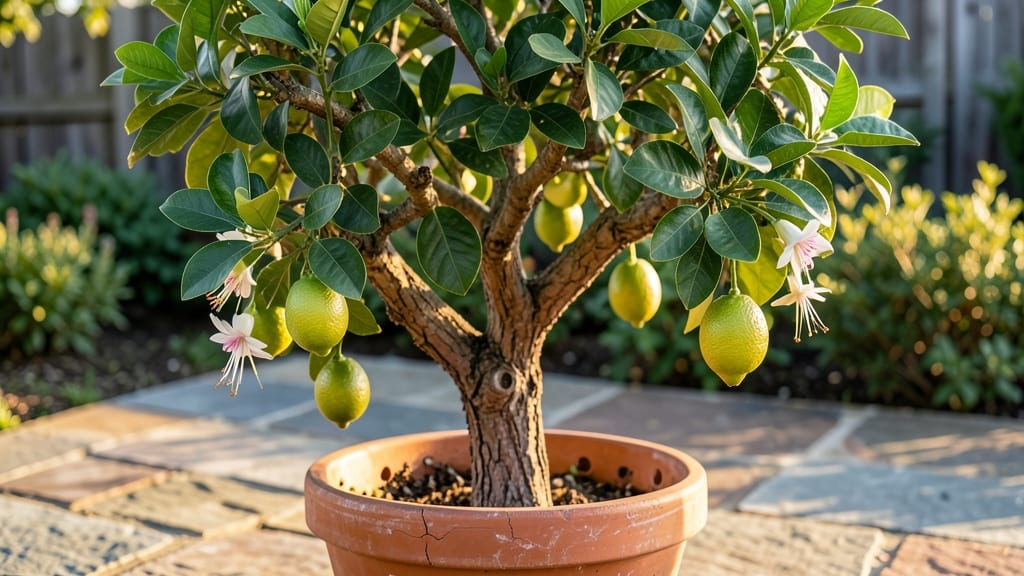
Looking after lemon trees in pots means you can grow sunshine in a tiny corner of your patio or balcony—no yard required. 🌿 My first lemon tree thrived in a 15-gallon pot, producing fruit by its third year, and I've since grown four more using the same simple system.
The key isn't complicated: it's about matching the tree's needs to what containers actually provide.
You'll need a pot at least 15 gallons for mature trees, well-draining soil mixed with perlite, and a sunny spot where it gets 6+ hours of light daily. Watering's the tricky part—too much and roots rot, too little and leaves crisp.
I check soil moisture by sticking my finger in: if it's dry an inch down, it's time to water. Fertilizing monthly with citrus-specific feed keeps those bright green leaves and sweet little fruits coming.
Pruning in late winter opens up the canopy for better airflow and fruit production, while winter care means moving pots indoors if temperatures drop below 40°F. The payoff? Juicy, homegrown lemons by summer, and a tree that keeps growing for decades with the right care.
You'll spot the first blossoms by spring, and those tiny white flowers mean fruit's on the way.
This works for Meyer lemons, Eureka varieties, or even dwarf types—just adjust pot size as the tree grows. The biggest mistake? Waiting too long to repot. If roots circle the bottom, it's time to upgrade to a larger container. Let's get those lemons growing!
📚 In This Guide
- What you need
- Instructions
- Tips and common mistakes
- Wrapping up and next steps
What you need
- ● Pot: A container at least 12–18 inches wide and deep (bigger = better for mature trees). Ensure it has drainage holes to prevent root rot. Terracotta or fabric pots work great!
- ● Well-draining potting mix: A blend of cactus/succulent mix (50%) and organic matter (50%), like compost or coconut coir. Avoid garden soil—it’s too dense!
- ● Lemon tree sapling: Choose a dwarf variety (like ‘Meyer’ or ‘Eureka’) for pots. Nurseries often sell 1–3 gallon-sized plants ready to repot.
- ● Fertilizer: A balanced citrus fertilizer (e.g., 6-6-6 or 8-3-9 NPK ratio) or organic options like fish emulsion or citrus-specific granules.
- ● Mulch: Organic mulch (e.g., straw or wood chips) to retain moisture and regulate soil temperature.
- ● Trowel or small shovel: For repotting or adjusting soil.
- ● Watering can with a narrow spout: Lemon trees hate soggy roots—water deeply but infrequently!
- ● pH test kit: Lemon trees prefer slightly acidic soil (pH 6.0–7.0). Adjust with lime (to raise pH) or sulfur (to lower) if needed.
- ● Spray bottle: For misting leaves if humidity drops (especially indoors).
- ● Pruning shears: Sharp, clean shears to trim dead/branches and encourage bushier growth.
- ● Self-watering pot: If you travel often, these keep roots hydrated without overwatering.
- ● Grow lights: For indoor trees—12–14 hours of light daily mimics sunlight.
- ● Citrus food supplements: Epsom salt (magnesium) or iron chelates if leaves look pale/yellow.
- ● Pot feet or casters: Protects floors and makes moving your tree easier!
Step-by-step guide for caring for potted lemon trees
Here’s how to keep your citrus thriving in containers all year—no green thumb required.
🌱 Step 1: Choose the Right Container and Soil Mix
Start with a pot at least 12 inches deep and wide—lemon trees need room for roots to spread. Terracotta pots work best because they allow excess moisture to evaporate, preventing root rot. If you’re repotting, choose one just 2 inches larger in diameter than the current container to avoid overwhelming the tree.
Use a well-draining citrus-specific potting mix (or blend 60% potting soil with 30% perlite and 10% compost). Avoid garden soil—it compacts and suffocates roots. Fill the pot ¾ full before adding your tree, leaving space at the top for watering. Tap the pot gently to settle the mix without compacting it too tightly.
☀️ Step 2: Position for Maximum Sunlight and Warmth
Lemon trees crave full sun—6 to 8 hours daily. Place your pot near a south-facing window or under grow lights if indoors. If outdoors, move it to a sheltered spot where it gets morning sun and afternoon shade in hot climates to prevent leaf scorch. You’ll know it’s getting enough light when new growth appears bright green and compact—not stretched or pale.
Keep temperatures between 60-85°F. If your home dips below 55°F at night, move the tree away from drafty windows or use a heating mat in winter. Lemon trees are sensitive to cold—below 50°F can cause leaf drop or even kill the tree. Watch for yellowing leaves or dropped fruit as early warning signs of stress.
💧 Step 3: Water Deeply but Strategically
Water when the top 1-2 inches of soil feel dry—stick your finger in to check. Lemon trees hate soggy roots, so water deeply until it drains from the bottom, then empty the saucer to prevent root rot. In summer, you might water every 2-3 days; in winter, every 7-10 days. Overwatering is the #1 killer of potted citrus—always let excess water drain away completely.
Mist the leaves occasionally in dry climates, but avoid wetting them in humid conditions to prevent fungal diseases like citrus scab. You’ll notice healthy trees have glossy, waxy leaves—a sign they’re well-hydrated but not waterlogged. If leaves curl or brown at the edges, it’s often a sign of underwatering or fluoride buildup (common in tap water). Use filtered or rainwater if possible.
✂️ Step 4: Prune and Fertilize for Year-Round Growth
Prune in late winter or early spring before new growth starts. Remove dead, crossing, or crowded branches with clean, sharp pruners—cut just above a leaf node to encourage bushier growth. Never prune more than ⅓ of the tree at once, or you’ll shock it. Shape the tree to improve airflow, which reduces disease risk. You’ll see new shoots emerging within 2-3 weeks if pruning was successful.
Fertilize every 4-6 weeks during growing season (spring-fall) with a citrus-specific fertilizer (high in nitrogen for foliage, potassium for fruit). In winter, cut back to once every 8 weeks—lemon trees rest then. Over-fertilizing burns roots, so follow label instructions and flush the soil with water monthly to prevent salt buildup. Yellow leaves between the veins? That’s often a magnesium deficiency—try a Epsom salt spray (1 tablespoon per gallon of water) every 2 months.
🪴 Step 5: Protect and Repot as Needed
Watch for pests like aphids, scale, or spider mites—wipe leaves with neem oil solution (1 tablespoon per quart of water) weekly as prevention. If you spot sticky residue or tiny webs, act fast—citrus pests spread quickly. For severe infestations, isolate the tree and treat with insecticidal soap. Healthy trees rarely attract pests, so strong light, good drainage, and proper watering keep them at bay.
Repot every 2-3 years in spring, or when roots circle the pot. Choose a container only 2 inches larger—big jumps stress the tree. After repotting, water lightly and place in bright, indirect light for a week to reduce shock. You’ll know it’s settled in when new leaves appear within 4-6 weeks. Avoid repotting during hot summers or cold winters—the tree needs stable conditions to recover.
Tips & tricks for perfect potted lemon trees
Container citrus care can feel intimidating, but these simple tricks will help you avoid common pitfalls and keep your lemon tree thriving year-round.
Pot Selection Matters: While terracotta is ideal, plastic pots retain more moisture—great for dry climates. If using plastic, add extra perlite to the mix (up to 40%) to improve drainage. I learned this the hard way after losing a tree to root rot in a sealed plastic container. Also, ensure your pot has drainage holes—no exceptions! If repotting, choose a container only 2 inches larger to prevent overwhelming the tree's root system.
Lighting Hacks for Indoor Growers: Lemon trees need that full 6-8 hours of sunlight daily. If your south-facing window doesn't cut it, supplement with a grow light placed 6-12 inches above the tree for 12-14 hours per day. I use a simple LED grow bulb on a timer—it's changed everything for my indoor trees. Watch for pale, stretched leaves as a sign they're reaching for more light. Rotate the pot weekly so all sides get even exposure.
Watering Wisdom: The finger-check method is foolproof, but here's what I've noticed: In summer, the top 1-2 inches dry out faster in terracotta pots (every 2 days) than in plastic (every 3 days). Always water until it drains from the bottom—this ensures the entire root zone gets hydrated. For fluoride-sensitive trees, let tap water sit out overnight before using or use filtered water. You'll know you're nailing the water balance when leaves stay glossy and waxy, not curled or crispy.
Fertilizer Timing: The 4-6 week spring-fall schedule works, but here's the secret: Split your fertilizer dose in half and apply every 3 weeks instead. This mimics natural rainfall patterns and prevents salt buildup. In winter, when you cut back to every 8 weeks, use only ¼ strength fertilizer. I've seen trees stressed by sudden fertilizer shocks—gradual adjustments keep them happy. And always flush the soil monthly to prevent salt accumulation.
Pro Tips for Looking After Lemon Trees In Pots
- Container citrus care can feel intimidating, but these simple tricks will help you avoid common pitfalls and keep your lemon tree thriving year-round.
- Pot Selection Matters: While terracotta is ideal, plastic pots retain more moisture—great for dry climates.
- Lighting Hacks for Indoor Growers: Lemon trees need that full 6-8 hours of sunlight daily.
Frequently asked questions
How often should I water my potted lemon tree?
Water your lemon tree when the top 1–2 inches of soil feel dry to the touch. In hot weather, this could mean daily watering, while cooler months may require watering every 3–5 days. Pro tip: Overwatering is worse than underwatering—ensure pots have drainage holes to prevent root rot.
Can I keep a lemon tree in a pot year-round?
Yes! Lemon trees thrive in pots year-round if you provide the right conditions: bright, indirect sunlight (6+ hours daily), well-draining soil, and protection from extreme cold (below 20°F). Move pots indoors near a sunny window or under grow lights during winter.
What’s the best pot size for a lemon tree?
Start with a 10–12 inch pot for young trees, then upgrade to 15–18 inches as the tree grows. Lemon trees need room for roots—crowded pots stunt growth and reduce fruit production. Pro tip: Choose lightweight materials like fabric or plastic for easier moving.
Why are my lemon tree leaves turning yellow?
Yellow leaves often signal overwatering, nutrient deficiency (like iron or nitrogen), or pests (e.g., spider mites). Check soil moisture, fertilize with citrus-specific feed, and inspect leaves for pests. Fix it: Adjust watering, prune damaged leaves, and spray with neem oil if needed.
Will my potted lemon tree ever bear fruit?
Potted lemon trees can bear fruit, but it takes patience—3–5 years for dwarf varieties and longer for standard trees. Ensure full sun, proper fertilization (high in nitrogen, phosphorus, and potassium), and consistent care. Bonus: Hand-pollinate flowers with a soft brush for better fruit set!
Wrapping up and next steps
Caring for lemon trees in pots is a rewarding journey that brings fresh, zesty fruit right to your doorstep—literally!
With the right container, soil, sunlight, and love, your citrus tree can thrive year-round, even in small spaces. 🌱✨ The key is consistency: prune regularly, watch for pests, and don’t forget those winter cozies to keep roots happy.
Now that you’re armed with the secrets, roll up your sleeves and get growing! Start by selecting your favorite lemon variety and pick a sunny spot—your future harvest is just a few seasons away. Happy potting! 🍋💚