
Trees
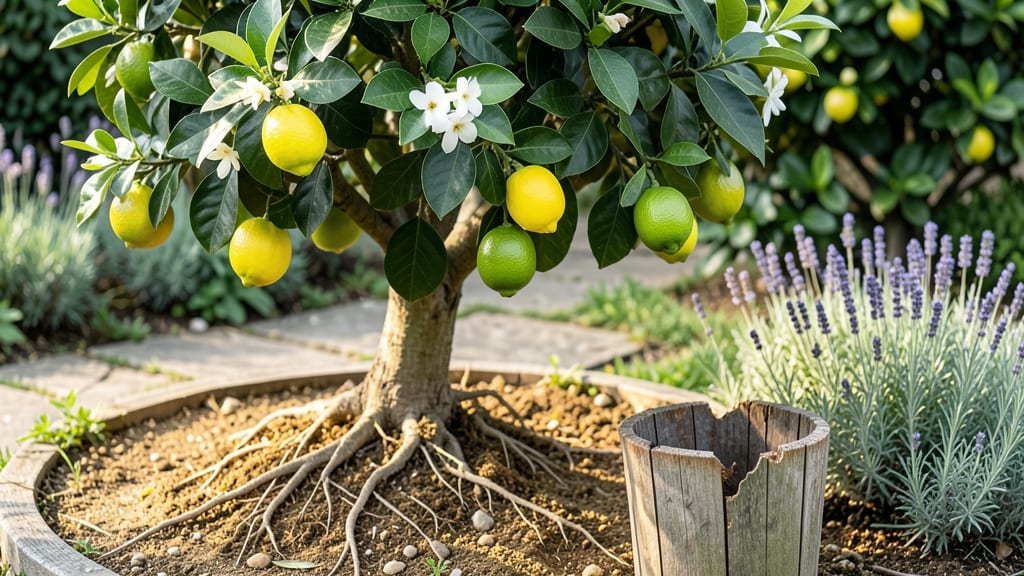
A lemon tree’s root system isn’t just underground—it’s the foundation of every juicy fruit and glossy leaf above. Understanding how those roots spread and absorb nutrients is the difference between a struggling sapling and a thriving tree that bears fruit for decades.
The deeper you dig into root care, the stronger your tree becomes.
Lemon trees develop a taproot that anchors deep, paired with fibrous lateral roots that spread wide for stability and nutrient hunting. This dual system means they need well-draining soil that stretches at least 2-3 feet deep—shallow planting leads to weak stems and poor fruit production.
The key? Loosen soil before transplanting and avoid compacted areas where roots can’t breathe.
📚 In This Guide
- What you need
- Instructions
- Tips and common mistakes
- Wrapping up and next steps
What you need
- ● Lemon tree seedlings or bare-root plants: Choose disease-resistant varieties like Meyer lemon or Eureka lemon. 1–3 plants (depending on space).
- ● Well-draining potting mix: 50% organic matter (compost, coconut coir) + 50% mineral soil (perlite, vermiculite, or sand). 10–20 gallons (varies by pot size).
- ● Containers or planting area: For pots: 5–10 gallon containers with drainage holes (terracotta or plastic).
- ● For in-ground planting: A sunny, well-draining spot with 6+ feet of spacing between trees.
- ○ Rooting hormone (optional but helpful): Cloning gel or powder (e.g., Rootone) to boost root growth.
- ● Slow-release fertilizer: Balanced 10-10-10 or citrus-specific (e.g., Miracle-Gro Shake ‘n Feed). 1–2 tbsp per plant.
- ● Mulch: 2–3 inches of organic mulch (straw, wood chips, or pine bark) to retain moisture.
- ● Garden trowel or transplant spade: For digging and minimal root disturbance.
- ● Pruning shears: To trim damaged roots or branches.
- ● Watering can or hose with gentle nozzle: 1–2 gallons per plant for initial watering.
- ○ pH testing kit (optional): Aim for 6.0–7.0 pH—lemon trees prefer slightly acidic soil.
- ● Glove and knee pads: Because every gardener deserves comfort! 😉
- ● Know your climate: Lemon trees thrive in USDA Zones 9–11. If you’re in a cooler zone, plan for container growing or winter protection.
- ● Sunlight commitment: 6–8+ hours of direct sun daily—no skimpiness!
- ● Patience: Root systems take 4–6 weeks to establish post-transplant.
How to develop a lemon tree root system for transplant success
Strong roots mean a thriving lemon tree—here’s how to cultivate them from the start.
Prepare the Root Zone Before Planting
The lemon tree’s root system thrives in well-draining soil with 3-4 inches of loose, aerated topsoil. Before transplanting, loosen the native soil to a depth of 12-18 inches using a broadfork or garden trowel. This breaks up compaction, allowing roots to penetrate deeper and access moisture more efficiently.
Work in 2-3 inches of compost mixed into the top 6 inches of soil. Lemon trees benefit from slightly acidic soil (pH 6.0-7.0), so test your soil and amend with sulfur if needed. Avoid heavy clay—roots suffocate in dense, waterlogged conditions, leading to poor nutrient uptake and stunted growth.
Air-Layer or Root Prune Established Trees
If transplanting a mature lemon tree, air-layering or root pruning 4-6 weeks before moving encourages a stronger root system. For air-layering, select a low branch, make a 1-inch vertical slit in the bark, and wrap it with damp sphagnum moss. Secure with plastic wrap and monitor moisture—roots will form in 6-8 weeks.
For root pruning, dig around the perimeter of the root ball, cutting 10-20% of the outer roots with a sharp spade. This stimulates new root growth toward the center, creating a more compact, resilient system. Water deeply after pruning to reduce stress and promote recovery.
Plant with Proper Spacing and Root Guidance
Dig a hole twice as wide as the root ball but no deeper. Lemon trees need 15-20 feet of space to avoid root competition, so plan accordingly. Gently loosen the roots if they’re circling or bound—straighten them outward to encourage outward growth rather than girdling.
Place the tree at the same depth it was growing before, ensuring the graft union (if present) sits 2-3 inches above soil level. Backfill with native soil mixed with 1 part compost, tamping lightly to eliminate air pockets. Water thoroughly to settle the soil and eliminate gaps that could dry out roots.
Mulch and Water Strategically for Root Development
Apply 3-4 inches of organic mulch (wood chips or straw) around the base, keeping it 6 inches away from the trunk to prevent rot. Mulch retains moisture, regulates soil temperature, and gradually breaks down to enrich the root zone. Replenish mulch annually to maintain coverage.
Water deeply 2-3 times per week for the first 6-8 weeks, ensuring the soil stays moist but not soggy. Lemon trees develop deep taproots, so drench the soil to 18 inches rather than frequent shallow watering. Use a moisture meter to check—roots need consistent hydration but hate waterlogged conditions.
Monitor and Adjust for Optimal Root Health
Watch for signs of stress: yellowing leaves often indicate overwatering or poor drainage, while wilting despite moist soil suggests root-bound conditions or pests. If roots circle the pot or emerge from the soil, it’s time to repot or prune aggressively to redirect growth downward.
Fertilize lightly with a balanced citrus fertilizer (6-6-6) every 6-8 weeks during the growing season. Over-fertilizing burns roots, while too little starves them. Prune suckers and watersprouts promptly—they divert energy from root development and weaken the tree’s structural integrity.
Tips & tricks for perfect lemon tree root development
Here's what nobody tells you about giving your lemon tree the strongest possible foundation before transplanting.
Soil Preparation Secret: When loosening that 12-18 inch depth in Step 1, focus on breaking up the soil horizontally as well as vertically. Use a broadfork to create horizontal channels—this mimics natural root pathways and encourages lateral root growth. Think of it like creating a three-dimensional highway system for your roots rather than just vertical tunnels. The goal is to make the soil feel like a sponge, not concrete.
Air-Layering Insight: For the 6-8 week air-layering process in Step 2, I've found that using a clear plastic wrap instead of opaque works wonders. You can actually see when roots begin forming—tiny white tendrils appear through the plastic about 3 weeks in. This visual cue lets you know the process is working without having to unwrap and check constantly. Just keep that moss consistently damp, not soggy.
Root Pruning Technique: When root pruning established trees, cut only the largest, most established roots—these are the ones that will regenerate most vigorously. Aim to remove about 10-20% of the outer roots, but focus on the thickest ones rather than making arbitrary cuts. The key is stimulating new growth toward the center of the root ball, so be strategic about which roots you remove. Watering deeply immediately after pruning helps reduce shock and encourages rapid recovery.
Planting Depth Caution: That 2-3 inch graft union placement in Step 3 is critical—any deeper and you risk suffocating the graft, any higher and you create a weak point vulnerable to disease. To check depth, use a small stake or marker next to the hole before planting. After backfilling, gently press the soil around the base to create a slight mound (about 1 inch high) that will settle naturally over time. This prevents water pooling against the trunk.
Pro Tips for Lemon Tree Root System
- Here's what nobody tells you about giving your lemon tree the strongest possible foundation before transplanting.
- Soil Preparation Secret: When loosening that 12-18 inch depth in Step 1, focus on breaking up the soil horizontally as well as vertically.
- Air-Layering Insight: For the 6-8 week air-layering process in Step 2, I've found that using a clear plastic wrap instead of opaque works wonders.
Frequently asked questions
Got questions about your lemon tree’s roots? You’re not alone! Here are answers to the most common concerns—from planting to troubleshooting—so you can nurture a thriving citrus tree with confidence.
How deep should lemon tree roots be when transplanting?
Lemon trees thrive with roots planted 12–18 inches deep and spread out horizontally. Dig a hole twice as wide as the root ball but only slightly deeper—burying the graft union (if present) too deep can cause rot. Loosen compacted soil around roots to encourage growth. Pro tip: Water thoroughly after transplanting to settle the soil!
How long does it take for lemon tree roots to establish after transplanting?
Roots typically establish in 4–8 weeks, but full strength may take up to a year. Watch for new growth (leaves or shoots) as a sign of success. Avoid heavy watering or fertilizing during this time—overdoing it can stress the tree. Pro tip: Mulch lightly to retain moisture without suffocating roots.
What are the signs of root rot in a lemon tree, and how can I fix it?
Root rot shows as yellowing leaves, wilting, or a foul smell from the soil. It’s often caused by overwatering or poor drainage. To fix it:
- Stop watering immediately and let the soil dry.
- Repot in fresh, well-draining soil (mix in perlite or sand).
- Ensure the pot has drainage holes.
Can I grow a lemon tree from a cutting, and how does its root system differ?
Yes! Root a cutting in water or moist perlite until roots form (4–6 weeks). However, cutting-grown trees have shallower, less robust roots than grafted trees. For stronger transplants, opt for nursery-bought trees with established root systems. If rooting a cutting, use a larger pot (12+ inches) to accommodate future growth.
How often should I fertilize a lemon tree, and does it affect root health?
Fertilize every 2–3 months during growing seasons (spring–fall) with a citrus-specific fertilizer (high in nitrogen, phosphorus, and potassium). Over-fertilizing can burn roots, so always follow package instructions. Pro tip: Use a slow-release fertilizer to avoid root stress from spikes in nutrients.
Do lemon tree roots need protection in cold climates?
While lemon trees are tender, their roots are most vulnerable to frost. In cold areas, mulch heavily (3–4 inches) with straw or wood chips. If potted, move the tree indoors or wrap the pot in burlap. Pro tip: Avoid mulching too early—wait until temps drop below 50°F (10°C) to prevent pests.
Wrapping up and next steps
Understanding your lemon tree’s root system is the foundation of a thriving, resilient plant—whether you’re transplanting, pruning, or nurturing new growth. From shallow fibrous roots to deep taproots, each plays a crucial role in nutrient absorption and stability. Now’s your chance to turn theory into action!
Ready to give your lemon tree the best start? Start small:
- Test your soil’s drainage with a quick DIY check.
- Observe your tree’s natural root behavior before digging.