
Pruning
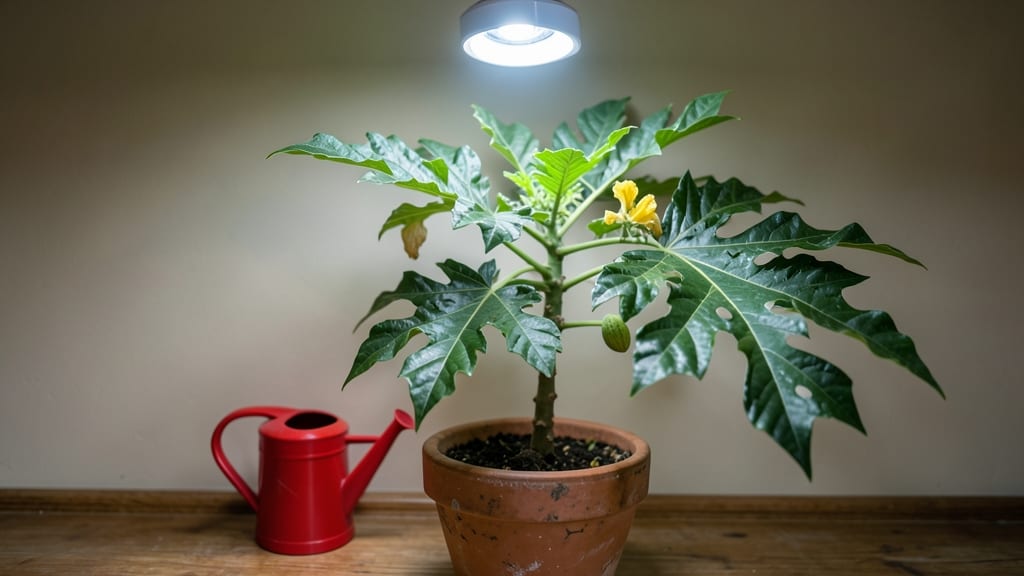
Growing a papaya tree indoors isn’t just possible—it’s a tropical escape you can enjoy year-round, even in a tiny apartment. 🌱 I’ve grown mine from a grocery store seedling, and now it produces fruit indoors with the right light, warmth, and care.
The key isn’t fancy equipment but matching its jungle needs to your space.
You’ll need a south-facing window or strong grow lights (12+ hours daily), well-draining soil, and humidity levels above 50%. Water when the top inch feels dry, and keep temperatures above 65°F—no heat lamp needed if your home stays warm.
Prune sparingly to encourage fruit production, and watch for pests like spider mites that thrive in dry indoor air.
By summer, you’ll see those signature orange fruits ripening on your kitchen windowsill—sweet, buttery, and impossible to find fresh in stores. The tree stays compact (5-6 feet tall) with regular pruning, making it perfect for balconies or sunny corners.
Just be patient: fruit takes 12-18 months from seed, but the journey is worth every leafy step.
Works for any climate, from desert apartments to humid basements—just adjust light and humidity to match your home. Here’s how to keep yours thriving indoors without the guesswork.
📚 In This Guide
- What you need
- Instructions
- Tips and common mistakes
- Wrapping up and next steps
What you need
- ● Papaya seedling or seed: Start with a healthy Carica papaya seedling (available at nurseries or online) or a fresh, viable seed (soak overnight to speed up germination).
- ● Well-draining potting mix: A blend of 60% coconut coir or peat moss, 30% perlite or pumice, and 10% compost (avoid heavy garden soil—it causes root rot!).
- ● Pot with drainage holes: A 5-gallon container (minimum) made of fabric, plastic, or terracotta (terracotta helps wick away moisture).
- ● Grow lights or sunny window: Papayas need 6–8 hours of bright, direct light daily. A full-spectrum LED grow light (20–30W) works if natural light is limited.
- ● Fertilizer: Balanced liquid fertilizer (e.g., 10-10-10 or 20-20-20) for early growth.
- ● High-potassium fertilizer (e.g., 5-10-10) once flowering begins to boost fruit development.
- ● Humidity tray or humidifier: Papayas thrive in 60–70% humidity. A pebble tray with water or a small humidifier near the plant helps.
- ● Pruning shears or sharp scissors: For trimming leggy growth or shaping the tree (sterilize blades with rubbing alcohol!).
- ● Support stake or trellis: As the tree grows (up to 6–10 feet indoors!), a bamboo stake or lightweight trellis keeps it upright.
- ● Self-watering system: A wicking bed or smart watering sensor prevents over- or under-watering.
- ● Pollination tool: A soft paintbrush to manually transfer pollen between flowers (critical for indoor fruit set!).
- ● Soil moisture meter: Ensures you’re keeping the roots consistently moist but not soggy.
- ● Mulch (e.g., bark chips): Retains moisture and regulates soil temperature in larger pots.
Step-by-step instructions for growing a thriving indoor papaya tree
Here's how to nurture a tropical fruit tree indoors—even in tight spaces.
🌱 Step 1: Select and Prepare Your Seedling
Start with a healthy 3-6 month old papaya seedling from a reputable nursery. Look for one with 4-6 true leaves and no signs of yellowing. Papayas are sensitive to cold drafts, so avoid seedling trays near windows or doors where temperatures dip below 60°F.
Before planting, soak the root ball in lukewarm water for 10-15 minutes to rehydrate roots. Gently squeeze out excess water—soggy roots can't breathe. I like to do this in the sink so I can inspect the roots for any dark, mushy spots (a sign of rot). If you see any, trim those areas with sterilized scissors before planting.
🪴 Step 2: Choose the Right Container and Soil
Papayas need room to grow, so select a 5-gallon container with drainage holes. The pot should be at least 12 inches deep—shallow pots restrict root growth and lead to stunted plants. I use a mix of 60% potting soil, 20% perlite, and 20% coconut coir for drainage and aeration.
Fill the pot halfway with your mix, then place the seedling in the center. Spread roots gently downward to encourage downward growth (not circling). Fill the remaining space with soil, pressing lightly to remove air pockets. Leave 1 inch of space between the soil surface and the pot rim—this prevents overflow during watering.
☀️ Step 3: Position for Optimal Light and Temperature
Papayas thrive in full sun, so place your tree within 3 feet of a south-facing window or under a grow light for 12-14 hours daily. If leaves start stretching toward the light (a sign of legginess), your plant needs more intensity. Rotate the pot quarter-turn weekly so the tree grows evenly.
Keep temperatures between 70-85°F—papayas are tropical and won’t tolerate drafts or sudden temperature swings. If your home runs cooler, a small space heater near the plant (but not touching) helps. Watch for brown leaf tips—this usually means dry air or low humidity. A pebble tray with water underneath the pot adds moisture without soggy roots.
💧 Step 4: Water and Fertilize for Fruit Production
Water when the top 2 inches of soil feel dry—stick your finger in to check. Papayas hate soggy roots, so always water at the base and avoid wetting leaves (this prevents fungal diseases). I use room-temperature water to avoid shocking the roots. After watering, let excess drain completely—never let the pot sit in saucers of water.
Feed your tree every 4-6 weeks with a balanced liquid fertilizer (10-10-10 or similar). When flowers appear, switch to a high-phosphorus fertilizer (like 5-10-5) to encourage fruiting. I also add a handful of worm castings to the soil surface monthly—this boosts nutrients without burning roots.
✂️ Step 5: Prune and Support for Fruit Growth
Papayas grow fast, so prune leggy or overcrowded branches to focus energy on fruit production. Use clean, sharp scissors to cut just above a leaf node (where new growth emerges). Remove any suckers (side shoots) that form at the base—they drain energy from fruit development.
As the tree grows, it may need support. If stems get top-heavy with fruit, tie them to a bamboo stake with soft twine. This prevents snapping. When flowers appear, hand-pollinate them with a small paintbrush—papayas often need help transferring pollen indoors. Watch for fruit drop if temperatures dip below 65°F or humidity gets too low.
Tips & tricks for perfect indoor papaya tree growth
Growing a papaya indoors is rewarding but tricky—here's how to avoid common pitfalls and boost your tree's success.
Seedling Selection: When choosing your 3-6 month old papaya seedling, look beyond just the leaves. Gently squeeze the stem—it should feel firm, not mushy. I've learned the hard way that soft stems often mean hidden rot. Also, check the undersides of leaves for tiny white pests (mealybugs)—they're sneaky and can spread fast. If you spot any, treat immediately with insecticidal soap before planting.
Root Care: That 10-15 minute root soak in Step 1 isn't just about hydration—it's your chance to inspect for damage. After soaking, gently separate the roots and look for any black or slimy areas. These are red flags for rot. Trim them with sterilized scissors, then rinse the roots in clean water. This simple step prevents future problems with waterlogged roots that can't absorb nutrients properly.
Light Optimization: The 12-14 hours of daily light requirement is non-negotiable, but here's what I've discovered: if your south-facing window isn't cutting it, supplement with a grow light placed 6-12 inches above the plant. I use a simple LED grow bulb on a timer for consistency. Watch for leaves stretching toward the light—this legginess means your tree needs more intensity or closer placement. Rotating the pot weekly ensures even growth, not just a lopsided plant reaching for the sun.
Temperature Troubleshooting: Maintaining that 70-85°F range can be challenging in many homes. If you notice leaves curling or dropping, your plant might be too cold. Move it closer to a warm spot (but not near vents or heaters that create drafts). For humidity, I've had great success with a pebble tray—fill a shallow tray with pebbles and water, then place the pot on top. The evaporating water adds moisture without soggy roots. Just make sure the pot sits above the water line, not in it.
Pro Tips for Indoor Papaya Tree
- Growing a papaya indoors is rewarding but tricky—here's how to avoid common pitfalls and boost your tree's success.
- Seedling Selection: When choosing your 3-6 month old papaya seedling, look beyond just the leaves.
- Root Care: That 10-15 minute root soak in Step 1 isn't just about hydration—it's your chance to inspect for damage.
Frequently asked questions
Got questions about growing a papaya tree indoors?
You’re not alone! Here are answers to the most common concerns—from pruning to fruit production—so you can troubleshoot like a pro.
How do I know when my indoor papaya tree is ready to prune?
Prune your papaya tree when it reaches 3–4 feet tall or shows signs of legginess (long, sparse stems). Focus on removing lower leaves to encourage airflow and redirect energy to fruit production. Use clean, sharp shears to avoid damaging the plant. Pro tip: Prune just above a leaf node (growth point) to promote bushier growth.
How long does it take for an indoor papaya tree to bear fruit?
With ideal care (warmth, humidity, and 12+ hours of light), your papaya tree may produce fruit in 12–18 months. Dwarf varieties like ‘Solo’ or ‘SunUp’ fruit faster (as early as 8–10 months). Patience is key—young trees prioritize growth over fruiting. Fun fact: Female flowers (larger, bulbous bases) yield fruit faster than males!
Why aren’t my papaya tree’s flowers turning into fruit?
Common culprits include lack of pollination (hand-pollinate with a soft brush), low humidity (mist leaves or use a pebble tray), or nutrient deficiencies (feed with a high-potassium fertilizer). If flowers drop early, check for temperature stress (keep it above 65°F). Quick fix: Isolate female flowers and gently shake the tree to aid pollination.
Can I grow a papaya tree indoors without a grow light?
Yes, but results vary. Place your tree near a south-facing window for 6+ hours of sunlight daily. If natural light is limited, supplement with a full-spectrum LED grow light (12–14 hours/day). Without enough light, growth slows, and fruit production stalls. Alternative: Rotate the pot weekly for even exposure.
What’s the best temperature range for an indoor papaya tree?
Ideal temps are 70–85°F during the day and 60–70°F at night. Avoid drafts (AC vents, open windows) and sudden drops below 55°F, which can shock the plant. Use a space heater in winter if needed, but keep it away from leaves. Watch for: Yellowing leaves = too cold; wilting = too hot.
How often should I repot my indoor papaya tree?
Repot every 12–18 months or when roots circle the pot’s bottom. Choose a container 2–3 inches larger with drainage holes and fresh, well-draining soil. Signs it’s time: Roots growing out of drainage holes or soil drying out too quickly. Use a terracotta pot to prevent root rot.
Wrapping up and next steps
Growing an indoor papaya tree is a rewarding journey that brings tropical vibes and fresh fruit right into your home—no matter how small your space! 🌱 With the right care, pruning techniques, and a little patience, you’ll enjoy lush foliage and sweet papayas year-round.
Whether you’re a beginner or a seasoned plant parent, this guide has given you all the tools to succeed.
Ready to take the next step? Start by monitoring your tree’s growth and adjusting care as needed—like trimming those leggy vines or repotting when roots get cozy. Soon, you’ll be harvesting your own golden fruit straight from your windowsill! 🍈✨