
Orchid Care
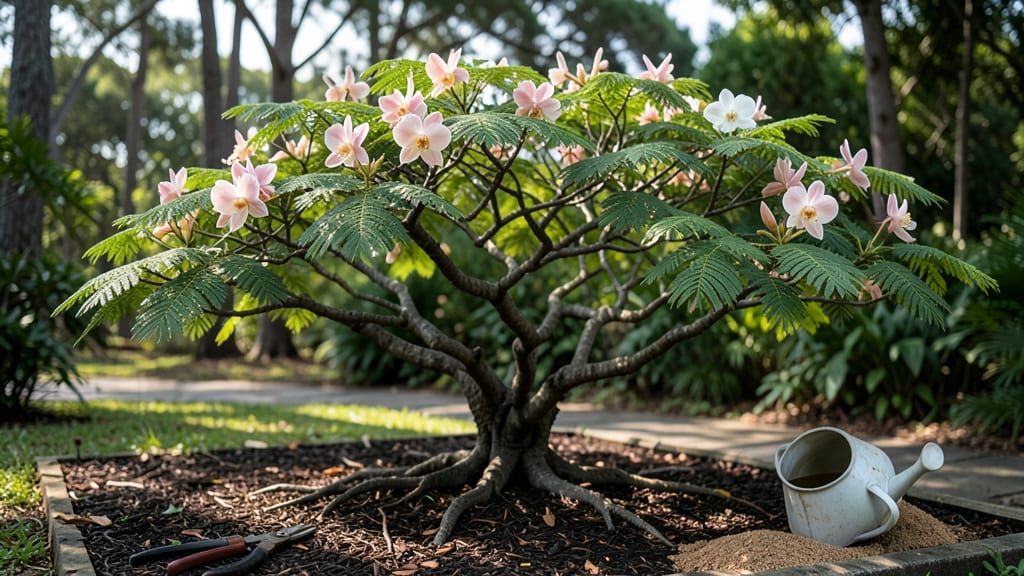
Growing a white orchid tree means adding year-round drama to your landscape with its striking white blooms that resemble delicate orchids. 🌸 I learned the hard way that these trees thrive in warm climates but can also adapt with the right care—even in containers for cooler zones.
The secret to their continuous flowering lies in understanding their light, soil, and water needs.
These trees love full sun (at least 6 hours daily) and well-draining soil—think sandy loam or a mix with perlite. In zones 9-11, they grow as shrubs or small trees, while in colder areas, treat them as container plants you can bring indoors during winter.
Planting in early spring gives roots time to establish before summer heat arrives.
Once established, your white orchid tree rewards patience with months of blooms—especially if you prune lightly after flowering to encourage new growth. The fragrant white flowers (and occasional pink or yellow varieties) attract hummingbirds, making your garden a lively hub.
Just watch for spider mites in dry heat and keep soil consistently moist but not soggy.
Whether you're planting in the ground or a pot, this tree’s adaptability makes it a foolproof choice for adding tropical flair. Start with a young tree or cutting, and in just a few seasons, you’ll have a flowering showstopper that keeps giving all year.
📚 In This Guide
- What you need
- Instructions
- Tips and common mistakes
- Wrapping up and next steps
What you need
- ● White orchid tree seeds or saplings: 1-3 (check for disease-free, healthy specimens).
- ● Well-draining potting mix: 5-10 gallons (use a blend of cactus/succulent mix + perlite or pumice for aeration).
- ● Pot or container: 1-2 (12"+ diameter for saplings, 18"+ for mature trees; ensure drainage holes!).
- ● Slow-release fertilizer: 1 (balanced 10-10-10 or orchid-specific formula).
- ● Organic mulch: 1-2 bags (e.g., pine bark or coconut coir to retain moisture).
- ● Gloves & long sleeves: 1 pair (to protect from thorns!).
- ● Trowel or small shovel: 1 (for transplanting).
- ● Spray bottle: 1 (for gentle watering of seeds/saplings).
- ● Pruning shears: 1 (sterilized, for shaping/trimming).
- ○ pH testing kit (optional): 1 (ideal soil pH: 6.0–7.0).
- ○ Support stake or trellis (optional): 1 (for young trees to encourage upright growth).
- ● Sunlight: Full sun (6+ hours daily) or bright indirect light (for indoor growing).
- ● Climate: USDA Zones 9–11 (or container-grown in cooler zones).
- ● Water source: Access to dechlorinated water (rainwater or filtered tap water).
- ● Patience: Seeds take 2–3 years to bloom; saplings may flower sooner!
Step-by-step instructions for cultivating a thriving white orchid tree
Here’s how to coax vibrant blooms from your white orchid tree—no guesswork, just proven techniques.
🪴 Step 1: Select the Right Container and Soil Mix
Start with a 12-15 inch diameter pot—white orchid trees (Bauhinia variegata) need room for their sprawling roots. Drill drainage holes if your container lacks them; stagnant water will rot roots faster than you can say "wilted leaves."
Use a well-draining cactus/succulent mix blended with 30% perlite or pumice. I swear by this combo because orchid trees hate soggy feet. Fill the pot halfway, then tap it gently on the table to settle the mix—this prevents air pockets that could strangle roots later.
☀️ Step 2: Position for Maximum Sunlight and Shelter
White orchid trees crave full sun (6+ hours daily), but they’re tropical divas who’ll scorch in brutal afternoon heat. Place yours where it gets morning sun and afternoon shade—think east-facing windows or a patio with dappled light. If outdoors, a 50% shade cloth during peak summer hours saves them from leaf burn.
Here’s the thing—these trees despise wind. If your yard’s breezy, stake the pot or tuck it against a wall. You’ll notice leaves curling or stems bending? That’s your cue to relocate or add support. Strong stems mean better blooms, and nobody wants a leggy, floppy tree.
💧 Step 3: Master the Watering Balance
Water when the top 2 inches of soil feel dry—stick your finger in; if it’s damp, wait. Overwatering is the #1 killer of orchid trees, and their roots will protest with yellow leaves or mushy stems. When you water, soak thoroughly until water drains from the bottom holes. Empty the saucer afterward—no one likes soggy shoes, and roots feel the same.
In winter, cut back to every 2-3 weeks, letting the soil dry almost completely. This mimics their natural drought tolerance and primes them for spring’s big bloom show. Pro tip: Use room-temperature water—cold shocks roots, and nobody wants a grumpy plant.
✂️ Step 4: Prune for Shape and Encourage Blooms
After flowering, trim back one-third of the current year’s growth to a leaf node or bud. This isn’t about size—it’s about redirecting energy into next season’s blooms. Use clean, sharp pruners (sterilize with rubbing alcohol) to avoid spreading disease. You’ll see new shoots emerge within 4-6 weeks, signaling the tree’s ready to bloom again.
Remove any dead, diseased, or crossing branches—these compete for nutrients and weaken the tree. If a branch looks sad but not dead, wait a week. Sometimes they stage a comeback. But if it’s truly gone, snip it off. No sentimentality here—strong structure = more flowers.
🌿 Step 5: Feed for Year-Round Color
Start fertilizing in early spring with a balanced 10-10-10 or 20-20-20 liquid fertilizer, diluted to half strength. Feed every 4-6 weeks until fall, then switch to a low-nitrogen, high-phosphorus formula (5-10-10) to push blooming. Overfeeding in winter just encourages leafy growth—you want flowers, not foliage.
Here’s where it gets fun: foliar feeding with seaweed extract every month boosts bloom intensity. Spray it on leaves in the morning so it doesn’t sit wet overnight. You’ll notice brighter whites and more abundant clusters—trust me, your tree will thank you with a showstopper display.
Tips & tricks for cultivating a thriving white orchid tree
These insider secrets will help you avoid common pitfalls and maximize those stunning white blooms year after year.
Container and Drainage: When selecting your 12-15 inch pot, look for one with pre-drilled drainage holes—if not, drill them yourself using a 1/4-inch bit. I've seen orchid trees suffer from root rot simply because owners skipped this step. For extra insurance, place a layer of broken terracotta pots at the bottom before adding your soil mix. This creates additional air pockets that prevent waterlogging, which is especially critical during our rainy season.
Light Balance Trick: The morning sun and afternoon shade recommendation isn't just about avoiding leaf burn—it's about creating the perfect light gradient. If you notice new growth leaning toward the light source, it's time to rotate your pot 90 degrees. This ensures even growth and prevents that sad, lopsided look. For indoor growers, supplement with a full-spectrum grow light for 12-14 hours daily during winter months when natural light is scarce.
Watering Technique: The finger test for watering (checking top 2 inches of soil) works, but here's what nobody tells you—press your finger about 1 inch deep instead of just skimming the surface. The soil at this depth gives you a more accurate reading of the tree's true moisture needs. Also, always water at the base rather than overhead—this prevents fungal issues and keeps those pristine white blooms looking their best. I've found that using a watering can with a narrow spout gives me better control than a hose attachment.
Pruning Insight: When you're trimming back that one-third of current growth after flowering, look for the first set of leaves that appear healthy and fully formed when moving upward from the base. Cutting just above this node gives you the best chance for vigorous new growth. I've seen gardeners make the mistake of cutting too close to the trunk, which can leave unsightly stubs and actually reduce future blooming potential. Remember, you're not just shaping your tree—you're directing its energy toward next season's flowers.
Pro Tips for White Orchid Tree
- These insider secrets will help you avoid common pitfalls and maximize those stunning white blooms year after year.
- Container and Drainage: When selecting your 12-15 inch pot, look for one with pre-drilled drainage holes—if not, drill them yourself using a 1/4-inch bit.
- Light Balance Trick: The morning sun and afternoon shade recommendation isn't just about avoiding leaf burn—it's about creating the perfect light gradient.
Frequently asked questions
When does a white orchid tree bloom, and how can I encourage more flowers?
A white orchid tree typically blooms in spring and summer, but with the right care, you can coax flowers year-round! Ensure it gets full sun (6+ hours daily), well-draining soil, and a balanced fertilizer (like 10-10-10) every 4-6 weeks during growing season. Prune spent blooms to redirect energy to new growth—just avoid heavy pruning in winter.
How cold-hardy is a white orchid tree, and what’s the best way to protect it in winter?
Most white orchid trees tolerate temps down to 20–25°F (-6 to -4°C), but younger trees or extreme cold may need help. Mulch the base with straw or bark, wrap the trunk in burlap, and avoid watering once temps drop. If you’re in a frost-prone zone, consider container growing so you can move it indoors during winter.
Can I grow a white orchid tree in a pot, and what’s the best soil mix?
Pots are great for controlling soil and mobility. Use a fast-draining mix like 60% cactus/succulent soil, 20% perlite, and 20% orchid bark. Add a 1-inch layer of gravel at the bottom to prevent root rot. Repot every 2–3 years in spring, and choose a container 10–15% larger than the root ball for stability.
Why aren’t my white orchid tree’s leaves turning green, and how do I fix yellowing?
Yellow leaves often signal overwatering, nutrient deficiency, or poor drainage. Check the soil—it should dry out between waterings. If leaves are pale or stunted, feed with a low-nitrogen fertilizer (like 5-10-10). For brown, crispy edges, increase humidity (mist leaves or use a pebble tray) or move the tree away from harsh afternoon sun.
Are there any non-toxic alternatives to white orchid trees for pet owners?
If you’re worried about pets, white orchid trees (Bauhinia variegata) are non-toxic to cats and dogs—but always monitor for overindulgence. For extra safety, consider pet-friendly alternatives like Cassia fistula (golden shower tree) or Lagerstroemia indica (crape myrtle), which also offer stunning blooms and are low-maintenance.
Wrapping up and next steps
The white orchid tree is a stunning addition to any garden, offering year-round beauty with the right care. By mastering its bloom timing—through strategic pruning, light exposure, and seasonal adjustments—you’ll unlock a cascade of elegant white blooms that brighten any space.
Whether you’re a seasoned grower or just starting, patience and attention to detail will reward you with a thriving, show-stopping tree. 🌸
Ready to transform your garden? Start small—plant one today and observe its progress! Track your orchid tree’s growth, experiment with the tips shared, and soon, you’ll be sharing your blooming success with fellow plant enthusiasts. Happy growing! 🌱