
Pruning
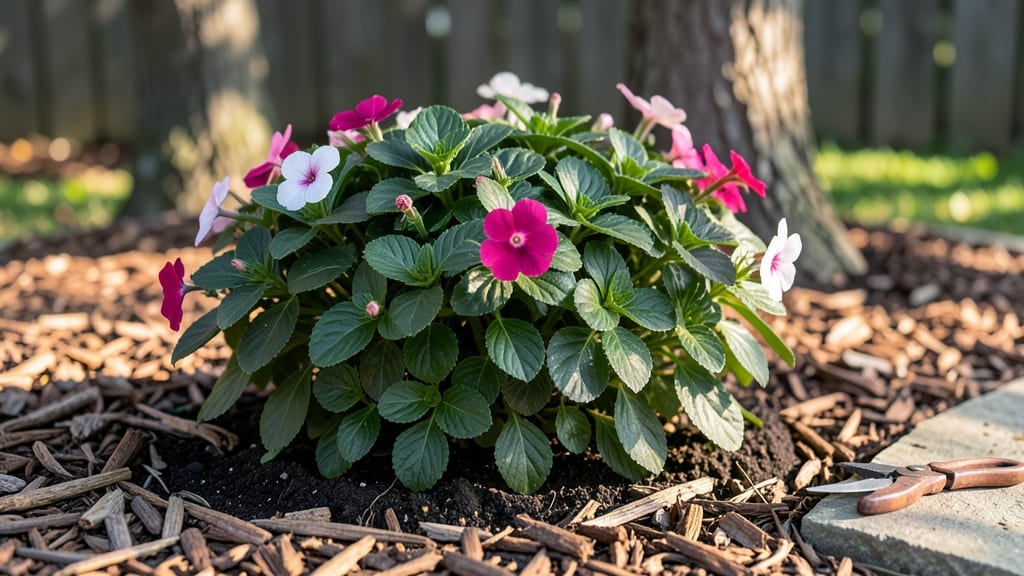
Planting impatiens around trees creates a lush, shadow-dancing carpet that never lets your yard look dull. The secret lies in their shade tolerance and vibrant blooms—perfect for transforming bare tree bases into year-round color.
I’ve used them to hide mulch edges and soften the stark lines of oak and maple trunks, and the difference is striking.
The key is spacing them 8–12 inches apart so they fill in quickly without competing for light. A 2–3 inch layer of compost mixed into the soil gives them the nutrients they crave, and a light mulch keeps roots cool.
Pair them with hostas or ferns for a layered look that thrives in dappled shade.
By late summer, you’ll have a dense, blooming groundcover that hides weeds and adds depth to your landscape. The flowers stay bright even in partial shade, and the foliage stays lush through fall—no fading edges in sight. Maintenance is minimal: just water when the top inch of soil dries out.
Works for any tree with partial shade, from young saplings to mature oaks. The only rule? Don’t let them dry out, and you’ll have a low-maintenance, high-impact border that lasts all season.
📚 In This Guide
- What you need
- Instructions
- Tips and common mistakes
- Wrapping up and next steps
What you need
- ● Impatiens plants: 10–20 plants (depending on tree size; opt for Impatiens walleriana or Impatiens hawkeri for best results).
- ● Slow-release fertilizer: 1–2 lbs of 10-10-10 or 14-14-14 blend (for nutrient-rich soil).
- ● Mulch: 2–3 bags of organic mulch (pine bark or shredded leaves work well).
- ● Pruning shears: Sharp, bypass-style shears (for trimming and shaping).
- ● Garden gloves: A pair of durable, cut-resistant gloves (to protect your hands).
- ● Watering can or hose with a gentle spray nozzle: For even moisture distribution.
- ● Transplanting spade or trowel: For digging small holes (6 inches deep).
- ○ Soil amendment (optional): 1–2 bags of peat moss or compost to improve drainage.
- ○ Edging tool (optional): For creating a clean border around the tree base.
- ○ Plant stakes or landscape pins (optional): To secure young plants until established.
- ○ Slow-release plant food tabs (optional): For extra nourishment during hot months.
- ○ Shade cloth (optional): Lightweight fabric to protect seedlings from harsh afternoon sun.
How to plant impatiens around trees for long-lasting color
Here's the simple approach I use to create vibrant, low-maintenance borders that thrive all season.
Prepare the Planting Area
Choose a site that gets morning sun to partial afternoon shade—impatiens wilt in hot afternoon rays. Start by marking a 12-inch-wide band around the tree trunk, extending outward to your desired width. This creates a clean, defined space without competing with the tree's roots.
Use a garden fork to loosen the soil to a depth of 6 inches, breaking up any compacted layers. Impatiens prefer well-draining soil, so if your area feels dense, mix in 2 inches of compost to improve texture. Avoid planting directly against the trunk—keep a 3-inch gap to prevent root competition and allow air circulation.
Plant Impatiens in Clusters
Dig small holes 12 inches apart along your marked band, spacing them to create a natural, flowing edge. The holes should be just deep enough to accommodate the root ball—typically twice the width of the container the impatiens came in. Gently remove plants from their pots and tease the roots if they're circling tightly.
Place each plant so the top of the root ball sits just below soil level. Fill the hole with soil, pressing lightly to eliminate air pockets. Water deeply right after planting to help settle the roots. Here's the thing—impatiens thrive in moisture, so mulch the area with 2 inches of shredded bark mulch to retain humidity and suppress weeds.
Maintain for Continuous Blooms
Water impatiens every 2-3 days during dry spells, keeping the soil evenly moist but not soggy. You'll know it's right when the top inch feels damp but not dripping. Deadhead spent blooms weekly by pinching off faded flowers with your fingers—this encourages nonstop new growth. I promise, a little effort here keeps them flowering until frost.
Fertilize lightly every 4-6 weeks with a balanced, water-soluble fertilizer (like 10-10-10) mixed at half strength. Too much fertilizer leads to lush foliage but fewer blooms. Watch for aphids on new growth—spray with a soapy water solution if you spot clusters of tiny insects. Impatiens are tough once established, but they'll reward you with vibrant color all season if you keep them happy.
Winter Care for Year-Round Color
In colder climates, impatiens are annuals, but you can extend their life by cutting back stems to 2 inches above the ground after the first frost. Cover the base with 4-6 inches of mulch to protect roots from freezing. In mild winters, they may regrow from the base in spring—just trim back any dead foliage and feed lightly when new growth appears.
For true year-round color, replace spent plants in early spring with new impatiens. Choose varieties like SunPatiens for heat tolerance or classic New Guinea impatiens for bold, long-lasting blooms. The key is keeping the soil moist and the area weed-free—once established, these plants practically take care of themselves.
Tips & tricks for planting impatiens around trees
These simple strategies will help you create a thriving, colorful border that lasts all season without fading or competition.
Soil Preparation Secret: Before planting, test your soil moisture by squeezing a handful—if it doesn't crumble easily, your impatiens will struggle. The 6-inch depth you loosen should feel like a damp sponge, not hard clay. If your area drains poorly, mix in an extra inch of compost to improve aeration while keeping that 3-inch gap from the tree trunk. This prevents root competition while ensuring proper drainage.
Planting Depth Matters: When placing impatiens in their holes, the top of the root ball should sit just below soil level—never above it. Pressing lightly after filling helps eliminate air pockets that could strangle new roots. The 12-inch spacing between plants creates airflow that prevents fungal issues, while the 2 inches of mulch retains moisture without smothering the plants.
Watering Wisdom: The "every 2-3 days" guideline assumes average summer conditions. During heatwaves, check soil moisture daily—stick your finger an inch deep. If it's dry, water thoroughly until water runs out the bottom. Mulch helps retain this moisture, but don't let it pile against stems. A light soapy water spray every 2 weeks keeps aphids at bay without harming the plants.
Pro Tips for Impatiens Around Tree
- These simple strategies will help you create a thriving, colorful border that lasts all season without fading or competition.
- Soil Preparation Secret: Before planting, test your soil moisture by squeezing a handful—if it doesn't crumble easily, your impatiens will struggle.
- Planting Depth Matters: When placing impatiens in their holes, the top of the root ball should sit just below soil level—never above it.
Frequently asked questions
Got questions about keeping impatiens thriving around trees? You’re not alone! Here are answers to the most common concerns—from planting to upkeep—so you can enjoy that lush, year-round color without stress.
When is the best time to plant impatiens near trees?
Plant impatiens in early spring after the last frost, or in late summer for a fall display. Avoid planting in extreme heat or cold—roots need time to establish before competing with tree roots for water. Pro tip: Amend the soil with compost to improve drainage, since impatiens hate soggy feet!
Why do my impatiens look wilted or yellow near the tree?
Wilted or yellowing impatiens often signal root competition (from the tree) or poor drainage. Check the soil—if it’s dry, water deeply but infrequently. If it’s soggy, improve drainage with mulch or raised beds. Move plants 3–5 feet from the tree trunk if roots are encroaching.
Can I use impatiens as ground cover under large shade trees?
Impatiens thrive in partial to full shade, making them perfect for tree bases. Just ensure the area gets at least 4–6 hours of indirect light daily. Pair them with ferns or hostas for a layered, low-maintenance look. Avoid deep shade (like under dense evergreens) where they’ll struggle.
How do I keep impatiens blooming all season around my tree?
Deadhead spent blooms weekly to encourage new flowers. Feed with a balanced, water-soluble fertilizer every 4–6 weeks, and mulch with 2–3 inches of organic material (like shredded bark) to retain moisture. In hot climates, provide afternoon shade to prevent stress.
What are some low-maintenance alternatives to impatiens for tree bases?
If impatiens prove tricky, try these shade-tolerant, tree-friendly options:
- Hosta – Drought-tolerant varieties like ‘Halcyon’ or ‘Francee’.
- Ferns (e.g., Japanese painted fern) – Thrives in dry shade.
- Heuchera (Coral Bells) – Adds color and texture with minimal care.
- Liriope or Mondo Grass – Great for edges and erosion control.
Wrapping up and next steps
Planting impatiens around trees is a game-changer for adding vibrant, year-round color to your garden—without the stress of fading edges! 🌿 With the right spacing, soil prep, and care, these cheerful blooms will thrive while keeping your landscape lush and dynamic.
Whether you’re a seasoned gardener or just starting out, this approach makes low-maintenance beauty achievable.
Ready to transform your space? Grab your gloves, pick out your favorite impatiens varieties, and start planting! For extra tips, check out our pruning guide to keep your garden looking its best all season long.