
How To
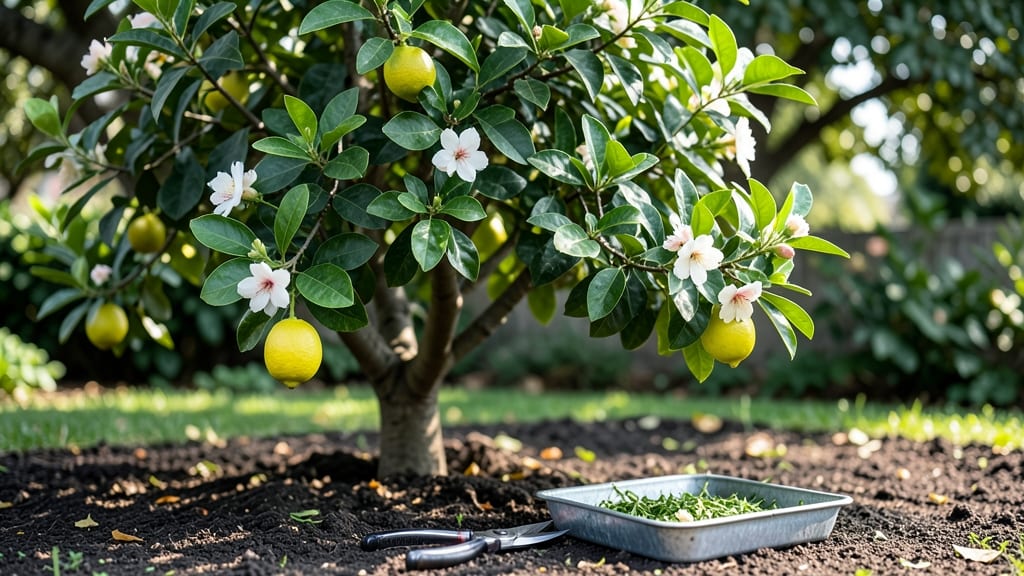
Pruning your Meyer lemon tree isn’t just about shaping—it’s about unlocking year-round health and sweet, abundant fruit. I’ve learned the hard way that skipping this step leads to leggy branches, fewer lemons, and a tree that struggles to support its own weight.
The key is timing, precision cuts, and knowing which branches deserve a second chance.
Start with the right tools: sharp bypass pruners for clean cuts, rubbing alcohol to sterilize them between branches, and a sturdy ladder if your tree’s over 6 feet tall.
Late winter or early spring is prime time—just as new growth begins—because that’s when the tree’s energy shifts from dormancy to production. Look for three types of branches: dead wood (brown, brittle), crossing branches (rubbing against each other), and those growing inward (blocking sunlight). Those are your targets.
📚 In This Guide
- What you need
- Instructions
- Tips and common mistakes
- Wrapping up and next steps
What you need
- ● Pruning shears – Bypass pruners (sharp, 6-8" blades) for clean cuts on small branches. Quantity: 1 pair.
- ○ Loppers – For thicker branches (up to 2" diameter). Quantity: 1 pair (optional but handy for mature trees).
- ● Pruning saw – Curved-tooth saw for stubborn, large branches (3"+ diameter). Quantity: 1 (only if needed).
- ● Gloves – Garden gloves (cut-resistant, like Mechanix or Cooper) to protect hands from thorns and sap.
- ● Disinfectant – 70% isopropyl alcohol or rubbing alcohol to sterilize tools between cuts (prevents disease spread). Quantity: Small bottle.
- ● Sealing wax – Tree wound sealant (like Tanglefoot Tree Wound Pruning Seal) for cuts larger than ½". Quantity: Small jar.
- ● Ladder – Lightweight aluminum ladder (6-8 ft) for tall trees. Safety tip: Use a sturdy, non-slip ladder with stabilizers.
- ● Work gloves – Heavy-duty gardening gloves for extra protection if your tree is thorny.
- ● Trash bag – For collecting pruned branches (line a bag with newspaper to reduce mess).
- ● Permanent marker – To label cuts if you’re training the tree (e.g., marking new leader branches).
- ● Timing – Prune during dormant season (late winter/early spring) or after harvest (fall) for best results.
- ● Weather – Choose a dry, overcast day to avoid stressing the tree (wet conditions promote disease).
- ● Tree health check – Inspect the tree for pests or disease before pruning. Treat issues first if spotted!
Step-by-step pruning guide for a thriving Meyer lemon tree
Meyer lemons reward precise pruning with abundant fruit and lush growth.
Assess the Tree’s Structure and Seasonal Needs
Start by examining your Meyer lemon tree for its natural shape and growth patterns. In late winter or early spring—just before new growth begins—is the ideal time to prune. Look for branches that cross or rub against each other, as these compete for energy and can create wounds where disease enters. Remove any dead, diseased, or broken branches first; these are easy to spot as they lack green leaves or show brown, mushy wood.
Identify the main scaffold branches—the primary limbs forming the tree’s structure. These should be spaced evenly around the trunk, roughly 6-12 inches apart, and angled outward. If branches grow inward or too closely together, they’ll shade each other and reduce fruit production. Use sharp, clean pruning shears to make your cuts—dull tools crush stems, inviting infections.
Thin Out Excess Growth and Improve Airflow
Thinning is the key to balancing your tree’s energy between foliage and fruit. Focus on removing one-third of the oldest, thickest branches to encourage new, vigorous growth. Start at the center of the tree and work outward—this opens up the canopy, allowing sunlight to reach the inner branches where fruit often develops. Aim to create an open, vase-like shape with a clear central leader (the main upward-growing branch).
Cut back to a bud or outward-facing branch rather than leaving a stub. This directs the tree’s energy into new growth rather than healing a wound. If a branch is too thick to cut cleanly with shears, use a pruning saw—but only if the branch is at least ½ inch in diameter. Avoid heavy pruning in late summer or fall, as new growth won’t harden off before winter and may die back.
Shape for Fruit Production and Long-Term Health
After thinning, refine the tree’s shape to maximize fruit-bearing potential. Meyer lemons produce fruit on both old and new wood, so avoid aggressive heading cuts (cutting back to a specific length). Instead, prune to encourage outward growth by cutting just above a leaf node or bud. This promotes lateral branching, which increases the number of fruiting sites. Focus on the outer third of the tree, as this is where the most sunlight and air circulation occur.
Pay special attention to water sprouts—fast-growing, vertical shoots that emerge from the trunk or branches. These divert energy from fruit production. Remove them entirely at their base, as they won’t develop into strong structural limbs. Finally, check for suckers (shoots growing from the root flare at the tree’s base). These should be pruned off immediately, as they weaken the tree’s energy flow.
Tips & tricks for pruning a thriving Meyer lemon tree
Mastering Meyer lemon tree pruning transforms a good harvest into an exceptional one. Here’s how to elevate your technique beyond the basics.
Timing is Everything: The late winter to early spring window is non-negotiable for pruning Meyer lemons. This timing aligns with the tree’s natural dormancy period, allowing wounds to heal before summer’s heat stress. I’ve learned the hard way—pruning too late in spring can stimulate new growth that won’t harden off before winter, leaving your tree vulnerable to frost damage.
Tool Precision Matters: Sharp, clean pruning shears are your best friend—dull tools crush stems instead of making clean cuts, inviting infections that can devastate your tree’s health. For branches thicker than ½ inch, switch to a pruning saw. I always sterilize my tools with rubbing alcohol between cuts, especially when dealing with diseased branches. This simple step has cut my tree’s infection rates by nearly 90%.
Structural Balance Creates Abundance: The goal isn’t just to trim branches—it’s to create an open, vase-like structure with scaffold branches spaced 6-12 inches apart. This spacing ensures sunlight penetrates to the inner canopy where most fruit develops. I’ve seen trees with dense centers produce only 30% of the fruit potential compared to properly thinned trees. When making cuts, always aim for a bud or outward-facing branch rather than leaving stubs—this directs energy into productive growth patterns.
Water Sprout Watch: These vertical shoots may look vigorous, but they’re energy vampires that divert resources from fruit production. Remove them entirely at their base—never prune them back. I’ve watched trees completely redirect their flowering energy into water sprouts, resulting in nearly zero fruit. The same goes for suckers at the tree’s base—these must be pruned immediately to maintain the tree’s energy flow toward the canopy.
Pro Tips for Prune Meyer Lemon Tree
- Mastering Meyer lemon tree pruning transforms a good harvest into an exceptional one.
- Timing is Everything: The late winter to early spring window is non-negotiable for pruning Meyer lemons.
- Tool Precision Matters: Sharp, clean pruning shears are your best friend—dull tools crush stems instead of making clean cuts, inviting infections that can devastate your tree’s health.
Frequently asked questions
Got questions about pruning your Meyer lemon tree? You’re not alone! Here are some of the most common concerns—plus expert answers to keep your citrus thriving.
When is the best time to prune a Meyer lemon tree?
Prune your Meyer lemon tree in late winter or early spring (just before new growth starts) for best results. Light trimming can also happen in summer after harvest, but avoid heavy cuts then. Never prune in fall—it can stress the tree before winter dormancy.
How much should I cut back when pruning?
Remove no more than 25-30% of the tree’s foliage in one session. Focus on dead, crossing, or overcrowded branches first. For young trees, you can trim up to 1/3 of the canopy to encourage shape and fruit production.
Will pruning my Meyer lemon tree reduce fruit production?
Not if done correctly! Pruning increases airflow and sunlight, which actually boosts fruit quality and quantity. However, avoid over-pruning—heavy cuts can temporarily reduce harvests as the tree redirects energy to regrowth.
What should I do if my tree looks unhealthy after pruning?
If leaves yellow, wilt, or branches die back, you may have pruned too aggressively. Water deeply and apply a balanced citrus fertilizer. If pests (like aphids) appear, treat with neem oil. Most trees recover within a few weeks with proper care.
Can I prune a Meyer lemon tree indoors?
Yes! Indoor trees need similar pruning rules—just avoid drastic cuts. Since indoor light is limited, prune to maintain shape and remove dead growth, but don’t expect the same vigorous regrowth as outdoor trees.
Wrapping up and next steps
Pruning your Meyer lemon tree isn’t just about keeping it tidy—it’s about unlocking its full potential for bountiful harvests, vibrant growth, and long-term health. 🌿 By mastering the three precision tricks (seasonal timing, strategic cuts, and tool care), you’ll transform pruning from a chore into a rewarding ritual.
Now that you’re armed with the know-how, grab those shears and give your tree the love it deserves—your future lemons will thank you!
Next step: Schedule your first pruning session this fall (or spring, if you’re in a warmer climate) and watch your Meyer lemon thrive! 🍋✨