
Pruning
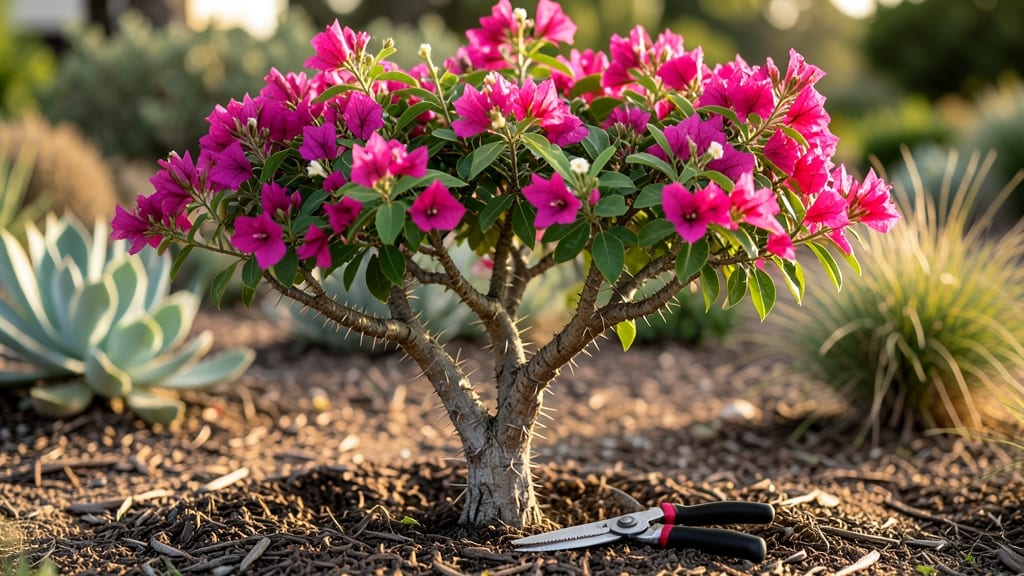
Learn how to prune bougainvillea into a tree with just three strategic cuts—no fancy tools or years of experience needed. 🌿 I’ve shaped mine into a grand, multi-trunked specimen over two seasons, and the secret lies in patience. and precise pruning during the right window.
The key isn’t hacking away but guiding growth with intentional snips that encourage thicker stems and a balanced canopy.
You’ll need sharp bypass pruners, a sturdy ladder (for taller plants), and a clear vision of your tree’s future—whether a single trunk with sweeping branches or a braided trunk for artistic flair.
Timing matters too: prune right after flowering in late winter or early spring when new growth is about to burst. This is when bougainvillea is most cooperative, sending energy into thickening stems instead of spreading vines.
After your cuts, the transformation begins. New shoots will sprout from the cut points, and within a few months, you’ll see thicker stems forming. Train the strongest shoots to become your main trunks by tying them to stakes, and let the rest fill out as branches.
The result? A bold, sculpted focal point that blooms with vibrant color year after year—no more tangled mess, just structured beauty.
Common mistakes include cutting too late in the season (which stunts growth) or over-pruning (which weakens the plant). Start small, observe how your bougainvillea responds, and adjust next year.
With each pruning, you’ll refine the shape until it’s exactly what you envisioned—a living work of art that turns heads in your landscape.
📚 In This Guide
- What you need
- Instructions
- Tips and common mistakes
- Wrapping up and next steps
What you need
- ● Sharp bypass pruners – Clean, sterilized, and well-oiled (for clean cuts on smaller stems).
- ● Pruning saw – For thicker stems (½ inch or larger)—look for a curved blade for precision.
- ○ Hand pruners (felco or similar) – For detailed trimming (optional but helpful for finer cuts).
- ● Rubbing alcohol (70% or higher) – 1 small bottle to sterilize tools between cuts and prevent disease.
- ● Garden gloves – Heavy-duty, cut-resistant (thorns are no joke!).
- ● Ladder or sturdy step stool – Reach those high branches safely! (Check stability first.)
- ○ Twine or zip ties – Small roll to secure branches during pruning (optional but handy).
- ● Disposable pruning bags – 1-2 large bags to collect trimmings (keeps your workspace tidy!).
- ● Horticultural oil or pruning sealant – Small bottle to coat larger cuts and prevent sap loss (speeds up healing).
- ● Plant tie or soft wire – For shaping young branches into a tree form.
- ● Spray bottle with water – Mist cuts lightly to reduce sap oozing.
- ● Sketch or reference photo – Of your desired tree shape (helps visualize cuts!).
- ● Safety goggles – Protects eyes from debris (especially if using a saw).
Step-by-Step guide to pruning bougainvillea into a tree
Here's the simple method I use to transform wild bougainvillea vines into striking, tree-like shapes.
🌿 Step 1: Choose Your Main Trunk and Remove Lower Growth
Start by selecting the strongest, straightest stem as your main trunk—this will be the focal point of your tree. Use sharp, clean pruners to cut away any lower branches within the first 12-18 inches of the ground. These lower branches compete with your main trunk for energy and will only create a bushy, unstructured shape.
Make your cuts at a 45-degree angle, about ¼ inch above a leaf node (the bump where leaves or branches grow). This encourages new growth to sprout from the right spot. If you see any weak or crossing branches on your main trunk, remove them too—they’ll just tangle and weaken your structure.
✂️ Step 2: Shape the Upper Canopy with Three Key Cuts
Now focus on the top third of your bougainvillea. Look for three sturdy, outward-facing branches that can form your tree’s canopy. These should be spaced evenly around the trunk, like spokes on a wheel. If you don’t have three strong branches yet, wait until you do—rushing leads to lopsided growth.
Cut back any branches that grow inward or cross over others. For the three you keep, trim them to about 12-18 inches long, leaving a few leaf nodes at the end. This forces the plant to branch out rather than grow long, leggy stems. You’ll see new shoots forming within 2-3 weeks—these will fill in your canopy beautifully.
☀️ Step 3: Maintain Balance and Encourage Fullness
After your initial cuts, bougainvillea will send out new growth from the nodes you left. Here’s where the magic happens: pinch back any new shoots that grow too long or straggly. When they reach about 6 inches, snip just above a leaf node to encourage bushier growth. This keeps your tree compact and full.
Watch for any branches that start to grow too close to the trunk—these can create a dense, unnatural cluster. Thin them out by cutting back to a side branch or node. Bougainvillea blooms on old wood, so avoid heavy pruning once flowers appear. Instead, focus on shaping new growth to maintain the tree form.
⏰ Step 4: Time Your Pruning for Best Results
Prune bougainvillea in late winter or early spring, just before new growth begins. This gives the plant plenty of time to recover and fill out before summer heat sets in. Avoid heavy pruning in fall—you’ll cut off next year’s blooms. If you notice leggy growth during the growing season, do a light trim to encourage branching, but don’t overdo it.
Here’s the thing—bougainvillea is forgiving. If you miss a pruning window, don’t stress. Just focus on shaping the strongest branches and thinning out the rest. Over time, your tree will take shape, and you’ll see those vibrant bracts (the colorful "flowers") filling in beautifully along your branches.
Tips & tricks for perfect bougainvillea tree pruning
Transforming bougainvillea into a tree shape takes patience, but these simple tricks will help you avoid common mistakes and create a stunning focal point. Here's what I've learned from years of shaping these vibrant plants.
Tool Selection: Invest in a good pair of bypass pruners for clean cuts—avoid dull or anvil-type pruners that crush stems. I also keep a small pair of sharp scissors for pinching back new growth. Sterilize your tools with rubbing alcohol between cuts to prevent spreading disease, especially when working with multiple branches. This keeps your bougainvillea healthy while you shape it.
Visual Reference: Before making any cuts, study your bougainvillea's natural growth pattern. Imagine your final tree shape—this mental picture helps guide your cuts. In Step 1, when removing lower branches within the first 12-18 inches, visualize how the trunk will stand alone. For the canopy in Step 2, picture three main branches radiating outward like spokes. This mental mapping prevents awkward gaps and uneven growth patterns that can happen when pruning blindly.
Growth Timing: The 2-3 week window mentioned for new shoots to appear after your initial cuts is actually a great opportunity to plan ahead. If you're working toward a specific event or season, time your pruning so you'll see those vibrant bracts (the colorful "flowers") just when you want them. For example, if you want summer blooms, start pruning in late winter to give the plant time to recover and fill out before the heat arrives. This timing strategy ensures your tree will be at its peak when you need it most.
Pruning Recovery: After your initial shaping, bougainvillea may look sparse and vulnerable. That's normal! The plant needs time to adjust. In Step 3, when pinching back new shoots at 6 inches, be patient—it can take 4-6 weeks for the plant to fully recover its density. During this time, keep the soil consistently moist but not soggy, and provide afternoon shade if your climate gets extremely hot. This care routine helps your bougainvillea tree bounce back stronger than before.
Pro Tips for Prune Bougainvillea Into A Tree
- Transforming bougainvillea into a tree shape takes patience, but these simple tricks will help you avoid common mistakes and create a stunning focal point.
- Tool Selection: Invest in a good pair of bypass pruners for clean cuts—avoid dull or anvil-type pruners that crush stems.
- Visual Reference: Before making any cuts, study your bougainvillea's natural growth pattern.
Frequently asked questions
Got questions about transforming your bougainvillea into a stunning tree shape? You’re not alone—here are answers to the most common concerns to help you prune with confidence!
When is the best time to prune bougainvillea into a tree?
Prune your bougainvillea in early spring (just before new growth starts) or late winter for the best results. Avoid pruning in fall or winter, as cold weather can stress the plant. If you must prune outside this window, do it after a heatwave to encourage rapid recovery.
How do I know which branches to cut to create a trunk?
Look for the thickest, sturdiest stems near the base—these will form your trunk. Cut back all other branches to 2-3 inches above a leaf node (where new growth emerges). Leave 3-5 main branches spaced evenly around the trunk for a balanced tree shape.
What if my bougainvillea doesn’t bloom after pruning?
Bougainvillea blooms on new growth, so pruning too late in the season (after summer) may delay flowers. If it’s not blooming, check for:
- Sunlight: Needs 6+ hours of direct sun daily.
- Water: Overwatering causes root rot—water only when soil is dry.
- Fertilizer: Use a low-nitrogen, high-phosphorus fertilizer in spring.
Can I prune bougainvillea into a tree if it’s already overgrown?
Yes! Even if your bougainvillea is a wild tangle, you can reshape it. Start by removing ⅓ of the oldest, woody branches first, then focus on sculpting the trunk. Use sterilized shears to make clean cuts at 45-degree angles. It may take 2-3 pruning sessions over a year to achieve your dream tree.
What should I avoid when pruning bougainvillea into a tree?
Avoid these common mistakes:
- Pruning too aggressively—never cut more than ⅓ of the plant at once.
- Leaving stubs—always cut just above a leaf node (never in the middle of a branch).
- Using dull tools—sharp shears prevent tearing and disease.
- Ignoring pests—inspect for aphids or mealybugs before pruning.
Wrapping up and next steps
Transforming your bougainvillea into a stunning tree shape is easier than you think—just three strategic cuts can make all the difference! 🌳 With patience and the right technique, you’ll enjoy a showstopping focal point in your garden that blooms beautifully year after year.
Now that you’ve mastered the basics, why not take it further?
🌟 Next Steps to Elevate Your Bougainvillea:
- Experiment with shapes: Try a tapered trunk or branching tiers for a more dramatic look.
- Feed & water wisely: Boost growth with a balanced fertilizer after pruning for lush, vibrant blooms.
- Share your progress: Snap photos and tag us—we’d love to see your bougainvillea masterpiece!
Your green thumb is already doing great things—keep nurturing that creativity! 🌺