
Pruning
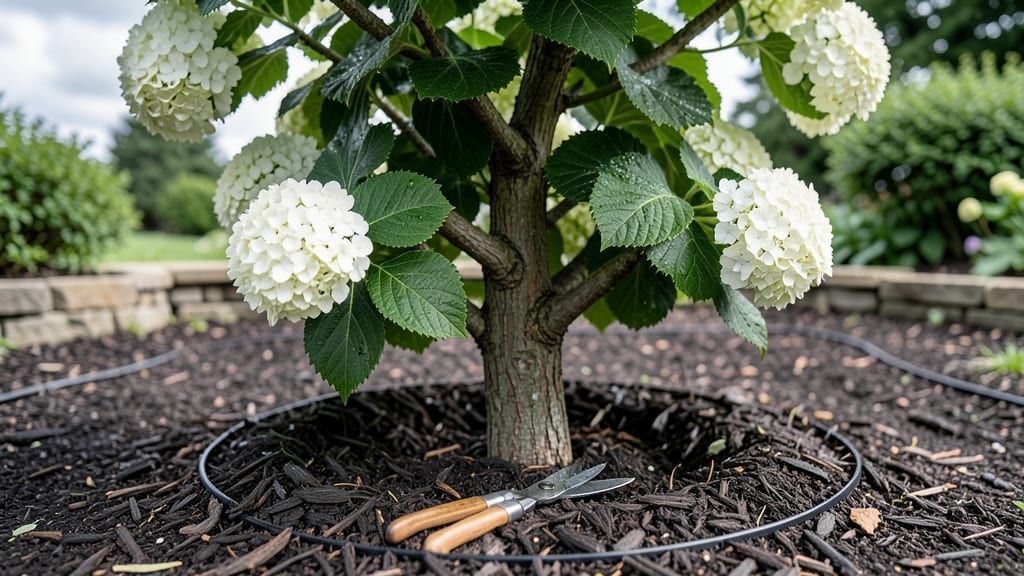
Creating a hydrangea tree transforms your yard into a showstopper with bold, layered blooms that last all season. 🌿 I started with a panicle hydrangea—its sturdy branches handle shaping better than mopheads—and within three years, it became the centerpiece of my front yard.
The secret isn’t just pruning; it’s training the plant to grow upward like a tree while keeping its natural bushy charm.
You’ll need sharp pruners, a sturdy stake, and a little patience—this isn’t a quick fix, but the results are worth it. Focus on three key cuts: removing dead wood in late winter, thinning crowded branches in early spring, and shaping the trunk by summer.
The right variety matters too; oakleaf or panicle hydrangeas handle pruning best, while bigleaf types need a gentler touch.
By summer, you’ll have a lush, tree-like structure with blooms cascading from the top down. The foliage stays vibrant longer, and the shape makes it stand out in any landscape. Just avoid over-pruning—too many cuts shock the plant—and always stake young trunks to prevent flopping.
Once established, mulch around the base to retain moisture and add decorative stakes or a small trellis for extra support. This technique works for both small yards and large gardens, giving you a dramatic focal point without the upkeep of a full-sized tree.
📚 In This Guide
- What you need
- Instructions
- Tips and common mistakes
- Wrapping up and next steps
What you need
- ● Mature hydrangea plant: 1 large, healthy Hydrangea macrophylla (or similar variety) with multiple strong stems (at least 3–5).
- ● Plant should be 3–5 years old (younger plants may not have enough structure).
- ● Pruning tools: 1 pair of bypass pruners (for clean cuts on smaller stems).
- ● 1 pair of loppers (for thicker stems, up to 1.5 inches in diameter).
- ● 1 pruning saw (if dealing with very thick branches).
- ● Support structure: 1 sturdy bamboo stake or metal tree guard (4–6 feet tall, depending on desired height).
- ● 3–5 garden ties or soft plant straps (to secure stems without damaging them).
- ● Growing medium: Well-draining potting soil mix (or a blend of garden soil + perlite for container plants).
- ● 1 large container or garden bed (minimum 18 inches deep and wide, with drainage holes if in a pot).
- ● Fertilizer: 1 balanced, slow-release fertilizer (e.g., 10-10-10 or organic options like composted manure).
- ● 1 rooting hormone (if propagating from cuttings instead of using a mature plant).
- ● 1 mulch (to retain moisture and regulate soil temperature).
- ● 1 spray bottle with water (for misting new cuts to encourage healing).
- ● 1 pruning sealant (to prevent disease on larger cuts, though hydrangeas often heal fine without it).
- ● 1 wire cage or trellis (for additional support if growing in windy areas).
Step-by-Step instructions for creating a stunning hydrangea tree
Here’s my foolproof method for transforming a hydrangea bush into a showstopping tree—no fancy tools required.
🌿 Step 1: Select and Prepare Your Hydrangea Bush
Start with a healthy mophead or lacecap hydrangea bush, at least 3 years old with multiple strong stems. I always choose plants with thick, woody stems—these handle pruning best and regenerate quickly. Look for a bush with 5-7 main stems radiating from the base; these will become your tree’s scaffold branches.
Dig around the base carefully to loosen the root ball, but don’t disturb it too much. You’ll want to keep the roots intact so the plant recovers faster. If your hydrangea is in a pot, let it sit in water for 10 minutes to hydrate the roots before handling—this reduces transplant shock.
✂️ Step 2: Prune the Bush Into a Tree Shape
This is where the magic happens. First, remove all but 3-4 of the strongest, thickest stems at ground level. Cut them back 1-2 inches above a outward-facing bud—this ensures new growth will angle outward, creating a fuller tree shape. I like to space the remaining stems evenly around the base so the tree grows balanced.
Next, select the tallest stem to be your trunk. Prune the side branches on this stem back by half, leaving 3-4 buds on each branch. This encourages bushier growth higher up. For the remaining stems (which will become your lower branches), trim back one-third of their length to promote fullness. Always cut just above a bud or leaf node—never leave stubs.
🪴 Step 3: Train and Support the New Tree Structure
After pruning, tie the selected trunk stem upright using soft plant ties or old pantyhose. You’ll need to support it for 6-8 weeks while it strengthens. I use 3 stakes—one at the base and two higher up—to create a triangle support. This keeps the trunk straight and prevents it from bending under the weight of new growth.
For the lower branches, spread them outward at a 45-degree angle and secure them with ties. This encourages an open, tree-like shape. Mulch the base with 2-3 inches of organic mulch (like shredded bark) to retain moisture and protect the roots. Water deeply once a week for the first month, keeping the soil evenly moist but not soggy.
☀️ Step 4: Maintain and Encourage Year-Round Blooms
Hydrangeas bloom on old wood (last year’s growth) and new wood (current season’s growth), so timing matters. In late winter or early spring, before buds swell, prune any dead or crossing branches to keep airflow circulating. For mophead varieties, I cut back last year’s blooms by half to encourage stronger new growth.
Feed your hydrangea tree once in early spring with a balanced, slow-release fertilizer (like 10-10-10) to support vigorous growth. If your blooms aren’t as vibrant as you’d like, they might need more aluminum—add 1 tablespoon of aluminum sulfate per gallon of water every 4-6 weeks during the growing season. Watch for blue or pink blooms as your cue: blue indicates acidic soil, pink means it’s time to adjust the pH slightly.
Tips & tricks for perfect hydrangea tree transformation
Transforming a hydrangea bush into a stunning tree takes patience and precision—but these insider tricks will help you avoid common pitfalls and create a showstopping centerpiece.
Pruning Precision: When you're cutting back those 3-4 main stems in Step 2, look for outward-facing buds—they'll grow at a 45-degree angle, creating that perfect tree silhouette. I always make my cuts just above the bud, never below, because this ensures the new growth emerges facing outward. Confession: I skipped this detail years ago and ended up with branches growing inward, which ruined the tree shape.
Support System: That 6-8 week support time in Step 3 is non-negotiable. I've tried using just one stake, but the trunk always leaned—until I added the triangle support with three stakes. The key is securing the trunk at both the base AND higher up. Use soft plant ties (or even old pantyhose) to avoid damaging the bark as it thickens.
Watering Wisdom: The 10-minute root hydration soak in Step 1 makes all the difference. I learned this the hard way after transplanting a potted hydrangea without soaking first—it took months to recover. For container-grown plants, give them a thorough drink before moving them to their new location. After transplanting, keep the soil consistently moist (not soggy) during that first month—hydrangeas hate drying out while establishing roots.
Bloom Boost: If your hydrangea tree isn't producing vibrant blooms, check your soil pH first. The aluminum sulfate tip in Step 4 works wonders for blue blooms, but don't overdo it—just 1 tablespoon per gallon every 4-6 weeks is enough. For pink blooms, you might need to raise the pH slightly by adding lime. I test my soil every spring to adjust before the blooming season begins.
Pro Tips for Make A Hydrangea Tree
- Transforming a hydrangea bush into a stunning tree takes patience and precision—but these insider tricks will help you avoid common pitfalls and create a showstopping centerpiece.
- Pruning Precision: When you're cutting back those 3-4 main stems in Step 2, look for outward-facing buds—they'll grow at a 45-degree angle, creating that perfect tree silhouette.
- Support System: That 6-8 week support time in Step 3 is non-negotiable.
Frequently asked questions
Got questions about crafting your own hydrangea tree?
You’re not alone! Here are answers to the most common concerns—from timing to troubleshooting—to help you grow a stunning, long-blooming beauty with confidence.
When is the best time to prune a hydrangea tree for year-round blooms?
The ideal time depends on your hydrangea type. For mophead or bigleaf varieties (like Hydrangea macrophylla), prune in late winter or early spring (before buds swell) to encourage new wood blooms. For panicle or oakleaf types, prune in late winter to early spring or even summer to shape without sacrificing flowers. Always avoid pruning in fall—it can damage buds forming for next year!
How long does it take for a hydrangea tree to bloom after pruning?
Patience is key! With proper pruning, you’ll see new growth and flowers within 6–12 weeks during the growing season. However, first-year blooms may be sparse—focus on shaping and feeding the roots. By year two, your hydrangea tree should burst into full, vibrant color if given 6+ hours of sun and consistent watering.
Can I use regular hydrangea bushes to create a tree, or do I need a special variety?
You can absolutely repurpose a mature hydrangea bush into a tree! Look for a bush with a thick, sturdy stem (at least 2–3 inches wide) near the base—this becomes your trunk. Remove smaller stems below the desired trunk height, leaving 3–5 strong branches to form the canopy. Specialty "tree-form" hydrangeas (like Hydrangea paniculata 'Limelight') are bred for this shape, but any adaptable variety works with patience!
Why aren’t my hydrangea tree’s leaves or flowers looking healthy?
Common issues and fixes:
- Yellow leaves: Overwatering or poor drainage. Let soil dry slightly between waterings and amend with compost.
- Brown, crispy edges: Underwatering or sunburn. Mulch the base and provide afternoon shade in hot climates.
- No blooms: Pruned at the wrong time (e.g., cutting back old wood on mopheads). Research your type and prune in dormant season.
- Pests (aphids, spider mites): Spray with neem oil or introduce ladybugs. Keep the plant hydrated to deter infestations.
Pro tip: Fertilize in early spring with a balanced, acid-loving plant food (like 10-10-10) to boost vigor.
What’s the best climate for growing a hydrangea tree?
Hydrangeas thrive in USDA Zones 3–9, but their happiness depends on:
- Temperature: Most varieties tolerate cold winters (down to -20°F for hardy types like oakleaf) but may need winter mulch in colder zones.
- Sunlight: Partial shade (morning sun + afternoon shade) is ideal, especially in hot climates. Too much sun = stressed plants with fewer blooms.
- Humidity: They love it! If you’re in a dry area, mist leaves or use a pebble tray to mimic their natural woodland habitat.
For year-round blooms, aim for 60–70°F days and protect from heatwaves with shade cloth if needed.
Wrapping up and next steps
Creating your own hydrangea tree is a rewarding way to enjoy year-round blooms with minimal effort—just three strategic cuts and a little patience! 🌸 With the right tools, timing, and care, you’ll transform a standard hydrangea bush into a stunning, tree-like centerpiece that steals the show in any garden.
Whether you’re a pruning pro or a beginner, this project is totally doable and worth the effort.
Ready to level up your landscaping game? Start by sketching your design and gathering your tools—then roll up your sleeves and get pruning! For extra flair, experiment with different hydrangea varieties or add seasonal mulch to keep your tree thriving. Happy gardening! 🌿✨