
Landscaping
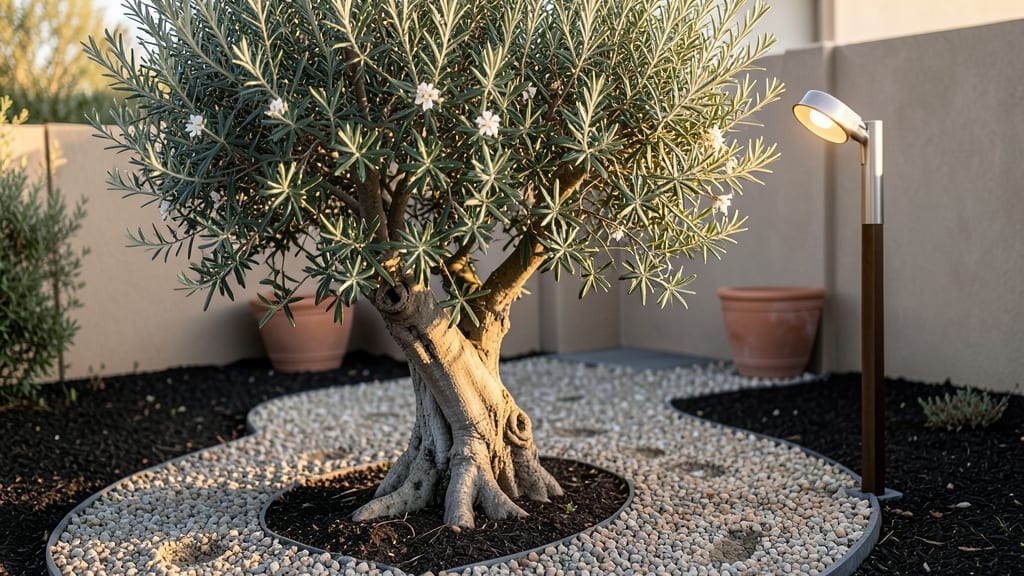
A front yard olive tree landscape design creates a timeless Mediterranean retreat right outside your door. 🌿 I fell in love with the idea after seeing how olive trees anchor a space with their silvery-green foliage and sturdy structure—something that looks stunning year-round, not just during blooming seasons.
The key starts with placement: olive trees thrive in full sun, so position them where they’ll get at least 6-8 hours of direct light daily. Pair them with drought-tolerant plants like lavender, rosemary, or ornamental grasses to complete the Mediterranean vibe.
A gravel pathway or stone patio adds texture while keeping maintenance low—just sweep away fallen leaves occasionally.
You’ll end up with a front yard that feels like a vacation spot, complete with the scent of crushed leaves underfoot and the satisfying rustle of branches in the breeze.
The trees grow slowly but steadily, so they’ll mature into a privacy screen or focal point over time without overwhelming your space.
This design works beautifully in USDA Zones 8-10, but with proper winter protection (like burlap wraps), you can grow them as far north as Zone 7. For cooler climates, consider dwarf varieties or container planting to bring that Mediterranean charm closer to home.
📚 In This Guide
- What you need
- Instructions
- Tips and common mistakes
- Wrapping up and next steps
What you need
- ● Olive tree: 1 mature container-grown tree (3–5 gallons, 6–8 ft tall) or 3–5 smaller dwarf varieties (1–3 ft) for a fuller look.
- ● Well-draining soil: 50 lbs of cactus/succulent mix or 10 cubic yards of amended native soil (sand + compost, 50/50 ratio).
- ● Mulch: 2–3 cubic yards of gravel, decomposed granite, or pine bark (3–4" deep) to retain moisture and deter weeds.
- ○ Drip irrigation system: 50–100 ft of ¼" tubing, 3–5 emitters (1–2 GPH), and a timer controller (optional but recommended).
- ● Support stakes (if needed): 2–4 wooden or metal stakes (1–2" diameter, 4–6 ft long) + 3–4 galvanized ties.
- ● Fertilizer: 10 lbs of slow-release olive tree fertilizer (10-10-10 or 8-3-9 NPK ratio) or organic options like alfalfa meal.
- ● Pruning tools: 1 pair bypass pruners, 1 loppers, and 1 pruning saw (for thicker branches).
- ● Shovel or spading fork
- ● Wheelbarrow (for soil/mulch transport)
- ● Garden gloves (heavy-duty)
- ● Measuring tape
- ● Level (for stakes/irrigation)
- ● Wheelbarrow or dolly (for heavy materials)
- ● Accent plants: 3–5 Mediterranean companions like lavender, rosemary, or dwarf citrus (1–3 gallon pots).
- ● Lighting: Solar-powered path lights or low-voltage LED spotlights (3–5 units) for evening ambiance.
- ● Hardscaping: Stepping stones (3–6 pieces), a small stone border, or a wooden trellis for structure.
- ● Windbreak: Temporary fencing (6–8 ft tall) if your area gets strong winds.
- ● Olive tree care kit: Copper fungicide, horticultural oil, and a tree collar sprayer for pest control.
How to design a stunning olive tree landscape in your front yard
Transform your outdoor space into a Mediterranean retreat with this elegant, year-round design.
🌿 Step 1: Choose the Right Olive Tree Variety for Your Climate
Not all olive trees thrive in every zone. For northern climates, opt for cold-hardy varieties like ‘Arbequina’ or ‘Frantoio’, which tolerate brief dips to 20°F. Southern gardeners can grow heat-loving ‘Manzanillo’ or ‘Mission’ varieties, which handle 100°F+ temperatures with ease. Dwarf varieties like ‘Little Ollie’ are perfect for small front yards, staying under 10 feet tall while still producing fruit.
Here's the thing—tree size matters. A full-sized olive tree can reach 25-35 feet, casting deep shade and overwhelming smaller front yards. Always check the mature height and spread before purchasing. I once planted a standard olive tree in my tiny urban front yard—big mistake. It now blocks my neighbor’s view, and I’m stuck trimming it every year.
☀️ Step 2: Select the Perfect Planting Location
Olive trees crave full sun, needing at least 6-8 hours of direct sunlight daily. In hot climates, afternoon shade helps prevent leaf scorch. The ideal spot combines southern exposure with protection from harsh winds. Avoid low-lying areas where cold air pools—this can damage young trees during winter.
Consider your front yard’s microclimate. A south-facing wall or fence acts as a natural windbreak while reflecting warmth back to the tree. If your yard faces north, you’ll need to supplement with a grow light during winter months to maintain growth. I planted mine near my patio, where it gets morning sun and afternoon shade from a nearby oak—perfect balance.
🪴 Step 3: Prepare the Planting Site with Proper Drainage
Olive trees despise soggy roots. Amend heavy clay soil with 3-4 inches of coarse sand or gravel to improve drainage. Dig a hole twice as wide as the root ball but no deeper—planting too deep suffocates roots. Mix the removed soil with compost to enrich it without compacting it.
Test your soil’s pH—olive trees prefer slightly alkaline conditions (6.5-8.0). If your soil is acidic, add lime to adjust it before planting. I always do a quick pH test kit check; my local nursery sells them for under $10. The last thing you want is a struggling tree because of poor soil chemistry.
✂️ Step 4: Plant and Establish the Tree for Long-Term Health
Place the tree in the hole so the root flare (where roots meet the trunk) sits 1-2 inches above soil level. Backfill with native soil mixed with compost, tamping gently to remove air pockets. Water deeply to settle the soil, then add 2-3 inches of mulch (avoid wood chips—they can acidify soil) to retain moisture and regulate temperature.
Don’t fertilize immediately—wait 6-8 weeks to let roots establish. Over-fertilizing shocks young trees. Instead, focus on consistent watering: 1-2 inches per week, more in summer. I water mine at the base, not the leaves, to prevent fungal diseases. A drip irrigation system makes this effortless and ensures deep root hydration.
🌱 Step 5: Design Complementary Mediterranean Plants for Year-Round Interest
Pair your olive tree with drought-tolerant companions like lavender, rosemary, or thyme to enhance the Mediterranean vibe. Use gravel or decomposed granite for pathways to reduce weed competition. Add climbing roses or wisteria for vertical interest near the tree’s canopy.
Think texture and height. A low-growing sedum or ice plant creates contrast with the tree’s rugged bark. I planted a ‘Little Ollie’ olive alongside a dwarf citrus tree and a lavender bush—the combination looks like a Tuscany garden. Just avoid fast-growing plants that’ll compete for water and nutrients.
Tips & tricks for perfect front yard olive tree landscaping
A few strategic choices will turn your olive tree into the centerpiece of a Mediterranean-inspired front yard that thrives year-round.
Climate Consideration: The 20°F cold tolerance of ‘Arbequina’ or ‘Frantoio’ varieties is critical for northern climates—these trees can survive winter freezes that would kill heat-loving varieties. For southern regions, ‘Manzanillo’ or ‘Mission’ varieties thrive in 100°F+ temperatures, but watch for leaf scorch during heatwaves. I learned this the hard way when my first olive tree died after a sudden cold snap—always verify your local hardiness zone before purchasing.
Sunlight Strategy: That 6-8 hours of direct sunlight requirement is non-negotiable for healthy growth. If your front yard gets afternoon shade, position the tree where it captures morning sun—this prevents leaf burn while still providing essential light. I installed a solar-powered grow light for my northern-facing yard during winter months, which gives the tree the extra boost it needs to maintain growth when daylight is limited.
Soil Science: The 3-4 inches of coarse sand or gravel amendment in Step 3 isn't just about drainage—it creates an ideal root environment. Olive trees hate soggy roots, so if your soil is heavy clay, consider building a raised bed instead. I tested my soil's pH before planting and discovered it was 5.8—too acidic. Adding lime raised it to 7.2, which made all the difference in the tree's establishment.
Long-Term Maintenance: That 6-8 week wait before fertilizing is crucial for root development. I've seen many gardeners skip this step and end up with trees that struggle because their roots never properly established. Once established, focus on consistent watering at the base—never the leaves—to prevent fungal diseases. A drip irrigation system is worth the investment for deep, even hydration without waste.
Pro Tips for Front Yard Olive Tree Landscape Design
- A few strategic choices will turn your olive tree into the centerpiece of a Mediterranean-inspired front yard that thrives year-round.
- Climate Consideration: The 20°F cold tolerance of ‘Arbequina’ or ‘Frantoio’ varieties is critical for northern climates—these trees can survive winter freezes that would kill heat-loving varieties.
- Sunlight Strategy: That 6-8 hours of direct sunlight requirement is non-negotiable for healthy growth.
Frequently asked questions
Got questions about transforming your front yard with an olive tree? You’re not alone! Here are answers to the most common queries to help you design with confidence.
How much space does a front yard olive tree need to thrive?
A mature olive tree typically requires 15–25 feet of space between itself and structures, sidewalks, or other plants. Dwarf varieties (like ‘Arbequina’ or ‘Little Ollie’) can work in smaller spaces (8–12 feet), but ensure they get full sun (6+ hours daily) and proper drainage. Pro tip: Check your local frost dates—some varieties need winter protection!
When is the best time to plant an olive tree in my front yard?
Plant in early spring or fall (3–4 weeks before frost) for optimal root establishment. Avoid extreme heat or cold—olive trees hate soggy soil or freezing temps. If planting in summer, water deeply 2–3 times weekly until established. Bonus: Mulch with wood chips to retain moisture and regulate soil temp!
What are some low-maintenance alternatives to olive trees for a Mediterranean look?
If olive trees seem high-maintenance, try these drought-tolerant stand-ins:
- Lavender – Fragrant, pollinator-friendly, and thrives in poor soil.
- Rosemary – Evergreen shrub with silvery foliage (great for hedges!).
- Texas Sage (Cenizo) – Drought-resistant with purple blooms.
- Dwarf Citrus (e.g., ‘Improved Meyer Lemon’) – Adds color and fruit (needs winter protection in cold zones).
For structure, consider Italian Cypress or Olivewood (Olea europaea ‘Gallinero’)—a smaller, bushier olive variety.
Why are my olive tree’s leaves turning yellow or dropping?
Yellow leaves usually signal overwatering, underwatering, or nutrient deficiencies. Check these fixes:
- Watering: Olive trees hate soggy roots—water deeply 1–2 times weekly (more in summer).
- Soil: Amend heavy clay with sand or gravel for drainage.
- Nutrients: Fertilize in spring with low-nitrogen, high-phosphorus (e.g., 6-12-6) if growth stalls.
- Pests: Inspect for scale insects or spider mites (treat with horticultural oil if needed).
Quick test: Stick your finger 2–3 inches into the soil—if it’s dry, water; if muddy, hold off!
How can I style my olive tree for a polished front yard look?
Pair your olive tree with these design tricks for curb appeal:
- Container planting: Use terracotta pots (classic Mediterranean vibe) or rustic wooden planters.
- Mulch: Gravel or crushed stone (light colors reflect heat) around the base.
- Lighting: Solar-powered path lights or uplighting to highlight the tree at night.
- Companion plants: Mix in shrub rosemary, sage, or dwarf boxwood for texture.
Design hack: Add a stone border or wrought-iron trellis nearby for a Tuscan-inspired touch!
Wrapping up and next steps
Transforming your front yard with an olive tree isn’t just about aesthetics—it’s about creating a timeless, low-maintenance Mediterranean oasis that thrives year-round. From selecting the right variety to designing around its mature size, every step brings you closer to a landscape that’s as functional as it is beautiful. 🌿✨
Ready to take the next step? Start by sketching your design, gathering materials, and reaching out to local nurseries for expert advice. With patience and care, your olive tree will become the stunning centerpiece of your outdoor space—welcoming, elegant, and full of life!