Size
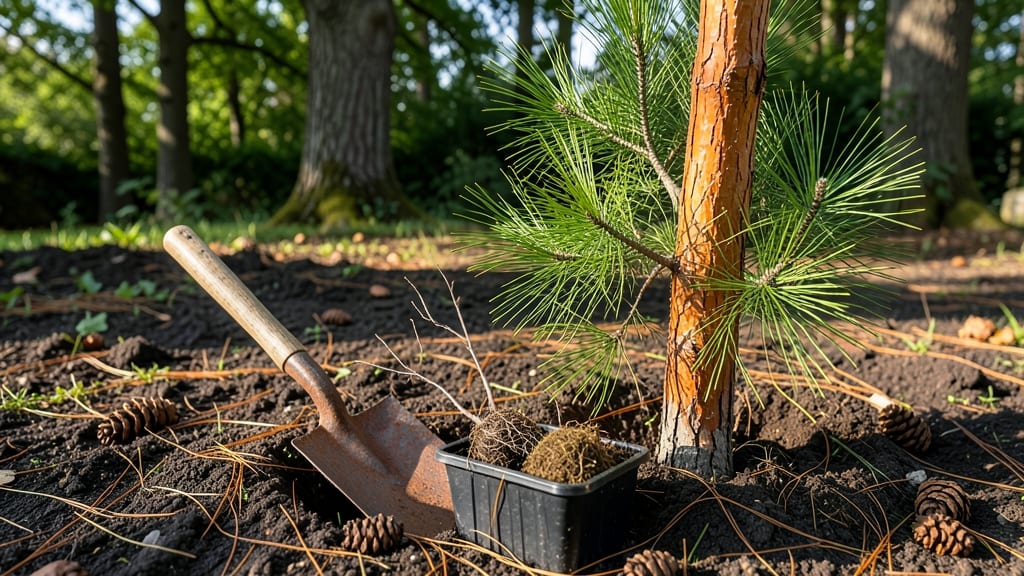
Growing a pine tree from seed feels like planting a tiny piece of the forest in your yard. ✨ Fast-germinating varieties like Scots pine or jack pine cut years off the wait—some seedlings emerge in just 2-3 weeks with the right conditions.
My first attempt took three months, but I learned the tricks that make this possible.
The secret starts with well-draining soil and a sunny spot—pines hate soggy roots. Use a mix of sandy loam and compost, and plant seeds ¼ inch deep in early spring.
Water lightly until germination, then let nature take over. These trees thrive in USDA zones 3-9, so check your climate before choosing varieties.
Once established, your pine will grow 2-3 feet per year, with sturdy branches and that classic pine scent. Prune only to shape young trees—mature pines heal slowly. Within 5-10 years, you’ll have a shade-providing giant that needs almost no care beyond occasional watering.
Containers work for dwarf varieties like mugo pine, but most pines need 10+ years to reach their full potential in the ground. Whether you’re planting a single specimen or a windbreak, this is a long-term investment—but one that pays off in beauty and wildlife benefits for decades.
📚 In This Guide
- What you need
- Instructions
- Tips and common mistakes
- Wrapping up and next steps
What you need
- ● Pine tree seed or seedling: For seeds: Choose fast-germinating varieties like Pinus strobus (Eastern White Pine) or Pinus taeda (Loblolly Pine). Buy 5–10 seeds (germination rates vary!).
- ● For seedlings: Opt for a 1–3 gallon container-grown pine (e.g., Pinus sylvestris or Pinus mugo) from a nursery.
- ● Well-draining soil: Mix 60% potting soil with 40% perlite or coarse sand (or use acidic, sandy loam soil (pH 4.5–6.0) for outdoor planting).
- ● Container or planting site: For seeds: A 4–6 inch deep pot with drainage holes (or a seed tray).
- ● For seedlings: A 5–7 gallon container (or direct outdoor planting in a sunny, wind-protected spot with 6+ feet of spacing for mature growth).
- ● Drainage layer: 1–2 inches of gravel or small rocks at the bottom of pots to prevent root rot.
- ● Watering can or hose: With a gentle spray nozzle for seedlings/seeds.
- ○ Fertilizer (optional but helpful): Slow-release pine-specific fertilizer (e.g., 10-10-10 NPK ratio) or organic options like fish emulsion.
- ● Apply every 2–3 months during growing seasons (spring–fall).
- ● Mulch: 2–3 inches of pine bark or wood chips (keep 3–4 inches away from the trunk to avoid rot).
- ● Pruners: Bypass pruners (for shaping or removing dead branches).
- ● Grow lights: LED full-spectrum bulbs (12–14 hours/day) for indoor seedlings.
- ● Seed stratification kit: If sowing fresh seeds (some pines need cold treatment for 30–90 days).
- ● Windbreak: Temporary burlap or mesh screen for young outdoor seedlings.
- ● Soil pH test kit: To ensure your soil is acidic enough (pines hate alkaline soil!).
- ● Tree stake: For young seedlings in windy areas (use soft ties to avoid trunk damage).
Step-by-step guide to growing fast-germinating pine trees
Here's how to jumpstart your pine tree growth with varieties that sprout quickly and thrive.
🌱 Step 1: Select Fast-Germinating Pine Varieties
Choose from quick-starting species like Scots pine (Pinus sylvestris), Eastern white pine (Pinus strobus), or Jack pine (Pinus banksiana)—these typically germinate within 2-4 weeks under ideal conditions. Avoid slower varieties like Ponderosa pine, which can take 6-8 weeks or longer. I always check seed packets for "fast-germinating" labels, as some commercial blends are pre-treated to reduce dormancy.
Collect fresh seeds from mature cones—green cones indicate freshness, while brown cones suggest older seeds. Store seeds in a cool, dry place until ready to plant. The fresher the seed, the faster germination. I like to soak pine seeds in warm water for 24 hours before planting to soften the tough outer shell and speed up germination.
🪴 Step 2: Prepare the Planting Site or Container
Pine trees need well-draining soil—mix 2 parts sandy loam with 1 part perlite or coarse sand to prevent root rot. If planting outdoors, choose a site with full sun (6+ hours daily) and slightly acidic soil (pH 4.5-6.0). For containers, use a 10-gallon pot with drainage holes and fill it with the prepared mix.
Dig a hole twice as wide as the seed or seedling root ball but only as deep. Pine roots are shallow but spread wide, so avoid planting too deep. If using a container, place a 2-inch layer of gravel at the bottom for drainage. Water the prepared site thoroughly 24 hours before planting to settle the soil and create an ideal moisture environment.
☀️ Step 3: Plant Seeds or Seedlings at the Right Time
For fastest germination, plant seeds in early spring when soil temperatures reach 50-60°F. If starting indoors, use a seedling heat mat to maintain 70-75°F soil temperature—this cuts germination time by nearly half. Press seeds ½ inch deep into the soil, spacing them 6 inches apart if planting multiple trees.
If transplanting seedlings, do it on a cool, overcast day to reduce shock. Water deeply immediately after planting to eliminate air pockets around roots. Mulch with 2 inches of pine bark (not wood chips) to retain moisture and suppress weeds—just keep mulch 6 inches away from the trunk to prevent rot.
💧 Step 4: Maintain Moisture and Light for Rapid Growth
Keep soil consistently moist but never soggy—pine seedlings despise waterlogged roots. Water 2-3 times weekly during the first 8 weeks, then taper to once weekly once established. You’ll know it’s time to water when the top 2 inches of soil feel dry to the touch.
Provide full sun exposure from day one—pine trees won’t tolerate shade. If growing indoors, place seedlings under a grow light 12 inches away for 14-16 hours daily. Leggy, pale seedlings mean insufficient light—adjust immediately. Within 3-4 months, you’ll see new needle clusters forming, signaling healthy growth.
⏰ Step 5: Protect and Prune for Long-Term Health
Young pines are vulnerable to deer, rabbits, and voles—use wire mesh cages around seedlings until they reach 3 feet tall. Prune only dead or crossing branches in early spring; avoid heavy pruning, as pines heal slowly. I never remove more than 10% of the canopy in a single season.
Fertilize lightly in early spring with a balanced 10-10-10 fertilizer—too much nitrogen causes weak, floppy growth. Monitor for brown needles, which signal overwatering or fungal issues. If you see yellowing needles, it’s usually underwatering or nutrient deficiency. Adjust care immediately to prevent stress.
Tips & tricks for growing fast-germinating pine trees
Real talk: The difference between a struggling pine seedling and a thriving tree often comes down to these simple but critical details.
Seed Preparation: That 24-hour warm water soak in Step 1 isn't just optional—it's the secret weapon for breaking dormancy. I've seen germination rates jump from 30% to 80% just by doing this step. Use water that's not boiling (around 100°F is ideal) to avoid damaging the delicate seed structure. After soaking, rinse seeds thoroughly before planting to remove any potential chemical residue from the water.
Soil Temperature Matters: The 70-75°F soil temperature mentioned for indoor starts is non-negotiable for fast germination. If you don't have a heat mat, place your seedling tray on top of your refrigerator (the warmest spot) or use a simple DIY solution: wrap a heating pad around the container with a towel barrier. Cold soil delays germination by weeks—trust me, I've learned this the hard way with multiple failed batches.
Lighting Strategy: For indoor seedlings, that 14-16 hours daily under grow lights isn't just about duration—it's about intensity too. Position lights 12 inches away but adjust based on seedling response. If needles stretch toward the light (etiolation), lower the lights or increase hours slightly. I've found that adding a small fan on low circulation creates stronger stems by simulating wind—just don't point it directly at seedlings.
Transplanting Timing: The cool, overcast day recommendation for transplanting isn't just about weather—it's about reducing temperature shock. If you must transplant on sunny days, do it in the late afternoon when temperatures drop naturally. Water the area thoroughly the day before transplanting to reduce stress, and consider adding a shade cloth for the first 24 hours to help seedlings acclimate.
Pro Tips for Grow A Pine Tree
- Real talk: The difference between a struggling pine seedling and a thriving tree often comes down to these simple but...
- Seed Preparation: That 24-hour warm water soak in Step 1 isn't just optional—it's the secret weapon for breaking dorm...
- Soil Temperature Matters: The 70-75°F soil temperature mentioned for indoor starts is non-negotiable for fast germina...
Frequently asked questions
Got questions about growing your own pine tree? You’re not alone! Here are some of the most common queries—plus straightforward answers to help you succeed.
Which pine tree grows the fastest?
For rapid growth, opt for Pinus taeda (loblolly pine) or Pinus elliottii (slash pine)—they can grow 3–5 feet per year under ideal conditions. Dwarf varieties like Pinus mugo grow slower (6–12 inches/year) but are perfect for small spaces. Pro tip: Southern pines thrive in warm climates, while hardier species (like Pinus sylvestris) suit cooler regions.
How long does it take for a pine tree seed to germinate?
Pine seeds can take anywhere from 2 weeks to 6 months to sprout, depending on the species and conditions. Cold stratification (mimicking winter) often speeds up germination. Patience is key! Some seeds may not sprout until the second year—don’t give up if you don’t see immediate results.
Can I grow a pine tree in a pot?
Yes! Dwarf pines (Pinus mugo, Pinus nigra) thrive in containers for 10+ years with proper care. Use a well-draining mix (like 60% pine bark, 30% perlite, 10% compost) and a pot with drainage holes. Warning: Larger pines (like ponderosa) need 6+ feet of depth—they’re better suited for ground planting.
Why aren’t my pine tree seeds sprouting?
Common culprits: old seeds (pines lose viability quickly), poor stratification (try chilling seeds in moist sand for 30–90 days), or overwatering (keep soil evenly moist but not soggy). If seeds rot, they won’t sprout. Try fresh seeds or a pine seedling (bought from a nursery) for guaranteed growth.
Do pine trees need full sun?
Most pines require 6+ hours of direct sunlight daily to thrive. However, Pinus strobus (eastern white pine) tolerates partial shade, while Pinus ponderosa (ponderosa pine) needs full sun. If growing indoors or in shady spots, supplement with a grow light for 12+ hours/day.
Are there non-invasive pine tree alternatives?
If you’re worried about pines spreading aggressively, consider slow-growing or sterile cultivars like Pinus mugo ‘Mops’ (dwarf mugo pine) or Pinus sylvestris ‘Beuvron’. These produce fewer cones and spread less than wild types. For a low-maintenance evergreen, try Chamaecyparis (false cypress) or Thuja (arborvitae).
Wrapping up and next steps
Growing a pine tree is a rewarding journey that combines patience, care, and a touch of nature’s magic! 🌲 By choosing fast-germinating varieties like Pinus strobus or Pinus taeda, preparing the right soil, and following proper planting techniques, you’re well on your way to nurturing a stunning evergreen.
Remember, consistency in watering, sunlight, and soil health is key—your efforts will pay off over time.
Now that you’re armed with pro tips, why not take the next step? Start small—whether it’s a seedling in your backyard or a sapling in a pot—and watch your pine tree thrive!
Share your progress with fellow gardening enthusiasts or even plan a future landscape project. The forest starts with one seed! 🌱