Pruning
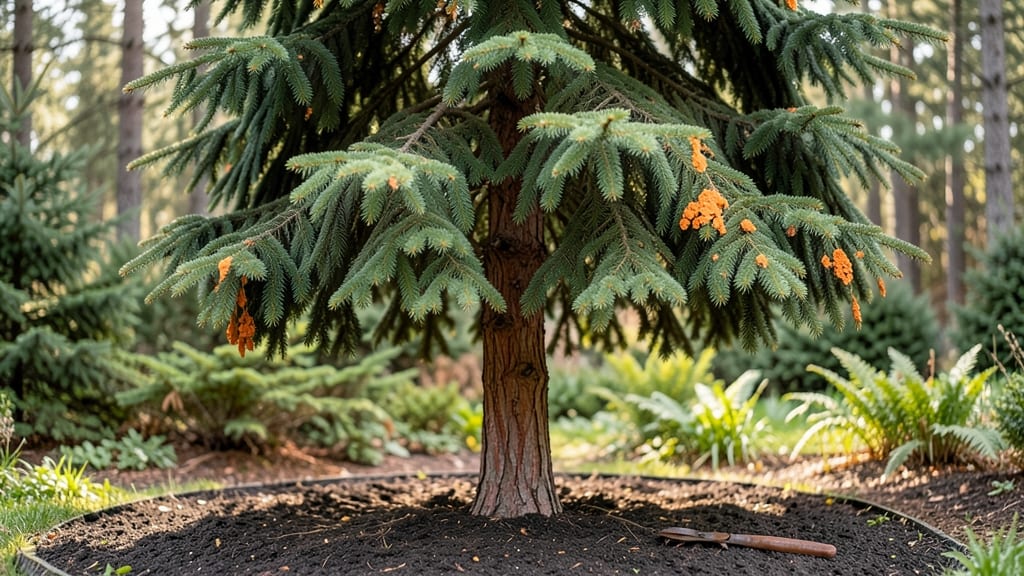
That orange growth on your cedar tree isn’t just unsightly—it’s a fungal infection that spreads fast if ignored. I’ve battled cedar-apple rust on my own trees, and the key to stopping it is acting early before the spores take over.
The good news? This isn’t a death sentence for your tree, but it does need your attention now.
Most homeowners assume orange puffballs mean their tree is dying, but with the right approach, you can clear it up in 4 focused steps. You’ll need basic tools—a pruner, fungicide (organic or chemical), and a clear day to work—plus a sharp eye for spotting fresh infections before they spread.
The worst part? Waiting too long turns a simple fix into a years-long battle.
By the time you finish, your cedar’s branches will look clean and healthy again, and you’ll know exactly how to prevent next year’s outbreak. The secret? Removing infected branches before they release spores, then treating the tree to stop the cycle.
No more wondering if those orange spots will ruin your landscape—just a foolproof system that works.
This method works for all cedar varieties, whether you’re dealing with a small ornamental tree or a large hedge. The key is consistency—check your trees every 2-3 weeks during growing season to catch new infections early. Let’s get your cedar back to its natural green and keep it that way.
📚 In This Guide
- What you need
- Instructions
- Tips and common mistakes
- Wrapping up and next steps
What you need
- ● Pruning shears or loppers: Bypass pruners (sharp, clean, and sterilized with rubbing alcohol) for clean cuts. Size: 6-8” for small branches, 10-12” for thicker limbs.
- ● Heavy-duty gloves: Waterproof, fungus-resistant (nitrile or leather) to protect hands from spores and sap.
- ● Disposable pruning bags or trash bags: 3-5 large bags (13-gallon minimum) to collect infected debris.
- ● Ladder or step stool: Sturdy, non-slip (extendable ladder for taller trees, 6-12’ height).
- ● Fungicide: Copper-based or sulfur-based (e.g., Bonide Copper Fungicide) for post-pruning treatment. Quantity: 1–2 gallons (follow label rates).
- ● Rubbing alcohol (70%+ isopropyl) or bleach solution: For sterilizing tools between cuts.
- ● Garden hose with nozzle: For rinsing tools and wetting foliage during treatment.
- ● Face mask/respirator: N95-rated to avoid inhaling fungal spores (especially in dry, windy conditions).
- ● Tree wound dressing: (e.g., Tanglefoot Tree Wound Pruning Seal) for large cuts—controversial but useful for some.
- ● Spray bottle with fungicide mix: For targeted application on stubborn growth.
- ● Camera or phone: To document the infection before/after treatment (helpful for tracking progress!).
Step-by-step guide to treating orange growth on cedar trees
Here's how to identify and fix that unsightly orange fungal growth before it spreads.
Identify the Fungal Growth Accurately
First, confirm the orange growth is indeed a fungal infection and not lichen or natural bark discoloration. Run your fingers gently over the affected area—fungal growth often feels slightly fuzzy or velvety, while lichen stays rough and crusty. Look for these key signs: orange-brown patches that spread in irregular shapes, often with a powdery texture when dry.
Check the underside of branches where moisture lingers. Fungal spores thrive in damp, shaded areas, so if you see the orange growth concentrated there, you've got your culprit. Avoid mistaking it for cedar apple rust, which appears as bright orange gelatinous growths. True fungal infections on cedars typically appear as flat, velvety patches rather than raised spots.
Prune Infected Branches at the Right Time
Use clean, sharp pruning shears to remove all infected branches, cutting back to at least 6 inches below the visible orange growth. This ensures you remove the entire infected section where spores are concentrated. Sterilize your shears between cuts by wiping them with rubbing alcohol or a 10% bleach solution to prevent spreading spores to healthy branches.
Focus on removing smaller branches first—they often harbor the worst infections. For larger branches, make clean cuts at a 45-degree angle just outside the branch collar. Dispose of infected branches immediately in a sealed plastic bag rather than composting them, as fungal spores can survive in yard waste.
Apply Fungicide Properly for Maximum Coverage
Choose a copper-based fungicide labeled for conifer use, as these are most effective against cedar-specific fungal infections. Mix the fungicide according to package instructions, typically using 1 tablespoon per gallon of water. Apply it with a pump sprayer on a calm day to ensure even coverage—focus on the undersides of branches where moisture collects.
Spray until the solution runs off the needles slightly, but avoid oversaturating the soil around the base. Reapply every 2-3 weeks during wet seasons or after heavy rains, as fungal spores can return quickly. For severe infections, consider a second application of a neem oil solution (1 tablespoon neem oil per quart of water) to enhance fungal suppression.
Improve Air Circulation and Monitor for Recurrence
Thin out dense branches to increase airflow around the tree, which reduces humidity levels where fungal spores thrive. Remove any low-hanging branches that block sunlight from reaching the ground beneath the tree, as this prevents moisture buildup on the bark. Water the tree at the base rather than overhead to minimize leaf wetness, which encourages fungal growth.
Inspect the tree every 2 weeks during the growing season for new orange patches. If you notice any recurrence, repeat the fungicide treatment immediately. Healthy cedars typically recover well once the infection is controlled, but chronic moisture issues may require adjusting your watering habits or even relocating the tree to a sunnier, drier spot.
Tips & tricks for eliminating cedar tree fungal growth
Here's what I've learned from treating my own cedar trees—these tricks make all the difference between temporary fixes and lasting results.
Timing Secret: The best time to prune infected branches is during late winter or early spring when the tree is dormant. This reduces stress on the tree and prevents fungal spores from spreading through fresh cuts. I always schedule my pruning for February or March in my climate zone, which gives the tree time to heal before summer's humidity returns.
Pruning Precision: When cutting back those 6 inches below the visible growth, make sure your cuts are smooth and clean—no jagged edges. Ragged cuts create entry points for new infections. I use a sharp bypass pruner and always cut just outside the branch collar to promote faster healing. Don't forget to seal larger cuts with a tree wound dressing if they're more than 1/2 inch in diameter.
Fungicide Application: For maximum effectiveness with the copper-based fungicide, apply it on a dry, calm morning when dew has evaporated but before temperatures rise above 85°F. The 2-3 week reapplication schedule is critical—don't skip it! I've found that adding a drop of dish soap to the fungicide mixture helps it adhere better to the needles, especially on windy days.
Monitoring Strategy: Mark the date of your first fungicide application on your calendar and set a reminder for the 2-week inspection. I use colored flags on the tree to track which branches received treatment. This visual system helps me spot any new growth patterns and ensures I don't miss any areas during follow-up sprays.
Pro Tips for Orange Growth On Cedar Tree
- Here's what I've learned from treating my own cedar trees—these tricks make all the difference between temporary fixe...
- Timing Secret: The best time to prune infected branches is during late winter or early spring when the tree is dorman...
- Pruning Precision: When cutting back those 6 inches below the visible growth, make sure your cuts are smooth and clea...
Frequently asked questions
Got questions about that weird orange growth on your cedar tree? You’re not alone!
Here are the answers to the most common concerns—so you can tackle the problem like a pro.
What causes orange growth on a cedar tree?
The orange fuzzy or crusty patches you’re seeing are likely cedar apple rust (a fungal disease) or hypoxylon canker. These fungi thrive in damp, humid conditions and spread via spores from nearby juniper trees. If your tree is otherwise healthy, don’t panic—it’s usually cosmetic but can weaken wood over time.
Is orange growth harmful to my cedar tree?
While it’s not usually fatal, severe infections can stunt growth, cause defoliation, or create entry points for pests. Prune affected branches in the dry season (late fall/winter) to reduce spread. If the tree looks stressed (yellowing needles, dieback), consult an arborist to check for secondary issues.
How do I remove orange growth safely?
Start by sterilizing pruners with rubbing alcohol to avoid cross-contamination. Cut at least 6 inches below the orange patches (fungi can lurk in the wood). Bag and dispose of infected branches—don’t compost them. For stubborn cases, scrub the wounds with a 1:10 bleach-water mix (rinse well afterward).
Will fungicide work, or is pruning enough?
Pruning is your first line of defense, but for persistent outbreaks, copper fungicide (like Copper Soap) or neem oil can help. Apply during dry weather (early morning or evening) to avoid burning foliage. Repeat every 2–4 weeks until new growth appears. Pro tip: Focus on the undersides of leaves—fungi love hiding there!
Can I save my cedar tree if the orange growth is everywhere?
If over 30% of the tree is infected or the trunk shows deep cankers, the tree may not recover. However, rejuvenation pruning (removing 1/3 of the canopy) can stimulate new growth. For hopeless cases, consider replacing it—cedars are long-lived, but fungal stress shortens their lifespan. Signs to watch: Wilting, oozing sap, or large dead patches mean it’s time to act fast.
Wrapping up and next steps
Spotting orange growth on your cedar tree can feel alarming, but with the right knowledge and action, you can restore its health! Remember, early identification and treatment—like pruning infected branches, applying fungicides, and improving airflow—are key to saving your tree.
Don’t wait until the issue spreads; act now to protect your cedar’s long-term vitality.
Ready to tackle it? Grab your tools, follow the steps above, and give your tree the care it deserves. 🌳✨ If the problem persists, consider consulting a local arborist for expert guidance.