Trees
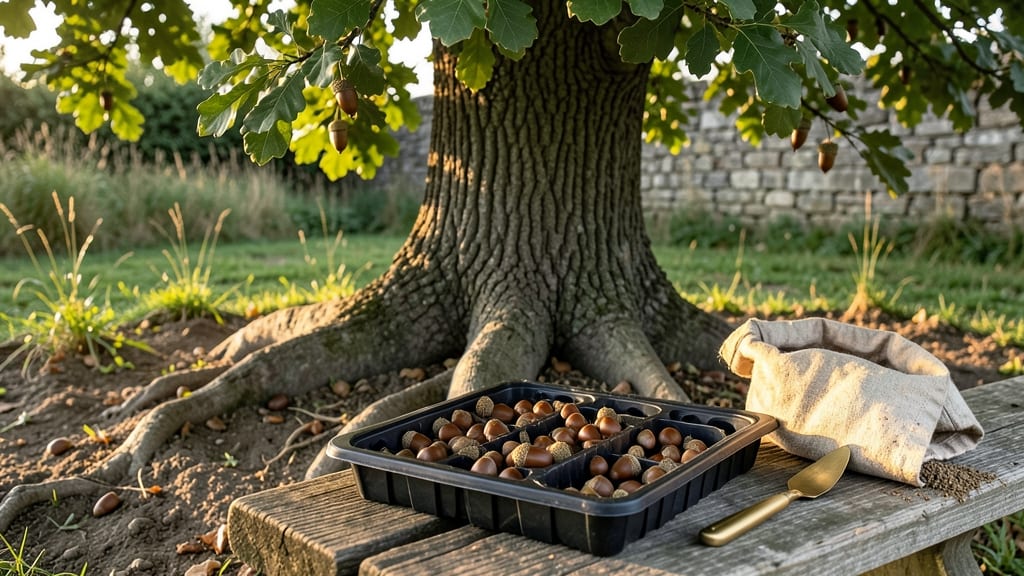
Oak trees start from seed with a process that feels like waiting for a slow-burning fire—patience is the real ingredient. 🌰 The journey begins with acorns, but not just any acorns: you need mature ones that have spent at least six months buried in moist soil, a process called stratification that mimics winter's natural dormancy break.
Most people skip this step and wonder why their acorns never sprout. The secret lies in replicating oak trees' wild germination conditions—cool, moist soil for months before planting. I learned this the hard way after planting fresh acorns that sat in my garage for weeks instead of months.
Even then, success rates hover around 30%, but that's enough to grow a forest.
What you'll end up with are sturdy seedlings that take years to mature but reward you with strong, disease-resistant trees. The first true leaves appear after 6-12 weeks of careful moisture control, and by year two, you'll see the iconic lobed oak leaves that make these trees so iconic.
The slow growth is worth it for the shade and wildlife value they bring.
Wild propagation relies on squirrels and weather, but cultivated methods let you control timing and location. Whether you're restoring a forest or adding a majestic tree to your yard, these secrets make the process reliable—if you're willing to wait. The real magic happens in the soil, not the speed.
📚 In This Guide
- What you need
- Instructions
- Tips and common mistakes
- Wrapping up and next steps
What you need
- ● Acorns: Fresh, plump acorns (preferably from mature oak trees). Aim for 10–20 acorns for a small batch or 50+ for larger-scale planting.
- ● Well-draining soil: A mix of 60% potting soil and 40% perlite or coarse sand (to prevent rot). Use a 10–12 inch deep container (e.g., seed trays or small pots).
- ● Watering can or spray bottle: For gentle, even moisture (avoid soaking!).
- ● Clear plastic wrap or humidity dome: To maintain moisture during germination (e.g., a 12x12 inch sheet or a propagator lid).
- ○ Scissors or knife: For optional acorn cap removal (if speeding up germination).
- ● Stratification setup: Refrigerator with a 35–40°F (2–4°C) temperature range (for 6–8 weeks of cold treatment).
- ● Moistened peat moss or vermiculite (to hold acorns in place).
- ○ Heating mat (optional): For indoor germination (70–75°F / 21–24°C range).
- ● Grow lights or sunny windowsill: If starting indoors before outdoor transplanting.
- ● Plant labels: To track acorn sources and planting dates.
Step-by-step guide to starting oak tree seeds
Here's how to break through oak's tough germination barrier and grow sturdy seedlings.
🌱 Step 1: Stratify Seeds for 60-90 Days
Oak seeds need a long cold period to break dormancy. Place the acorns in a plastic bag with slightly damp sphagnum moss or sand. Seal the bag and refrigerate at 35-40°F for 60-90 days. Check monthly—moisture should feel like a wrung-out sponge, not dripping.
Real talk: I've tried skipping stratification, and the seeds just sit there. The cold period mimics winter conditions, telling the seed "now's the time." After 90 days, if nothing happens, extend it another 30 days—oaks vary by species.
💧 Step 2: Plant Stratified Seeds in Containers
Fill 6-inch deep pots with a mix of 50% potting soil and 50% perlite. Plant acorns 1 inch deep, two per pot. Press gently so they make contact with the soil but don't compact the mix too tightly—roots need room to expand.
Water lightly until the soil surface looks damp but not wet. Too much water now causes rot before germination. Place pots in partial shade (50% sun) where temperatures stay between 65-75°F during the day.
☀️ Step 3: Monitor for Sprouts and Gradual Light Increase
Germination takes 30-60 days after planting. You'll see a tiny white root first, then a shoot pushing through the soil. Keep soil consistently moist—not soggy—by watering when the top inch feels dry.
Once sprouts reach 2 inches tall, move pots to full sun gradually. Start with 2 hours daily and increase by 1 hour weekly. Sudden sun exposure burns tender leaves. Watch for yellowing—this signals too much light too soon.
🌿 Step 4: Transplant Seedlings After First True Leaves
When seedlings show their second set of leaves (true leaves, not the first seed leaves), they're ready to transplant. Choose a spot with full sun and well-draining soil. Dig holes twice as wide as the root ball but only as deep as the pot.
Water deeply the day before transplanting. Gently remove seedlings, keeping the root ball intact. Place in the hole, backfill with soil, and tamp lightly. Stake taller seedlings to prevent wind damage. Mulch with 2 inches of wood chips to retain moisture and regulate soil temperature.
Tips & tricks for reliable oak tree seed germination
Common pitfalls—and how to sidestep every one—when growing oak trees from seed.
Cold Stratification Secret: The 60-90 day cold period at 35-40°F is non-negotiable for breaking oak seed dormancy. I've tried room-temperature storage, and nothing happens—no sprouts, no life. Use a refrigerator's crisper drawer for consistent temperatures. If your fridge runs warmer, place a thermometer inside to monitor. After 90 days with no signs of germination, extend by 30 days—some species like white oak need that extra time.
Moisture Management: During stratification, your sphagnum moss or sand should feel like a wrung-out sponge—not dripping, not bone-dry. I learned this the hard way when my first batch rotted from excess moisture. Check monthly by squeezing a handful: water should bead up slightly but not drip. For planting, the same rule applies—damp soil, not soggy. Use a spray bottle to water lightly rather than pouring, which can displace seeds.
Light Transition Strategy: That gradual sun increase is critical. Start with just 2 hours of sun daily when seedlings hit 2 inches tall, then add 1 hour weekly. I've seen seedlings burn within hours of full sun exposure—it's like putting pale skin in a tanning bed without acclimation. Watch for yellowing leaves as your warning sign. Move pots to a shaded patio first if your yard gets intense afternoon sun.
Transplant Timing: Wait for those second set of true leaves before transplanting—don't rush it. The first leaves (cotyledons) provide energy, but true leaves mean the seedling has developed its own photosynthetic system. I've transplanted too early, and seedlings wilted from shock. Water deeply the day before transplanting to reduce stress, and keep the root ball intact by sliding the pot sideways rather than pulling up.
Pro Tips for How Does Oak Trees Start Seed
- Common pitfalls—and how to sidestep every one—when growing oak trees from seed.
- Cold Stratification Secret: The 60-90 day cold period at 35-40°F is non-negotiable for breaking oak seed dormancy.
- Moisture Management: During stratification, your sphagnum moss or sand should feel like a wrung-out sponge—not dripping, not bone-dry.
Frequently asked questions
about oak tree seed germination can help clarify the process. Here are some common queries:How long does it take for oak tree seeds to germinate?
Oak seeds typically take 6 to 18 months to germinate, depending on the species and conditions. Some require a cold stratification period (mimicking winter) to break dormancy. Patience is key—don’t rush the process!
Do oak acorns need to be planted right after harvesting?
No, fresh acorns don’t need immediate planting. Store them in a cool, moist environment (like a sealed container with damp sand) until you’re ready. Cold stratification (40°F for 3–6 months) improves germination rates for many oak species.
What if my acorns sprout mold or rot?
Mold or rot usually means the acorns were too wet or stored improperly. Discard affected seeds. For future batches, ensure proper ventilation and avoid over-moisture. A 1:1 sand-to-acorn ratio in storage helps prevent spoilage.
Can I grow an oak tree from a store-bought acorn?
Yes! Store-bought acorns work, but choose fresh, plump ones (heavy for their size). Avoid acorns from ornamental oaks—they may not produce true-to-type trees. Local nurseries or wild-harvested acorns often yield better results.
Why aren’t my acorns germinating after stratification?
Check for viability first—squeeze the acorn: if it’s soft or hollow, it’s likely dead. Ensure stratification was at the correct temperature (34–41°F) and lasted 3–6 months. Some oaks (like white oaks) need longer stratification than red oaks.
Wrapping up and next steps
Understanding how oak trees start seeds is the first step toward nurturing these majestic giants! From acorn collection to proper stratification and planting, each phase plays a crucial role in ensuring strong, healthy growth.
With patience and the right techniques, you can help these resilient trees thrive for generations—whether in your backyard or a larger landscape.
Ready to take the next step? Start by gathering acorns this fall and experimenting with germination methods. Observe, learn, and share your progress—your green thumb could inspire others to grow their own oak forests! 🌳💚