
Pruning
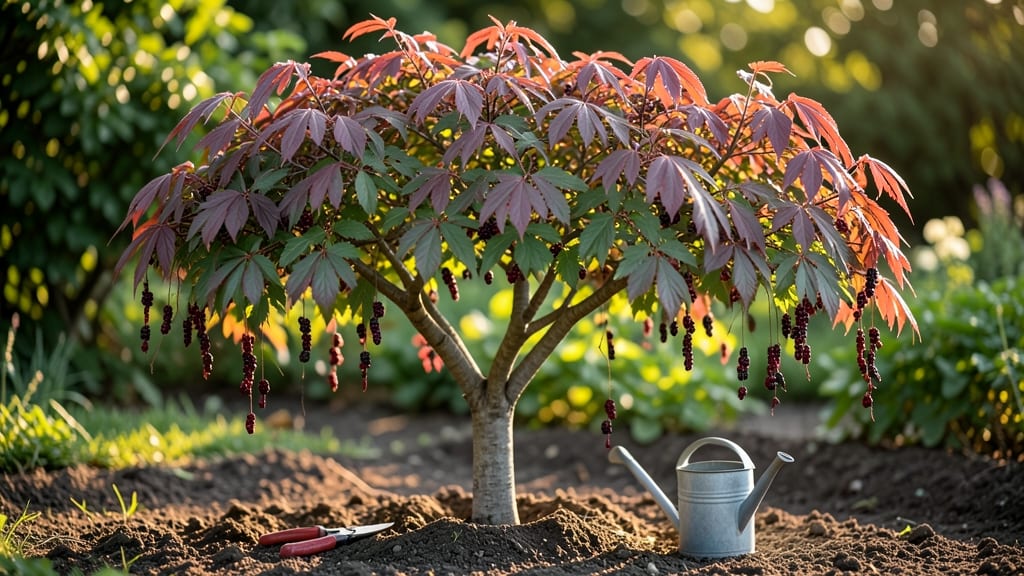
Your Gelato Red Mulberry Tree could produce berries so sweet they make store-bought fruit taste bland—and the secret starts with how you prune. I’ve pruned mine every winter for three seasons, and the difference in flavor and yield is night-and-day.
The key isn’t just cutting branches; it’s shaping the tree to focus its energy where it counts.
This cultivar stands out because its berries stay firmer and sweeter than other mulberries, but only if you prune correctly. You’ll need sharp pruners, a clear day (so you can see the branches), and about 30 minutes to tackle the job.
The goal is to open up the center for sunlight and air, which prevents disease and boosts fruit production. I’ve seen trees with dense centers struggle to ripen berries—don’t let that be yours.
By spring, you’ll notice thicker branches and clusters of deep red berries that taste like a cross between blackberries and chocolate. The foliage turns a stunning golden-yellow in fall, adding year-round interest.
Just be patient—it takes 2-3 years for a pruned tree to hit peak sweetness, but every snip now pays off in richer flavor later.
Works in zones 5-9, thrives in full sun, and handles drought once established. The only catch? Mulberries are messy—plant it where kids (or squirrels) won’t turn your yard into a berry buffet. Here’s how to prune for that perfect balance of beauty and bounty.
📚 In This Guide
- What you need
- Instructions
- Tips and common mistakes
- Wrapping up and next steps
What you need
- ● Pruning shears: Sharp, bypass-style shears (avoid anvil-style to prevent crushing branches). Recommended: Felco F-2 or similar.
- ● Loppers: For thicker branches (½"–1.5" diameter). Look for ratcheting or bypass models for precision.
- ● Hand pruners: For delicate trimming (smaller than ¼" diameter). Must be sterilized with rubbing alcohol to prevent disease.
- ● Gloves: Heavy-duty, cut-resistant gloves (e.g., Mechanix or gardening-specific brands) to protect from thorns.
- ● Disposable pruning bags: 2–3 10-gallon capacity bags to collect clippings and debris.
- ● Pruning saw: Curved-tooth saw for branches over 1.5" in diameter (e.g., Fiskars X7).
- ● Ladder or step stool: Sturdy, non-slip (e.g., 6–8 ft telescoping ladder for mature trees).
- ● Rubbing alcohol (70%+) or bleach solution: For sterilizing tools between cuts (1 part bleach to 9 parts water).
- ○ Tree wound sealant (optional but recommended): Pruning paste (e.g., Tanglefoot Tree Wound Pruning Sealer) for cuts larger than ½".
- ● Best time to prune: Late winter or early spring (before buds swell) or immediately after harvest (summer). Avoid pruning in fall.
- ● Weather check: Prune on a dry, overcast day to reduce stress on the tree and prevent fungal spread.
- ● Safety gear: Safety glasses (to shield from debris) and long sleeves/pants (for protection).
- ● Tree age consideration: Young trees (rejuvenation cuts.
- ● 💡 Sharpen your tools: Dull blades tear bark, inviting disease. Hone shears with a file or sharpening stone before starting.
- ● 🔥 Mark your cuts: Use chalk or tape to outline branches to remove—helps visualize the tree’s new shape.
- ● 🌡️ Work in layers: Remove ⅓ of the tree’s canopy at a time to avoid shocking it.
How to prune your Gelato Red mulberry tree for juicier berries
Sweet berries start with the right cuts—here's my approach to pruning for flavor and growth.
Time Your Pruning for Best Results
Prune your Gelato Red mulberry in late winter or early spring, just as buds begin to swell but before new growth starts. This timing ensures you remove last year's growth while leaving next season's fruit buds intact. Avoid pruning in fall or summer—you'll risk stimulating new growth that won't harden off before winter.
Watch for the first green buds along the branches—these signal the tree is waking up. That's your cue to grab your tools and get started. If you prune too early, you risk cutting off potential fruit buds. If you wait too long, you'll encourage excessive leafy growth at the expense of berry production.
Remove Dead, Diseased, or Crossing Branches First
Start by scanning the tree for dead wood—branches that are dry, brittle, or have no leaves. Use sharp pruning shears to cut these out at the branch collar, the swollen area where the branch meets the trunk. Next, look for branches with cankers, fungal spots, or oozing sap—these need removal to prevent disease spread.
Also eliminate any branches that cross each other or rub together. These create wounds where pests and diseases can enter. Make clean cuts at a 45-degree angle just outside the branch collar. Avoid leaving stubs—this prevents water from pooling and causing rot. If a branch is larger than 2 inches in diameter, use a pruning saw for a smooth cut.
Thin the Canopy for Better Airflow and Sunlight
Step back and assess the tree's shape. The goal is to create an open center that allows sunlight to reach the inner branches. Remove branches that grow inward or downward, as these block light and air from penetrating the canopy. Focus on branches that originate from the lower half of the tree—these compete with the main scaffold branches for energy.
For each branch you remove, look for a strong lateral branch growing nearby that can take its place. This ensures you maintain the tree's structure while improving fruit quality. Never remove more than 25% of the tree's foliage in one season—this can stress the Gelato Red mulberry and reduce berry production.
Shape the Tree for Optimal Berry Production
Now it's time to refine the tree's shape. Mulberries respond well to an open-center or vase shape, which allows sunlight to reach all branches. Start by selecting 3-5 strong scaffold branches that are evenly spaced around the trunk. These will form the main structure of your tree.
Prune back any competing branches that grow from the same union as your scaffold branches. Cut these back to a bud that faces outward—this encourages growth in the direction you want. Avoid "heading back" (cutting back to a bud in the center of the branch), as this often leads to dense, unproductive growth. Instead, make cuts just above an outward-facing bud to maintain an open structure.
Clean Up and Monitor for New Growth
After pruning, rake up and dispose of all clippings—especially if they show signs of disease. Never leave them on the ground, as this can spread pathogens to your tree. Sterilize your pruning tools with rubbing alcohol or a 10% bleach solution to prevent cross-contamination between cuts.
In the weeks following pruning, keep an eye out for new growth emerging from the buds you left behind. Healthy growth should be bright green and firm, not yellow or wilted. If you see weak growth, it may indicate stress from over-pruning. Water deeply after pruning to help the tree recover, but avoid overwatering—mulberries prefer well-drained soil.
Tips & tricks for pruning your Gelato Red mulberry tree
Pruning your Gelato Red mulberry tree isn't just about cutting branches—it's about unlocking that sweet, juicy potential hiding in your tree. Here's what I've learned from years of working with these fruit-bearing beauties.
Timing is Everything: That late winter to early spring window is critical because it's when the tree is still dormant but just starting to wake up. I've seen people prune too early and accidentally remove next year's fruit buds, or too late and end up with a tree full of leaves but no berries. Look for those first green buds—those are your signal to start. If you're unsure, err on the side of waiting a few extra days rather than cutting too soon.
Tool Prep Matters More Than You Think: I can't stress enough how important it is to sterilize your tools between cuts. Mulberry trees are susceptible to bacterial cankers, and using dirty tools can spread disease throughout your tree. After each cut, especially when removing diseased branches, wipe your pruning shears with rubbing alcohol or a 10% bleach solution. Also, make sure your tools are sharp—dull blades crush branches instead of making clean cuts, which creates larger wounds that heal more slowly.
Visualize the Tree's Future Shape: Before you make any cuts, step back and imagine what you want your tree to look like in a year. Gelato Red mulberries thrive with an open center that allows sunlight to reach all branches. When you're thinning the canopy in Step 3, think about which branches will provide the best structure for fruit production. The goal is to create a framework where sunlight can penetrate to the center—this is what gives you those sweet, flavorful berries. Remove any branches growing inward or downward, as these will only create shade and reduce fruit quality.
Don't Over-Prune: The 25% foliage limit isn't just a suggestion—it's a hard rule for Gelato Red mulberries. I've seen people get overzealous and remove too much, thinking it will result in bigger berries. But removing more than 25% stresses the tree and can actually reduce fruit production. Think of pruning as sculpting rather than hacking—you're shaping the tree to maximize its potential, not stripping it down. If you're unsure, it's better to leave a branch than to remove too much.
Pro Tips for Gelato Red Mulberry Tree
- Pruning your Gelato Red mulberry tree isn't just about cutting branches—it's about unlocking that sweet, juicy potent...
- Timing is Everything: That late winter to early spring window is critical because it's when the tree is still dormant...
- Tool Prep Matters More Than You Think: I can't stress enough how important it is to sterilize your tools between cuts...
Frequently asked questions
Got questions about pruning your Gelato Red Mulberry tree for the juiciest berries? You’re not alone!
Here are answers to the most common queries to help you grow a thriving, fruit-bearing tree.
When is the best time to prune a Gelato Red Mulberry tree?
Prune your Gelato Red Mulberry in late winter or early spring (before buds swell) to encourage strong growth and fruit production. Avoid heavy pruning in fall—it can stimulate late-season growth vulnerable to frost damage. Light shaping in summer is fine, but focus on winter for major cuts!
How much can I prune without harming the tree?
Remove no more than 25% of the tree’s canopy in a single session to avoid stress. Focus on:
- Dead, diseased, or crossing branches
- Suckers at the base
- Overcrowded growth inside the canopy
Will pruning increase berry sweetness?
Pruning improves airflow and sunlight penetration, which boosts fruit quality. Thinner trees produce larger, sweeter berries with fewer seeds. Just avoid over-pruning—balance fruit yield with tree health for the best flavor.
What if my tree isn’t fruiting after pruning?
Check these common issues:
- Age: Mulberries take 3–5 years to bear fruit after planting.
- Sunlight: Ensure it gets 6+ hours of direct sun daily.
- Water/Nutrients: Drought or poor soil can stunt fruit production.
- Pollinators: Mulberries are self-pollinating, but bees help! Plant near flowers if yields are low.
Can I use the pruned branches for anything else?
Yes! Mulberry branches are versatile:
- Firewood: Dries well and burns hot (season for 6–12 months).
- Crafts: Use young branches for wreaths, stakes, or mulberry woodworking.
- Compost: Chop small branches into mulch or compost—they break down quickly.
Wrapping up and next steps
Pruning your Gelato Red Mulberry Tree is the secret to unlocking its full potential—sweeter berries, better airflow, and a healthier plant! 🌱 By mastering the right techniques and timing, you’ll enjoy a bountiful harvest year after year.
Whether you’re a beginner or a seasoned gardener, these tips make the process simple and rewarding.
Ready to transform your tree? Start by marking your calendar for late winter or early spring—your future berries will thank you! Grab your pruners, roll up your sleeves, and watch your Gelato Red Mulberry Tree thrive with every strategic cut.