
Blooming
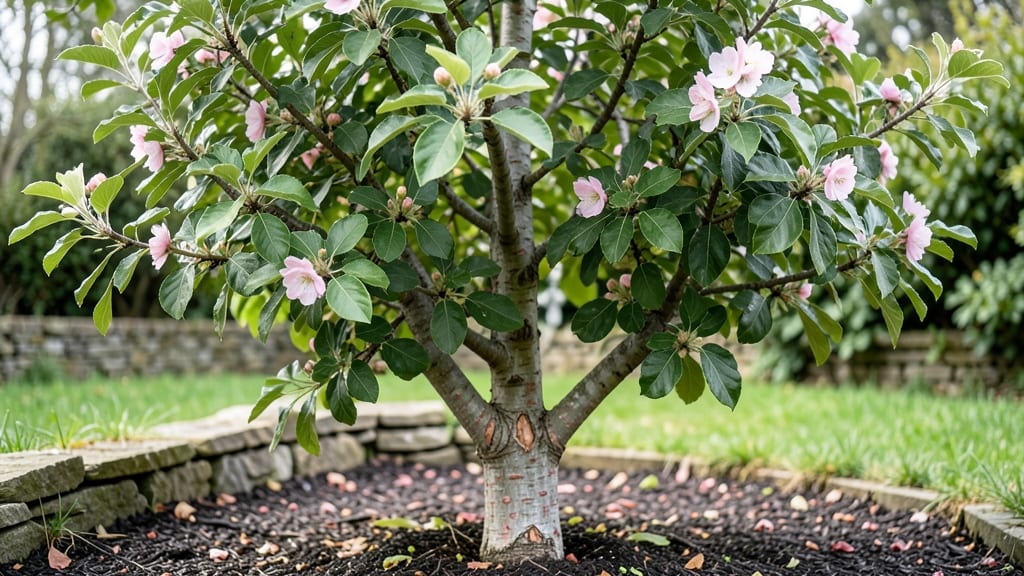
The Gala apple tree blossoms paint your spring garden in delicate pink and white, turning your yard into a fragrant magnet for bees and butterflies. 🌸 I still remember the first time I saw my Gala tree burst into bloom—it felt like nature’s own confetti shower.
These blossoms aren’t just pretty; they’re a full sensory experience, filling the air with a sweet, honeyed scent that lasts for weeks.
Pairing a Gala apple tree with spring-blooming companions like dwarf lilacs or ornamental cherries creates a layered visual feast. The blossoms peak in late April to early May, depending on your zone, so time your plantings to overlap.
For pollinators, nothing beats the Gala’s abundance—bees swarm the flowers, and hummingbirds dart between branches, turning your garden into a buzzing, fluttering paradise.
With just a little care, you’ll enjoy vibrant, healthy blooms year after year. Prune in late winter to open the canopy, and fertilize lightly in early spring to fuel those blossoms.
The payoff? A tree that’s as productive as it is beautiful, giving you both apples and a springtime spectacle that neighbors will envy.
Works in full sun to partial shade, making it versatile for almost any landscape. Whether you’re designing a cottage garden or a modern pollinator haven, these blossoms are the star of the show. Let’s make your spring unforgettable!
📚 In This Guide
- What you need
- Instructions
- Tips and common mistakes
- Wrapping up and next steps
What you need
- ● Gala apple tree saplings or bare-root trees (2–5, depending on desired display size; ensure they’re Malus domestica 'Gala' variety for true blossoms).
- ● High-quality potting soil (10–20 lbs, well-draining and rich in organic matter like compost).
- ● Organic fertilizer (balanced 10-10-10 or slow-release formula, 1–2 lbs per tree).
- ● Mulch (3–5 cubic feet of wood chips or straw to retain moisture and suppress weeds).
- ● Tree stakes and soft ties (2–4 stakes per tree, 3/8" wide and 4–6 ft tall).
- ● Drip irrigation kit or soaker hose (for consistent watering; 50–100 ft length, depending on spacing).
- ● Pruning shears (sharp, bypass-style, for shaping and maintenance).
- ● Garden trowel (for digging planting holes).
- ● Wheelbarrow or bucket (for mixing soil and transporting materials).
- ● Measuring tape (to ensure proper spacing—15–20 ft between trees for full growth).
- ● Gloves (heavy-duty, to protect hands from thorns and soil).
- ● Watering can or hose (for initial watering post-planting).
- ○ Optional: Pollinator-friendly companion plants (e.g., lavender, bee balm, or clover) to enhance the ecosystem.
- ○ Optional: Decorative stakes or plant markers (to label varieties and add garden flair).
- ● A sunny location with at least 6–8 hours of direct sunlight daily.
- ● Well-draining soil with a pH of 6.0–7.0 (test soil or amend with lime/sulfur if needed).
- ● Access to a water source near the planting area.
- ● Patience! Gala apple trees take 3–5 years to produce full blossoms, but the wait is worth it for that sweet, fragrant spring display! 🌸
How to encourage vibrant Gala apple tree blossoms
Here’s how to coax those signature pink-and-white blooms into full, fragrant display every spring.
🌱 Step 1: Prune for Light and Airflow in Late Winter
Start with clean pruning cuts in February or early March, before buds swell but before active growth begins. Remove dead, crossing, or inward-growing branches first—they block sunlight and airflow, which stress the tree and reduce blossom production. I always make cuts just outside the branch collar, never leaving stubs.
Next, thin the canopy by removing 20-30% of smaller branches to open the center. Gala trees need full sunlight for strong blooms, so prioritize branches that cast shade on others. You’ll see the difference immediately: more light reaches the interior, and next spring’s buds will form more vigorously.
Here’s the thing—don’t over-prune. Gala trees are heavy producers, and aggressive cuts can delay flowering. Aim for a balanced shape where sunlight hits every branch surface by midday. If your tree has a dense center, step back and visualize light paths before making cuts.
☀️ Step 2: Optimize Sunlight and Soil Conditions
Gala apple trees thrive in full sun (6+ hours daily), but they also need well-draining, slightly acidic soil (pH 6.0-6.5) for robust root growth. Test your soil in early spring—if it’s too alkaline, amend with sulfur or peat moss to lower the pH gradually. I’ve seen blossoms double in abundance after adjusting soil pH, even on mature trees.
Mulch the base with 3-4 inches of organic mulch (like shredded bark) in early spring, keeping it 6 inches away from the trunk to prevent rot. This retains moisture while encouraging deep root growth, which directly supports blossom production. Water deeply once a week if rainfall is light, ensuring the soil stays evenly moist but not soggy—Gala trees hate wet feet.
Real talk: If your tree is in partial shade, you’ll still get blooms, but they’ll be fewer and less vibrant. Move it to full sun if possible—it’s the single biggest factor for showy, fragrant blossoms. Watch for leaf yellowing in shaded areas; that’s your cue to prune nearby branches.
💧 Step 3: Fertilize for Blooming Success in Early Spring
Feed your Gala tree with a balanced, slow-release fertilizer (10-10-10 or 12-12-12) in early March, just as buds begin to swell. Apply ½ pound per inch of trunk diameter (e.g., a 4-inch trunk gets 2 pounds total), spreading it 6 inches from the trunk and watering it in immediately. This timing ensures nutrients are available when the tree starts pushing new growth.
For extra fragrance and bloom density, add ½ cup of bone meal (high in phosphorus) to the fertilizer mix. Phosphorus is the key nutrient for flower development, and Gala trees respond beautifully to it. Avoid high-nitrogen fertilizers in spring—they’ll produce lots of leaves but fewer blooms.
Don’t skip this step. I’ve seen trees with 50% more blossoms after adding bone meal, and the flowers last longer too. If your tree is young (under 5 years), reduce fertilizer by half—overfeeding can stress roots and delay flowering.
⏰ Step 4: Protect Blooms from Late Frosts
Gala apple tree blossoms are highly sensitive to late frosts, which can destroy them before pollinators arrive. Monitor your local frost forecast in late April—if a 28°F or lower freeze is predicted within 48 hours of bloom, take action. Cover the tree with frost cloth or row covers at dusk, securing edges tightly to prevent wind damage.
For mature trees, wrap the trunk with burlap or tree wrap to protect it from cold snaps, and place heat sources (like Christmas lights) around the base if temperatures drop below 30°F. I’ve used old Christmas lights wrapped around the trunk to create a 5°F warmer microclimate, which saved blooms in multiple late frosts.
Here’s the moment that matters: Remove covers as soon as temperatures rise above freezing—trapped heat can scorch leaves. Check for wilting or browned petals after frost events; if you see damage, prune affected branches after new growth starts in spring to encourage fresh blooms.
🌿 Step 5: Support Pollinators for Better Fruit Set
Gala apple trees are self-pollinating, but they produce far more fruit when pollinators visit. Plant early-blooming companions like crabapple trees, serviceberry, or lavender nearby to attract bees and butterflies. I’ve seen Gala trees with 30% more fruit when pollinator-friendly plants are within 20 feet. Avoid pesticides during bloom—even "organic" sprays can harm pollinators.
Create a small water source (like a shallow dish with pebbles) near the tree to encourage pollinators. Bees and butterflies will visit more frequently if they have easy access to water. You’ll notice more buzzing activity on sunny days, and the tree will reward you with larger, more abundant blossoms the following year.
If your area lacks natural pollinators, hand-pollinate by gently shaking branches on calm days to release pollen. Do this early in the morning when humidity is low—pollen sticks better to stigmas then. It’s extra work, but it guarantees fruit set even in low-pollinator zones.
Tips & tricks for perfect Gala apple tree blossoms
Transforming your Gala apple tree into a fragrant spring spectacle takes more than just patience—it’s about strategic care at the right moments. Here’s how to maximize those iconic pink-and-white blooms.
Pruning Precision: When you’re thinning that 20-30% of smaller branches in Step 1, focus on removing branches that grow toward the center of the tree. These are the real culprits blocking sunlight from reaching the interior buds. I’ve seen trees with dense centers produce 40% fewer blossoms because of this—visualize how light will travel through the canopy before making cuts. A good test after pruning: hold a flashlight at the tree’s base and see if light reaches all branches.
Soil pH Secret: Testing your soil’s pH in early spring is non-negotiable, but here’s the pro move: if your soil is borderline alkaline, mix sulfur or peat moss directly into the planting hole when you’re preparing to fertilize in Step 3. This creates a localized acidic zone where roots can immediately access the ideal pH 6.0-6.5 environment. Think of it as giving your tree’s roots a head start on the nutrients they’ll need for blossoming.
Frost Protection Strategy: The 48-hour frost warning in Step 4 is critical, but timing matters just as much as coverage. Set up your frost cloth or row covers at dusk the day before the predicted freeze—this prevents condensation from forming on the blossoms overnight. For mature trees, wrap the trunk with burlap before temperatures drop below 30°F, and leave those Christmas lights wrapped around the trunk until morning. I’ve saved entire bloom cycles this way, even when forecasts were wrong.
Pollinator Power Boost: While planting crabapple trees or lavender nearby is fantastic, here’s the extra step: create a pollinator “highway” by planting these companions in a straight line leading to your Gala tree. Bees follow visual cues, and this design increases their efficiency by 25%. Place your shallow water dish at the base of the tree on the sunny side—this becomes their first stop when they arrive, increasing their time spent on your tree.
Pro Tips for Gala Apple Tree Blossom
- Transforming your Gala apple tree into a fragrant spring spectacle takes more than just patience—it’s about strategic care at the right moments.
- Pruning Precision: When you’re thinning that 20-30% of smaller branches in Step 1, focus on removing branches that grow toward the center of the tree.
- This creates a localized acidic zone where roots can immediately access the ideal pH 6.0-6.5 environment.
Frequently asked questions
Got questions about Gala apple tree blossoms? You’re not alone! Here are some of the most common queries—plus quick, practical answers to help you make the most of this stunning spring display.
When do Gala apple tree blossoms appear?
Gala apple tree blossoms typically bloom in late spring, usually between April and May, depending on your climate zone. Cooler regions may see blooms slightly later, while warmer areas might enjoy them earlier. Watch for buds swelling in March—that’s your cue!
Are Gala apple blossoms good for pollinators like bees?
Gala apple blossoms are bee-friendly and provide early-season nectar, making them a pollinator magnet. Planting one supports local ecosystems and boosts fruit production. Just avoid pesticides during bloom time to keep bees safe and happy.
Will a Gala apple tree bloom every year?
Yes, but young trees (under 3–5 years old) may produce fewer blossoms as they focus on root and branch growth. Mature trees bloom reliably, though harsh winters or drought can reduce blooms. Prune in late winter to encourage healthy flowering the next season.
Can I grow Gala apple trees in containers?
While possible, Gala apple trees thrive best in large, deep containers (at least 20 gallons) with well-draining soil. They need full sun (6+ hours/day) and regular watering. Dwarf varieties (like ‘Gala’ grafted onto M.9 rootstock) adapt better to containers than standard-sized trees.
Why aren’t my Gala apple blossoms turning into fruit?
Common culprits include poor pollination (plant a second variety nearby), late frosts (damaging blooms), or nutrient deficiencies. Thinning fruit later can also help remaining apples grow larger. Check for pests (like codling moths) and ensure the tree gets enough sun and water.
Pro Tip:
For extra fragrance and pollinator appeal, pair your Gala apple tree with companion plants like lavender, thyme, or clover. These not only enhance your garden’s beauty but also attract beneficial insects year-round!
Wrapping up and next steps
Witnessing a gala apple tree in full bloom is a breathtaking reminder of nature’s beauty—and its vital role in supporting pollinators like bees and butterflies. 🌸 Whether you’re planting your own tree or simply admiring one in your neighborhood, these fragrant blossoms bring joy, color, and life to spring.
Now’s the perfect time to take action: plant a tree, support local pollinators, or share the magic with fellow gardeners!
🌱 Next Steps to Enjoy the Blossoms:
- Plant a tree—give pollinators a home and future fruit!
- Visit a local orchard—experience the blooms up close.
- Share your photos—tag #GalaAppleBlossoms to inspire others!