
Pruning
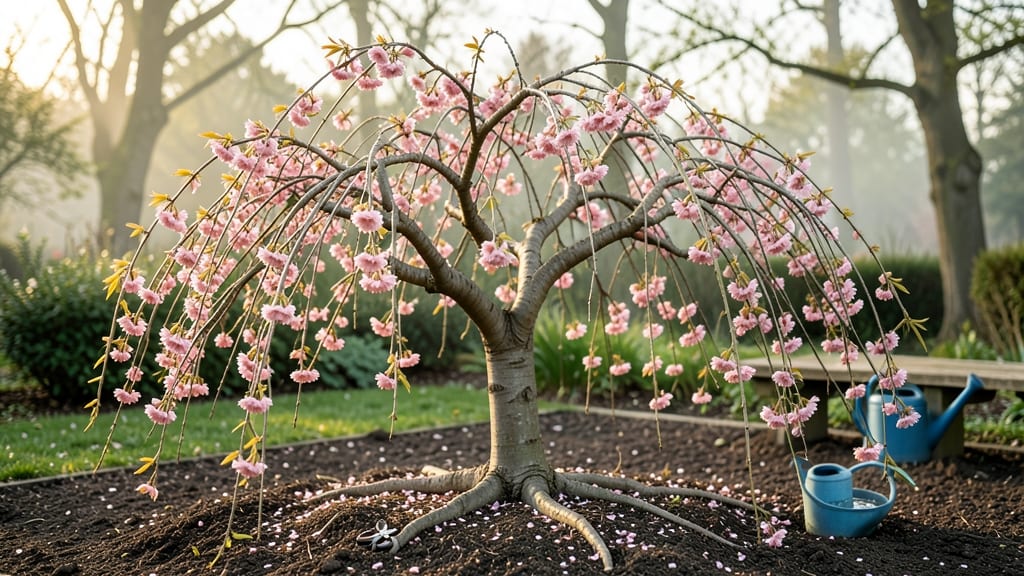
The fountain weeping cherry tree transforms any yard into a living waterfall of pink blossoms and cascading branches. 🌸 What makes this tree special isn't just its dramatic year-round shape—it's how four simple seasonal cuts keep it thriving for decades.
I planted mine in my front yard five years ago, and neighbors now stop to ask about it every spring.
This tree thrives in full sun with well-draining soil, but the real magic happens in how you shape it. Pruning isn't just about removing dead branches—it's about encouraging that signature weeping habit.
Start with clean cuts in late winter to remove crossing branches, then follow up with shaping cuts in early summer, late summer, and again in early fall. Each season builds on the last, creating that graceful, fountain-like silhouette.
By spring, you'll see fresh pink blossoms cascading like a waterfall, followed by vibrant green foliage that turns fiery red in fall. The tree stays lush even in winter, offering texture and structure when most gardens go dormant.
With proper care, it grows 15-20 feet tall and 10-15 feet wide, making it perfect for focal points or as a stunning privacy screen.
Even in colder climates, this tree handles winter well—just avoid heavy pruning in late fall. The key is patience: it takes about three years to establish that classic weeping shape, but once it's there, it's a showstopper every season. Let's get started with the essentials for planting and pruning right.
📚 In This Guide
- What you need
- Instructions
- Tips and common mistakes
- Wrapping up and next steps
What you need
- ● Pruning shears: Sharp, bypass-style shears (1 pair) for clean cuts on small branches.
- ● Loppers: Heavy-duty (20–24" reach) for thicker branches (½"–1.5" diameter).
- ● Pruning saw: Curved-tooth saw (for branches >1.5" thick).
- ● Gloves: Heavy-duty, cut-resistant gloves (1 pair) to protect hands.
- ● Disinfectant: 70% isopropyl alcohol or pruning sealant (small bottle) to prevent disease spread.
- ○ Extension pole: 6–10 ft (optional but helpful for tall trees).
- ● Marking twine or flags: For tagging branches to remove (small roll).
- ● Wheelbarrow or bucket: For collecting debris (1–2 units).
- ● Hand saw: For precision cuts on stubborn branches.
- ● Ladder: Sturdy, stable ladder (if tree is >10 ft tall).
- ● Pruning paint: To seal large cuts and prevent decay.
- ● Safety glasses: For debris protection.
- ● Notebook & pen: To sketch your pruning plan.
Step-by-Step instructions for pruning a fountain weeping cherry tree
Here's how to shape your tree's graceful weeping branches into a stunning year-round display.
✂️ Step 1: Late Winter Cleanup (Dormant Season)
Start your pruning in late February or early March while the tree is still dormant but before buds swell. This is the best time to remove dead, diseased, or crossing branches that spoil the tree's elegant form. I reach for my sharp bypass pruners and make clean cuts just outside the branch collar—never leave stubs, as they invite rot.
Look for branches that grow inward toward the center of the tree. These compete with others for sunlight and weaken the tree's structure. Remove up to 25% of the total canopy during this first cut, focusing on branches thicker than ½ inch. Thin out crowded areas to improve airflow, which prevents fungal diseases that can discolor the stunning foliage you're working to preserve.
Here's the thing—weeping cherries have a natural tendency to grow downward, but some branches may start growing upward. These "water sprouts" should be pruned back to a lateral branch or bud. You'll see the tree's graceful fountain shape emerge as you work, but resist the urge to over-prune. This first cut is about cleaning up, not shaping.
✂️ Step 2: Light Summer Pruning (After Flowering)
Wait until mid-June, after the tree has finished flowering but before new growth hardens. This timing ensures you don't remove next year's blooms. I use my hand pruners again, but this time I focus on maintaining the tree's shape rather than major cleanup. Look for branches that are growing too long or starting to lose their weeping habit.
For branches that have grown too upright, I make a cut just above a downward-growing lateral branch. This encourages the tree to maintain its fountain shape. You'll want to remove no more than 10% of the total canopy during this pruning—this is a maintenance cut, not a structural one. Watch for any suckers growing from the base or trunk; these should be removed immediately to redirect the tree's energy into the canopy.
This is the moment that matters: if you see any branches with dieback (brown, dead tips), cut those back to healthy green growth. Don't worry if it looks dramatic—weeping cherries are remarkably resilient and will fill back in beautifully. Just make sure your cuts are clean and at a slight angle to prevent water from pooling.
✂️ Step 3: Post-Bloom Summer Thinning (Late Summer)
In early August, after the tree has finished producing fruit (if applicable) or after the main flush of summer growth, perform another light pruning. This time, focus on the smaller branches that make up the tree's cascading effect. Use your bypass pruners to trim back any branches that are growing too densely or starting to look leggy.
I like to step back and look at the tree from all angles. The goal is to maintain an even, balanced fountain shape. If one side looks heavier, thin out a few branches there to restore balance. You'll see the tree's natural weeping habit emerge more clearly as you work. For branches that are too long, cut them back to a point where the remaining branch still has a good number of leaves to maintain photosynthesis.
Real talk: this is where most people make mistakes. Don't be tempted to over-prune to "fix" the shape. Weeping cherries have a natural growth pattern, and forcing them into an unnatural shape will stress the tree. Instead, think of this as a gentle refinement—just enough to keep the tree looking its best without shocking it.
✂️ Step 4: Late Fall Preparation (Before Dormancy)
In late October or early November, just before the tree enters dormancy, perform a final light pruning. This is your chance to remove any branches that have died back during the growing season or that are showing signs of disease. Use your sterilized pruners to make clean cuts, and dispose of any diseased branches immediately to prevent spreading spores.
Focus on the smaller branches that make up the tree's cascading effect. Trim back any that have grown too long or are starting to look sparse. You'll want to remove no more than 5-10% of the total canopy during this final cut. This is about tidying up, not shaping—think of it as giving your tree a fresh haircut before winter.
Here's the final tip: after pruning, apply a layer of mulch around the base of the tree (but not touching the trunk) to protect the roots over winter. Water the tree deeply before the ground freezes to ensure it has enough moisture to survive the cold months. You've got this—your weeping cherry will reward you with a stunning display of blooms, foliage, and even fruit (if it's a fruiting variety) for years to come.
Tips & tricks for perfectly pruning a fountain weeping cherry tree
Let me save you from the common mistakes I made while shaping my own weeping cherry—these seasonal pruning secrets will keep your tree thriving for decades.
Timing is Everything: The four-season schedule in the instructions works because each cut aligns with the tree's natural growth cycles. In Step 1, that late February/early March window is critical—if you wait until buds swell, you risk removing next year's blooms. I always mark my calendar because missing this timing can set back your tree's recovery for months. For Step 2, the mid-June timing after flowering but before new growth hardens is equally important—this ensures you're not pruning away potential blooms while still maintaining shape.
Tool Selection Matters: Sharp bypass pruners aren't just recommended—they're essential. I learned this the hard way after using dull shears that crushed branches and left ragged cuts. For branches thicker than ½ inch in Step 1, you'll need your pruners; for smaller branches in Steps 3 and 4, hand pruners work perfectly. Always sterilize your tools between cuts, especially when dealing with diseased branches in Step 4. I keep a small bottle of rubbing alcohol handy to wipe down my tools between each branch to prevent spreading any potential infections.
Branch Angle Secrets: When pruning upright branches in Step 2 or leggy branches in Step 3, always cut just above a downward-growing lateral branch or bud. This encourages the tree to maintain its natural weeping habit. I make a point to look for these lateral branches first—they're often hidden among the foliage. If you can't find a suitable lateral branch, cut back to a point where the remaining branch still has several leaves to maintain photosynthesis. The goal is to create natural growth patterns, not force unnatural shapes.
Visual Balance Check: Before making any cuts in Steps 2 and 3, step back and examine the tree from all angles. The fountain shape should look even and balanced. I often use a string line technique for larger trees: tie a string between two stakes at the desired height, then trim branches that cross above this line. For smaller trees, just use your eyes—imagine the perfect fountain shape and adjust branches to match. This visual check prevents over-pruning while ensuring your tree maintains its elegant form.
Pro Tips for Fountain Weeping Cherry Tree
- Let me save you from the common mistakes I made while shaping my own weeping cherry—these seasonal pruning secrets will keep your tree thriving for decades.
- Timing is Everything: The four-season schedule in the instructions works because each cut aligns with the tree's natural growth cycles.
- Tool Selection Matters: Sharp bypass pruners aren't just recommended—they're essential.
Frequently asked questions
Got questions about keeping your fountain weeping cherry tree looking its best year-round? Here are some common ones—and their answers!
How often should I prune a fountain weeping cherry tree?
Prune your weeping cherry tree four times a year for that dramatic, layered look: late winter (before buds swell), spring (after blooms fade), summer (to shape growth), and fall (light cleanup). Focus on removing dead, crossing, or overcrowded branches while preserving its natural weeping form.
Can I prune my weeping cherry tree in winter?
Yes, but only lightly! Prune in late winter (dormant season) to avoid stressing the tree before spring growth. Avoid heavy cuts—stick to removing deadwood or weak branches to prevent disease. Save major shaping for spring or summer when the tree is actively growing.
Will pruning affect next year’s cherry blossoms?
Pruning after blooms fade (late spring) won’t hurt next year’s flowers—in fact, it encourages more blooms! Avoid pruning in early spring (before buds open), as this can reduce flowering. For best results, prune 1/3 of the oldest wood annually to keep the tree healthy and blooming.
What if my weeping cherry tree isn’t growing as expected?
Check for these common issues:
- Over-pruning: Too many cuts can stress the tree. Stick to selective shaping.
- Poor soil: Weeping cherries thrive in well-draining, slightly acidic soil. Amend with compost if needed.
- Pests/disease: Yellow leaves or spots? Treat with neem oil or fungicide early.
- Sunlight: Needs 6+ hours of sun daily—shady spots slow growth.
Are there alternatives to weeping cherry trees for small spaces?
If space is tight, consider these low-maintenance, compact alternatives:
- Dwarf Japanese Maple – Stunning foliage, similar pruning needs.
- Columnar Crape Myrtle – Blooms year-round with minimal shaping.
- Weeping Silver Birch – Fast-growing with graceful branches.
- Ornamental Grass (e.g., ‘Karl Foerster’ Feathertop) – Adds texture with zero pruning.
Still stumped? Tag us on social media with your tree’s progress—we love seeing your pruning wins!
Wrapping up and next steps
The fountain weeping cherry tree is a stunning, low-maintenance beauty that rewards you with year-round elegance—thanks to strategic seasonal pruning! By mastering just four key cuts, you’ll keep its graceful, weeping branches lush and vibrant while preventing disease and pests.
Whether you’re a pruning pro or a curious beginner, this tree offers a dramatic payoff with minimal effort.
Ready to transform your space? Grab your tools, follow the seasonal guide, and watch your weeping cherry tree thrive! Start with this season’s cut—your future canopy (and neighbors’ envy) will thank you. 🌸✂️