
Pruning
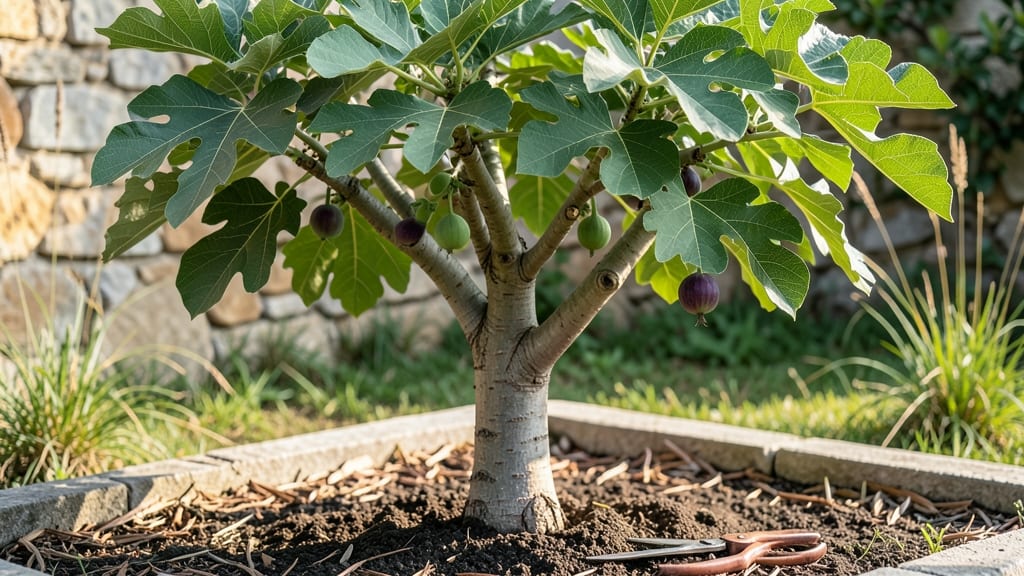
Pruning fig tree branches isn’t just about shaping—it’s the secret to keeping your tree productive for decades. I’ve learned that strategic cuts in late winter or early spring encourage stronger growth and bigger harvests, while avoiding the common mistake of over-pruning that weakens the tree.
The key is timing: too early and you risk frost damage; too late and you lose potential fruit production.
You’ll need sharp pruning shears, rubbing alcohol for sterilizing cuts, and a clear plan for which branches to keep. Start by removing dead, diseased, or crossing branches first—these are the easy wins that improve airflow and sunlight penetration.
Then focus on thinning the canopy to let light reach the center, where most fruit develops. My fig tree went from sparse harvests to overflowing branches after just one season of targeted pruning.
What you’ll end up with is a tree that looks like a well-maintained work of art while producing more fruit than you know what to do with. The branches will thicken, the leaves will shine, and you’ll notice fewer pests because the tree isn’t overcrowded.
Best of all, this method works for both container-grown figs and those planted in the ground.
Even experienced gardeners make mistakes here—like cutting too close to the trunk or pruning at the wrong time of year. But once you get the rhythm, it becomes second nature.
Whether you’re dealing with a mature tree or a young sapling, these techniques keep figs healthy year-round, no matter where you live.
📚 In This Guide
- What you need
- Instructions
- Tips and common mistakes
- Wrapping up and next steps
What you need
- ● Pruning shears – Bypass pruners (sharp, clean blades) for small to medium branches (1/4"–1" thick). Anvil pruners for thicker branches (up to 2" thick).
- ● Loppers – For branches 1"–2" in diameter (look for ratcheting or bypass-style for precision).
- ● Pruning saw – Curved or folding saw for branches 2"+ in diameter (avoid cheap saws—they dull quickly!).
- ● Disinfectant – Rubbing alcohol (70%+) or bleach solution (1 part bleach to 9 parts water) to sterilize tools between cuts.
- ● Garden gloves – Cut-resistant, durable gloves (e.g., mechanics or pruning-specific) to protect hands from thorns and rough bark.
- ● Extension pole – Adjustable or telescoping (10–15 ft) with a pruner or saw attachment for high branches.
- ● Heavy-duty trash bags – For collecting pruned branches and debris (2–3 bags per session).
- ○ Marking twine or tape – Colored twine or painter’s tape to flag branches for removal (optional but helpful for complex pruning).
- ● Pruning sealant – Tree wound paint (controversial but useful for large cuts >2" in diameter).
- ● Step stool or ladder – Stable, non-slip (3–6 ft) for lower branches (prioritize safety!).
- ● Sharpener – File or honing stone to keep blades razor-sharp mid-session.
- ● Safety glasses – To protect eyes from debris or sap splatter.
- ● Notebook & pen – To sketch branch maps or note pruning decisions for future reference.
How to prune a fig tree branch for year-round health
Strategic cuts keep your fig tree thriving—here's how to do it right.
Identify the Right Cuts for Seasonal Growth
Figs respond best to pruning when they're dormant, typically in late fall or early winter. Look for dead, diseased, or crossing branches first—these are your priority. Dead branches snap easily when bent, while healthy ones bend slightly. Remove any branches that rub against others, as this creates wounds that invite pests and disease.
For spring pruning, focus on shaping the tree and encouraging fruit production. You'll want to cut back last year's growth by about one-third to promote new, vigorous shoots. This is when you'll see the tree's natural structure emerge—watch for where branches form a natural vase shape or open canopy.
Use the Correct Tools for Clean Cuts
Sharp, clean tools are non-negotiable. Use pruning shears for branches up to ½ inch thick, and a pruning saw for thicker branches. Always sterilize your tools with rubbing alcohol before and after pruning to prevent spreading disease. I like to wipe down the blades with a cloth soaked in alcohol—this takes just seconds but makes all the difference.
Make cuts at a 45-degree angle, about ¼ inch above an outward-facing bud. This angle helps water run off the cut, preventing rot. If you're unsure which way is outward, look for the small bump on the bud—this is where new growth will emerge. Avoid leaving stubs, as these can trap moisture and lead to infection.
Prune for Airflow and Light Penetration
Thin out crowded branches to improve airflow and sunlight exposure. Figs need plenty of light to produce fruit, so aim for an open center that lets sunlight reach the inner branches. Start at the top and work your way down, removing branches that grow inward or downward. You'll see the tree's natural shape reveal itself as you make these cuts.
For established trees, remove no more than 25% of the foliage in one season. Over-pruning stresses the tree and can reduce fruit production. If you're unsure how much to cut, err on the side of caution—you can always prune more next season. Watch for new growth within a few weeks; this is your sign that the tree is responding well.
Clean Up and Monitor for Recovery
After pruning, collect and dispose of all cuttings. Don't leave them on the ground, as they can harbor pests or disease. I like to burn or bag the debris immediately—this keeps my garden clean and reduces the risk of reinfection. If you notice any signs of disease on the branches, such as black spots or oozing sap, dispose of them separately.
Keep an eye on the tree in the weeks following pruning. New growth should appear within 4-6 weeks, depending on the season. If you see yellowing leaves or wilting, it could be a sign of stress or over-pruning. Water the tree deeply after pruning to help it recover, but avoid overwatering—figs are drought-tolerant once established.
Tips & tricks for perfect fig tree branch pruning
These simple strategies will help you prune your fig tree like a pro—without the guesswork.
Seasonal Timing Secret: Late fall or early winter is ideal for dormant-season pruning, but don't stress if you miss it. Spring pruning works too, though it focuses more on shaping than disease removal. The key is to prune after the tree has gone dormant but before new growth starts. If you're unsure, check for leaf buds—if they're still tight and brown, it's safe to prune.
Tool Technique: When making your 45-degree cuts in Step 2, position your pruning shears so the blade faces outward from the branch collar. This creates a clean cut that heals better. For thicker branches, use a pruning saw with smooth, steady strokes—sawing too quickly can tear the wood. I've ruined several cuts by rushing, so take your time here. The goal is a smooth cut that won't peel as the tree heals.
Shape Strategy: In Step 3, aim for an open center that resembles an inverted cone. This allows sunlight to reach all parts of the tree, which is crucial for fruit production. Start at the top and work downward—this prevents you from accidentally cutting branches you've already removed. You'll know you're doing it right when you can see sunlight through the center of the tree.
Recovery Watch: After pruning, monitor for new growth within 4-6 weeks. Healthy new shoots should emerge from the buds you left just above your cuts. If you notice yellowing leaves or stunted growth, you may have over-pruned. Figs are resilient, but they won't tolerate aggressive cutting. Think of it like giving your tree a haircut—you want to shape it, not shave it.
Pro Tips for Fig Tree Branch
- These simple strategies will help you prune your fig tree like a pro—without the guesswork.
- Seasonal Timing Secret: Late fall or early winter is ideal for dormant-season pruning, but don't stress if you miss it.
- Tool Technique: When making your 45-degree cuts in Step 2, position your pruning shears so the blade faces outward from the branch collar.
Frequently asked questions
Got questions about pruning your fig tree branch? You’re not alone! Here are some of the most common concerns—and straightforward answers—to help you keep your tree thriving.
When is the best time to prune a fig tree branch?
The ideal time to prune is late winter or early spring, just before new growth begins. This minimizes stress on the tree and prevents disease spread. For tropical fig varieties, prune in late winter, while Mediterranean types can handle pruning in early spring. Avoid heavy pruning in fall—it stimulates new growth that won’t harden off before winter.
How do I know which branches to cut on a fig tree?
Focus on removing dead, diseased, or crossing branches first. Next, trim back any branches that are growing inward or rubbing against others. For shape and airflow, cut back about 1/3 of the tree’s height to encourage a bushier form. Always make cuts just above a leaf node or outward-facing bud for the best regrowth.
What should I do if my fig tree bleeds sap after pruning?
Sap bleeding is normal and harmless—it’s the tree’s way of sealing wounds. To minimize mess, prune on a dry day and avoid cutting into wet wood. If sap bothers you, apply a thin layer of pruning sealant (optional) to larger cuts, but skip it for small trims. The tree will heal naturally within a few weeks.
Can I prune a fig tree in summer, or will it hurt the fruit?
Light pruning in summer is fine, but avoid heavy cuts during peak fruiting season (late spring to early summer). Summer pruning can stress the tree and reduce fruit production. If you must prune, focus on dead branches or water sprouts—never more than 10% of the tree’s foliage at once. Always water well after summer pruning to aid recovery.
What are some alternatives if I don’t want to prune my fig tree?
If pruning feels overwhelming, try selective thinning—just remove the worst offenders (dead/diseased branches) and skip the heavy shaping. You can also train the tree by guiding new growth with stakes or trellises. For container-grown figs, prune lightly to maintain shape, but avoid over-trimming. Remember: Less is often better—figs are resilient!
Wrapping up and next steps
A fig tree branch thrives when pruned with intention—whether it’s shaping its form, boosting fruit production, or preventing disease. By mastering the when, why, and how of cuts, you’ll unlock a healthier, more vibrant tree year after year. 🌿
Ready to put your new skills to work? Grab your pruners and schedule your first session—spring or late winter is ideal! Start small, observe your tree’s response, and adjust as you go. With patience and practice, your fig tree will reward you with lush growth and bountiful harvests.
Pro tip: Keep a pruning journal to track progress and refine your technique over time! ✨