
Pruning
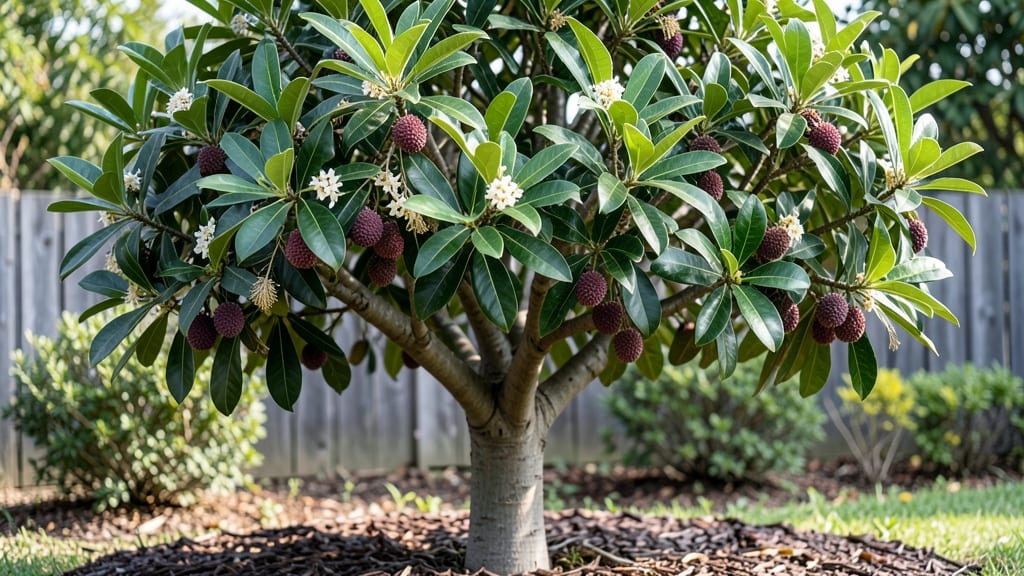
The Emperor lychee tree (Litchi chinensis 'Emperor') produces sweet, fragrant fruit that tastes like dessert straight from the tree—but only if you prune it right. I learned the hard way when my first tree sagged under too many lychees, branches breaking under the weight.
The secret isn’t just cutting back; it’s a year-round rhythm that keeps the tree strong and productive.
This tree thrives in USDA zones 10-12, where frost never visits, but with the right pruning, you can coax fruit even in containers or greenhouses in cooler climates. Start with 3-4 main branches to shape the tree early, then focus on thinning fruit clusters to prevent branch damage.
The key? Light pruning in summer to improve airflow and heavier cuts in late winter to remove deadwood and encourage new growth.
By the end of your first pruning season, you’ll see fewer broken branches and healthier, more abundant fruit. The tree’s glossy leaves stay vibrant, and the scent of blossoms in spring becomes irresistible.
Even if you’ve never pruned a lychee before, this method works—just follow the seasonal cues, and your tree will reward you with harvests that last from summer into fall.
Whether you’re growing in a tropical backyard or a greenhouse, the same principles apply. The only difference? Cooler climates may need extra winter protection and container mobility to bring the tree indoors when temperatures dip.
Let’s get those pruners out and turn that fruit load from a hazard into a harvest.**
📚 In This Guide
- What you need
- Instructions
- Tips and common mistakes
- Wrapping up and next steps
What you need
- ● Pruning shears: Bypass pruners (for clean cuts on small branches) – 1 pair (e.g., Felco F-2 or Corona Tools)
- ● Loppers: Bypass or anvil type (for thicker branches, 1.5"–2" diameter) – 1 pair (e.g., Fiskars X27)
- ● Pruning saw: Curved-tooth or folding saw (for branches 2"–4" thick) – 1 (e.g., Felco F-21)
- ● Gloves: Heavy-duty, cut-resistant (to protect hands from thorns and sap) – 1 pair
- ● Disinfectant: 70% isopropyl alcohol or pruning sealant (to prevent disease spread) – small bottle
- ○ Ladder or step stool: Sturdy, extendable (for high branches) – 1 (optional if tree is small)
- ● Tarp or drop cloth: Heavy-duty (to collect debris) – 1–2
- ● Marking twine or spray paint: (to tag branches for removal) – small amount
- ● Pruning oil or wound dressing: (to seal large cuts and promote healing)
- ● Work boots or closed-toe shoes: (for stability and protection)
- ● Safety glasses: (to shield eyes from debris)
- ● Notebook & pen: (to track pruning notes or progress)
- ○ Tree growth regulator (e.g., paclobutrazol): (optional for managing vigorous growth)
Step-by-step guide to pruning an Emperor lychee tree for optimal fruit production
Mastering pruning transforms a struggling lychee tree into a heavy-fruiting powerhouse.
Assess the Tree’s Structure and Growth Habits
Begin by examining the tree’s primary scaffold branches—these should form a strong, open framework at about 45-degree angles from the trunk. Look for water sprouts (fast-growing vertical shoots) and dead or crossing branches that compete for energy. The Emperor lychee responds best to open-center pruning, where you maintain a vase-like shape rather than a dense canopy.
Run your hands along the branches to feel for suckers (small shoots at the base) and weak crotches (where branches join the trunk). These are your first targets. Healthy branches should have smooth bark and plump buds—anything with cracked bark or hollow centers needs removal. Use a sharp pruning saw for branches thicker than ½ inch to avoid tearing the bark.
Perform Seasonal Pruning with Precision Timing
Late winter to early spring (just before buds swell) is the best time to prune Emperor lychees. This timing ensures you remove last year’s growth while leaving current season’s buds intact. Start by thinning out 20-30% of the canopy to improve airflow—lychees hate humidity trapped in dense foliage, which invites fungal diseases like anthracnose. Cut back overly vigorous branches by ⅓ of their length to encourage bushier growth.
For fruit-bearing branches, avoid heavy pruning—focus on light heading cuts (trimming the tips) to redirect energy into flowering laterals. If you see blind shoots (branches with no fruit), prune them back to a bud that faces outward to open the tree’s center. Always make cuts just above a leaf node at a 45-degree angle to prevent water from pooling.
Manage Fruit Load and Encourage Future Production
After the tree flowers, thin the fruit load to 6-8 inches apart on each branch. Overloaded branches snap under the weight, and small lychees develop poorly. Remove misshapen or damaged fruit first—these drain energy without contributing to harvest quality. For heavy branches, use branch spreaders (zip ties or rubber bands) to prop them up if needed, but avoid over-supporting.
In summer, perform light maintenance pruning to remove any suckers that emerge at the base or water sprouts that shoot upward. These compete with fruit production. By late summer, assess the tree’s energy reserves—if leaves yellow prematurely, reduce pruning for the next season. The goal is to balance fruit yield with tree health, not maximize production at the expense of long-term vigor.
Sanitize Tools and Monitor for Recovery
After pruning, sterilize your tools with 70% rubbing alcohol or a 10% bleach solution to prevent disease spread. Wipe down cuts with pruning sealant (optional but helpful for large wounds over ½ inch thick) to reduce sap oozing. Watch for epicormic buds (small buds along the trunk) in the weeks following pruning—these indicate the tree is redirecting energy effectively.
Within 4-6 weeks, you should see new growth from the pruned areas. If the tree produces too many leaves but few flowers, it’s a sign of excessive nitrogen—switch to a phosphorus-heavy fertilizer (like 5-10-5) to encourage flowering. Avoid heavy pruning in years with poor fruit set, as the tree needs energy to recover. A well-pruned Emperor lychee can live for decades and produce hundreds of pounds of fruit annually with consistent care.
Tips & tricks for perfect Emperor lychee tree pruning
These precision-focused strategies will help you transform your lychee tree into a fruit-bearing machine without sacrificing its long-term health.
Tool Selection Matters: Invest in a sharp bypass pruner for branches under ½ inch and a pruning saw for thicker cuts—dull tools crush branches instead of cleanly severing them. I've seen pruning wounds take months to heal when made with dull blades. For branches over 1 inch thick, consider a folding pruning saw with a fine-tooth blade to minimize bark tearing. Always carry a small pair of gloves to protect your hands from sap and thorns.
Seasonal Timing is Everything: The late winter to early spring window (just before buds swell) is non-negotiable for major pruning. This timing ensures you're removing last year's growth while preserving the current season's flower buds. If you're in a warmer climate where buds swell earlier, adjust your pruning by 2-3 weeks. Watch for the first signs of bud swelling—this is your cue to start pruning. I've learned the hard way that pruning too early can remove potential fruit-bearing branches.
Branch Angle Technique: When making cuts, aim for a 45-degree angle just above a leaf node to prevent water pooling. This technique promotes faster healing and reduces disease risk. For scaffold branches, maintain that 45-degree angle from the trunk to create structural strength. I've found that branches cut at 90-degree angles often develop weak crotches that split under fruit weight. Use a small level or protractor tool if you're unsure about your angle accuracy.
Recovery Monitoring: After pruning, watch for epicormic buds (those small buds along the trunk) within 4-6 weeks—they're nature's way of telling you the tree is redirecting energy effectively. If you don't see new growth after this period, your pruning may have been too aggressive. For large wounds over ½ inch, apply pruning sealant to prevent sap oozing and disease entry. I've seen trees recover beautifully from even significant pruning when given proper aftercare.
Pro Tips for Emperor Lychee Tree
- These precision-focused strategies will help you transform your lychee tree into a fruit-bearing machine without sacrificing its long-term health.
- Tool Selection Matters: Invest in a sharp bypass pruner for branches under ½ inch and a pruning saw for thicker cuts—dull tools crush branches instead of cleanly severing them.
- Seasonal Timing is Everything: The late winter to early spring window (just before buds swell) is non-negotiable for major pruning.
Frequently asked questions
When is the best time to prune an Emperor Lychee Tree for maximum fruit?
Prune your Emperor Lychee Tree after harvest (late summer to early fall) to avoid removing flower buds. Light shaping can also happen in late winter or early spring (before new growth starts). Avoid heavy pruning during flowering (spring) or fruiting (summer)—this stresses the tree and reduces yield.
How often should I prune my Emperor Lychee Tree?
Young trees (under 5 years) need annual pruning to establish structure. Mature trees (5+ years) benefit from light pruning every 1-2 years, focusing on removing dead wood, crossing branches, and thinning out dense growth. Over-pruning weakens the tree—keep cuts minimal (10-20% of foliage max per session).
Can I prune in cold weather, or will it harm the tree?
Pruning in freezing or frost-prone conditions stresses the tree and invites disease. Wait until temperatures are consistently above 50°F (10°C) for at least a week. If you must prune in cooler months, do it on a warm, sunny day to help wounds heal faster. Always sterilize tools to prevent bacterial infections.
What if my Emperor Lychee Tree isn’t fruiting after pruning?
Poor fruiting often stems from over-pruning (removing too many branches) or nutrient imbalances. Check for:
- Light exposure: Needs 6+ hours of direct sun daily.
- Watering: Deep water 2-3 times weekly (more in summer).
- Fertilizer: Use a balanced citrus fertilizer (e.g., 6-6-6) in early spring.
- Pollination: Hand-pollinate if bees are scarce (use a soft brush on flowers).
Are there alternatives to pruning for managing fruit load?
Yes! Try these low-stress methods to reduce fruit load without pruning:
- Thinning fruit: Remove 1-2 fruits per cluster when they’re golf-ball sized to improve size/quality.
- Temperature control: Lightly shade the tree in peak summer heat (100°F+/38°C+) to slow flowering.
- Water stress: Withhold water for 2-3 weeks before flowering (then resume), which can reduce blooms.
Wrapping up and next steps
Growing an Emperor Lychee Tree with year-round pruning isn’t just about technique—it’s about patience, observation, and a little love for your tropical treasure. 🌿 By mastering the art of strategic trimming, you’ll unlock heavier, sweeter fruit loads and a healthier, more vibrant tree.
Whether you’re a beginner or a seasoned pruner, every snip brings you closer to that dream harvest!
Ready to take the next step? Start small—pick one season to refine your skills, then gradually expand. Join online lychee forums or connect with local growers to swap tips, and don’t forget to celebrate your progress with every plump, juicy lychee you taste! 🍈✨