
Pruning
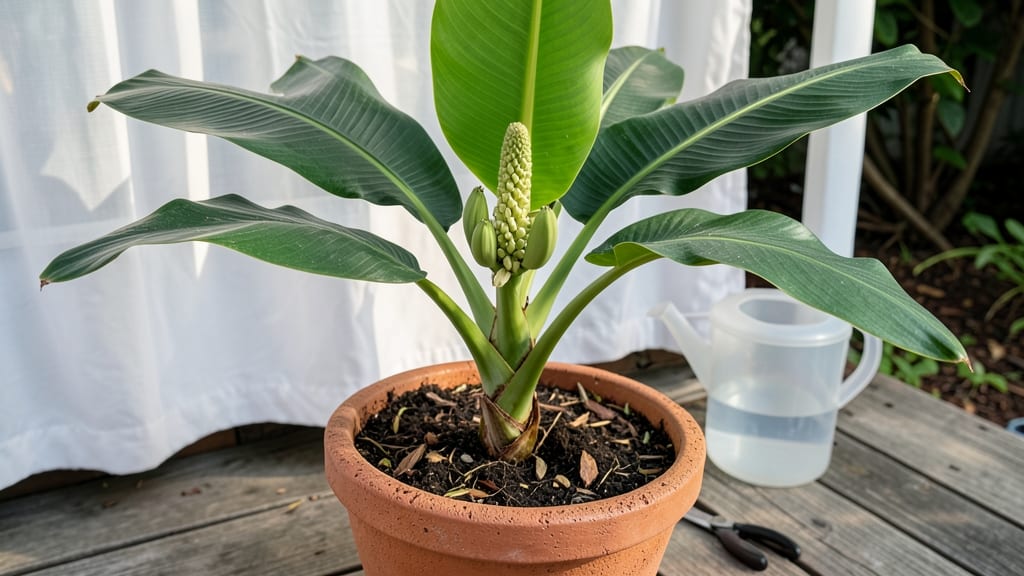
Proper dwarf banana tree care turns your plant into a lush, banana-laden giant—just ask my first tree, which stubbornly yielded only three tiny fruits after I ignored pruning. The secret isn’t complicated: it’s about timing, technique, and understanding how these tropical plants respond to cuts.
Most people wait until winter to prune, but I’ve found that monthly light trims keep my tree compact, productive, and free from those awkward bare stems.
You’ll need just a few basics: sharp pruners (dull blades tear stems), a clean bucket of 70% rubbing alcohol for sterilizing cuts, and a well-draining potting mix rich in organic matter.
Dwarf bananas thrive in USDA zones 10-11, but with the right container and winter care, they’ll fruit indoors too. The key is mimicking their natural tropical rhythm—warmth, humidity, and consistent moisture without waterlogging.
What you’ll end up with is a tree that looks like a miniature jungle—thick, glossy leaves, sturdy stems, and clusters of bananas year after year. My tree now produces dozens of finger bananas in a single season, and the pruning takes less than 15 minutes a month.
The best part? You’ll avoid the common pitfall of leggy, sparse growth that so many growers struggle with.
Whether you’re growing in a sunny patio pot or a greenhouse, the same principles apply. The only real difference is adjusting watering in winter—let the top 1-2 inches of soil dry out between waterings to prevent root rot.
Ready to turn your dwarf banana into a fruit-producing machine? Let’s get those pruners out.
📚 In This Guide
- What you need
- Instructions
- Tips and common mistakes
- Wrapping up and next steps
What you need
- ● Pruning shears or loppers – Sharp, clean, and sterilized (bypass pruners work best for clean cuts). Size: 6-8 inches for precision.
- ● Garden gloves – Heavy-duty, cut-resistant (banana leaves can be jagged!).
- ● Disinfectant (70% isopropyl alcohol or bleach solution) – 1 part bleach to 9 parts water to sterilize tools between cuts.
- ● Compost or well-aged manure – 5-10 gallons for fertilizing after pruning.
- ● Organic mulch (straw, wood chips, or pine needles) – 2-3 inches thick to retain moisture and regulate soil temperature.
- ● Watering can or hose with a gentle spray nozzle – For post-pruning hydration (avoid soaking the base).
- ● Hand pruners (smaller than loppers) – For delicate trimming of suckers or small leaves.
- ● Pruning saw (for thick stems) – Only needed if your dwarf banana tree develops unusually thick growth.
- ● Plant support (stakes or trellis) – If your tree grows tall, lightweight stakes can help support heavy fruit clusters.
- ● Slow-release fertilizer (balanced NPK, 10-10-10) – 1-2 pounds per tree to replenish nutrients after pruning.
- ● Pest control spray (neem oil or insecticidal soap) – For preventive care against aphids or spider mites.
- ● A healthy dwarf banana tree (at least 1-2 years old) with no signs of disease (yellowing leaves, black spots, or soft stems).
- ● Warm, sunny location – Dwarf banana trees thrive in full sun (6+ hours/day) and well-draining soil (pH 6.0-7.5).
- ● Patience and timing – Prune after fruiting (late fall/winter) or during active growth (spring/summer) for best results.
Step-by-Step year-round pruning for a thriving dwarf banana tree
Here's how to keep your compact banana tree productive and full—without the massive height or invasive roots.
Understand the Three-Pruning Season System
Dwarf banana trees respond best to a three-season pruning cycle that aligns with their natural growth patterns. Start with light maintenance pruning every 4-6 weeks to remove dead or yellowing leaves and encourage air circulation. This prevents fungal diseases like black leaf spot that thrive in dense foliage.
I always begin by examining the central trunk—healthy dwarf banana trees develop multiple pseudostems (the layered stems) that form a clump. If you see a pseudostem turning brown at the base, it's dying and should be removed immediately. Use sterilized pruning shears to cut 1-2 inches above the soil line to prevent splashing moisture onto fresh cuts.
Perform Structural Pruning After Heavy Fruit Production
The most critical pruning happens 6-8 weeks after harvest, when the tree has finished fruiting. This is when you reduce the height by 25-30% to stimulate bushier growth. Look for the oldest pseudostem—it will be the largest and most woody. Cut it back to ground level using sharp shears, leaving the younger, thinner pseudostems intact.
Here's the thing—never remove more than 30% of the plant at once. If you do, the tree will struggle to recover and may take 6-12 months to regrow. After pruning, apply 1-2 inches of mulch around the base to retain moisture and protect new shoots from temperature fluctuations. Water deeply but avoid soaking the cut areas.
Encourage Multiple Trunks for Higher Yields
To maximize fruit production, dwarf banana trees need 3-5 strong pseudostems. If your tree has only one or two, it's time to selectively prune to encourage branching. Choose the two thickest pseudostems and cut any thinner ones back to 6-8 inches tall. This redirects energy toward the remaining stems, which will thicken and produce more flower stalks.
Watch for new shoots emerging from the base—these are your future trunks. Once they reach 12-18 inches tall, thin them to keep only the healthiest 3-5. Remove the rest at the base with a clean cut. This step is where patience pays off: wait until shoots are 6-8 inches tall before thinning, or you risk stunting their growth.
Winter Dormancy Care and Light Pruning
In colder climates, dwarf banana trees enter dormancy when temperatures drop below 50°F. During this time, reduce pruning to minimal maintenance—only remove dead or diseased leaves and any pseudostems that have turned completely brown. Avoid heavy pruning in winter, as the tree needs all its energy to survive.
If your tree is in a container, move it to a protected location like a garage or under a porch where temperatures stay above 40°F. Water sparingly—only enough to keep the soil slightly moist. You'll see new growth resume in spring, signaling it's time to resume regular pruning and fertilizing.
Post-Harvest Revival and Fertilizer Timing
After harvesting bananas, the tree enters a recovery phase that lasts 4-6 weeks. During this time, avoid pruning—let the tree focus on rebuilding its energy reserves. Instead, feed it with a balanced fertilizer (10-10-10) every 4 weeks until new shoots appear.
Real talk: Over-fertilizing now leads to weak, leggy growth. Stick to half-strength fertilizer until you see new leaves unfurling. Once growth resumes, you can return to full-strength applications. This ensures the tree has the nutrients it needs to rebound quickly and produce another fruit cycle within 8-12 months.
Tips & tricks for perfect dwarf banana tree pruning
These essential techniques will help you maintain a thriving dwarf banana tree that produces abundant fruit year after year.
Tool Preparation: Always sterilize your pruning shears with rubbing alcohol or a 10% bleach solution before and after each use. This prevents cross-contamination between cuts, which is especially important when dealing with fungal diseases like black leaf spot. I keep a small bottle of rubbing alcohol in my gardening toolkit for quick sterilization between cuts on different plants.
Seasonal Timing: The 4-6 week maintenance pruning schedule in Step 1 works best when you align it with your tree's growth cycles. In warmer climates, you might find you can extend this to every 5-6 weeks, but never go longer than 6 weeks without some form of maintenance pruning. Watch for new growth—when you see fresh leaves emerging, that's your cue to check for any dead or yellowing foliage that needs removal.
Structural Balance: When performing the critical 6-8 week post-harvest pruning in Step 2, focus on maintaining that 25-30% height reduction by always removing the oldest, most woody pseudostem first. This creates space for younger, more productive stems to develop. I've found that marking the oldest stem with a small piece of colored tape during the previous season helps me identify it easily when pruning time comes around.
Container Care: For dwarf banana trees in containers, pay special attention to the winter care instructions in Step 4. The 40°F minimum temperature requirement is crucial—even a few nights below this can cause significant damage. I've had success using a small space heater with a thermostat set to 45°F in my garage during cold snaps, which provides that extra protection without overheating the space.
Pro Tips for Dwarf Banana Tree Care
- These essential techniques will help you maintain a thriving dwarf banana tree that produces abundant fruit year after year.
- Tool Preparation: Always sterilize your pruning shears with rubbing alcohol or a 10% bleach solution before and after each use.
- Seasonal Timing: The 4-6 week maintenance pruning schedule in Step 1 works best when you align it with your tree's growth cycles.
Frequently asked questions
Got questions about keeping your dwarf banana tree thriving?
Here are the most common ones—plus expert answers to help you grow a lush, fruit-bearing plant with ease!
How often should I prune my dwarf banana tree?
Prune your dwarf banana tree year-round but focus on heavy cuts during the active growing season (spring and summer). Trim dead or overgrown leaves every 3–4 months, and give it a hard prune (cutting back 1/3 of the plant) once a year in late winter to encourage new growth and fruit production. Avoid pruning in fall or winter unless removing damaged foliage.
Will pruning my dwarf banana tree increase fruit yield?
Pruning redirects energy
from leaf production to fruit development. By removing old or crowded leaves, you improve airflow and sunlight exposure, which helps the plant focus on producing larger, healthier bananas. Just avoid over-pruning—aim to keep at least 3–4 healthy leaves per pseudostem (the tree-like trunk) to maintain energy balance.
Can I prune my dwarf banana tree in cold weather?
Dwarf banana trees are tropical plants and hate cold temperatures. Prune only if leaves are frozen or damaged—never do a full prune in winter. If you live in a cold climate, move the plant indoors or to a greenhouse before temps drop below 50°F (10°C). Wait until spring to resume regular pruning once warm weather returns.
What do I do if my dwarf banana tree stops growing after pruning?
If your tree seems sluggish post-prune, check these fixes:
- Light: Ensure it gets 6+ hours of sunlight daily—banana trees thrive in bright, indirect light.
- Water: Keep soil consistently moist (but not soggy) during growing seasons.
- Fertilizer: Use a balanced, banana-specific fertilizer every 4–6 weeks in spring/summer.
- Patience: New growth may take 4–8 weeks to appear—don’t panic!
Can I propagate my dwarf banana tree from cuttings?
Yes! After pruning, you can propagate your dwarf banana tree using the sucker (baby shoot) at the base. Simply:
- Gently twist or cut the sucker from the main plant.
- Let it dry for 1–2 days to callous over.
- Plant in well-draining soil and keep humid and warm (70°F+ / 21°C+).
- Water lightly until roots establish (4–6 weeks).
Wrapping up and next steps
Caring for your dwarf banana tree is a rewarding journey that yields lush foliage and delicious fruit—with the right pruning techniques, you’ll enjoy a thriving plant year-round! 🌿 By mastering when, how, and why to prune, you’ll encourage bushier growth, better airflow, and even heavier harvests.
Whether you’re a beginner or a seasoned gardener, these steps make the process simple and stress-free.
Ready to transform your banana tree into a productive, eye-catching centerpiece? Grab your tools, follow the guide, and watch your plant flourish! For extra inspiration, check out our pruning timeline or join a gardening community to share your progress. Happy pruning! 🌱✨