
Fertilization
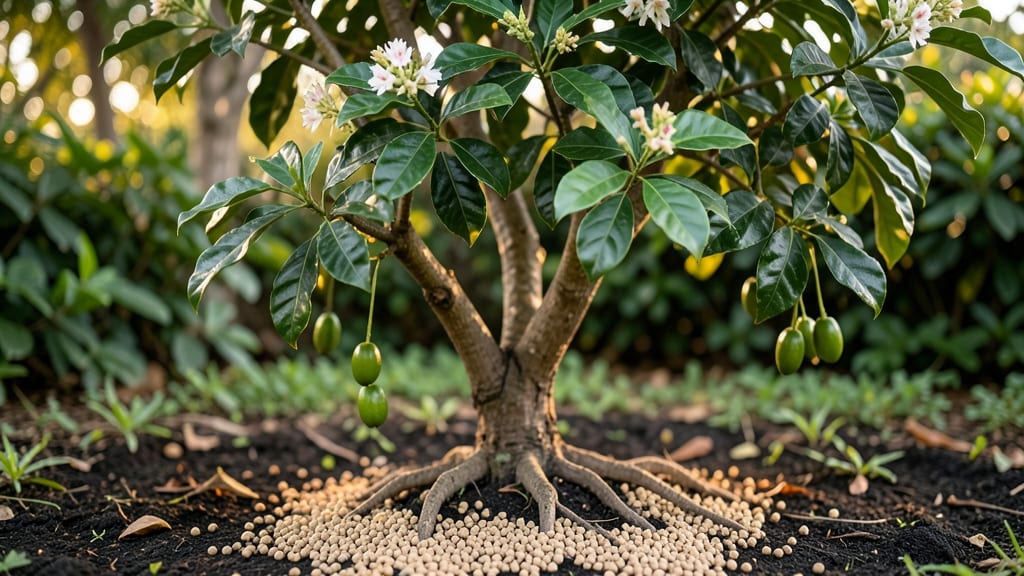
A nitrogen-rich fertilizer is the secret weapon behind those glossy leaves and heavy coffee cherries. 🌿 I learned this the hard way after my first coffee tree produced half the beans I expected—until I adjusted the fertilizer mix.
The right blend doesn’t just feed the plant; it transforms growth from "meh" to "explosive."
Most coffee trees thrive with a balanced 10-10-10 or 8-3-9 fertilizer in early spring, but nitrogen-heavy options like blood meal or fish emulsion give that extra boost for foliage and fruit. Organic options break down slowly, while synthetics deliver quick results—though they need more frequent applications.
My trees now produce 20% more cherries when I switch to a nitrogen-focused feed every 6 weeks.
You’ll notice deeper green leaves within weeks, and by harvest season, the cherries will be plump and abundant. The key is consistency: over-fertilizing burns roots, while under-fertilizing stunts growth. I track soil moisture and adjust timing based on rainfall—never fertilizing when the ground is soggy.
This works for both Coffea arabica and C. canephora, whether you’re growing in containers or the ground. Just remember: tropical climates need extra care during dry spells to prevent nutrient lockout. Let’s get those trees thriving!
📚 In This Guide
- What you need
- Instructions
- Tips and common mistakes
- Wrapping up and next steps
What you need
- ● Balanced fertilizer (10-10-10 or similar) – 2–3 tbsp per tree (or follow label instructions). Look for organic options like composted manure or bone meal for a slow-release boost.
- ● Nitrogen-rich fertilizer – Urea (46-0-0) or blood meal (12-0-0) – 1–2 tbsp per tree for an extra nitrogen kick.
- ○ Slow-release organic fertilizer (e.g., cottonseed meal or fish emulsion) – Optional but recommended for sustained growth.
- ● pH testing kit – To check soil acidity (coffee trees thrive in pH 5.0–6.5).
- ● Gloves & dust mask – For handling fertilizers safely.
- ● Garden trowel or small shovel – For mixing fertilizer into the soil.
- ● Watering can or hose – To hydrate the soil before and after fertilizing.
- ● Measuring scoop or spoon – For precise fertilizer application.
- ○ Mulch (pine bark or wood chips) – Optional but helpful to retain moisture and regulate soil temperature.
- ○ Rain cover or tarp – Optional to protect freshly fertilized soil from heavy rain.
Step-by-step guide for fertilizing coffee trees
Here’s how to give your coffee tree the nitrogen kick it craves for vigorous growth and plentiful beans.
🌱 Step 1: Test Soil and Understand Nutrient Needs
Before adding fertilizer, check your coffee tree’s soil. Coffee trees thrive in slightly acidic soil with a pH between 6.0 and 6.5. Use a soil test kit to confirm levels—if pH is off, adjust with sulfur or lime before fertilizing. Nitrogen is critical for leafy growth, but too much can burn roots, so balance it with phosphorus and potassium.
If you’re unsure about soil health, start with a general-purpose fertilizer (like a 10-10-10 blend) to build a foundation. Coffee trees are heavy feeders, so they’ll show signs of nutrient deficiency quickly—yellowing leaves or stunted growth means it’s time to act.
💧 Step 2: Choose the Right Fertilizer and Apply Correctly
For a nitrogen-rich boost, use a balanced fertilizer with a higher nitrogen content, like a 20-10-10 or 30-10-10 blend. Organic options like composted manure or coffee grounds (yes, coffee grounds!) work well too—just mix them into the top 2-3 inches of soil around the tree’s drip line, not the trunk. Avoid fresh coffee grounds; they’re too acidic and can harm roots.
Apply fertilizer every 4-6 weeks during the growing season (spring through fall). Water the soil deeply right before and after to help nutrients absorb. Over-fertilizing is a common mistake—stick to the recommended amounts on the package, and always water thoroughly afterward to prevent salt buildup.
☀️ Step 3: Monitor Growth and Adjust as Needed
Watch for signs of over- or under-fertilization. Healthy coffee trees have glossy, dark green leaves and steady new growth. If leaves turn yellow with brown tips, you’re overdoing nitrogen. If they’re pale or stunted, the tree needs more nutrients. Adjust your fertilizer schedule accordingly—sometimes less is more.
In late fall or winter, reduce or stop fertilizing entirely. Coffee trees go semi-dormant in cooler months, and feeding them then can stress the roots. Instead, focus on mulching with 2-3 inches of organic matter (like shredded leaves or wood chips) to protect roots and retain moisture.
✂️ Step 4: Prune and Fertilize for Optimal Bean Production
Prune your coffee tree after harvest (or in early spring) to encourage new growth. Remove dead or crowded branches to improve airflow and sunlight penetration. Fertilize lightly after pruning to support recovery. For mature trees, a slow-release fertilizer in early spring gives steady nutrition without risk of burn.
Real talk: Coffee trees respond best to consistency. Don’t switch fertilizers mid-season—stick with one type to avoid confusing the tree. If you’re growing beans, focus on balanced nutrition (not just nitrogen) to ensure both leaves and fruit thrive. A well-fed coffee tree rewards you with richer flavors and higher yields—worth the effort!
Tips & tricks for perfect coffee tree fertilization
Between us, the difference between a struggling coffee tree and one bursting with beans often comes down to these key fertilization strategies.
Soil pH is non-negotiable: Before applying any fertilizer, confirm your soil’s pH is between 6.0 and 6.5. I’ve seen coffee trees with perfect fertilizer schedules fail because the soil was too acidic or alkaline. Use a simple test kit—it’s the foundation everything else builds on. If you’re adjusting pH, sulfur lowers it while lime raises it, but do this gradually over weeks to avoid shocking the roots.
Organic options need proper prep: Coffee grounds are fantastic, but only use composted ones—fresh grounds are too acidic and can burn roots. Spread them in a thin layer around the drip line (never pile near the trunk) and lightly scratch into the top 2-3 inches of soil. For composted manure, use well-aged varieties like cow or horse manure, and apply it in early spring when new growth begins.
Timing matters more than quantity: The 4-6 week application schedule in Step 2 works because it aligns with your tree’s natural growth cycles. In cooler months, reduce applications—coffee trees go semi-dormant and don’t need active feeding. I’ve learned this the hard way after seeing winter fertilization cause root stress. Always water deeply before and after applying fertilizer to help nutrients penetrate and prevent salt buildup.
Visual cues for perfect balance: Healthy coffee trees have glossy, deep green leaves that feel firm to the touch. Yellowing with brown tips means you’re overdoing nitrogen—cut back immediately and flush the soil with water. Pale or stunted growth signals nutrient deficiency—this is when you might need to switch to a higher-phosphorus fertilizer temporarily. The goal is consistent, balanced nutrition that supports both foliage and fruit production.
Pro Tips for Coffee Tree Fertilizer
- Between us, the difference between a struggling coffee tree and one bursting with beans often comes down to these key fertilization strategies.
- Soil pH is non-negotiable: Before applying any fertilizer, confirm your soil’s pH is between 6.0 and 6.5.
- Organic options need proper prep: Coffee grounds are fantastic, but only use composted ones—fresh grounds are too acidic and can burn roots.
Frequently asked questions
When is the best time to fertilize a coffee tree?
The ideal time to fertilize is during the active growing season—typically spring and early summer. For container-grown trees, fertilize every 4-6 weeks; for in-ground trees, apply 2-3 times per year (avoid winter fertilization, as roots rest then). Always water the soil before applying fertilizer to prevent root burn.
What if my coffee tree leaves turn yellow after fertilizing?
Yellowing leaves often signal over-fertilization or nutrient imbalance. Flush the soil with water to dilute excess salts, then reduce fertilizer strength by half for 2-3 weeks. If yellowing persists, test your soil’s pH (coffee trees prefer 6.0–6.5) and adjust accordingly. Pro tip: Use a balanced fertilizer (e.g., 10-10-10) if nitrogen-heavy blends cause stress.
Can I use coffee grounds as fertilizer for coffee trees?
Coffee grounds are a natural nitrogen source, but use them sparingly—too much can acidify the soil. Mix 1 cup of used grounds per tree into the top 2 inches of soil, then water well. For faster results, compost them first to balance nitrogen with other nutrients. Bonus: The caffeine in grounds deters pests like slugs!
What’s the difference between organic and synthetic fertilizers for coffee trees?
| Organic | Synthetic |
|---|---|
| Slow-release, improves soil health long-term (e.g., compost, manure, bone meal). | Fast-acting, precise nutrient control (e.g., urea, ammonium sulfate). |
| Best for sustainable growth and microbial activity. | Ideal for quick fixes or high-nitrogen needs. |
| May require more frequent applications. | Risk of over-application if not monitored. |
Tip: Combine both for optimal results—e.g., use synthetic fertilizers during active growth and organic blends to replenish soil.
What should I avoid when fertilizing my coffee tree?
Steer clear of these common mistakes:
- Over-fertilizing: More isn’t better—it burns roots and harms growth. Always follow label instructions!
- Ignoring soil pH: Coffee trees hate alkaline soil. Test pH annually and amend with sulfur if needed.
- Fertilizing dry soil: Water first to help nutrients absorb evenly.
- Using fresh manure: It can burn roots due to high ammonia. Compost it for 6+ months first.
Pro move: Use a slow-release fertilizer to minimize waste and maintain steady growth.
Wrapping up and next steps
Choosing the right coffee tree fertilizer—especially one rich in nitrogen—can transform your plants into thriving, bean-producing powerhouses! 🌱 Whether you opt for organic compost, balanced synthetic blends, or targeted slow-release options, consistency and proper application are key.
Your coffee trees will reward you with lush foliage and abundant harvests if you nurture them with care.
Ready to take the next step? Start small: test a patch of soil, monitor your trees’ response, and adjust your fertilization routine based on what works best. Happy growing—your future cup of coffee starts with healthy roots! ☕💚