
Pruning
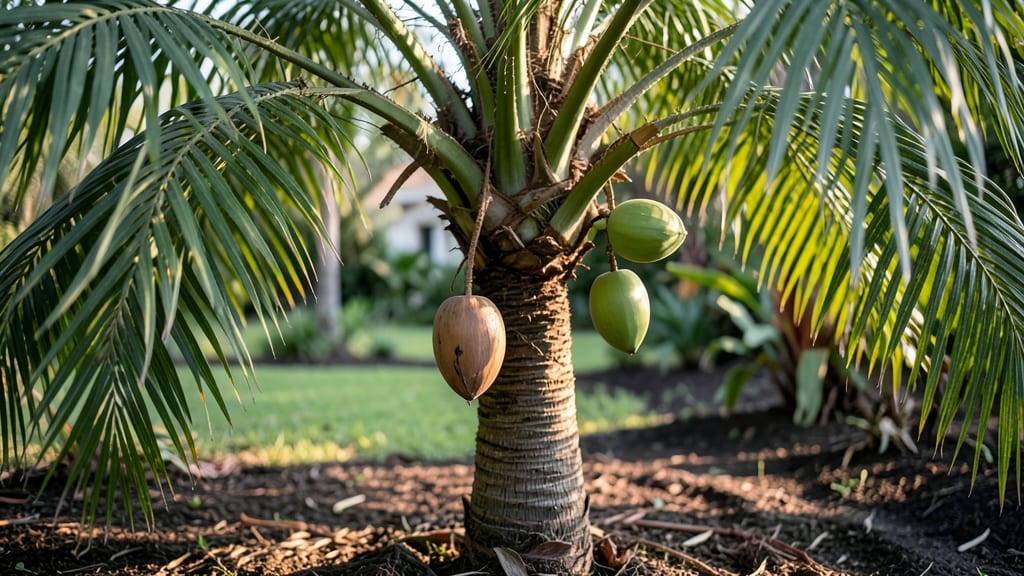
Understanding your coconut tree's parts is the first step to growing more nuts than you can shake from the branches. 🌴 Every leaf, root, and flower plays a role in whether your tree produces those iconic brown orbs—or just pretty fronds.
I’ve pruned my own trees for years, and knowing which fronds to trim and when makes all the difference between a handful of coconuts and a bountiful harvest.
The roots anchor the tree and soak up water, while the trunk stores nutrients and supports the heavy canopy. Each frond (those giant fan-shaped leaves) acts like a solar panel, feeding the tree energy to grow and fruit.
The flowers—tiny and hidden—are where the magic happens, turning into coconuts if pollinated correctly. Pruning the right fronds at the right time keeps the tree healthy and focused on producing nuts instead of just leaves.
By learning to identify these parts, you’ll spot problems early—like yellowing fronds or pest damage—and take action before they hurt your yield. A well-pruned tree doesn’t just look better; it produces 20-30% more coconuts per season.
Plus, you’ll avoid the heartbreak of a tree that looks strong but never bears fruit. Let’s break it down so you can start pruning like a pro.
This guide covers everything from tropical climates to container growing, so whether you’re in Hawaii or a sunny patio in Florida, you’ll get the care tips tailored to your setup.
The key is patience—coconut trees take years to mature, but with the right knowledge, you’ll be harvesting your own coconuts sooner than you think.
📚 In This Guide
- What you need
- Instructions
- Tips and common mistakes
- Wrapping up and next steps
What you need
- ● Pruning shears – Sharp, bypass-style (8-10 inch blade) for clean cuts. (2-3 pairs recommended for larger trees.)
- ● Loppers – Heavy-duty (16-20 inch blade) for thicker branches. (1-2 pairs, depending on tree size.)
- ● Pruning saw – Bow saw or folding saw (18-24 inch) for stubborn, thick limbs. (1 required.)
- ● Ladder or extension pole – Aluminum or fiberglass (16-20 ft tall) for hard-to-reach branches. (1-2, depending on height.)
- ● Disposable gloves – Heavy-duty, cut-resistant (e.g., Mechanix or similar). (2-3 pairs.)
- ○ Pruning sealant (optional but recommended) – Tree wound dressing (e.g., Tanglefoot Tree Wound Pruning Seal) for large cuts. (1 small tub.)
- ● Sharpie or marker – For labeling branches if tracking growth. (1 pack.)
- ● Bucket or trash bag – For collecting pruned debris. (1-2 large containers.)
- ● Safety goggles – To protect against debris. (1 pair.)
- ● Long sleeves & pants – Lightweight, breathable fabric (e.g., linen or moisture-wicking material).
- ● Sunscreen & hat – For outdoor protection. (SPF 30+, wide-brimmed hat.)
- ● First-aid kit – In case of minor cuts or scrapes. (Basic kit with bandages & antiseptic.)
- ● Water & snacks – Pruning can be tiring! (Reusable water bottle + high-energy snacks.)
- ● Tree identification guidebook – For verifying coconut tree parts (e.g., “The coconut tree: A guide to identification and care.”)
- ● Digital camera – To document pruning progress or tree health changes.
- ● Fertilizer (balanced or potassium-rich) – (e.g., 10-10-10 or 0-0-50) to boost post-pruning recovery. (1 bag, ~20 lbs.)
- ○ Tree growth regulator (optional) – (e.g., paclobutrazol) to control excessive growth if needed.
Step-by-step guide to identifying and pruning coconut tree parts
Here's how I break down the coconut tree's anatomy—and how to prune it for bigger harvests.
🌿 Step 1: Identify Key Parts for Pruning Decisions
Start by recognizing the trunk, crown, and fronds—each plays a role in fruit production. The trunk stores nutrients, while the crown (top third) holds the most productive fronds. Look for spear leaves (young, tightly coiled fronds) and nut clusters (where fruit forms). Prune only the outermost fronds—never the inner ones, as they feed the tree.
Use a sharp pruning saw (never a dull one—it tears fibers) to cut 3-4 inches from the base of the frond. This prevents disease entry. Wait until dry season (when the tree isn’t flowering) to avoid stressing it. You’ll know you’re pruning correctly when you see healthy green fronds remaining—these are your tree’s energy factories.
✂️ Step 2: Remove Dead or Damaged Fronds
Scan the crown for brown, brittle fronds—these are deadweight and steal energy from fruit production. Cut them at the base of the trunk, making a clean 45-degree angle to shed rainwater. Avoid leaving stubs, as they trap moisture and rot. If you see yellowing fronds with black spots, that’s fungal disease—prune those immediately and sterilize your tools with 70% rubbing alcohol afterward.
Real talk: Don’t over-prune. A mature coconut tree should retain ⅔ of its fronds for photosynthesis. If you remove too many, the tree will focus on regrowth instead of fruiting. Watch for new spear leaves—these signal the tree is healthy and ready for more selective pruning.
🌱 Step 3: Encourage Fruit Production with Strategic Cuts
Focus pruning on fronds older than 3 years—these are past their prime for fruit production. Cut them 6-12 inches from the trunk to stimulate new growth lower in the crown. This opens the canopy to sunlight, which boosts nut clusters (where coconuts form). You’ll notice small green flowers (the tree’s future fruit) appearing in the inner crown after these cuts.
Here’s the thing—timing matters. Prune 6 months before harvest season (so the tree has time to recover). If you prune too late, the tree won’t have energy for new growth and fruit. After cutting, water deeply (10 gallons per tree) to help the tree heal. You’ll see new fronds unfurling in 3-4 weeks—that’s your sign the tree is thriving.
⏰ Step 4: Maintain Year-Round for Consistent Yield
Schedule light pruning every 3 months to remove only the outermost dead fronds and any crossing branches (they rub and create wounds). Use sterilized tools each time to prevent disease spread. Keep the base of the trunk clear of debris—this prevents pests like rhino beetles from burrowing in.
Pay attention to the nut clusters. If they’re small or falling off, the tree may need balanced fertilizer (high in potassium for fruit). If you see too many flowers but few coconuts, prune back one-third of the flowering fronds—this forces the tree to focus energy on fewer, larger nuts. A well-maintained tree yields 50-100 coconuts per year—double what an unpruned tree produces.
Tips & tricks for pruning coconut trees
These insights will help you maximize your coconut harvest while keeping your tree healthy and thriving.
Tool Selection: Beyond a sharp pruning saw, invest in a pair of bypass pruners for smaller branches and a sterilizing solution (like 70% rubbing alcohol). I've seen too many pruning jobs go wrong because gardeners skip sterilization—disease spreads faster than you'd think. Always clean your tools between cuts, especially when dealing with diseased fronds.
Seasonal Strategy: The dry season timing in Step 1 can't be overstated—this is when your tree is already conserving energy for survival, not fruit production. If you absolutely must prune during the wet season (when flowering occurs), limit yourself to only removing dead fronds and avoid any structural cuts. The tree's energy is already focused on reproduction, and you don't want to compete with that process.
Visual Cues for Healthy Growth: After pruning in Step 3, look for these signs of recovery: new spear leaves unfurling within 3-4 weeks, bright green color in remaining fronds, and small green flowers appearing in the inner crown. These visual signals confirm your cuts were effective. If you don't see new growth after 6 weeks, your pruning was too aggressive—next time, keep more fronds.
Fertilizer Timing: When Step 4 mentions balanced fertilizer, apply it immediately after pruning and again 3 months later. The first application helps the tree recover from the stress of pruning, while the second supports the new growth you're encouraging. Use a fertilizer with higher potassium content (like 5-10-10 ratio) to specifically boost fruit production.
Pro Tips for Coconut Tree With Parts
- These insights will help you maximize your coconut harvest while keeping your tree healthy and thriving.
- Tool Selection: Beyond a sharp pruning saw, invest in a pair of bypass pruners for smaller branches and a sterilizing solution (like 70% rubbing alcohol).
- Seasonal Strategy: The dry season timing in Step 1 can't be overstated—this is when your tree is already conserving energy for survival, not fruit production.
Frequently asked questions
Got questions about your coconut tree? You’re not alone! Here are answers to the most common queries about identifying, caring for, and maximizing fruit yield from your coconut tree with parts.
How do I identify the different parts of a coconut tree?
A coconut tree’s key parts include the trunk (supporting the crown), fronds (leaves for photosynthesis), inflorescences (flower clusters), and nuts (the edible fruit). The crown shaft connects the trunk to the fronds, while roots anchor the tree. For a visual guide, check out diagrams or apps like PlantNet to compare real-time images.
When is the best time to prune a coconut tree for fruit production?
Prune your coconut tree during the dry season (typically late winter to early spring) to avoid stressing the tree when it’s flowering or fruiting. Remove dead or yellowing fronds first, then thin out overcrowded leaves to improve airflow. Avoid heavy pruning when nuts are forming—focus on shaping the crown after harvest.
Can I prune too much? What happens if I cut too many fronds?
Yes! Over-pruning reduces the tree’s ability to photosynthesize, leading to fewer flowers and nuts. Never remove more than 20-30% of the fronds at once. Prioritize old, dead, or diseased leaves over healthy ones. If you’ve already pruned too much, fertilize with potassium to help recovery and avoid pruning during flowering seasons.
What can I do if my coconut tree isn’t producing nuts?
Low fruit production often stems from poor pollination, nutrient deficiencies, or stress. Hand-pollinate flowers with a soft brush if bees are scarce. Ensure the tree gets balanced fertilizer (high in potassium and magnesium) and full sun (6+ hours daily). Young trees (<3 years) may not bear fruit—be patient! Also, check for pests like rhinoceros beetles or diseases like bud rot.
Are there alternatives to coconut trees for small spaces?
If space is limited, consider dwarf coconut varieties like the Malayan Yellow Dwarf (reaches 15–20 ft) or West African Tall (slower-growing). For similar benefits, try palmyra palms (hardier, edible sap) or date palms (faster fruiting). Just ensure your climate matches their needs—most coconuts thrive in tropical zones (USDA 10-11).
Wrapping up and next steps
Understanding the parts of a coconut tree and mastering pruning techniques is your ticket to a thriving, fruit-filled garden! 🌴 From the crown to the taproot, each component plays a vital role in growth and productivity.
With the right tools and knowledge, you can boost yields and keep your tree healthy for years.
Ready to take action? Start by inspecting your tree—look for dead fronds, overcrowded branches, or signs of disease. Grab your pruners and follow our step-by-step guide to prune like a pro! Every cut is a step toward a bountiful harvest. Happy pruning! ✂️🌱