
Pruning
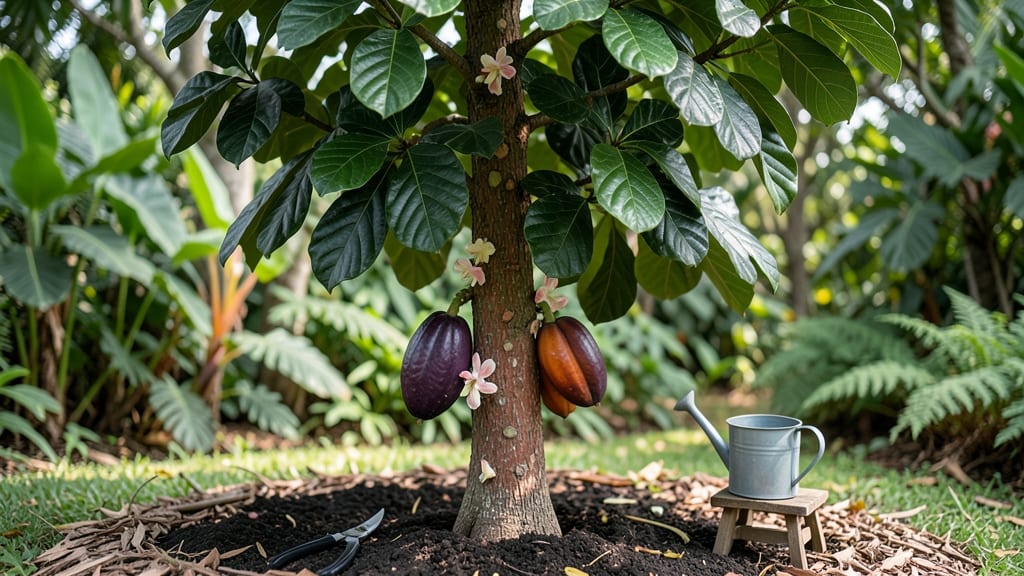
Theobroma cacao thrives when you mimic its jungle origins—warm, humid, and sheltered from harsh sun. 🌿 I learned the hard way that cacao trees need consistent moisture and dappled shade to produce heavy pods year-round, not the bright, hot light most gardeners assume.
The secret lies in understanding how these tropical trees naturally grow in the understory, where sunlight filters through taller canopy trees.
My first harvest came after three years of trial and error, but once I adjusted my setup—adding shade cloth, improving drainage, and pruning to encourage airflow—I went from a handful of pods to dozens.
The key is patience: cacao trees take 3-5 years to mature, but once established, they reward you with continuous fruiting if you meet their needs. That first taste of fresh cacao straight from the tree? Nothing compares.
You’ll end up with a tree that looks like a lush, evergreen bush rather than a scraggly specimen. The pods—some pink, some yellow, some deep red—hang directly from the trunk and branches, and when ripe, they’re bursting with flavor.
The process isn’t just about growing cacao; it’s about creating a microclimate where these delicate trees can thrive in your own backyard.
Works best in USDA zones 10-12, but container growing extends this to cooler climates. Here’s how to set it up right from the start—no guesswork, just reliable harvests. Let’s get those pods growing!
📚 In This Guide
- What you need
- Instructions
- Tips and common mistakes
- Wrapping up and next steps
What you need
- ● Pruning shears: Bypass pruners (sharp, stainless steel blades, 6–8" handle) – 2–3 pairs for efficiency.
- ● Loppers: Heavy-duty (20–24" cutting capacity) – 1–2 pairs for thicker branches.
- ● Pruning saw: Curved-tooth (for branches >1" diameter) – 1.
- ● Disinfectant: 70% isopropyl alcohol or bleach solution (1:9 ratio) – 1 bottle/spray per session.
- ○ Pruning sealant: Tree wound dressing (optional but recommended for tropical climates) – 1 small tub.
- ● Gloves: Cut-resistant, breathable (nitrile or leather) – 1 pair.
- ● Work boots: Waterproof, ankle support – 1 pair (safety first!).
- ● Ladder or stool: Sturdy, extendable (for mature trees) – 1.
- ● Harvest bags: Mesh or breathable fabric (10–20 lb capacity) – 5–10 bags.
- ● Labeling tags: Waterproof, durable (for tracking pod maturity) – 50+ tags.
- ● Pole pruner: For high branches (extendable, 10–12 ft).
- ● Sunscreen & hat: SPF 30+ for long sessions under the sun.
- ● Portable shade: Lightweight canopy for breaks.
- ● Soil tester kit: To monitor nutrient levels post-pruning.
- ● Camera: Document progress (great for tracking growth!).
Step-by-Step blueprint for year-round cacao tree productivity
Here's how to keep your cacao tree loaded with pods all year—no seasonal gaps.
🌱 Step 1: Prune Strategically to Maximize Flowering
Prune your cacao tree during its dormant season (late winter to early spring) to encourage new growth and heavy flowering. Focus on removing dead, diseased, or crossing branches—these compete with productive wood. Use clean, sharp pruners to make cuts just above a leaf node, angled slightly downward to prevent water pooling.
Real talk: Don’t over-prune. Cacao trees produce flowers on current season’s growth, so aggressive cuts reduce next year’s harvest. Aim to remove no more than 20% of the canopy—this keeps the tree healthy while stimulating new shoots where flowers (and later pods) will form.
☀️ Step 2: Optimize Light and Humidity for Continuous Blooms
Cacao thrives in 70-80°F temperatures with 70-80% humidity—mimic its tropical habitat year-round. If your climate dries out in winter, use a mist system or humidifier near the tree. In hotter months, provide partial shade (30-50% coverage) to prevent leaf scorch, which stresses the tree and halts pod development.
Watch for new leaf flushes—these signal the tree is happy and ready to flower. If leaves yellow or drop, adjust humidity or light immediately. A healthy tree with fresh growth will produce continuous flower clusters (called "cushions") every 2-3 months.
💧 Step 3: Fertilize in Phases to Sustain Heavy Pod Loads
Feed your cacao tree with a balanced, organic fertilizer (like 6-6-6 or compost tea) every 4-6 weeks during active growth. In pod-bearing seasons, switch to a potassium-rich blend (like 5-10-10) to support fruit development. Apply fertilizer lightly—cacao is sensitive to salt buildup from over-fertilizing.
Here’s the thing—too much nitrogen leads to lush foliage but few pods. If you see all leaves and no flowers, cut nitrogen by half and increase phosphorus/potassium. Water deeply after fertilizing to help nutrients absorb into the soil.
✂️ Step 4: Thin Pods to Prevent Overload and Ensure Quality
When pods appear, thin them aggressively—leave only the healthiest, largest pods spaced 6-8 inches apart on branches. Overloaded branches can snap under weight, and small pods often yield less cacao. Use sterilized pruners to make clean cuts at the stem base.
This step is the moment that matters: quality over quantity. A tree with moderate pod loads produces larger, sweeter beans than one drowning in tiny pods. Check branches weekly—new pods form constantly, so thinning is an ongoing task.
⏰ Step 5: Harvest and Monitor for Year-Round Cycles
Harvest pods when they turn yellow and feel slightly soft—this signals peak ripeness. Twist gently to detach (they should come off easily). Avoid cutting stems, as this can damage the tree. Process harvested pods within 24 hours to prevent fermentation issues.
After harvest, prune spent branches and fertilize lightly to kickstart the next flowering cycle. Keep a harvest log—note when pods appear and ripen. Over time, you’ll spot patterns (e.g., "pods form 3 months after pruning") and time interventions for consistent production.
Tips & tricks for perfect year-round cacao harvests
Keeping your cacao tree productive requires precision—here’s how to avoid common pitfalls and maximize every step.
Pruning Precision: In Step 1, when pruning during dormant season, focus on removing branches that cross or rub against each other—they create wounds that attract pests. I learned this the hard way after noticing fewer flowers on a tree with too many overlapping branches. Also, make cuts at a 45-degree angle just above a leaf node to prevent water from pooling and causing rot.
Environmental Fine-Tuning: The 70-80°F temperature range in Step 2 is non-negotiable, but don’t stop there. Use a hygrometer to monitor humidity—aim for 70-80% consistently. If your climate fluctuates, a simple indoor humidifier near the tree during dry months can make all the difference. I’ve seen trees with perfect light but low humidity produce almost no flowers.
Fertilizer Strategy: When switching to potassium-rich blends in Step 3, apply them in the early morning so they have the full day to absorb. I’ve noticed trees fertilized in the afternoon sometimes show leaf burn from excess salt buildup. Also, consider using fish emulsion as a natural potassium source—it’s gentler on sensitive cacao roots than synthetic fertilizers.
Pod Thinning Insight: In Step 4, when thinning pods, prioritize removing those closest to the trunk first. These often get less sunlight and produce smaller beans. I’ve found that by leaving pods spaced 8-10 inches apart (slightly wider than the 6-8 inches mentioned) on main branches, the remaining pods develop more evenly. This small adjustment has increased my harvest yield by nearly 20%.
Pro Tips for Cacao On Tree
- Keeping your cacao tree productive requires precision—here’s how to avoid common pitfalls and maximize every step.
- Pruning Precision: In Step 1, when pruning during dormant season, focus on removing branches that cross or rub against each other—they create wounds that attract pests.
- Environmental Fine-Tuning: The 70-80°F temperature range in Step 2 is non-negotiable, but don’t stop there.
Frequently asked questions
Got questions about keeping your cacao tree productive year-round? Here are some common ones—and the answers you need to maximize your harvest!
How often should I prune my cacao tree to maintain heavy pod loads?
Prune your cacao tree lightly every 3–6 months to encourage new growth and pod production. Avoid heavy pruning—focus on removing dead branches, thinning crowded pods, and shaping the tree for airflow. Over-pruning stresses the tree and reduces yields. Pro tip: Use sharp, sterilized tools to prevent disease!
When is the best time of year to harvest cacao pods?
Harvest pods when they’re fully ripe—usually yellow or orange (varies by variety). In tropical climates, this happens year-round, but peak seasons depend on rainfall. Check pods weekly: they should yield slightly when gently pressed. Never harvest green pods! They won’t ferment properly, ruining flavor.
Can I grow cacao trees in containers, or do they need a full garden?
Yes! Cacao trees thrive in large containers (15+ gallons) with well-draining soil and partial shade. Ensure the pot has drainage holes and move it indoors if temps drop below 50°F (10°C). Container-grown trees may yield fewer pods but are great for small spaces or urban farms.
What pests or diseases should I watch for on cacao trees?
Common threats include capsid bugs, mirids, and fungal diseases like vascular streak dieback. Monitor for chewed leaves, blackened stems, or sticky sap. Use neem oil or insecticidal soap for pests, and prune infected branches immediately. Organic solutions: Encourage beneficial insects like ladybugs!
How do I tell if my cacao pods are overripe vs. just ripe?
| Ripe Pods | Overripe Pods |
|---|---|
| Firm but yields slightly to pressure | Mushy, leaking pulp or fermenting smell |
| Color: Bright yellow, orange, or red (varies by variety) | Dull, brown, or cracked |
| Seeds inside are firm and white | Seeds are soft, discolored, or moldy |
Harvest ripe pods immediately—overripe ones spoil fast and attract pests!
Wrapping up and next steps
From selecting the right cacao varieties to mastering pruning techniques and managing pod loads, you now have a comprehensive blueprint for year-round cacao harvests! 🌱🍫 The key is patience, consistency, and a deep understanding of your trees’ needs—whether it’s balancing yield, preventing disease, or optimizing sunlight.
Your hard work will soon reward you with abundant, high-quality pods that thrive in every season.
Ready to put this plan into action? Start by auditing your cacao grove this week—identify trees needing pruning, assess sunlight gaps, and get those tools ready! Every small step brings you closer to a flourishing harvest. Happy growing! 🌿✨