
Trees
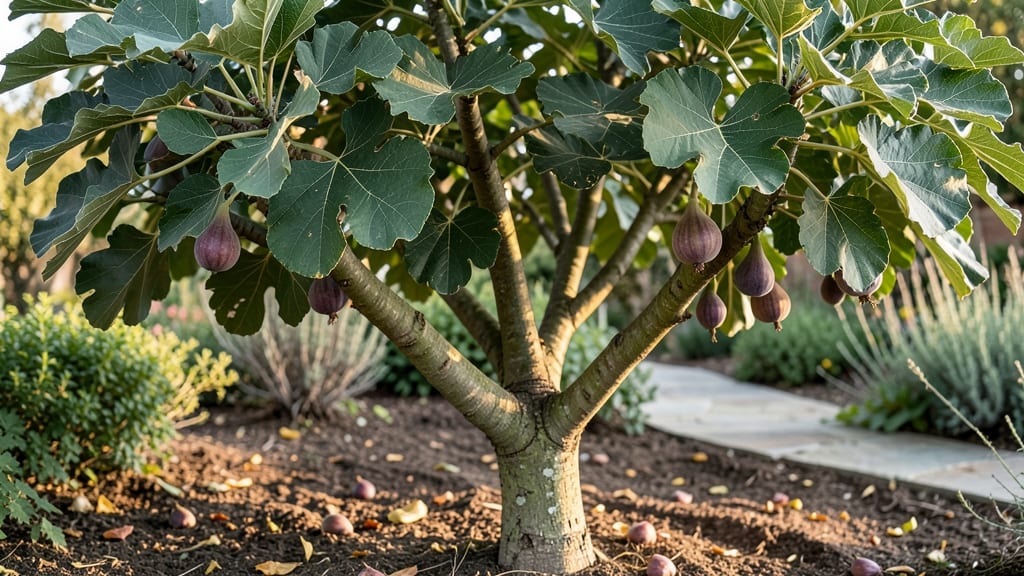
Caring for a Brown Turkey fig tree starts with understanding its stubborn charm—this variety thrives when you mimic its Mediterranean roots, not your local climate. 🌿 I’ve nursed mine through droughts, freezes, and overwatering mishaps, and the secret lies in three pruning moves that keep it productive for decades.
The tree rewards patience with sweet, sun-ripened fruit and glossy leaves that outshine most ornamentals.
This fig loves full sun (6+ hours daily) and well-draining soil, but it’s surprisingly drought-tolerant once established—overwatering kills it faster than cold snaps. Prune in late winter to shape the tree and encourage new growth, then fertilize lightly in spring.
The key is balancing aggression (it grows fast) with restraint (it hates crowded branches), and I’ll show you exactly how to strike that balance without guessing.
📚 In This Guide
- What you need
- Instructions
- Tips and common mistakes
- Wrapping up and next steps
What you need
- ● Brown Turkey Fig Tree: A healthy sapling or young tree (ensure it’s disease-free!)
- ● Well-draining soil: Mix of 60% native soil, 30% compost, and 10% coarse sand (or perlite for urban planters).
- ● Pot (if container-grown): At least 15-gallon capacity with drainage holes (or a 10-foot diameter in-ground space for direct planting).
- ● Pruning tools: Sharp bypass pruners (for small branches)
- ● Hand pruning saw (for thicker branches)
- ● Sterilizing solution (e.g., rubbing alcohol or bleach)
- ● Mulch: 2–3 inches of organic mulch (e.g., wood chips or straw) to retain moisture.
- ● Fertilizer: Balanced 10-10-10 or organic fig-specific fertilizer (apply in early spring).
- ● Support stakes: 2–3 wooden or bamboo stakes (if planting in windy areas).
- ● Drip irrigation system or soaker hose for consistent watering.
- ● Tree guard (to protect from pests like aphids or fruit flies).
- ● pH test kit (ideal soil pH: 6.0–7.0 for figs).
- ● Slow-release granules (for nutrient boosts mid-season).
Step-by-Step instructions for pruning your Brown Turkey fig tree
Here's how I keep my Brown Turkey fig thriving—with pruning that boosts fruit production and airflow.
✂️ Step 1: Prune for Structure in Late Winter
Timing matters most here. Wait until after the last frost but before buds swell—typically February to early March in most climates. This ensures the tree enters dormancy with a clean framework. I grab my bypass pruners and start by removing dead, diseased, or crossing branches first. These are easy to spot—they're brittle, discolored, or growing inward where they'll rub against other branches.
Next, I look for water sprouts—those fast-growing, vertical shoots that steal energy from fruit production. Snip them at their base. For thicker branches over ½ inch, I make clean cuts at a 45-degree angle, about ¼ inch above an outward-facing bud. This prevents water from pooling and causing rot. Always sterilize your tools with rubbing alcohol between cuts to prevent spreading disease.
☀️ Step 2: Thin for Sunlight and Fruit in Early Spring
Once new growth appears—around late March to April—I shift focus to selective thinning. Figs need 6-8 hours of direct sun daily for heavy fruiting, so I prioritize branches that block light from reaching the center. Remove overlapping branches first, cutting back to the nearest lateral bud. This opens up the canopy and improves airflow, which reduces fungal risks like fig rust.
Here's the thing—don't overdo it. Aim to keep 60-70% of the tree's original structure. I leave 3-5 main scaffold branches and prune side branches to 12-18 inches long. This balance ensures the tree can support fruit while maintaining its natural shape. If a branch is too crowded, I'll make a heading cut just above a leaf node to encourage bushier growth.
🌿 Step 3: Light Summer Pruning for Fruit and Airflow
After the first harvest—around June to July—I do a light maintenance prune. This isn't about shaping anymore; it's about removing spent fruit stems and any new growth that's competing with existing branches. Figs produce fruit on current season's wood, so I avoid heavy pruning now. Instead, I trim only the tips of overly vigorous shoots to redirect energy to fruit development.
Watch for suckers—those small shoots growing from the base or along the trunk. These drain energy from the main tree. Remove them immediately with your fingers or small pruners. For larger branches, I'll do a renewal prune: cut back one-third of the oldest wood to rejuvenate the tree. This keeps the Brown Turkey productive for decades. Just remember: never prune more than 25% of the canopy in one season—this stresses the tree and reduces fruit yield.
Tips & tricks for perfect Brown Turkey fig tree care
These precise techniques will help you maintain your fig tree's health and maximize fruit production throughout the year.
Timing Secret: For Step 1, check your local frost dates—pruning too early can stimulate premature growth that gets damaged by late frosts. I use the National Weather Service frost calendar for my region and mark February 15th as my deadline. If you're in a warmer climate, you might extend this to early March. The key is to work while the tree is still dormant but before buds begin swelling.
Tool Technique: When making those 45-degree angle cuts for branches over ½ inch in Step 1, use a sharp bypass pruner to avoid tearing the bark. I like to make a small notch on the underside of the branch first—this helps guide the cut and prevents the bark from splitting. Always cut just outside the branch collar (that swollen area where the branch meets the trunk) to promote faster healing.
Sunlight Strategy: In Step 2, when thinning for sunlight, focus on creating an open center that lets light penetrate to the inner branches. I use a simple trick: stand back and look at the tree from all angles. If you can see light through the center from any direction, you're on the right track. For larger trees, consider removing one branch per year to gradually open the canopy without shocking the tree.
Seasonal Balance: During the light summer pruning in Step 3, remember that figs produce fruit on current season's growth. When you trim those vigorous shoots, leave at least 3-4 leaf nodes on each branch to ensure the tree can continue photosynthesizing. This is where I've learned the hard way—over-pruning in summer can reduce next year's harvest.
Pro Tips for Brown Turkey Fig Tree Care
- These precise techniques will help you maintain your fig tree's health and maximize fruit production throughout the year.
- Timing Secret: For Step 1, check your local frost dates—pruning too early can stimulate premature growth that gets damaged by late frosts.
- Tool Technique: When making those 45-degree angle cuts for branches over ½ inch in Step 1, use a sharp bypass pruner to avoid tearing the bark.
Frequently asked questions
Got questions about keeping your Brown Turkey Fig Tree happy and productive? You’re not alone! Here are answers to the most common queries—from pruning to pests and beyond.
When is the best time to prune a Brown Turkey Fig Tree?
The ideal time is late winter or early spring (before new growth starts) to avoid stressing the tree. You can also do light pruning after harvest (fall) to shape it. Avoid heavy cuts in summer—figs hate heat stress! For container-grown trees, prune anytime except extreme cold.
How do I know if I’m over-pruning my fig tree?
Watch for yellowing leaves, stunted growth, or no fruit the next season—these are red flags. A well-pruned tree should still have 3–5 main branches with plenty of leafy vigor. If it looks bald or weak, dial back and let it recover with water and fertilizer.
What pests should I watch for on my Brown Turkey Fig?
Common culprits include:
- Fig beetles (chew leaves—handpick or use neem oil).
- Aphids (sticky residue—blast off with water).
- Root-knot nematodes (wilted leaves—rotate crops or use resistant rootstock).
Why aren’t my figs ripening? Could it be pruning-related?
Ripe figs need sunlight + warmth. If you pruned too aggressively, the tree may focus on regrowth instead of fruit. Also check:
- Temperature: Figs need at least 80°F to ripen.
- Water: Drought stress = small, hard figs.
- Age: Young trees (under 3 years) may not fruit heavily.
Can I grow a Brown Turkey Fig in a container? What size pot?
Use a 15–20 gallon pot (minimum 18" diameter) with drainage holes. Dwarf varieties thrive in containers, but expect smaller yields than in-ground trees. Move pots to full sun in summer and partial shade in winter. Fertilize monthly with citrus-specific feed.
Wrapping up and next steps
Caring for your Brown Turkey Fig Tree doesn’t have to feel overwhelming—with the right pruning techniques and a little patience, you’ll enjoy a thriving tree year-round! 🌿 Remember, timing, technique, and consistency are your best friends, whether you’re shaping it for fruit production or simply keeping it healthy.
Now that you’re armed with expert tips, why not take action? Grab your pruners, mark your calendar for the next pruning window, and give your tree the love it deserves.
Before you know it, you’ll be basking in the shade of a lush, productive Brown Turkey Fig Tree—and maybe even feasting on its sweet rewards! 🍇✨