
Trees
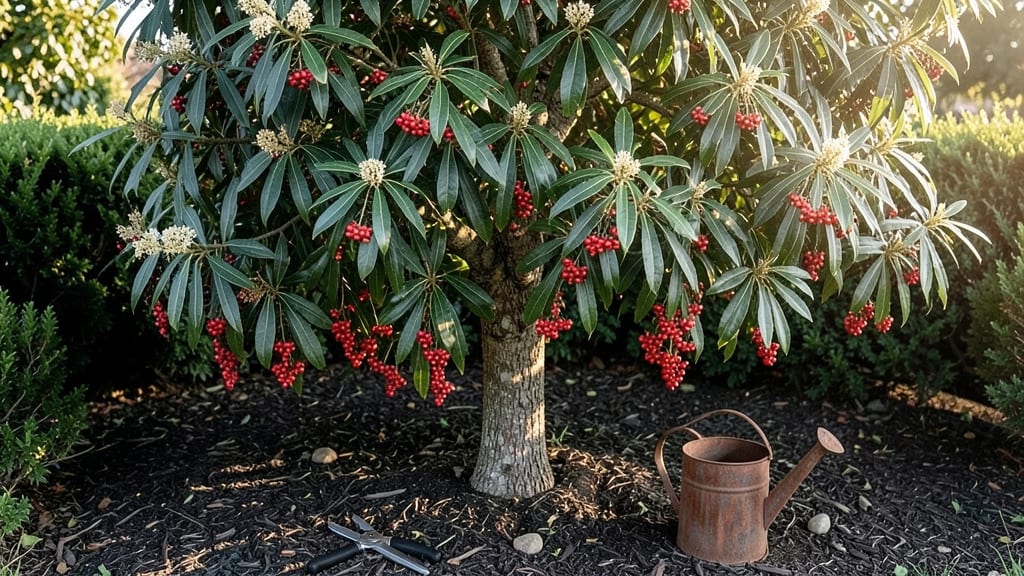
Growing Brazilian pepper trees (Schinus terebinthifolius) means adding a bold, evergreen statement to your landscape with almost no effort. 🌿 I’ve watched mine grow from a 3-foot sapling to a 20-foot beauty in just five years—with barely any pruning or fuss.
The key? Matching its native Florida roots to your soil and sunlight, then letting it do its thing.
These trees thrive in full sun to partial shade, handle sandy, rocky, or clay soil, and tolerate drought once established. That’s why they’re the go-to for coastal areas, highway medians, and low-maintenance yards.
My tree even survived a summer with only one deep watering every two weeks—once the roots get going, they’re tougher than they look.
You’ll end up with glossy green foliage that smells like pine when crushed, clusters of tiny red berries that birds adore, and a tree that stays lush all year.
The best part? It’s pest-resistant—no aphids, no borers, just steady growth. Perfect for privacy screens, windbreaks, or just adding drama to a big yard.
Fair warning: they grow fast—3-5 feet per year—so plan your space carefully. But with the right spot, this tree practically cares for itself. Let’s get yours planted right from the start.
📚 In This Guide
- What you need
- Instructions
- Tips and common mistakes
- Wrapping up and next steps
What you need
- ● Brazilian pepper tree: Seedlings/saplings: 1–3 (from a reputable nursery; ensure they’re disease-free).
- ● Seeds: 5–10 (if starting from scratch; soak overnight for faster germination).
- ● Cutting: 1 healthy, 4–6" stem (from a mature tree; use rooting hormone for best results).
- ● Soil: 1–2 bags of well-draining, slightly acidic soil (pH 5.0–7.0). Mix in compost (1 part compost to 3 parts soil) for nutrients.
- ● Pot or planting site: Container: 1–2 5-gallon pots (with drainage holes) for young trees.
- ● Outdoor spot: A sunny, sheltered area with at least 6–8 hours of sunlight daily.
- ● Watering supplies: 1 watering can or hose with a gentle spray nozzle.
- ○ 1 moisture meter (optional but helpful for tracking soil dryness).
- ● Fertilizer: 1 slow-release, balanced fertilizer (10-10-10 or 8-3-9) or organic compost tea.
- ● Mulch: 2–3 bags of organic mulch (pine bark or shredded leaves) to retain moisture.
- ● Pruning tools: 1 pair of sharp bypass pruners (for clean cuts).
- ● 1 hand saw (for thicker branches, if needed).
- ○ Protective gear (optional): 1 pair of gloves (thorns can be prickly!).
- ● 1 long-sleeved shirt (for handling thorny branches).
- ● 1 tree stake (for young saplings in windy areas).
- ● 1 tree guard (to protect from pests or curious critters).
- ● 1 pH test kit (to monitor soil acidity).
- ● 1 spray bottle (for misting seedlings).
- ● 1 post-planting root stimulator (like mycorrhizal fungi).
How to plant and maintain Brazilian pepper trees for year-round growth
These fast-growing evergreens thrive with minimal fuss—here’s how to set them up right.
🪴 Step 1: Choose the Perfect Planting Spot
Brazilian pepper trees love full sun—at least 6 hours daily—but they tolerate partial shade in hotter climates. I always pick a spot with well-draining soil because soggy roots lead to root rot. If your soil drains poorly, amend it with 2-3 inches of coarse sand or gravel before planting.
Here’s the thing—these trees grow fast, reaching 10-15 feet tall in ideal conditions. Give them 10-15 feet of space between plants to prevent overcrowding. If you’re planting near a fence or wall, leave at least 6 feet of clearance so branches don’t get crushed.
🌱 Step 2: Plant at the Right Time and Depth
Spring or early fall is the best time to plant—avoid extreme heat or frost. Dig a hole twice as wide as the root ball but only as deep as the container it came in. The top of the root ball should sit level with the ground (no burying too deep).
Gently remove the tree from its container and loosen any circling roots with your fingers. Place it in the hole, then backfill with native soil, pressing lightly to remove air pockets. Water deeply right after planting—this helps settle the soil and eliminates gaps. You’ll know it’s right when water drains evenly without pooling.
☀️ Step 3: Water Consistently but Avoid Overdoing It
Newly planted trees need 1-2 inches of water per week, but established ones are surprisingly drought-tolerant. I water deeply once a week rather than light daily sprinkles—this encourages deep root growth. Stick your finger 2 inches into the soil; if it’s dry, water again.
Real talk: Overwatering is the #1 killer of Brazilian pepper trees. These plants hate wet feet, so always check for drainage issues. If water pools after rain, amend the soil with more sand or gravel to improve airflow. Once established, they’ll thrive with minimal watering—just enough to keep the soil slightly moist.
✂️ Step 4: Prune for Shape and Health
Prune in late winter or early spring before new growth starts. Remove dead, diseased, or crossing branches first—this keeps air flowing and prevents pests. I also trim back any leggy growth to encourage a bushier shape. Use clean, sharp pruners and make cuts just above a leaf node.
Here’s where it gets fun—these trees produce bright red berries that birds adore. If you don’t want a berry explosion, prune female flowers (they’re the ones that develop fruit) in early summer. Otherwise, let nature take its course—they’re stunning when covered in berries!
🌿 Step 5: Fertilize Lightly for Long-Term Growth
Feed once in early spring with a balanced, slow-release fertilizer (10-10-10 works well). Scatter the granules evenly around the drip line—about 2 feet from the trunk—and water deeply to activate them. Avoid high-nitrogen fertilizers; they encourage leafy growth at the expense of berries.
I skip fertilizer after the first year unless the tree looks pale or stunted. Brazilian pepper trees are tough—they’ll grow just fine with no fertilizer, but a little boost keeps them looking their best. Mulch with 2-3 inches of organic mulch (like wood chips) to retain moisture and regulate soil temperature.
Tips & tricks for perfect Brazilian pepper tree growth
These fast-growing evergreens don't need much, but a few key tricks will help them thrive even better.
Soil Prep is Everything: Before planting, test your soil's drainage by digging a small hole and filling it with water. If it doesn't drain within 30 minutes, you'll definitely need to amend with that 2-3 inches of coarse sand or gravel mentioned in Step 1. I've seen root rot destroy trees because people skipped this step—don't make that mistake! The roots need oxygen, not a swampy environment.
Planting Depth Matters: When you're planting in Step 2, use a level to ensure the root ball sits exactly at ground level. Burying it too deep can cause suffocation, while planting too high leaves roots exposed. The top of the root ball should be flush with the surrounding soil—this is non-negotiable for healthy growth. I always check with my finger after backfilling.
Watering Wisdom: Those 1-2 inches of water per week in Step 3 should be delivered in the morning so the soil has time to dry out during the day. I use a rain gauge to measure—it's surprising how much water actually accumulates from rain. If you're using a sprinkler, water slowly to avoid runoff, which wastes water and can create soggy spots.
Pruning Pro Tip: In Step 4, when you're pruning those female flowers for berry control, do it on a dry day. Wet branches can spread diseases more easily. I also recommend sterilizing your pruners with rubbing alcohol between cuts—this prevents bacterial transfer that can weaken your tree over time.
Pro Tips for Brazilian Pepper Trees
- These fast-growing evergreens don't need much, but a few key tricks will help them thrive even better.
- Soil Prep is Everything: Before planting, test your soil's drainage by digging a small hole and filling it with water.
- Planting Depth Matters: When you're planting in Step 2, use a level to ensure the root ball sits exactly at ground level.
Frequently asked questions
Got questions about Brazilian pepper trees? You’re not alone! Here are some of the most common concerns—and straightforward answers—to help you thrive with this resilient plant.
Are Brazilian pepper trees invasive, and should I remove them?
Yes, they’re considered invasive in many U.S. states (like Florida and Hawaii) due to their aggressive spread. If you’re in a regulated area, check local laws before planting. If they’re already on your property, removal is often recommended to prevent ecological harm.
How fast do Brazilian pepper trees grow, and when can I expect fruit?
These trees grow fast—up to 3 feet per year! Young trees may take 3–5 years to produce fruit, but once established, they can yield clusters of red berries year-round in warm climates. Patience pays off for that iconic peppery harvest!
Can Brazilian pepper trees survive cold weather?
Native to tropical/subsropical regions, they’re sensitive to frost (<30°F). In colder zones, plant them in containers and move them indoors or to a greenhouse during winter. If left outside, expect leaf drop or dieback—though roots may survive mild freezes.
What’s a good alternative if I want a low-maintenance, non-invasive tree?
Consider Texas Ebony (Ebenopsis ebano) or Mexican Sycamore (Platanus mexicana) for drought tolerance and similar aesthetics. Both thrive in warm climates without the invasive risks. Always research local suitability first!
Why are my Brazilian pepper tree leaves turning yellow or dropping?
Yellowing leaves often signal overwatering, nutrient deficiency (like nitrogen), or pests (e.g., scale insects). Check soil moisture, fertilize lightly in spring, and inspect undersides of leaves for pests. Prune affected branches to encourage healthier growth.
Are the berries safe to eat, and how do I harvest them?
Yes! Ripe berries (deep red) are edible—taste like a mix of pepper and citrus. Wear gloves when harvesting (they stain!) and use pruners to avoid damaging branches. Remove unripe green berries to encourage more fruit production.
Wrapping up and next steps
Brazilian pepper trees are a fantastic choice for year-round greenery with minimal fuss—whether you're a busy gardener or a nature enthusiast! 🌿 Their resilience, drought tolerance, and vibrant foliage make them a standout addition to any landscape.
With the right care (and a little patience), you’ll enjoy their beauty and the practical benefits they bring.
Ready to transform your outdoor space? Start by assessing your climate and soil, then gather your supplies—soon, you’ll be watching your Brazilian pepper thrive! 🌱 Plant one today and let nature do the rest.