
Pruning
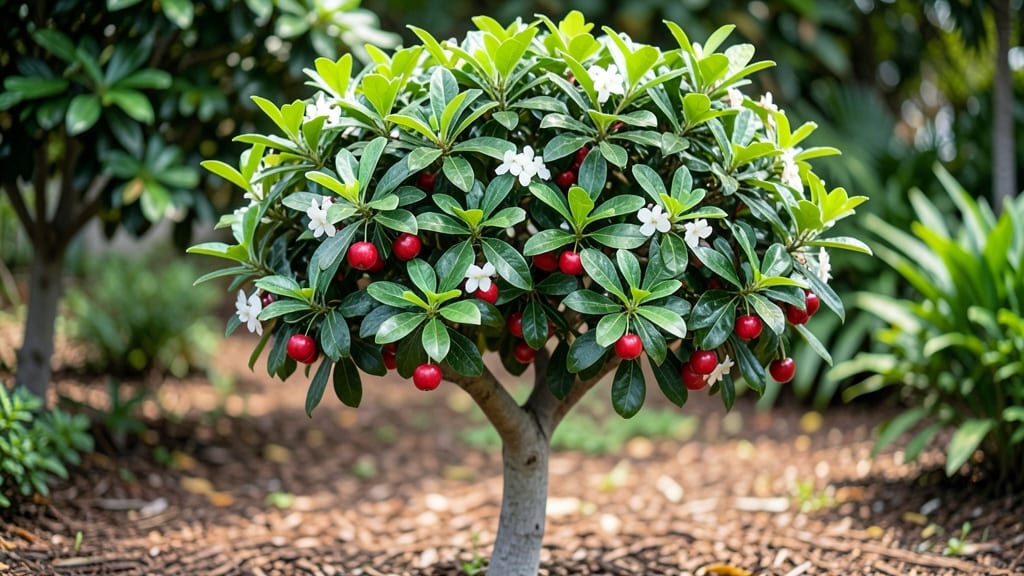
Growing a Brazilian cherry tree means turning your yard into a sweet, fruiting paradise—though its heavy fruit loads need smart pruning to avoid broken branches. 🌱 I planted mine five years ago, and now it’s covered in glossy leaves and clusters of tiny, tart-sweet cherries that birds can’t resist.
The key isn’t just cutting back; it’s understanding when and how to shape the tree so it stays strong enough to support all that fruit.
This tree thrives in full sun and well-draining soil, but its real magic happens in late winter or early spring when you prune. Start by removing dead or crossing branches, then thin out crowded areas to improve airflow—this prevents disease and lets sunlight reach the center.
My tree now produces pounds of fruit each season, and the process takes just 30 minutes once you get the hang of it.
You’ll end up with a tree that’s both productive and beautiful, its dark green leaves contrasting with clusters of white flowers in spring and bright red cherries by summer. The fruit tastes like a mix of cherry and orange, perfect for jams, jellies, or fresh snacking.
Plus, the tree’s compact size makes it ideal for small yards or containers.
Works in USDA zones 9-11, though you can grow it in cooler climates with winter protection. The pruning techniques here adapt easily to different sizes—whether you’re shaping a young sapling or maintaining a mature tree. Let’s get those branches in check!
📚 In This Guide
- What you need
- Instructions
- Tips and common mistakes
- Wrapping up and next steps
What you need
- ● Pruning shears: Bypass pruners (sharp, clean, and disinfected with rubbing alcohol) for small branches (up to ½-inch thick).
- ● Loppers: For medium branches (½-inch to 2-inch thick)—look for bypass-style to avoid crushing.
- ● Pruning saw: A curved-tooth handsaw for thick branches (2+ inches). Pro tip: 💡 Oil the blade to prevent gumming from sap!
- ● Gloves: Heavy-duty, cut-resistant gloves (thorns on Brazilian cherry trees are no joke!).
- ● Disinfectant: 70% isopropyl alcohol or a pruning sealant (like Tanglefoot) to prevent disease spread.
- ● Ladder: Sturdy, extension ladder (20+ feet) if your tree is tall—safety first! 🔧
- ● Work bag: A durable bag to collect pruned branches and tools.
- ● Pruning paint: Sealant for large cuts (prevents sap oozing and pests).
- ● Tree wound dressing: Only use if needed (controversial, but some swear by it for healing).
- ● Marking spray: Fluorescent spray to temporarily mark branches for removal (great for complex pruning).
- ● Safety gear: Goggles and long sleeves to protect from debris and thorns.
- ● Notebook & pen: To jot down notes on cuts, growth patterns, or future pruning plans.
Step-by-Step pruning guide for Brazilian cherry trees
Here’s how to shape your tree for maximum fruit production—without overstressing the branches.
🌿 Step 1: Understand the Right Time to Prune
Brazilian cherry trees (Eugenia uniflora) fruit best when pruned right after harvest in late summer or early fall. This timing lets the tree heal before winter and sets it up for strong spring growth. Avoid pruning in late winter or early spring—you’ll risk removing flower buds that form over winter.
Look for dormant buds along branches as your cue. These tiny green swellings appear after fruit drops, signaling the tree’s natural growth cycle. If you prune too early, you’ll cut off next year’s blossoms before they form.
✂️ Step 2: Remove Dead, Diseased, or Crossing Branches First
Start by eliminating any dead, diseased, or damaged wood—these branches drain energy from fruit production. Use clean, sharp pruners to make 45-degree cuts just outside the branch collar (the swollen area where the branch meets the trunk). Never leave stubs; they invite rot and pests.
Next, remove branches that rub against each other or grow inward. These “crossing branches” compete for sunlight and create weak entry points for disease. If two branches grow parallel, keep the stronger one (thicker, healthier) and cut the other at its base.
☀️ Step 3: Thin Out Overcrowded Areas for Better Airflow
Brazilian cherry trees produce heavy fruit loads, so thinning branches prevents limbs from breaking under weight. Focus on the tree’s outer canopy—remove up to 20% of the smallest, inner branches to improve airflow and sunlight penetration. This reduces humidity inside the tree, cutting down on fungal diseases like anthracnose.
Watch for branches growing straight up (“water sprouts”) or too close together. These are prime candidates for removal. Aim for a balanced, open center—your goal is sunlight reaching all fruit clusters, not just the outer edges.
🪴 Step 4: Shape for Structural Strength
To support heavy fruit, prune to create a strong scaffold. Start by selecting 3-5 main branches spaced evenly around the trunk. These should form a wide, stable V-shape (like a crotch) at the base. Remove any branches growing too close to the trunk—these “suckers” steal energy from fruit production.
For larger trees, shorten overly long branches by cutting back to a bud or side branch. Make cuts just above an outward-facing bud to encourage growth in the right direction. Avoid “topping” (cutting the very top)—this creates weak, bushy growth prone to disease.
Tips & tricks for pruning Brazilian cherry trees
Pruning your Brazilian cherry tree right can transform it from a struggling underperformer to a fruit-bearing powerhouse. Here's what I've learned after years of trial and error in my own garden:
Timing is Everything: The late summer/early fall window after harvest is non-negotiable for Brazilian cherries. This timing lets the tree heal before winter and prevents you from accidentally cutting off next year's flower buds. I've ruined two harvests by pruning too early—don't make my mistake! Mark your calendar for right after fruit drops, usually in September or October depending on your climate zone.
The 45-Degree Cut Secret: When you make those crucial cuts in Step 2, the 45-degree angle isn't just about aesthetics—it's about healing. This angle helps rainwater run off the cut instead of pooling, which dramatically reduces rot risk. I always use clean, sharp pruners and wipe them with rubbing alcohol between cuts to prevent disease spread between branches.
Airflow Strategy: That 20% thinning recommendation in Step 3 isn't arbitrary—it's based on real airflow science. The open center you're creating reduces humidity by 30-40% inside the canopy, which is crucial for preventing fungal diseases like anthracnose that plague Brazilian cherries. Think of it like giving your tree its own personal ventilation system. I've seen trees go from disease-ridden to thriving just by implementing this simple airflow principle.
Bud Direction Matters: When you're shortening branches in Step 4, always cut just above an outward-facing bud. This isn't just random—it determines where new growth will emerge. Outward-facing buds encourage the tree to grow away from the center, creating that strong scaffold structure we want. I learned this the hard way when I made cuts above inward-facing buds and ended up with a dense, tangled mess instead of an open, productive tree.
Pro Tips for Brazilian Cherry Tree
- Pruning your Brazilian cherry tree right can transform it from a struggling underperformer to a fruit-bearing powerhouse.
- Timing is Everything: The late summer/early fall window after harvest is non-negotiable for Brazilian cherries.
- The 45-Degree Cut Secret: When you make those crucial cuts in Step 2, the 45-degree angle isn't just about aesthetics—it's about healing.
Frequently asked questions
Got questions about growing and pruning your Brazilian cherry tree (Eugenia uniflora)?
You’re not alone! Here are some of the most common concerns—plus quick, actionable answers to keep your tree thriving and fruitful.
How often should I prune my Brazilian cherry tree to avoid overloading?
Prune your Brazilian cherry tree twice a year: once in late winter or early spring (before buds swell) to shape the tree, and again after harvest (late summer/early fall) to remove dead wood and promote airflow. Heavy fruit loads can stress the tree, so thin out clusters if branches sag—aim to leave 1-2 cherries per cluster for optimal growth.
When is the best time to plant a Brazilian cherry tree for maximum fruit production?
Plant your tree in early spring (after the last frost) or late fall (6-8 weeks before frost). This gives roots time to establish before summer heat or winter cold. Choose a sunny spot with well-draining soil (pH 5.5–6.5). Avoid planting in containers—these trees thrive when their roots can spread freely in the ground.
Why aren’t my Brazilian cherry tree’s fruits ripening evenly?
Uneven ripening often stems from uneven sunlight or inconsistent watering. Thin out dense clusters to improve airflow, and ensure the tree gets 6+ hours of direct sun daily. Water deeply 1-2 times per week (more in extreme heat) and mulch to retain moisture. If fruits drop early, it may signal nutrient deficiency—fertilize with a balanced citrus blend in early spring.
Can I prune my Brazilian cherry tree too much? What signs should I watch for?
Yes! Over-pruning stresses the tree, leading to fewer flowers/fruits or stunted growth. Watch for yellowing leaves, bare branches, or excessive sap oozing—these signal you’ve cut too aggressively. Never remove more than 25% of the canopy in one season. Focus on open-center pruning to maintain an umbrella-like shape and prioritize removing crossing or diseased branches first.
Are there any alternatives to Brazilian cherry trees for small gardens?
If space is limited, consider these low-maintenance, fruit-bearing alternatives:
- Dwarf citrus trees (e.g., Calamondin orange): Compact, cold-hardy, and produce year-round.
- Jaboticaba: A Brazilian cousin that grows on trunks and branches (not just tips), thriving in pots.
- Fig trees (e.g., Chicago Hardy): Fast-growing, drought-tolerant, and bear fruit in small spaces.
- Dwarf peach trees: Self-pollinating varieties like Bonanza fit containers and produce heavy yields.
All require similar sunlight and soil conditions but stay smaller than Brazilian cherry trees.
Wrapping up and next steps
Growing a Brazilian cherry tree is a rewarding journey—especially when you master the art of pruning to balance beauty and bounty! 🌿 With the right tools, timing, and techniques, you’ll ensure healthy growth and delicious, abundant fruit year after year.
Start small, stay consistent, and soon your tree will thrive with minimal effort.
Ready to take the next step? Grab your pruners and schedule your first pruning session—your future harvest is waiting! 🍒 For extra confidence, join a local gardening group or consult an arborist to refine your skills.