
Pruning
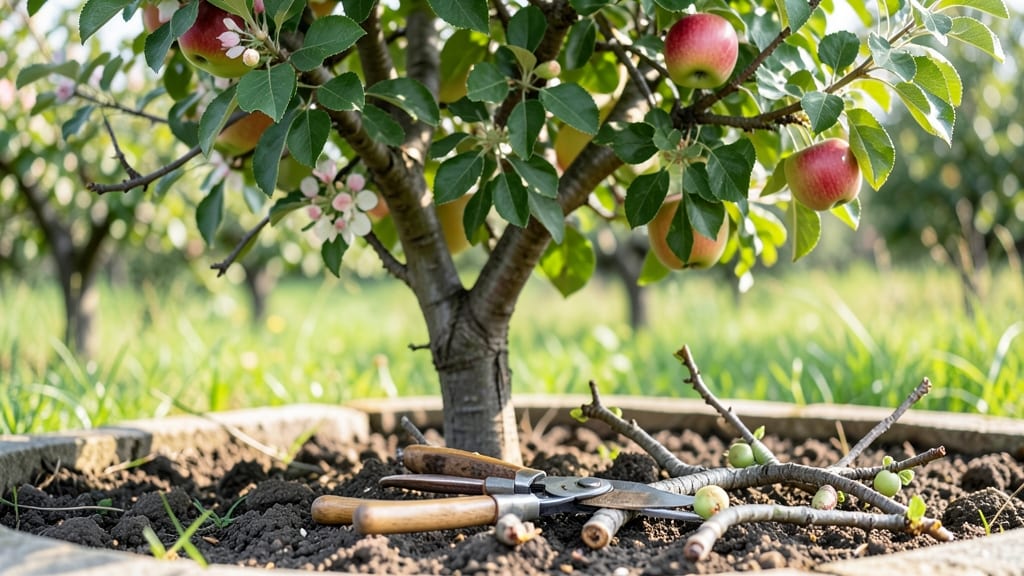
The best time of year to prune apple trees is late winter while they’re still dormant but before buds swell. ✨ I learned this the hard way after pruning too late and watching my trees bleed sap for weeks—now I mark my calendar for February in Zone 5, when the risk of frost has passed but new growth hasn’t started yet.
Timing matters because pruning during dormancy minimizes stress and disease risk while maximizing next year’s fruit production. You’ll need sharp pruners, a ladder (for taller trees), and maybe even a friend to hold branches—safety first!
The goal is to open the canopy for sunlight and air circulation, which prevents fungal issues and boosts yield.
What you’ll end up with is a tree that produces stronger branches, fewer suckers, and more abundant harvests. The cuts heal cleaner, the shape stays balanced, and you avoid the dreaded "summer pruning shock" that weakens trees.
Think of it as giving your apple tree a fresh start before spring’s growth surge.
Works for most apple varieties in temperate climates, though southern growers may need to adjust for earlier dormancy breaks. Here’s how to do it right without overcomplicating things—no green thumb required!
📚 In This Guide
- What you need
- Instructions
- Tips and common mistakes
- Wrapping up and next steps
What you need
- ● Pruning shears: Bypass pruners (sharp, clean, and 5-7 inches long) for small branches. 1 pair per person.
- ● Loppers: For thicker branches (½–1½ inches diameter). 1 pair.
- ● Pruning saw: For branches 2+ inches thick. 1 saw with a fine-tooth blade.
- ● Gloves: Heavy-duty, cut-resistant gloves to protect hands.
- ● Disinfectant: 70% isopropyl alcohol or a 10% bleach solution to sterilize tools between cuts.
- ● Rubbing alcohol or vinegar: For quick tool cleaning in the field.
- ○ Pruning sealant: Optional but helpful for large cuts (>½ inch) to prevent disease. Latex-based or tree wound paint.
- ● Ladder or step stool: If your tree is tall (6+ feet). Ensure it’s stable and non-slip.
- ○ Bucket or bag: For collecting pruned branches (optional but handy for cleanup).
- ● Weather check: Prune on a dry, calm day (no rain or wind for 24 hours before/after).
- ● Safety glasses: Protect your eyes from debris.
- ● Long sleeves/pants: To avoid scratches from branches or thorns.
- ● First-aid kit: Just in case of minor cuts or scrapes.
- ● Tree identification: Confirm it’s an apple tree (or variety) to avoid pruning mistakes!
Step-by-step guide for pruning apple trees in late winter
Here's the method that keeps my orchard healthy and productive—timed perfectly for dormancy.
⏰ Step 1: Prune During Late Winter Dormancy
Your best window is 2-4 weeks before bud break, typically February through early March in most climates. This timing ensures the tree isn't actively growing but has stored energy for new growth. You'll know it's time when buds are still tight and branches feel dormant to the touch.
Cold snaps below 20°F can stress the tree, so avoid pruning if frost is forecast. A clear, calm day with temperatures between 40-60°F is ideal. I always check the forecast and reschedule if winter storms are coming—wet wood splits more easily.
✂️ Step 2: Remove Dead, Diseased, or Crossing Branches First
Start with the obvious—any dead wood (gray, brittle branches) or diseased limbs (mushrooms at base, oozing sap) go first. Cut back to healthy wood, making your cuts just outside the branch collar where the branch meets the trunk. This prevents unsightly stubs and promotes faster healing.
Next, remove crossing or rubbing branches that chafe each other. These create wounds where pests and diseases love to enter. I look for branches growing toward the center of the tree—these compete for sunlight and weaken the tree's structure. Use clean, sharp pruners to make smooth cuts at a 45-degree angle just above an outward-facing bud.
☀️ Step 3: Thin the Canopy for Better Airflow and Light
Apple trees need open airflow to prevent fungal diseases like apple scab. Aim to remove 20-30% of the tree's branches, focusing on those growing inward or downward. You'll see the best results when sunlight can reach the inner canopy—this encourages fruit production and reduces pest problems.
Look for water sprouts (fast-growing vertical shoots) and suckers (shoots from the base). These steal energy from fruit production. Cut these back to a bud or lateral branch—never leave a stub. I like to step back every few cuts to visualize the tree's shape, ensuring the strongest branches remain.
🌱 Step 4: Shape for Balance and Future Growth
Now's the time to refine the tree's form. Apple trees thrive with a central leader (main upright branch) and scaffold branches (larger limbs) spaced 12-18 inches apart. Prune competing leaders early to avoid a weak, multi-trunked tree. Your goal is a balanced vase shape that lets light penetrate evenly.
For younger trees, I focus on selective pruning to encourage strong framework branches. Older trees benefit from rejuvenation cuts—shortening overgrown branches by one-third to stimulate new growth. Always cut back to a bud or lateral branch, never to a fork or stub.
💧 Step 5: Clean Up and Protect the Tree
After pruning, sterilize your tools with rubbing alcohol to prevent spreading disease. Remove all clippings from the area—don't leave them under the tree, as they can harbor pests. I like to bag them and dispose of them in yard waste to keep my orchard clean.
Apply a wound dressing only if the cut is larger than ½ inch in diameter. For smaller cuts, let the tree seal naturally—dressings can trap moisture and invite rot. Finally, give the tree a deep watering to help it recover from the stress of pruning. You'll see fresh green growth in 3-4 weeks, signaling the tree is healing well.
Tips & tricks for perfect late winter apple tree pruning
Timing and technique make all the difference when pruning apple trees—here's how to get it right.
Timing Secret: The 2-4 week window before bud break is non-negotiable. I check bud development weekly—when buds are still tight and branches feel dormant, that's your cue. In my zone 5 climate, this usually falls between late February and early March. If you prune too early, you risk exposing the tree to late frosts; too late, and you'll encourage new growth that can't survive winter. A quick test: gently rub a bud between your fingers—if it feels firm and doesn't leave green residue, you're good to go.
Tool Technique: Sharp, clean tools are your best friend. I use bypass pruners for branches up to ½ inch thick and a pruning saw for thicker limbs. Always sterilize your tools with rubbing alcohol between cuts to prevent spreading disease. Here's a pro move: Wipe down each tool with a paper towel after sterilizing—it catches any debris that might harbor pathogens. And never use the same pair of shears for both pruning and harvesting—cross-contamination is a real risk for apple trees.
Visual Pruning Cues: When thinning the canopy (Step 3), look for branches that grow inward or downward—they're your top candidates for removal. I use the "sunlight test": stand back and imagine the sun moving across the sky. Any branches that would cast shade on others during peak sunlight hours need to go. For water sprouts, they're easy to spot—these vertical shoots grow straight up like arrows and are usually much thinner than other branches. Cut these back to a lateral branch or bud to redirect the tree's energy where you want it.
Recovery Strategy: After pruning, the tree needs time to heal. That deep watering in Step 5 isn't just symbolic—it helps the tree recover from stress. I like to add a 2-inch layer of mulch around the base (but not touching the trunk) to retain moisture and regulate soil temperature. This simple step can make a big difference in how quickly your tree shows new growth. And remember: the fresh green shoots you'll see in 3-4 weeks are your reward for doing it right!
Pro Tips for Best Time Of Year To Prune Apple Trees
- Timing and technique make all the difference when pruning apple trees—here's how to get it right.
- Timing Secret: The 2-4 week window before bud break is non-negotiable.
- Tool Technique: Sharp, clean tools are your best friend.
Frequently asked questions
Got questions about pruning apple trees?
You’re not alone! Here are answers to the most common ones to help you prune like a pro—without the guesswork.
When is the absolute latest I can prune my apple tree before spring?
Prune no later than early March (varies by climate zone) to avoid stimulating early growth before last frost. In warmer regions, late winter (Feb–March) is ideal. If you miss dormancy season, wait until late summer (after harvest) but expect slower recovery.
What if I prune too early in winter?
Pruning before deep dormancy (Dec–Jan) can stress the tree and leave cuts vulnerable to disease. Wait until late winter (when temps are consistently below freezing at night) to ensure clean, safe pruning. Think of it like waiting for the “all-clear” before trimming!
Can I prune apple trees in summer instead?
Yes, but it’s not ideal for major shaping. Light summer pruning (removing water sprouts or diseased branches) is fine, but avoid heavy cuts—it stresses the tree and may reduce fruit production. Save big pruning for dormancy season for best results.
Will pruning now affect my apple harvest this year?
Pruning in late winter won’t hurt this year’s harvest—it actually boosts future yields by improving airflow and sunlight. However, if you prune too aggressively, the tree may focus on regrowth instead of fruiting. Aim for 20–30% of the canopy max per year.
What if my area has unpredictable weather?
If frost or rain is forecasted, delay pruning until conditions are dry and calm. Use a pruning sealant (like tree paint) on large cuts to prevent disease. Monitor local frost dates—prune 2–4 weeks before the last expected frost for safety.
Wrapping up and next steps
Pruning your apple tree at the right time—late winter during dormancy—sets the stage for a healthier, more productive orchard. 🌱 By following the steps and tips shared, you’ll encourage better airflow, sunlight exposure, and fruit quality while minimizing stress on your tree.
Now that you’re armed with the best timing and techniques, grab those pruners and get ready to transform your apple tree into a thriving, fruit-bearing powerhouse!
Your next step? Mark your calendar for late winter, gather your tools, and take action—your future harvest will thank you! 🍏✨