Pruning
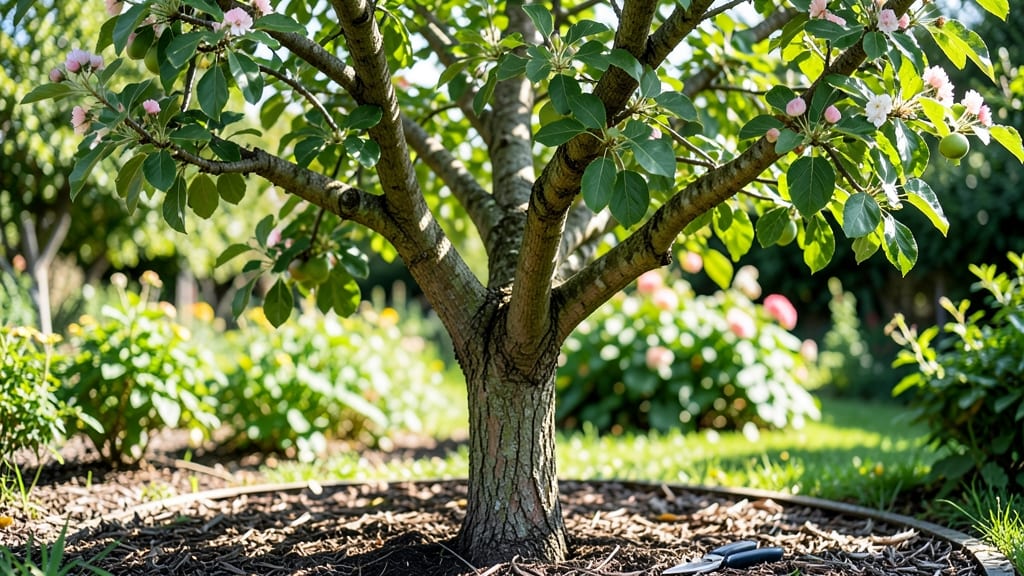
Pruning apple tree branches isn’t just about shaping—it’s about unlocking next year’s harvest by directing energy where it matters most. 🌳 The right cuts now mean fewer crowded branches, more sunlight reaching fruit, and a stronger structure that resists winter damage.
I learned this the hard way after my first tree produced a meager crop because I’d overloaded the lower limbs with too many apples.
You only need three basic cuts—thinning, heading back, and cleaning up—and a sharp pair of pruners. Timing matters too: late winter or early spring is ideal, but you can make structural adjustments anytime the tree isn’t flowering.
The goal is simple: open up the canopy so air circulates, remove dead wood, and encourage new growth in the right places.
What you’ll end up with is a tree that produces larger, higher-quality fruit while staying healthy for decades. The branches will be evenly spaced, the trunk will thicken, and you’ll spend less time wrestling with tangled limbs during harvest.
Plus, fewer branches mean easier access for picking—and fewer apples left behind to rot.
This method works for both young trees you’re training and mature orchards you’re maintaining. Whether you’re dealing with a single backyard tree or a row of heritage varieties, the same principles apply. Let’s get those branches in shape for a better harvest next season.
📚 In This Guide
- What you need
- Instructions
- Tips and common mistakes
- Wrapping up and next steps
What you need
- ● Pruning shears – Bypass pruners (for branches up to ½ inch thick) or anvil pruners (for thicker branches). Ensure they’re sharp and clean.
- ● Loppers – For branches ½ to 1½ inches thick. Look for long-handled, bypass-style for better leverage.
- ● Pruning saw – A curved-tooth pruning saw for branches over 1½ inches thick. Avoid tearing the bark!
- ● Disinfectant (70% isopropyl alcohol or bleach solution) – To sterilize tools between cuts and prevent disease spread.
- ● Rubbing alcohol or hand sanitizer – For cleaning hands before and after pruning.
- ● Heavy-duty gloves – Garden gloves with reinforced palms to protect against thorns and rough bark.
- ● Ladder or sturdy step stool – If your tree is over 6 feet tall. Always prioritize safety!
- ● Tarp or bucket – To collect pruned branches and debris for easy cleanup.
- ● Sealing wax or pruning paste – To protect large cuts from disease (apply only if needed).
- ● Marking spray or tape – For tagging branches to identify future cuts.
- ● Safety glasses – To shield eyes from debris or sap splashes.
- ● Tree wound dressing – Controversial but some swear by it for extra protection.
- ● Notebook & pen – To sketch your tree’s structure before pruning.
How to prune apple tree branches for stronger growth
Here's the simple system I use to keep apple trees thriving year-round.
🌿 Step 1: Identify and Remove Dead or Diseased Branches
Start by scanning your tree for branches that are completely dead, broken, or showing signs of disease like cankers or fungal growth. These branches won't recover and will drain energy from healthy growth. Use clean, sharp pruning shears to make your cuts—dull tools crush stems and invite infection.
Look for branches that are brittle, have no leaves, or show dark, sunken spots. These are clear candidates for removal. I always prune these first, no matter the season. The key is to cut back to a healthy bud or branch collar—the swollen area where the branch meets the trunk—to prevent water from pooling and causing rot.
Real talk: If a branch looks questionable but has a few green leaves, give it another season. Sometimes branches appear dead but surprise you with new growth. But if it's truly dead, out it goes immediately.
✂️ Step 2: Thin Out Crowded Branches for Better Airflow
Next, focus on thinning out the canopy to improve sunlight penetration and airflow. Look for branches that cross each other or grow too close together. These create rubbing points that lead to wounds and disease. Select the weaker branch at each junction—it'll be thinner, older, or growing in a less favorable direction.
Thinning isn't about cutting back length; it's about removing entire branches. Aim to create an open center that lets sunlight reach all parts of the tree. For young trees, I typically remove about 20-30% of the branches, while mature trees might need more aggressive thinning to maintain shape.
Here's the thing—don't be afraid to make bold cuts. Apple trees respond well to proper thinning, and you'll see stronger fruit production and fewer pest issues. Just make sure your cuts are clean and angled slightly away from the branch collar.
☀️ Step 3: Shape the Tree for Optimal Fruit Production
Now it's time to shape the tree for maximum fruit yield. Focus on removing branches that grow inward or downward—they'll compete with others for sunlight and reduce air circulation. You want an open vase shape that allows sunlight to reach the center of the tree where most fruit develops.
For horizontal branches, aim to have them grow at about a 45-degree angle from the trunk. These branches produce the most fruit. Vertical branches, called "water sprouts," should be removed entirely—they grow too fast, use too much energy, and rarely bear fruit.
I like to step back every few cuts to visualize the tree's shape. This is the moment that matters: you're not just pruning, you're sculpting a tree that will produce better fruit for years. Take your time and make cuts that encourage strong, outward growth.
Tips & tricks for pruning apple tree branches
Between us, these tricks will transform your pruning from a guess into a science—stronger branches and better fruit are what you're after, right?
Timing is Everything: Late winter or early spring, just before buds swell, is the absolute best time to prune apple trees. This timing prevents disease entry points and gives the tree time to heal before summer pests arrive. If you must prune later in the season, do it on a dry day and sterilize your tools between cuts to minimize infection risks.
The Technique That Changed Everything: When making cuts, always use a three-step approach: First, make an undercut about a quarter-inch below your target cut to prevent tearing. Then, cut just outside the branch collar at a slight angle. Finally, make a clean top cut to remove the stub. This method promotes faster healing and reduces the chance of disease entering the wound. I learned this the hard way after ruining three branches with improper cuts!
Visual Cues for Better Cuts: In Step 3, when shaping your tree, look for branches that grow at less than a 45-degree angle—they're called "water sprouts" and should be removed entirely. These vertical branches grow too fast and rarely produce fruit. Instead, focus on keeping branches that grow outward at about a 45-degree angle, as these will bear the most fruit. Step back frequently to visualize the open vase shape you're creating—this is how you'll know you're on the right track.
Sterilize Your Tools: Before you start pruning, clean your pruning shears with rubbing alcohol or a bleach solution to prevent spreading disease between cuts. I keep a small spray bottle of diluted bleach on hand for quick sterilization between branches. This simple step can make the difference between a healthy tree and one struggling with fungal infections.
Pro Tips for Apple Tree Branch
- Between us, these tricks will transform your pruning from a guess into a science—stronger branches and better fruit are what you're after, right?
- Timing is Everything: Late winter or early spring, just before buds swell, is the absolute best time to prune apple trees.
- The Technique That Changed Everything: When making cuts, always use a three-step approach: First, make an undercut about a quarter-inch below your target cut to prevent tearing.
Frequently asked questions
Got questions about pruning your apple tree branches? You’re not alone! Here are some of the most common concerns—plus quick answers to keep your tree thriving.
When is the best time to prune apple tree branches?
The ideal window is late winter or early spring (just before buds swell), but you can also prune in summer after harvest. Avoid heavy pruning in fall—it invites disease. For young trees, prune annually; mature trees may need less frequent attention.
How do I know which branches to cut?
Focus on three key cuts:
- Dead/diseased branches: Remove immediately—they drain energy.
- Crossing or rubbing branches: Cut one to prevent wounds.
- Water sprouts (vertical shoots): Trim to encourage fruit-bearing wood.
Will pruning hurt my apple tree’s fruit production?
Not if done right! Pruning boosts fruit quality by improving airflow and sunlight. Over-pruning (removing >25% of branches) can reduce yield temporarily, but strategic cuts—like thinning dense areas—actually increase fruit size and sweetness.
Can I prune apple tree branches in extreme heat or cold?
Avoid pruning when temps are below 40°F or above 90°F. Cold weather stresses the tree; heat increases sap flow, making cuts ooze excessively. Early morning on a mild day is perfect for clean, efficient pruning.
What if I accidentally prune too much?
Don’t panic! If you’ve removed more than 30% of branches, pause for a season to let the tree recover. Focus on smaller cuts next year and fertilize lightly. Young trees bounce back faster than mature ones—patience is key!
Wrapping up and next steps
Pruning your apple tree branch isn’t just about shaping—it’s about inviting strength, health, and bountiful harvests year after year! 🌿 By mastering the three key cuts (thinning, heading, and renewal), you’ll boost airflow, reduce disease risk, and encourage vibrant growth.
Whether you’re a seasoned gardener or just starting, every snip is a step toward a thriving orchard.
Ready to roll up your sleeves? Grab your tools, review your notes, and schedule your next pruning session—your apple tree will thank you with delicious fruit and lush foliage! 🍏✨