
Pruning
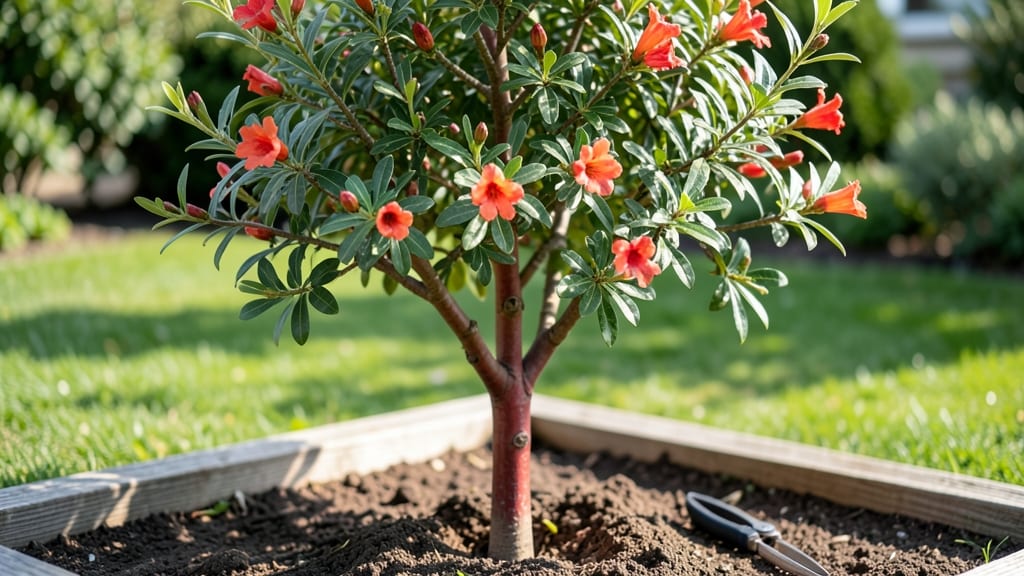
Your young pomegranate tree could produce double the fruit next season with just a few strategic cuts this spring. I learned the hard way—skipping dormant pruning left my first tree looking like a tangled mess, and the harvest was disappointing.
The key is timing and technique, not just hacking away at branches.
This isn't complicated—just sharp pruners, a sunny day, and 30 minutes of focused work. You'll shape the tree to encourage strong growth while keeping it open enough for sunlight to reach all the fruit.
The best part? You only need to do this once a year, and the payoff comes in summer when your tree bursts with ruby-red jewels.
What you'll end up with is a neat, productive tree that flowers heavily and sets fruit along the branches. The secret is cutting back last year's growth by about a third, removing any dead or crossing branches, and opening up the center.
Your tree will thank you with vibrant new shoots and a framework ready for years of abundant harvests.
Works for any young pomegranate—whether you planted it last spring or just last month. The same principles apply whether you're in zone 7 or zone 9, though timing shifts slightly with your climate. Let's get those pruners ready!
📚 In This Guide
- What you need
- Instructions
- Tips and common mistakes
- Wrapping up and next steps
What you need
- ● Pruning shears or bypass pruners – Choose sharp, high-quality shears (e.g., Felco F-2 or Bypass Pruners by Corona) for clean cuts on branches up to ½-inch thick.
- ● Loppers – For thicker branches (½-inch to 2-inches), opt for bypass loppers (e.g., Felco F-22) to avoid crushing.
- ● Hand pruners – A lightweight pair (e.g., Gonicc G92) for smaller twigs and precision cuts.
- ● Disinfectant (70% isopropyl alcohol or pruning sealant) – A small spray bottle or wipe to sterilize tools between cuts and prevent disease spread.
- ● Gloves – Heavy-duty gardening gloves (e.g., Cruelty-Free Vegan Gloves) to protect from thorns and sap.
- ● Rake or broom – For clearing fallen debris and leaves after pruning.
- ● Bucket or trash bag – To collect pruned branches for composting or disposal.
- ● Pruning saw – For branches thicker than 2-inches (e.g., Fiskars X7).
- ● Extension pole pruners – If your tree is tall, these help reach higher branches safely.
- ○ Tree wound pruning paste – Optional for sealing large cuts (e.g., Tree Help Wound Dressing), though many experts recommend letting small cuts heal naturally.
- ● Notebook & pen – To sketch a quick map of your tree’s structure before and after pruning.
- ● Water spray bottle – To mist tools and cuts if working in dry conditions.
Step-by-Step guide for pruning a young pomegranate tree
Here's how I shape young pomegranates for strong growth and future fruit loads.
Choose the Right Time and Tools
Prune your young pomegranate tree in late winter or early spring, just before buds begin to swell. This timing gives the tree time to heal before summer heat arrives. I always use sharp, clean pruning shears—dull blades tear bark and invite disease. Disinfect your tools with rubbing alcohol between cuts to prevent spreading any pathogens.
You'll want to work on a dry day when the tree isn't stressed. The goal is to remove dead, crossing, or weak branches while maintaining an open center. This open structure ensures good airflow and sunlight penetration, which pomegranates love for fruit production. Avoid heavy pruning in the first year unless absolutely necessary—young trees establish their framework better with minimal interference.
Identify and Remove Problem Branches
Start by removing any dead, diseased, or broken branches first. These are easy to spot—they'll be brown, brittle, or lacking leaves. Cut back to healthy wood just above a bud or branch collar. Next, look for branches that cross or rub against each other. These often create wounds that invite pests and disease.
I also remove branches growing straight upward from the trunk or main scaffold branches. These "water sprouts" compete with the tree's main structure for energy. Thin out crowded branches to improve air circulation. Remember, you want sunlight to reach the center of the tree—this encourages fruiting on the inner branches where pomegranates often produce their best fruit.
Shape the Tree's Framework
For young pomegranate trees, aim to establish 3-5 main scaffold branches spaced evenly around the trunk. These should emerge at angles between 45 and 60 degrees from the trunk. Cut back any branches that grow too close together or are too small to become main limbs.
When shaping, make your cuts just above an outward-facing bud. This encourages growth in the direction you want. Avoid cutting back to a stub—this often leads to weak regrowth. For branches that are too long, you can shorten them by up to one-third to encourage bushier growth. The key is to create a balanced structure that will support fruit production as the tree matures.
Clean Up and Monitor Growth
After pruning, remove all cuttings and debris from the area. This helps prevent disease and pests from taking hold. Rake up any fallen leaves or small branches and dispose of them properly. I like to spread a thin layer of mulch around the base of the tree to retain moisture and suppress weeds.
In the weeks following pruning, monitor your tree closely. Look for signs of stress like yellowing leaves or wilting branches. If you see any unusual symptoms, it might be time to adjust your pruning approach. Young pomegranate trees typically show new growth within 3-4 weeks of proper pruning. This is your sign that the tree is recovering well and setting up for a productive growing season.
Tips & tricks for pruning a young pomegranate tree
Here's what I've learned after shaping dozens of young pomegranate trees—these details make all the difference for healthy growth.
Timing is Everything: Late winter or early spring, just before buds swell, is your perfect window. I've seen trees stressed when pruned too early—buds can still be vulnerable to cold snaps. If you miss this timing, wait until summer after flowering, but avoid pruning in fall. The tree needs time to heal before winter dormancy sets in again.
The 45-60 Degree Rule: When shaping your scaffold branches in Step 3, pay close attention to that angle. Branches growing at less than 45 degrees from the trunk often develop weak crotches that split under fruit weight. I've had to replace entire branches because they grew too close to vertical. Make your cuts just above an outward-facing bud to encourage growth in the right direction—this creates that perfect angle naturally.
Visual Cues for Healthy Cuts: In Step 2, when removing problem branches, look for these signs of healthy wood: smooth bark, greenish-brown color, and buds that look plump and ready to open. I learned this the hard way—once I cut back to a brown, shriveled bud that never produced new growth. Always cut just above the branch collar, that swollen area where the branch meets the trunk, to promote faster healing.
Monitoring Growth After Pruning: Those 3-4 weeks after pruning are critical. You'll notice new growth appearing as small red buds along the scaffold branches. If you see yellowing leaves or wilting branches within this period, it might indicate stress from over-pruning. A light application of balanced fertilizer can help, but don't overdo it—the tree is still establishing its root system.
Pro Tips for Young Pomegranate Tree
- Here's what I've learned after shaping dozens of young pomegranate trees—these details make all the difference for healthy growth.
- Timing is Everything: Late winter or early spring, just before buds swell, is your perfect window.
- The 45-60 Degree Rule: When shaping your scaffold branches in Step 3, pay close attention to that angle.
Frequently asked questions
Got questions about trimming your young pomegranate tree? You’re not alone! Here are some of the most common concerns—and their solutions—to help you prep for spring pruning like a pro.
How do I know if my young pomegranate tree is ready for dormant pruning?
A young pomegranate tree is ready for dormant pruning when it’s fully dormant (late winter or early spring, before buds swell). Look for no new growth and leaves that have fallen. Avoid pruning in fall or after buds break—this can stress the tree and reduce fruit production.
What’s the best way to prune a young pomegranate tree to encourage fruit?
Focus on three key goals:
- Remove dead/diseased branches (cut at the base).
- Thin out crowded branches to improve airflow (aim for 6–12 inches between branches).
- Shape the tree into an open vase or goblet form to maximize sunlight exposure for fruit.
Can I prune a pomegranate tree too much? What are the signs?
Yes! Over-pruning can stress the tree and reduce fruit production. Signs include:
- No new growth by mid-spring.
- Leaves that are smaller or yellowing.
- Fewer (or no) flower buds in spring.
Do I need to sterilize my pruners between cuts?
Absolutely!
Sterilizing pruners (with rubbing alcohol or a 10% bleach solution) between cuts prevents bacterial/fungal spread, like pomegranate shot hole disease. Wipe blades before and after each cut, especially if trimming dead wood.
What if my young pomegranate tree doesn’t have any branches to prune?
Don’t worry—it’s normal for young trees (under 2 years) to have minimal structure. If your tree is bare-bones, focus on:
- Encouraging new growth by pruning just the tips of the longest branches.
- Adding support stakes if branches are floppy.
- Fertilizing lightly with citrus/pomegranate-specific food to boost vigor.
Can I use the same pruning techniques for a pomegranate tree as I would for a citrus tree?
While both are evergreen-like, pomegranates are hardier and prefer more aggressive shaping than citrus. Avoid heavy heading cuts (trimming back to a bud)—instead, prune to open the canopy for sunlight. Citrus trees also need less pruning overall; pomegranates benefit from annual dormant trims. vs.
Wrapping up and next steps
Giving your young pomegranate tree the right winter trim is like setting the stage for a bountiful spring harvest—it’s all about balance, patience, and a little know-how! 🌱 By removing dead wood, shaping for airflow, and encouraging strong growth, you’re not just pruning; you’re investing in years of juicy, ruby-red fruit.
Now that you’re armed with the right tools and techniques, there’s no better time to roll up your sleeves and get to work.
Ready to see your tree thrive? Mark your calendar for late winter or early spring—just as buds begin to swell—and make that first cut. Your future fruit bowl will thank you! 🍇✨