
Trees
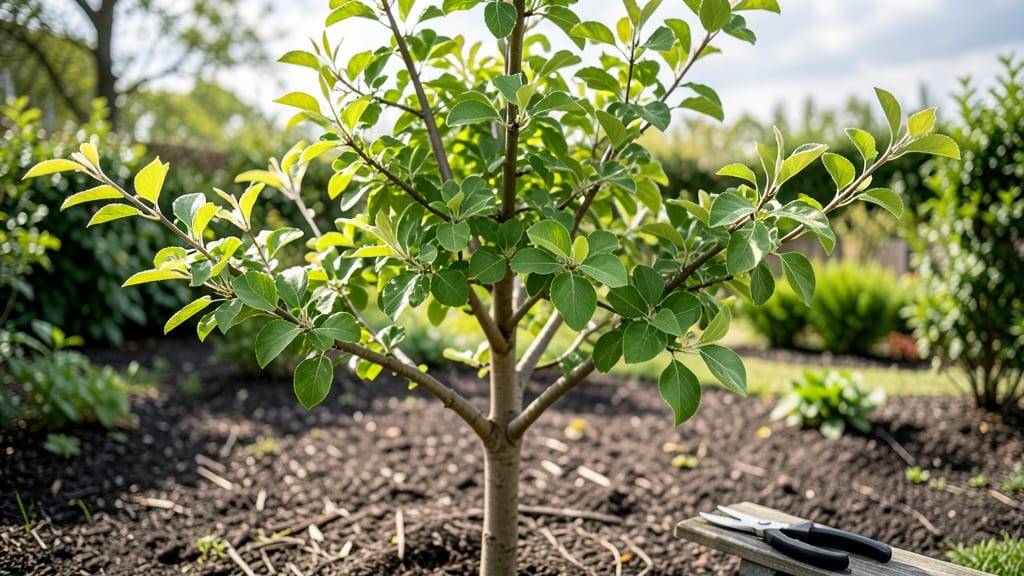
Your young apricot tree’s leaves hold the key to next year’s harvest—ignore them now, and you’ll miss out on the sweetest fruit. 🌱 I’ve watched first-year trees go from scraggly to bursting with blossoms by mastering just three pruning principles, and the best time to start is this late winter, before buds swell.
The biggest mistake? Over-pruning or cutting at the wrong angle. Apricot trees need open centers to let sunlight reach all leaves, but aggressive cuts trigger stress. Instead, focus on removing dead, crossing, or inward-growing branches—just 10-15% of the tree’s total growth.
Think of it like sculpting: you’re shaping a vase, not hacking a firewood pile.
What you’ll end up with is a tree that blooms like crazy in spring and sets fruit without dropping it prematurely. The leaves stay rich green, not yellow or spotted, and the branches hold their shape—no flopping or tangled mess.
Plus, you’ll spot pests early (like aphids hiding in curled leaves) before they become a problem.
Works for container-grown trees too, though dwarf varieties need even lighter pruning. Here’s how to tell if you’re doing it right—and what to do when things go wrong.
📚 In This Guide
- What you need
- Instructions
- Tips and common mistakes
- Wrapping up and next steps
What you need
- ● Bypass Pruners: A sharp, high-quality pair (e.g., Felco F-2 or comparable) for clean cuts on small branches (up to ½ inch in diameter). ✨ Pro Tip: Always keep blades oiled to prevent rust.
- ● Loppers: Medium-sized (18-24 inches) for thicker branches (½ to 1½ inches in diameter). Look for ratcheting or bypass-style loppers for ease.
- ● Pruning Saw: A curved-tooth saw for branches larger than 1½ inches. A foldable or compact design makes handling easier.
- ● Gloves: Heavy-duty, cut-resistant gloves (e.g., Mechanix or similar) to protect your hands from thorns and rough bark.
- ● Safety Goggles: To shield your eyes from debris and sap.
- ● Disinfectant: A 70% isopropyl alcohol or bleach solution (1 part bleach to 9 parts water) to sterilize tools between cuts and prevent disease spread.
- ● Trash Bags or Bin: For collecting pruned leaves and branches. Compostable bags are eco-friendly!
- ● Ladder (if needed): A stable, extendable ladder (e.g., aluminum or fiberglass) for taller trees. 💡 Tip: Always place it on level ground and secure it with stabilizers.
- ● Pruning Sealant: (e.g., Tanglefoot or pruning paint) to coat larger cuts and reduce sap loss or pest entry.
- ● Marking Twine or Tape: To temporarily mark branches for removal before cutting.
- ● Pruning Shears for Fine Trimming: Small, anvil-style shears for delicate adjustments on tiny shoots.
- ● Tree Wrap: If your apricot tree has young, tender bark, wrap it to protect against sun scorch or pests.
How to prune young apricot trees for healthy growth and fruit
Here's the straightforward approach I use to shape apricot trees early—it keeps them productive and sturdy.
✂️ Step 1: Identify and Remove Dead or Damaged Branches
Start by scanning your young apricot tree for any branches that are brown, brittle, or showing signs of disease. These are your first targets—they won’t produce fruit and can spread problems to healthy growth. Use sharp pruning shears to cut just outside the branch collar, the swollen area where the branch meets the trunk. This ensures clean cuts that heal properly.
Real talk: If you see any branches rubbing against each other, remove the smaller one. Friction creates wounds that invite pests and diseases. I always check for these weak spots in late winter before new growth starts—it’s the best time to spot them.
🌿 Step 2: Prune for an Open Center and Airflow
Apricot trees thrive when light and air circulate freely through their branches. Aim to create an open vase shape by removing any branches growing inward toward the center of the tree. Start by cutting back the smallest of these competing branches first—this gives the tree room to develop strong, outward-facing limbs.
You’ll notice some branches grow at odd angles. These are called "water sprouts" or "suckers," and they sap energy from fruit production. Snip them off at their base. The goal is to leave a framework of sturdy branches spaced about 12-18 inches apart along the trunk.
☀️ Step 3: Thin Out Crowded Growth for Better Fruit
Once you’ve shaped the tree’s structure, focus on thinning out clusters of branches that are growing too close together. This step is critical—crowded growth leads to small, poor-quality fruit. Look for branches that cross or overlap; remove the weaker of the two, cutting back to a bud that faces outward.
Here’s the thing—you want to leave about 3-4 main branches on a young apricot tree. These will become your primary fruit-bearing limbs. If you see any branches growing straight up from the trunk, prune them back to a side bud to encourage a more horizontal growth habit.
⏰ Step 4: Time Your Pruning for Spring Growth
The best time to prune young apricot trees is in late winter or early spring, just before buds begin to swell. This timing ensures the tree has time to heal before the growing season kicks in. Avoid pruning in fall, as new growth can’t harden off before winter, making it vulnerable to cold damage.
If you must prune later in the season, do it in early summer after the tree has finished flowering. Just be gentle—summer pruning can stress the tree, so limit yourself to light shaping. You’ll see new leaves emerge within a week of pruning, signaling the tree is recovering well.
Tips & tricks for pruning young apricot trees
Common pitfalls—and how to sidestep every one when shaping your apricot tree.
Tool Prep: Always sanitize your pruning shears with rubbing alcohol before and after use—this prevents spreading diseases between cuts. I also recommend sharpening your blades annually; dull shears tear branches instead of making clean cuts. This is especially important when working with young trees, where clean cuts heal faster and reduce stress on the tree.
Visual Cues for Step 1: In Step 1, look for branches that are completely brown or have dead spots—these are easy to spot. But watch for subtle signs too: branches with cracks, peeling bark, or oozing sap are also candidates for removal. Remember, you're not just pruning for shape; you're creating a healthier tree that will produce better fruit. The branch collar should be clearly visible when making cuts—this is your guide for clean, proper pruning.
Structural Balance: When creating that open vase shape in Step 2, aim for symmetry but don't obsess over perfect balance. The key is to leave branches that are evenly spaced around the trunk—about 12-18 inches apart. Think of it like arranging furniture in a room: you want good circulation and visibility (or in this case, sunlight and airflow) without overcrowding. This spacing gives your tree room to grow strong limbs that will support heavy fruit loads later.
Seasonal Timing: The late winter/early spring timing in Step 4 is critical because it gives the tree time to heal before the growing season. But here's what nobody tells you—if you're in a warmer climate, you can prune up to 2 months earlier. Just make sure buds haven't started to swell yet. This early pruning gives your tree an extra boost of energy for spring growth, which translates to more fruit production down the road.
Pro Tips for Young Apricot Tree Leaves
- Common pitfalls—and how to sidestep every one when shaping your apricot tree.
- Tool Prep: Always sanitize your pruning shears with rubbing alcohol before and after use—this prevents spreading diseases between cuts.
- Visual Cues for Step 1: In Step 1, look for branches that are completely brown or have dead spots—these are easy to spot.
Frequently asked questions
Got questions about nurturing your young apricot tree? You’re not alone! Here are some of the most common queries—plus straightforward answers to keep your tree thriving and fruiting.
When is the best time to prune young apricot tree leaves for optimal fruit?
The ideal window is late winter or early spring (before buds swell) when the tree is dormant but about to wake up. Avoid pruning in fall—it can leave wounds vulnerable to disease. For young trees (under 3 years old), focus on shaping and removing dead wood to encourage strong growth.
How do I know if I’m pruning too much or too little?
Stick to the 25% rule: Never remove more than 25% of the tree’s foliage in one session. Signs of over-pruning?
- Excessive leaf drop after pruning
- Stunted new growth in spring
- Weak, sparse canopy
Will pruning young apricot leaves affect fruit production next year?
Actually, proper pruning boosts fruit! By opening the canopy, you improve airflow and sunlight penetration, which leads to better fruit set. Just avoid heavy cuts—focus on thinning out dense growth and removing water sprouts (vertical shoots) to redirect energy to fruit-bearing branches.
Can I use apricot tree leaves for anything other than pruning?
Young apricot leaves are edible (cook them like spinach) and packed with vitamin A. Plus, they make fantastic mulch—chop and spread them around the base to retain moisture and deter weeds. Just avoid using diseased leaves!
My apricot tree leaves are yellowing after pruning—what’s wrong?
Yellowing can stem from
- Over-pruning: Too many cuts stress the tree.
- Nutrient deficiency: Add compost or a balanced fertilizer.
- Pests/disease: Check for aphids or fungal spots.
Wrapping up and next steps
Mastering the art of pruning young apricot tree leaves is your first step toward a bountiful harvest and a thriving orchard! 🌱 By following the right techniques—like removing dead branches, thinning for airflow, and shaping for sunlight—you’re setting the stage for healthier growth and sweeter fruit.
Remember, consistency and patience are key, so don’t hesitate to revisit your tree as it matures.
Ready to take action? Grab your pruners, schedule your next pruning session, and watch your apricot tree flourish! 🌟 Whether you’re a beginner or refining your skills, every cut brings you closer to that dream orchard. Happy pruning!