
Pruning
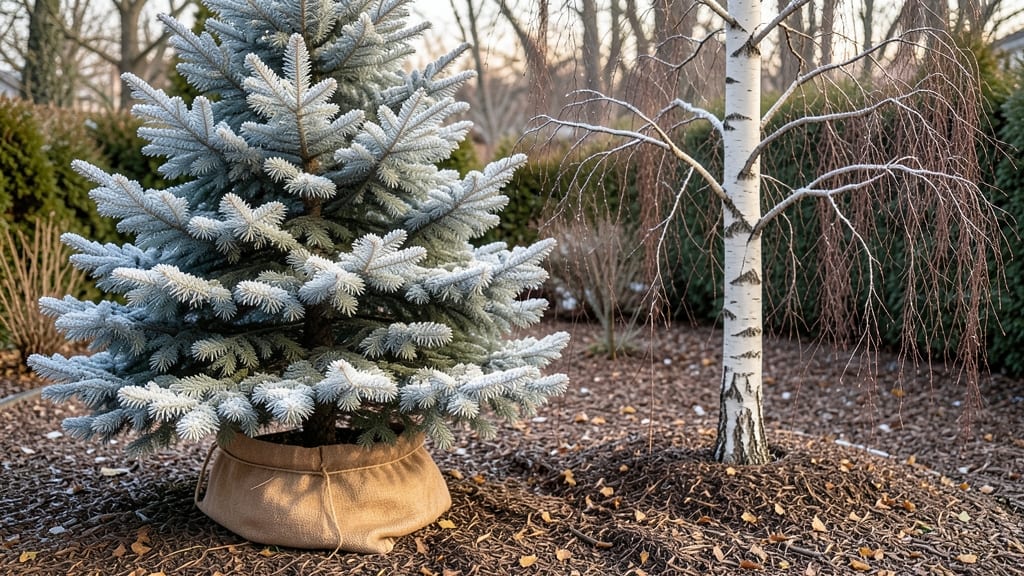
Here are the essential winter tree care tips you need—because thriving trees start with smart prep for spring’s showstopper growth. I’ve seen frost crack bark and freeze roots, but these five moves keep my mature oaks and young maples thriving through the coldest months.
The key? Timing and protection—prune at the right moment, wrap vulnerable trunks, and adjust watering before the ground freezes.
Start with late winter pruning (when buds swell but before leaves appear) to remove deadwood and shape growth. Skip heavy cuts now—wait until late summer for major shaping.
For young trees, wrap trunks with tree guard to shield bark from voles and sun scald, while mulching with 3-4 inches of shredded bark insulates roots like a cozy blanket. A deep watering in late fall (before frost) ensures roots stay hydrated through dormancy.
You’ll notice fewer broken branches come spring, and new shoots emerge 2-3 weeks earlier than neglected trees. The bark stays smooth, not split by freeze-thaw cycles, and pests avoid winter refuges in damaged wood.
Even in Zone 5 winters, these steps keep trees resilient—no more wilting or stunted growth when warmer weather arrives.
Works for shade trees, fruit trees, and ornamental varieties alike—just adjust timing for your region’s first hard frost. Let’s get your trees winter-ready before the cold sets in for good.
📚 In This Guide
- What you need
- Instructions
- Tips and common mistakes
- Wrapping up and next steps
What you need
- ● Pruning shears – Bypass or anvil type, sharp and clean (1 pair).
- ● Loppers – For thicker branches (up to 2 inches) (1 pair).
- ● Pruning saw – For branches over 2 inches in diameter (1 saw).
- ● Gloves – Heavy-duty, cut-resistant (1–2 pairs).
- ● Ladder – Sturdy, extendable (if needed) (1).
- ● Tree wrap or burlap – For young or sensitive trees (e.g., fruit trees) (1 roll).
- ○ Anti-desiccant spray – Optional but helpful for evergreens (e.g., Wilt-Pruf) (1 bottle).
- ● Mulch – Organic (wood chips, straw) or inorganic (gravel) (2–3 bags, ~3 inches deep).
- ● Watering can or hose – For deep watering before frost (1).
- ● Disinfectant – 70% isopropyl alcohol or bleach solution (1:9 ratio) (for sterilizing tools).
- ● Reflective tape – To mark branches for safety (e.g., near power lines).
- ● Tree ties – For securing young trees to stakes.
- ● Soil moisture meter – To check hydration levels before winter.
- ● Hand saw or pole pruner – For hard-to-reach branches.
- ● Winter tree food – Slow-release fertilizer (e.g., 10-10-10) (1 bag).
Step-by-Step winter tree care to protect against frost
Cold weather stresses trees differently than heat—here’s how to shield them properly.
🪴 Step 1: Inspect and Prune Dead or Damaged Branches
Start by removing any branches that are already dead, diseased, or broken from storms. Use sharp pruning shears to make clean cuts just outside the branch collar—the swollen area where the branch meets the trunk. This prevents entry points for pests and disease during winter’s weakened state.
Look for branches with peeling bark or oozing sap—these are already compromised. If you find mushrooms growing at the base, that’s a sign of root rot, and you’ll need to dig deeper to assess the damage. Prune on a dry day when temperatures are above 40°F to avoid stressing the tree further.
☀️ Step 2: Wrap Young Trunks and Protect Against Sun Scorch
Young trees with thin bark are especially vulnerable to frost cracks and sun scorch. Wrap the trunk with tree wrap or burlap starting from the base up to about 6 feet high. Secure it loosely—too tight, and it can girdle the trunk as it grows.
Pay attention to the south and west sides of the trunk, where winter sun can cause bark to split. If you don’t have wrap, even a few layers of cardboard will work in a pinch—just remove it in early spring before buds swell. Avoid plastic, which can trap moisture and promote rot.
💧 Step 3: Water Deeply Before the Ground Freezes
Trees need moisture to prepare for winter dormancy. Water deeply 2-3 weeks before the first hard freeze, delivering 10-15 gallons per inch of trunk diameter. For example, a 6-inch diameter tree should get 60-90 gallons spread evenly over the root zone.
Use a soaker hose or drip irrigation to avoid compacting the soil. You’ll know it’s enough when water drains 6-8 inches deep. Stop watering once the ground freezes—wet roots in frozen soil can’t absorb moisture, and overwatering invites root rot.
✂️ Step 4: Mulch to Insulate Roots and Retain Moisture
Spread 3-4 inches of mulch over the root zone, keeping it 6 inches away from the trunk to prevent rot. Use wood chips, straw, or shredded bark—avoid fresh sawdust, which can draw nitrogen from the soil. The mulch acts like a blanket, protecting roots from temperature swings.
Rake mulch away from the trunk if it piles up over time. A thick layer against the bark traps moisture and invites fungal growth. Check mulch depth in spring—if it’s broken down, add more to maintain 3 inches of coverage.
🌱 Step 5: Shield Newly Planted Trees from Wind and Frost
Newly planted trees need extra care. Bury a stake near the trunk and tie the tree loosely with tree ties to prevent wind rock. For added protection, construct a windbreak using burlap or snow fencing on the north and west sides, where cold winds are strongest.
If your area gets heavy snow, gently brush snow off branches as it accumulates. Too much weight can snap limbs. In extreme cold (below 10°F), drape a lightweight frost cloth over the canopy if your tree is still leafing out—just remove it during the day to prevent heat buildup.
Tips & tricks for protecting trees in winter
Winter can be tough on trees—here’s how to give them the best chance of surviving the cold.
Pruning Precision: When you’re inspecting branches in Step 1, pay special attention to the angle of your cuts. Make them just outside the branch collar at a 45-degree angle—this promotes faster healing. Avoid cutting flush with the trunk, as this can create wounds that invite disease. And remember, those 40°F temperatures are your window for pruning—below that, the tree’s defenses are weakened.
Trunk Wrap Technique: For Step 2, if you’re using tree wrap, overlap the edges by about 1-2 inches to ensure full coverage. The wrap should fit snugly but not tightly—you should be able to slide a finger between it and the trunk. For cardboard alternatives, use 2-3 layers for maximum protection, but remember to remove it by early spring before buds start swelling. The south and west sides are critical—those are where sun scorch strikes hardest.
Watering Wisdom: In Step 3, timing is everything with that 2-3 week window before freeze. Check your local frost date and work backward—don’t wait until the last minute. When you’re calculating 10-15 gallons per inch of trunk diameter, round up if your soil drains poorly. A simple test: Dig down 6-8 inches after watering—if it’s damp, you’re good. If it’s dry, give it more.
Mulch Maintenance: For Step 4, that 3-4 inch layer of mulch should look like a donut around your tree—keep it 6 inches away from the trunk to prevent rot. In spring, check the depth and refresh if needed. If you notice mold or fungus at the base, that’s a sign the mulch is too thick or too close to the trunk. A thin layer of mulch is better than none at all—even 1-2 inches helps retain moisture.
Pro Tips for Winter Tree Care Tips
- Winter can be tough on trees—here’s how to give them the best chance of surviving the cold.
- Pruning Precision: When you’re inspecting branches in Step 1, pay special attention to the angle of your cuts.
- Trunk Wrap Technique: For Step 2, if you’re using tree wrap, overlap the edges by about 1-2 inches to ensure full coverage.
Frequently asked questions
Got questions about keeping your trees thriving through winter? You’re not alone! Here are answers to the most common concerns—because even trees need a little TLC to survive the chill.
When is the best time to prune trees in winter?
Prune dormant trees (like oaks, maples, and fruit trees) between late fall and early spring—before buds swell. Avoid pruning evergreens (like pines) in winter, as their foliage can dry out. Late winter (February-March) is ideal for most deciduous trees. Pro tip: Wait until a dry, calm day to minimize stress on the tree.
How do I protect young trees from frost damage?
Wrap the trunk with tree guard or burlap to shield it from temperature swings. Mulch the base with 2–4 inches of organic mulch (like wood chips) to insulate roots. Water deeply before the first hard freeze to encourage root growth. For extra protection, use anti-desiccant sprays on broadleaf evergreens to prevent browning.
Can I fertilize trees in winter?
Generally, no—fertilizing in winter can stimulate late-season growth, making trees vulnerable to frost. Instead, focus on spring fertilization (late winter/early spring) when roots are active. If your soil is nutrient-poor, apply slow-release organic fertilizer in fall for a gradual boost.
What should I do if my tree’s branches are already damaged by frost?
Inspect for dead, brittle branches (they’ll snap easily). Prune them with clean, sharp shears to improve airflow and reduce disease risk. Avoid heavy pruning—remove only what’s necessary. If more than 30% of the canopy is damaged, consult an arborist. Warning: Never prune near power lines yourself!
Are there any winter-specific pests I should watch for?
Yes! Watch for winter moths (they lay eggs on branches) and sap-sucking insects like spider mites. Shake branches over a tarp to dislodge eggs or use horticultural oil in late winter (before buds break). Avoid chemical sprays, as they can harm beneficial insects.
Still unsure? Drop your tree-care questions in the comments—we’re happy to help your greens stay green all season!
Wrapping up and next steps
Winter may bring chilly challenges, but with the right care, your trees can thrive even in the coldest months! 🌳❄️ By following these 5 expert tips—from proper watering and mulching to smart pruning and protective wrapping—you’ll give your trees the best shot at beating frost damage.
Remember, consistency is key, so check in regularly and adjust as needed.
Ready to put your newfound knowledge into action? Grab your gloves, grab a friend, and start your winter tree care routine today! Your trees (and your future spring blooms!) will thank you. 🌿💚