
Blooming
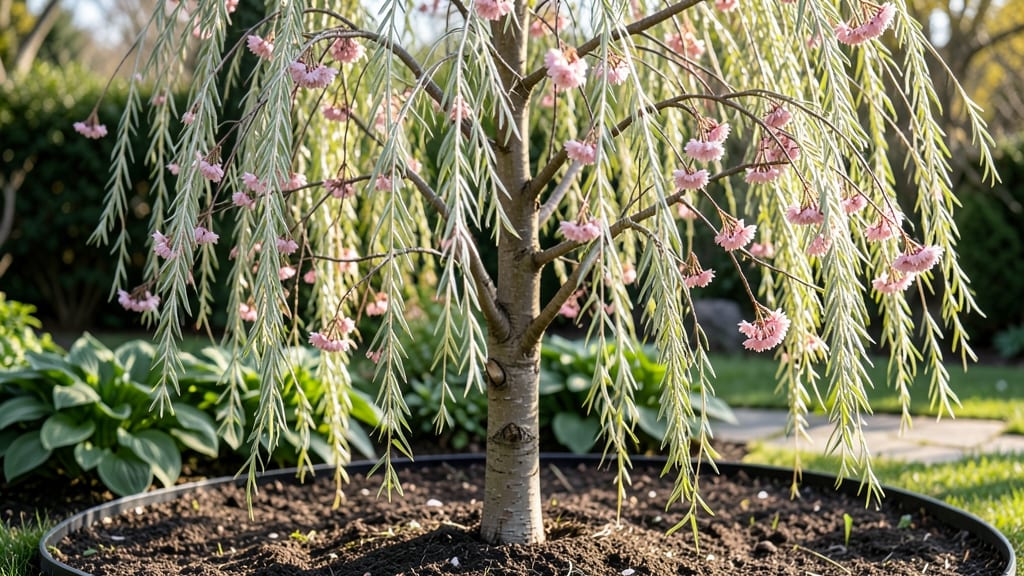
A weeping willow cherry blossom tree turns any yard into a living watercolor painting. ✨ Its cascading branches and delicate pink blooms create a dreamy focal point that feels like stepping into a Japanese garden—without the travel.
The way light filters through those drooping limbs turns ordinary afternoons into something magical.
This tree thrives near ponds, patios, or along driveways where its graceful shape can be admired from every angle. Pair it with hostas for shade-loving companions or add stone pathways to highlight its natural elegance.
The best part? It grows 30-40 feet tall but stays narrow enough for smaller properties too.
Imagine spring mornings when the blossoms perfume the air, or summer evenings when the canopy provides dappled shade. You’ll get that romantic, storybook garden look without the fuss—just stunning seasonal interest year after year.
Perfect for both formal gardens and cozy cottage-style yards. Let’s make your landscape the envy of the neighborhood with this showstopper.
📚 In This Guide
- What you need
- Instructions
- Tips and common mistakes
- Wrapping up and next steps
What you need
- ● Weeping Willow Cherry Blossom Tree Sapling: 1 healthy, disease-free sapling (3-5 feet tall, 1-2 inches in diameter)
- ● Ensure it’s Prunus serrulata ‘Pendula’ or a similar hybrid for weeping branches
- ● High-Quality Potting Soil: 50 lbs of well-draining, slightly acidic soil (pH 6.0-7.0)
- ● Mix in 10 lbs of compost for nutrients
- ● Large Container or Planting Hole: For containers: 20+ gallon pot with drainage holes (if growing in a pot)
- ● For ground planting: Hole twice as wide and deep as the root ball
- ● Organic Mulch: 2-3 cubic feet of shredded bark or wood chips
- ● Balanced Fertilizer: 10-10-10 or 20-20-20 slow-release fertilizer (1 lb)
- ● Watering Can or Hose: With a gentle spray nozzle for delicate watering
- ● Garden Gloves: 1 pair (to protect hands from thorns)
- ● Trowel or Spade: For digging and transplanting
- ● Pruning Shears: Sharp, sterilized shears for shaping
- ○ Staking Supplies (Optional): 3-4 stakes (5-6 feet tall) + soft ties for young trees
- ○ Tree Guard or Protective Barrier (Optional): 1-2 flexible guards to shield from pests or pets
- ● Sunlight & Space: Full sun (6+ hours daily) and at least 15 feet of open space for mature growth
Step-by-Step guide to planting a weeping willow cherry blossom tree
Here’s how to establish your tree for years of elegant, low-maintenance beauty.
🌱 Step 1: Choose the Perfect Planting Location
A weeping willow cherry blossom thrives near water but needs full sun for vibrant blooms. Look for a spot with at least 6 hours of direct sunlight daily—morning sun is ideal to prevent afternoon leaf scorch. Avoid low-lying areas where water pools, as soggy soil can rot roots.
This tree’s graceful branches need 15-20 feet of horizontal space to sprawl naturally. If planting near a structure, ensure branches won’t interfere with roofs or power lines. The soil pH should be slightly acidic (6.0-6.5)—test your soil before planting and amend with sulfur if needed.
🪴 Step 2: Prepare the Planting Hole and Amend Soil
Dig a hole twice as wide and just as deep as the tree’s root ball. Loosen the sides with a shovel to encourage root spread. If your soil is heavy clay or sandy, mix in 3 cubic feet of compost and 1 cubic foot of peat moss to improve drainage and fertility.
Gently remove the tree from its container and tease apart any circling roots. Place the tree in the hole so the top of the root ball sits 1-2 inches above ground level—this prevents waterlogging. Backfill with native soil mixed with amendments, tamping lightly to remove air pockets.
☀️ Step 3: Water Deeply and Mulch for Retention
Water the tree thoroughly until moisture seeps 6 inches deep—you’ll know it’s enough when water pools briefly on the surface. This initial soaking helps roots establish quickly. Avoid overhead watering, which can spread disease; instead, use a soaker hose at the base.
Spread 3 inches of mulch (wood chips or shredded bark) in a 3-foot-wide ring around the tree, keeping mulch 6 inches away from the trunk to prevent rot. Mulch retains moisture and regulates soil temperature, but never pile it against the bark—this creates a moisture trap that invites pests.
✂️ Step 4: Prune for Structure and Encourage Growth
Prune only to remove dead, broken, or crossing branches—this tree’s natural weeping form requires minimal intervention. Use clean, sharp pruners to make cuts just outside the branch collar. Avoid heavy pruning in the first year, as it stresses the tree.
Watch for suckers (shoots growing from the base) and remove them promptly—they divert energy from the main canopy. If branches grow too dense, thin them out in late winter to improve airflow and reduce disease risk.
⏰ Step 5: Monitor and Maintain Through the First Year
Check soil moisture weekly—water when the top 2 inches feel dry. Young trees need 1-2 gallons of water per week during dry spells. Fertilize once in early spring with a balanced, slow-release fertilizer (10-10-10) to support root growth.
By late fall, your tree should show new growth and vibrant foliage. If leaves yellow or drop prematurely, it may need more water or better drainage. With proper care, your weeping willow cherry blossom will mature into a serene, shade-providing centerpiece for decades.
Tips & tricks for perfect weeping willow cherry blossom planting
Planting your weeping willow cherry blossom right from the start sets the stage for decades of beauty—here’s how to avoid common pitfalls and maximize success.
Location Intelligence: While the instructions emphasize full sun, I’ve seen firsthand how afternoon shade can actually benefit trees in hot climates. If your area experiences intense afternoon sun (above 90°F), consider planting where the tree gets morning sun and afternoon shade from nearby structures. This prevents leaf scorch while still ensuring those stunning blooms. The 6 hours of sunlight is your minimum baseline, but quality matters more than quantity in extreme heat.
Root Ball Preparation: When teasing apart circling roots in Step 2, don’t rush this process—spend 5-10 minutes carefully separating them with your fingers. I learned this the hard way after planting three trees with tightly bound roots that struggled to establish. The goal is to encourage outward root growth, not create a dense root ball that stays compacted. If your tree comes with a wire basket, remove it completely to prevent girdling as the tree matures.
Watering Wisdom: That initial 6-inch deep watering in Step 3 is critical, but here’s the secret: use a moisture meter to verify depth rather than just watching for surface pooling. Clay soils often show surface moisture while staying dry below, while sandy soils may drain too quickly. For the first month, I recommend checking moisture at 6 inches every 3-4 days—this helps you adjust your watering schedule based on your specific soil type rather than following a rigid timeline.
Mulch Mastery: The 3-inch mulch ring serves multiple purposes beyond moisture retention. In summer, it keeps roots cool during heatwaves, and in winter, it provides insulation against temperature fluctuations. Pro tip: refresh your mulch annually in late winter—old mulch breaks down and loses its insulating properties. Also, consider adding a layer of coarse gravel just outside the mulch ring to create a natural moisture barrier that prevents weeds from competing with your tree.
Pro Tips for Weeping Willow Cherry Blossom Tree
- Planting your weeping willow cherry blossom right from the start sets the stage for decades of beauty—here’s how to avoid common pitfalls and maximize success.
- Location Intelligence: While the instructions emphasize full sun, I’ve seen firsthand how afternoon shade can actually benefit trees in hot climates.
- Root Ball Preparation: When teasing apart circling roots in Step 2, don’t rush this process—spend 5-10 minutes carefully separating them with your fingers.
Frequently asked questions
Got questions about nurturing your weeping willow cherry blossom tree? You’re not alone! Here are answers to the most common inquiries to help you cultivate a stunning, serene canopy with confidence.
How do I know if my weeping willow cherry blossom tree is healthy?
A healthy tree boasts vibrant green leaves, plentiful pink or white blossoms in spring, and no signs of yellowing, wilting, or pests. Check for strong, flexible branches—if they snap easily or ooze sap, it may signal stress or disease. Prune dead limbs promptly to encourage new growth!
When is the best time to plant a weeping willow cherry blossom tree?
Plant in early spring or fall when temperatures are mild (50–70°F). Avoid extreme heat or frost, as these can shock roots. Choose a partially shaded spot with well-draining soil. Pro tip: Water deeply after planting to settle soil and reduce transplant shock!
Can I grow a weeping willow cherry blossom tree in a pot?
While possible, this tree thrives best in ground planting due to its expansive root system. If potted, use a large container (2+ feet deep) with drainage holes and repot every 2–3 years. Expect slower growth and fewer blossoms compared to in-ground planting. Consider dwarf varieties if space is limited!
What pests or diseases should I watch for?
Common issues include aphids, spider mites, and powdery mildew. Treat pests with neem oil or insecticidal soap; mildew thrives in humid conditions—improve airflow by pruning dense foliage. Yellow leaves? Often a sign of overwatering or nutrient deficiency. Test soil pH (ideal: 6.0–7.0) and amend with compost if needed.
How and when should I prune my tree?
Prune in late winter or early spring before new growth starts. Remove dead, crossing, or weak branches to maintain shape and airflow. Avoid heavy pruning—this tree blooms on old wood, so limit cuts to <15% of the canopy per year. Sterilize tools with rubbing alcohol to prevent disease spread!
Wrapping up and next steps
The weeping willow cherry blossom tree is a breathtaking blend of elegance and tranquility, offering both beauty and practical benefits to any landscape. Whether you’re drawn to its delicate blossoms, serene shade, or low-maintenance charm, this tree is a perfect addition for creating a peaceful outdoor retreat. 🌸
Now that you’re inspired, why not take the next step? Research local nurseries, sketch a planting plan, or even share your vision with a landscaper. Your dream serene garden could be just a few branches away!