
Pruning
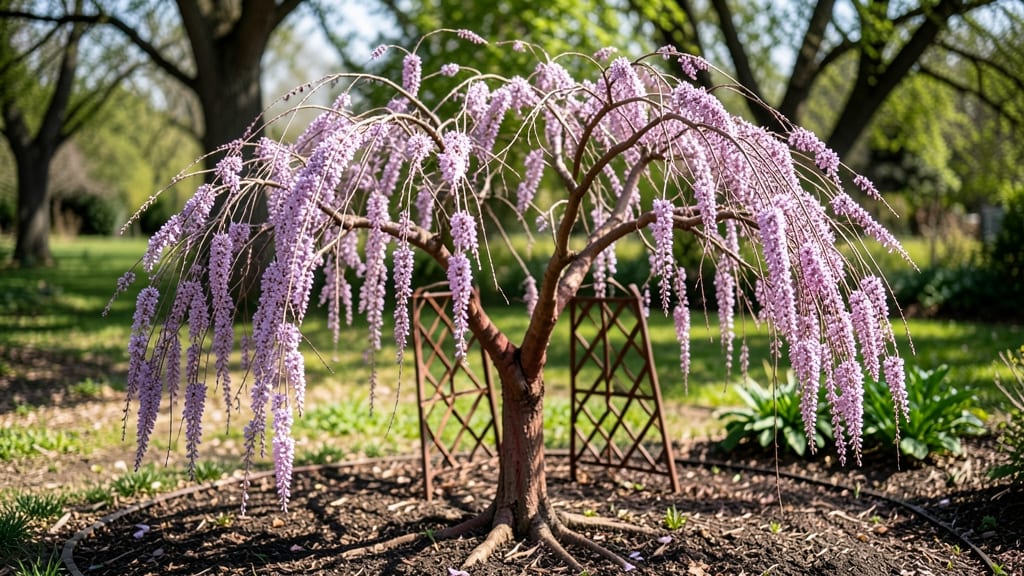
The weeping eastern redbud tree transforms any garden into a springtime centerpiece with its cascading lavender blooms and minimal care demands. I planted mine last April, and by May, neighbors were stopping to ask what magical tree I'd discovered—it wasn't magic, just the perfect spot and a little patience.
The key to that dramatic display starts with choosing the right location where its branches can gracefully spill over walls or trellises without fighting for space.
This tree thrives in partial sun to full sun, tolerating everything from rocky slopes to urban sidewalks as long as it gets at least 4 hours of sunlight daily. Well-draining soil is a must—amend heavy clay with compost before planting, and avoid soggy spots where roots rot.
Young trees need regular watering for the first year, but once established, they're drought-tolerant enough to handle dry spells like a pro.
Pruning is where the real magic happens—just one strategic cut per year keeps that weeping form intact. In late winter, remove any crossing branches or deadwood while shaping the canopy to encourage downward growth.
The result? A tree that looks like it took years to cultivate, but actually requires just 10 minutes of work annually.
Common challenges like aphids or powdery mildew are easily managed with a strong spray of water or neem oil, and deer usually leave it alone. For extra drama, plant it near spring bulbs—the contrast of purple cascades against yellow daffodils is pure garden poetry.
Ready to make your yard the talk of the neighborhood?
📚 In This Guide
- What you need
- Instructions
- Tips and common mistakes
- Wrapping up and next steps
What you need
- ● Pruning shears: Bypass pruners (sharp, clean, and sterilized with rubbing alcohol) for clean cuts on small branches.
- ● Loppers: 1 pair (8–10 inches) for thicker branches (½–1½ inches in diameter).
- ● Pruning saw: 1 handheld saw (for branches thicker than 1½ inches—rare in redbuds, but good to have!).
- ● Gloves: Heavy-duty gardening gloves (cut-resistant for safety).
- ● Disinfectant: 70% isopropyl alcohol or a 10% bleach solution (1 part bleach to 9 parts water) to sterilize tools between cuts.
- ○ Pruning sealant (optional): Tree wound sealant (only needed if cutting into larger branches or damaged wood).
- ● Trash bags: 2–3 heavy-duty bags (for debris and clippings).
- ● Ladder or step stool: If your tree is taller than 6 feet (extendable ladder recommended for safety).
- ● Notebook & pen: To jot down notes on cuts or areas to monitor.
- ● Hose or bucket of water: For rinsing tools and refreshing cuts.
- ● Safety glasses: Protect your eyes from debris (especially when using a saw!).
- ○ Mulch (optional): Shredded bark or compost to replenish the soil after pruning.
- ● Choose a dry, sunny day (avoid pruning when the tree is wet or frozen).
- ● Identify the tree’s weeping habit—look for drooping branches that create its signature cascading effect.
- ● Gather inspiration! Sketch or take photos of your tree’s current shape and desired outcome.
How to cultivate a stunning weeping Eastern redbud tree
This elegant tree thrives with just a few key steps—perfect for adding spring color with minimal effort.
Select the Perfect Planting Site
Choose a location with partial shade to full sun—this tree tolerates both but performs best with 4-6 hours of morning sun. Avoid deep shade, where foliage will thin and flowers may fail to bloom. The weeping habit means branches cascade naturally, so plant where they can grace a lawn, patio, or garden border without obstruction.
Test the soil by digging a 12-inch hole—ideal soil drains well but retains moisture. Eastern redbuds prefer slightly acidic to neutral soil (pH 6.0-7.0). If your soil is heavy clay, amend with 2-3 inches of compost mixed into the native soil. This tree adapts to various conditions but rewards you with vibrant blooms when given well-draining, fertile ground.
Plant with Care for Strong Root Establishment
Dig a hole twice as wide as the root ball but no deeper—planting too deeply suffocates roots. Gently loosen the root ball if roots are circling, then place the tree so the top of the root ball sits level with the surrounding soil. Backfill with the native soil you removed, tamping lightly every 4-6 inches to eliminate air pockets.
Water deeply immediately after planting to settle the soil and encourage root contact. Use 1-2 gallons of water to moisten the entire hole evenly. Mulch around the base with 2-3 inches of organic mulch, keeping it 6 inches away from the trunk to prevent rot. This mulch layer retains moisture and regulates soil temperature—critical for young trees in hot climates.
Water Strategically for Healthy Growth
For the first 2-3 weeks, water every 2-3 days to keep the soil consistently moist but not soggy. Check moisture by inserting your finger 2 inches deep—if it feels dry, water again. After the initial establishment period, reduce watering to once a week unless your region experiences extreme heat or drought.
Overwatering is a common mistake—Eastern redbuds are drought-tolerant once established. Yellowing leaves or wilting branches signal either underwatering or poor drainage. If the soil feels compacted, aerate it gently with a fork to improve airflow to the roots. This tree’s weeping form makes it visually striking, but proper watering ensures it stays healthy for decades.
Prune Minimally for Natural Beauty
The weeping Eastern redbud’s grace comes from its natural shape, so prune only to remove dead, diseased, or crossing branches. The best time to prune is late winter or early spring, just before new growth begins. Use clean, sharp pruners to make cuts at a 45-degree angle just above a bud or branch collar.
Avoid heavy pruning—this tree blooms on old wood, so aggressive cuts reduce next year’s flowers. If you notice leggy growth, thin out a few branches to improve airflow and light penetration. Never prune more than 10-15% of the tree’s foliage in a single season. The goal is to maintain its weeping silhouette while encouraging abundant spring blooms.
Fertilize Lightly for Optimal Bloom
Apply a balanced, slow-release fertilizer (10-10-10) in early spring as new growth emerges. Use ½ cup per year of the tree’s age (e.g., ½ cup for a 1-year-old tree, 1 cup for a 2-year-old). Work the fertilizer into the top 4-6 inches of soil and water deeply to activate it.
Skip high-nitrogen fertilizers—they promote leafy growth at the expense of flowers. Eastern redbuds are low-maintenance, but a light feeding in spring ensures vibrant foliage and prolific blooms. If your tree is established (3+ years old), you may not need to fertilize at all—healthy soil and proper watering often suffice.
Tips & tricks for perfect weeping Eastern redbud cultivation
A few subtle adjustments can transform your weeping Eastern redbud from merely surviving to thriving with breathtaking spring displays. These insights come from years of watching these trees flourish—and occasionally struggle—under different conditions.
Sunlight Strategy: The 4-6 hours of morning sun mentioned in Step 1 is non-negotiable for vibrant blooms, but here's the nuance: afternoon sun can actually scorch the delicate foliage of weeping varieties. If your location gets intense afternoon rays, consider planting near a structure that provides afternoon shade while still allowing morning sunlight. This balance prevents leaf burn while maintaining the flower production that makes this tree so spectacular.
Soil Preparation Secret: While the instructions recommend testing soil pH, I've found that adding a handful of wood ash to the bottom of the planting hole creates a subtle alkaline buffer that helps maintain that ideal 6.0-7.0 range over time. The 2-3 inches of compost should be mixed with this ash and native soil—this combination gives your redbud a head start on nutrient balance that's particularly important in acidic soils common to many regions.
Watering Precision: The 2-3 day watering schedule during establishment might feel excessive, but here's why it works: Eastern redbuds establish roots quickly when consistently moist, and this schedule prevents the soil from drying out completely between waterings. A pro move is to water in the early morning—this gives the roots time to absorb moisture before the heat of the day evaporates it. I've seen trees planted with this method establish roots twice as fast as those watered in the evening.
Pruning Timing: While late winter/early spring is ideal for pruning, there's a specific window within that period that works best: aim to finish pruning by the time buds begin to swell. This timing ensures you don't accidentally remove next year's flower buds, which form on old wood. I mark my calendar for mid-February in most climates—this gives me a two-week window before buds typically swell in my region.
Pro Tips for Weeping Eastern Redbud Tree
- A few subtle adjustments can transform your weeping Eastern redbud from merely surviving to thriving with breathtaking spring displays.
- Sunlight Strategy: The 4-6 hours of morning sun mentioned in Step 1 is non-negotiable for vibrant blooms, but here's the nuance: afternoon sun can actually scorch the delicate foliage of weeping varieties.
- The 2-3 inches of compost should be mixed with this ash and native soil—this combination gives your redbud a head start on nutrient balance that's particularly important in acidic soils common to many regions.
Frequently asked questions
Got questions about nurturing your weeping eastern redbud tree? You're not alone! Here are some of the most common inquiries—plus practical answers to keep your tree thriving with minimal fuss.
When is the best time to prune a weeping eastern redbud?
The ideal time to prune is late winter or early spring, just before new growth begins (typically February–March). This timing encourages vibrant blooms and maintains its graceful weeping form. Avoid pruning in fall or summer, as it can stress the tree or reduce flowering.
How much should I prune to keep it "weeping"?
Light pruning is key! Remove no more than 15–20% of the branches annually, focusing on:
- Dead or crossing branches
- Overly long stems to encourage a cascading shape
- Suckers at the base (they sap energy from the main structure)
Why isn’t my weeping redbud flowering like it should?
Pink spring blooms can be finicky! Common culprits include:
- Over-pruning: Heavy cuts reduce next year’s flowers.
- Poor sunlight: Needs full sun (6+ hours/day) for optimal blooms.
- Age: Young trees (under 3 years) may bloom lightly.
Can I grow a weeping eastern redbud in a container?
Yes, but with caveats! It’s not ideal long-term due to its size (10–15 ft tall/mature), but you can try a large container (20+ gallons) for 2–3 years. Use well-draining soil, repot every 2–3 years, and move it outdoors in spring/fall. Expect slower growth and fewer blooms compared to in-ground planting.
How cold-hardy is this tree, and does it need winter care?
Weeping eastern redbuds thrive in USDA Zones 5–9 and handle temps down to -20°F. In colder zones, mulch the base with 3–4 inches of organic mulch (like wood chips) in late fall to insulate roots. Avoid heavy pruning in winter—wait until dormancy breaks in early spring.
Pro Tip:
For maximum drama, pair your weeping redbud with spring bulbs (daffodils, tulips) at its base. The cascading pink blooms + popping yellow/white flowers create a showstopping spring display with zero extra pruning!
Wrapping up and next steps
The Weeping Eastern Redbud Tree isn’t just a stunning addition to your garden—it’s a low-maintenance star that rewards you with vibrant spring blooms and graceful form. With minimal pruning, you can keep it thriving while enjoying its natural beauty year after year. 🌸
Ready to give your tree the care it deserves? Start by assessing its shape and health—then grab your tools and get pruning! Whether you’re trimming for aesthetics or health, every snip brings you closer to a lush, picturesque landscape.