
Pruning
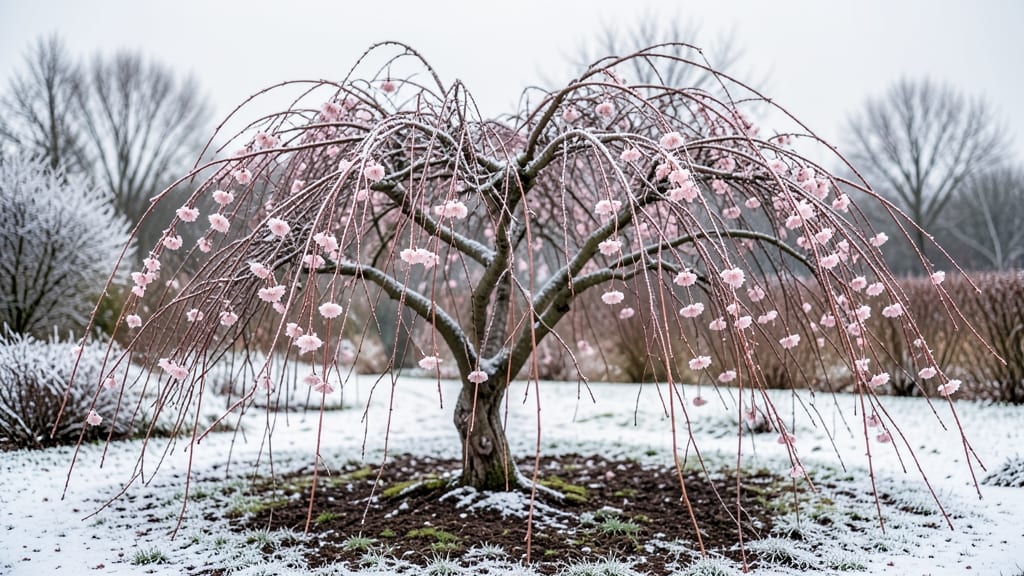
The Snowfall weeping cherry tree transforms small gardens into dreamy, cascading waterfalls of white blossoms—its graceful branches spill like silk ribbons, creating a vertical focal point that feels impossibly elegant. 🌸 I planted mine near my patio last spring, and neighbors now stop to ask which "magical fountain" it is.
The secret lies in its natural habit: instead of growing outward like most cherries, it drapes downward, offering year-round interest from spring blooms to autumn foliage.
This tree thrives in tight spaces where others fail—its mature height of 12-15 feet fits perfectly along fences, beside walkways, or as a standalone specimen. Pair it with low-growing perennials like hostas or ferns to frame its cascading branches, or plant dwarf boxwoods beneath for contrast.
The key to keeping it showstopping? Prune lightly after flowering to maintain its weeping shape, and avoid heavy cuts that disrupt its natural silhouette.
What makes it truly special is how it performs in every season: spring’s clouds of white blossoms, summer’s lush green foliage, and autumn’s subtle color shifts to peach or bronze. In winter, its bare branches take on an artistic, skeletal beauty—especially when dusted with snow.
For maximum impact, position it where its branches can spill over edges, like a patio roof or garden bench, turning ordinary spaces into living art installations.
Works beautifully in Japanese-inspired gardens, cottage-style borders, or even modern minimalist designs. The only requirement? Full sun and well-drained soil—after that, it’s pure, effortless drama. Ready to make your garden the envy of the neighborhood?
📚 In This Guide
- What you need
- Instructions
- Tips and common mistakes
- Wrapping up and next steps
What you need
- ● Snowfall Weeping Cherry Tree (Prunus subhirtella 'Snowfall'): A healthy, 1- to 3-year-old bare-root or container-grown sapling (check local nurseries for cold-hardy varieties).
- ● Pruning Shears: Sharp, bypass-pruners (20–24 cm blades) for clean cuts.
- ● Hand Pruners: For smaller branches (10–15 cm blades).
- ● Gloves: Heavy-duty, thorn-resistant gloves (e.g., Felco or Fiskars).
- ● Disinfectant: 70% isopropyl alcohol or pruning sealant (to prevent disease).
- ● Planting Hole Supplies: Shovel (spade or digging fork).
- ● Compost or well-draining soil mix (50% native soil, 50% organic matter).
- ● Slow-release fertilizer (10-10-10 NPK ratio, 1 lb per tree).
- ○ Support Stakes (Optional but Recommended): 2–3 bamboo or metal stakes (1.5–2 m tall) + soft ties (e.g., tree ties).
- ● Mulch: 2–3 inches of wood chips or shredded bark (to retain moisture and insulate roots).
- ● Drip Irrigation System: For consistent watering (especially in dry climates).
- ● Winter Protection: Burlap wrap (for young trees in harsh winters).
- ● Anti-desiccant spray (to prevent branch drying).
- ● Decorative Accents: Solar-powered garden lights or a small bench to frame the tree’s weeping branches.
Step-by-Step guide for planting and caring for a Snowfall weeping cherry tree
Here's how to establish your tree for decades of stunning spring blooms.
🪴 Step 1: Select and Prepare the Planting Site
Choose a location with full sun exposure (6-8 hours daily) and space for the tree's mature spread of 15-20 feet wide. The Snowfall weeping cherry thrives in well-draining soil with a pH between 6.0-7.0. If your soil is heavy clay, amend it with 2-3 inches of compost mixed into the top 12 inches of soil.
Dig a hole that's twice as wide as the root ball but no deeper. This prevents soil compaction around the roots. Gently loosen any circling roots with your fingers—these will strangle the tree as it grows. The hole should be just deep enough so the top of the root ball sits 1-2 inches above ground level after backfilling.
🌱 Step 2: Plant with Proper Spacing and Support
Position the tree so the trunk faces the direction you want it to grow (usually away from prevailing winds). For a weeping cherry, this often means planting near a patio or walkway where you can enjoy its cascading branches. Fill the hole with native soil, tapping the sides gently to eliminate air pockets as you go.
Water deeply to settle the soil, then add a 3-inch layer of mulch (wood chips or bark) around the base, keeping it 3 inches away from the trunk. Install a stake and tree tie to provide temporary support—weeping cherries can get top-heavy with spring blooms. Bury the stake 1/3 of its length and tie the trunk loosely with a soft fabric tie.
☀️ Step 3: Establish Watering and Fertilizing Routines
Water deeply 2-3 times per week for the first year, ensuring the soil stays evenly moist but not soggy. You'll know you've watered enough when 12 inches of soil remain damp—check with a trowel. After the first year, reduce to once a week during dry spells, as mature trees develop deep roots.
Apply a balanced 10-10-10 fertilizer in early spring (just as buds swell) and again in late summer. Use 1/4 pound per inch of trunk diameter—for a 2-inch trunk, that's about 1/2 pound total. Avoid high-nitrogen fertilizers, which encourage leafy growth at the expense of flowers. Prune only to remove dead or crossing branches in late winter.
✂️ Step 4: Prune for Structure and Health
Weeping cherries need minimal pruning, but remove any dead, diseased, or crossing branches in late winter (before buds swell). Use clean, sharp pruners to make cuts just outside the branch collar. Never remove more than 25% of the canopy in one season—this stresses the tree and reduces flowering.
Watch for silver leaf disease (a fungal infection causing silvery leaves) and cankers (sunken, discolored areas on bark). If you spot these, prune infected areas 6 inches below the visible damage and sterilize your tools with rubbing alcohol. The Snowfall variety is generally disease-resistant, but proper airflow prevents most issues.
🌿 Step 5: Protect and Enjoy the Mature Tree
Once established, your weeping cherry will reward you with spectacular spring blooms (March-April) followed by small, edible cherries. The tree's graceful, weeping habit makes it perfect for small gardens, patios, or as a focal point near entryways. Mulch annually in early spring to maintain soil moisture and suppress weeds.
In late fall, remove any fallen fruit to prevent pests from overwintering. If your tree grows near a driveway or walkway, consider installing a drip irrigation system to keep roots hydrated during dry spells. With proper care, your Snowfall weeping cherry will thrive for 50+ years, becoming a cherished landscape centerpiece.
Tips & tricks for perfect Snowfall weeping cherry tree planting
These simple yet game-changing insights will help you establish a thriving weeping cherry that lives up to its dramatic potential.
Soil Preparation Secret: If your soil test reveals a pH outside the 6.0-7.0 range, don't just amend the planting hole—treat the entire planting area. Spread 1 pound of elemental sulfur per 100 square feet for acidic soil or 5 pounds of lime for alkaline soil, then till it in 2-3 weeks before planting. This ensures consistent root growth from day one. The Snowfall variety is forgiving, but proper pH prevents nutrient deficiencies that show up as yellowing leaves.
Root Ball Handling: When removing your weeping cherry from its container, run your fingers along the inner edge to loosen the root ball completely. If you notice roots circling tightly, make 2-3 vertical cuts along the bottom with a clean knife—this prevents girdling as the tree matures. The wider hole (twice the root ball width) gives roots room to expand without competition, which is especially important for the Snowfall's wide canopy.
Watering Wisdom: The 2-3 times weekly watering in the first year might seem frequent, but this establishes deep root systems that support the tree's eventual 15-20 foot spread. Use a soil probe to check moisture—if it's dry at 12 inches, water again. For the first few weeks, water immediately after planting, then every 2-3 days until new growth appears. This mimics natural rainfall patterns and prevents transplant shock.
Staking Strategy: That stake and tree tie combo in Step 2 isn't just for show—it's critical for the first year. Weeping cherries develop top-heavy canopies that can snap in strong winds. Bury the stake 1/3 of its length (about 6-8 inches deep) and use a soft fabric tie that won't cut into the bark. Check the tie monthly—it should allow slight trunk movement to prevent weakening. Remove the stake after one growing season if the tree shows no leaning.
Pro Tips for Snowfall Weeping Cherry Tree
- These simple yet game-changing insights will help you establish a thriving weeping cherry that lives up to its dramatic potential.
- Soil Preparation Secret: If your soil test reveals a pH outside the 6.0-7.0 range, don't just amend the planting hole—treat the entire planting area.
- Root Ball Handling: When removing your weeping cherry from its container, run your fingers along the inner edge to loosen the root ball completely.
Frequently asked questions
When is the best time to prune a weeping cherry tree?
Prune your Prunus serrulata ‘Snowfence’ in late winter or early spring (before buds swell) to avoid disease spread and encourage healthy blooms. Light shaping can also happen after flowering, but avoid heavy cuts during summer—this stresses the tree. Pro tip: Sterilize tools with rubbing alcohol to prevent bacterial infections!
How do I protect my weeping cherry tree in winter?
Weeping cherries are hardy, but young trees or harsh climates may need help. Wrap the trunk with tree guard to prevent rodent damage, and mulch 3–4 inches deep around the base (but not touching the trunk). Avoid heavy snow buildup on branches—gently brush it off to prevent breakage.
Why isn’t my weeping cherry tree blooming?
Missing flowers? Check these fixes:
- Age: Young trees (under 3–5 years) may not bloom yet.
- Sunlight: Ensure 6+ hours of full sun daily—partial shade reduces flowers.
- Pruning timing: Over-pruning in summer or fall can stress the tree.
- Nutrients: Test soil pH (ideal: 6.0–7.0) and amend with compost if needed.
Bonus: Fertilize in early spring with a balanced 10-10-10 formula.
Can I grow a weeping cherry tree in a container?
Yes! Choose a large container (at least 24” wide/deep) with drainage holes and use a well-draining soil mix. Repot every 2–3 years and prune roots if they circle. However, container-grown trees may bloom less abundantly than in-ground plants.
What pests or diseases should I watch for?
Common issues include:
- Japanese beetles: Handpick or use neem oil.
- Cherry leaf spot: Remove infected leaves and apply fungicide in spring.
- Bacterial canker: Prune infected branches 6” below the lesion and sterilize tools.
Preventative tip: Inspect leaves monthly during growing season for early signs.
Are there dwarf alternatives for smaller spaces?
If space is tight, consider these compact weeping cherry cultivars:
- ‘Amanogawa’: Slender, 8–10’ tall, with abundant pink blooms.
- ‘Shirotae’: Pure white flowers, grows 10–12’ tall.
- ‘Kanzan’ (standard, not weeping but compact): 20–25’ tall, disease-resistant.
Design tip: Pair with heuchera or boxwood for year-round interest!
Wrapping up and next steps
The snowfall weeping cherry tree is a stunning, space-saving choice for small gardens, offering breathtaking vertical beauty with minimal footprint. Its delicate, cascading branches and vibrant blooms create a serene focal point, perfect for adding drama and elegance to any outdoor space.
Whether you're a seasoned gardener or just starting, this tree rewards patience and care with unmatched visual impact.
Ready to transform your garden? Start by sketching your space—measure where you’d like the tree to thrive, then gather your tools and follow the pruning tips above. With a little love and attention, your snowfall weeping cherry will flourish into a dreamy winter wonderland! 🌸✨