
Pruning
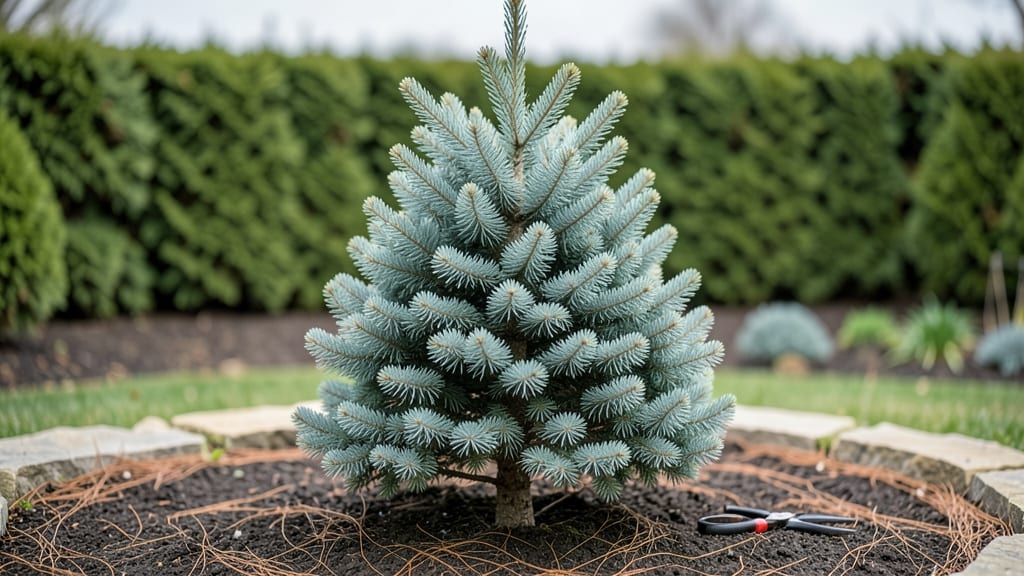
Your skinny spruce isn’t a lost cause—just a tree waiting for the right cuts. I’ve nursed back more than my share of lanky spruces by focusing on three strategic pruning moves that thicken branches and strengthen growth.
The key isn’t just trimming; it’s understanding which branches to keep and which to sacrifice for the tree’s long-term health.
Start by removing the thinnest, weakest branches first—they’re the ones stealing energy from the tree’s core. Next, open up the center by cutting back branches that cross or rub, which creates airflow and prevents disease.
Finally, shape the outer edges to encourage fuller growth. These cuts should happen in late winter or early spring, when the tree is dormant but ready to rebound.
What you’ll end up with is a denser, more resilient spruce that holds its shape year-round. The branches will thicken, the needles will fill in, and the tree will resist winter damage better. Plus, you’ll save yourself the heartbreak of watching it lean like a sad flagpole for another decade.
This method works for Colorado blue spruces, Norway spruces, and even dwarf varieties—just adjust the size of your cuts to match the tree’s scale. The goal is gradual improvement, not drastic transformation. With patience and the right cuts, your spruce will go from "skinny" to "showstopper."
📚 In This Guide
- What you need
- Instructions
- Tips and common mistakes
- Wrapping up and next steps
What you need
- ● Pruning shears (bypass) – Sharp, clean, and sterilized (7–10" blade, ideal for small branches).
- ● Loppers – For thicker branches (up to 2" diameter).
- ● Pruning saw – Heavy-duty, with a curved blade for stubborn limbs.
- ● Disinfectant (70% isopropyl alcohol or bleach solution) – 1 part bleach to 9 parts water.
- ● Gloves (cut-resistant) – Protects hands from thorns and sap.
- ● Ladder or stump – Safe access to higher branches (extendable pole helps too!).
- ● Heavy-duty trash bags – For debris cleanup (2–3 large bags).
- ● Pruning sealant – For large cuts (1–2 tubes) to prevent disease.
- ● Tree wound dressing – Only if dealing with major damage (follow label instructions!).
- ● Notebook & pen – To sketch your tree’s shape before/after pruning.
- ● Safety glasses – Protects eyes from falling debris.
How to restore a skinny spruce tree to full, healthy shape
Here's my go-to method for transforming a weak, stretched spruce into a sturdy, symmetrical tree.
Assess the Tree's Structure and Identify Target Branches
Start by examining your spruce from all sides—look for branches that are too thin, sparse, or growing in odd directions. Focus on the lower third of the tree, where most pruning should happen to encourage fullness. I always scan for dead or crossing branches first; these need immediate removal to prevent disease.
Use your hands to gently feel the branches—healthy growth should feel firm, not brittle. If a branch snaps when you bend it slightly, it's dead and should be cut. Mark the branches you'll remove with a piece of twine or a flagging tape so you don't accidentally cut the wrong ones. Real talk: this step saves you from making costly mistakes later.
Make Strategic Cuts to Encourage Fullness
Begin with the lower branches—selectively cut back any that are too sparse or growing outward at awkward angles. Use clean, sharp pruning shears to make cuts just above a bud or lateral branch, angled slightly downward to prevent water from pooling. Never leave stubs; this invites rot and weakens the tree.
For each cut, aim to remove no more than 25% of the tree's foliage at once. Over-pruning stresses spruces and can lead to dieback. Focus on branches that are one-third the thickness of your thumb or smaller—these are the ones that will regrow best. Watch for new growth emerging from the base of the tree; this is your sign you're on the right track.
Shape the Upper Canopy for Balance and Strength
Move to the upper canopy and trim branches that are growing too long or crowding others. Cut back the tips of these branches by about one-third of their length to encourage bushier growth. Spruces naturally grow upward, so you'll need to make small, precise cuts to maintain a natural shape rather than forcing an unnatural look.
Pay attention to the tree's natural growth pattern—spruces grow in a pyramidal shape, so avoid cutting branches too close to the trunk. This ensures the tree retains its structural integrity. After pruning, step back and visualize the tree's shape from all angles. If one side looks too bare, focus your next cuts there to even things out.
Tips & tricks for perfect spruce tree pruning
Transforming a leggy spruce into a lush, sturdy tree takes precision—and these insider tips will help you avoid common pitfalls while maximizing results.
Timing is Everything: The best time to prune your spruce is in late winter or early spring, just as new growth begins. This timing ensures you're cutting before the tree puts energy into new shoots, allowing it to focus on healing and filling out. Avoid pruning in fall—it stresses the tree when it's already preparing for dormancy. If you must prune later, do it in early summer, but be prepared for slower recovery.
Tool Sharpness Matters: Dull pruning shears crush branches instead of making clean cuts, which can damage the tree and leave it vulnerable to disease. Before you start, test your shears on a small branch—if the cut isn't smooth, sharpen them. I keep a small file in my toolkit for quick touch-ups. For larger branches, use a pruning saw with a fine-toothed blade to avoid tearing the bark.
The 25% Rule: Never remove more than 25% of the tree's foliage in a single session. This rule prevents stress that can lead to dieback or even tree death. If your spruce looks particularly sparse, break pruning into two sessions spaced 6-8 weeks apart. Think of it like a workout—gradual progress builds strength, while overdoing it leads to burnout.
Visualizing the Final Shape: Before making any cuts, step back and visualize how you want the tree to look from all angles. Spruces naturally grow in a pyramidal shape, so aim to maintain that silhouette. Use a string or garden twine to outline the shape you're targeting—this helps guide your cuts and ensures symmetry. Confession: I skipped this step for years and wondered why my trees always looked lopsided.
Pro Tips for Skinny Spruce Tree
- Transforming a leggy spruce into a lush, sturdy tree takes precision—and these insider tips will help you avoid common pitfalls while maximizing results.
- Timing is Everything: The best time to prune your spruce is in late winter or early spring, just as new growth begins.
- Tool Sharpness Matters: Dull pruning shears crush branches instead of making clean cuts, which can damage the tree and leave it vulnerable to disease.
Frequently asked questions
Got questions about keeping your skinny spruce tree healthy and stylish? You’re not alone! Here are answers to the most common concerns—from timing to troubleshooting—so you can prune with confidence.
When is the best time to prune a skinny spruce tree?
The ideal time is late winter to early spring (before new growth starts) or mid-summer (after the first flush of growth). Avoid pruning in fall or during drought—this stresses the tree. For minor shaping, summer is fine, but major cuts should wait for dormancy.
How do I fix uneven or lopsided growth after pruning?
Uneven growth often happens if cuts aren’t balanced. Step back and assess the tree’s shape from all sides—trim opposite branches to even out density. Avoid over-pruning one side; spruces grow slowly, so patience is key. If gaps persist, focus on selective thinning (removing entire branches at the base).
Can I use the same tools for a skinny spruce as for other trees?
Not quite! Spruces have soft, needle-covered branches, so bypass pruners (for clean cuts) and a sharp handsaw (for thicker branches) work best. Avoid anvil pruners—they crush branches, leading to disease. Disinfect tools between cuts to prevent fungal spread (rubbing alcohol works great!).
Why is my spruce tree shedding needles after pruning?
Light needle drop is normal, but excessive shedding signals stress. Check for:
- Over-pruning (stick to 10–15% of the canopy per year).
- Drought—spruces hate dry soil. Water deeply before and after pruning.
- Pests/disease (e.g., spider mites). Inspect for webs or discolored needles.
What’s a good alternative if my spruce tree is too small for pruning?
If your spruce is under 3 feet tall, pruning risks stunting growth. Instead:
- Use selective needle trimming (snip a few needles with sharp scissors for shape).
- Opt for container-grown spruces with pre-shaped varieties (e.g., ‘Little Gem’).
- Try ornamental grasses or dwarf conifers (like Picea pungens ‘Glauca Globosa’) for low-maintenance alternatives.
Wrapping up and next steps
Pruning your skinny spruce tree doesn’t have to be intimidating—with the right cuts and timing, you can keep it strong, symmetrical, and healthy all year long. 🌲✨ Remember, the key is patience and precision: focus on thinning, shaping, and rejuvenating cuts while avoiding over-pruning.
Start small, observe your tree’s response, and adjust as needed.
Ready to give your spruce the TLC it deserves? Grab your tools, pick a calm day, and get pruning! If you’re unsure about a tricky cut, snap a photo and consult a local arborist for expert advice.
Your tree will thank you with lush, vibrant growth for years to come. 🌿💪