
Trees
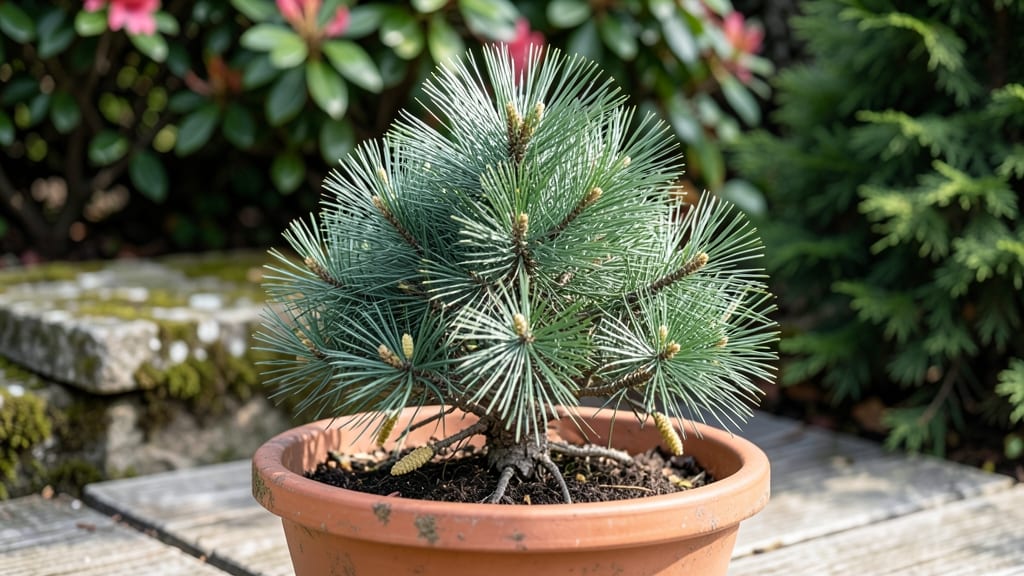
Your pine trees look like they’re wearing skinny jeans—all legs and no branches. 🌲 The problem isn’t just cosmetic; it’s a sign your trees are struggling to grow strong canopies, whether from poor soil, pests, or environmental stress.
I’ve nursed back more than a few "stick" pines to full, lush shapes, and the fixes are simpler than you’d think.
The good news? Most skinny pines can be transformed with the right care. Start by checking the soil—pine trees hate soggy roots but also need good drainage. A light layer of organic mulch helps, but the real game-changer is proper pruning to encourage fuller growth.
I’ll show you exactly where to cut (and where to leave alone) so you don’t accidentally stunt them further.
Within a year, you’ll see new shoots filling in those bare spots, and your trees will look like the sturdy, shade-providing giants they’re meant to be.
The key is consistency—watering right, feeding at the right times, and giving them space to spread. Let’s get those branches growing the way nature intended.
This works for all pine varieties, from dwarf pines in containers to towering evergreens in your yard. The same principles apply, just scaled to size. Ready to turn those skinny trees into something impressive?
📚 In This Guide
- What you need
- Instructions
- Tips and common mistakes
- Wrapping up and next steps
What you need
- ○ Pruning shears or loppers – Sharp, bypass-style blades (for clean cuts on branches up to 2 inches thick). Optional: Extendable loppers for taller trees.
- ● Hand pruners – For smaller branches (under ½ inch). Look for ergonomic grips to avoid hand fatigue.
- ● Pruning saw – Only if your tree has thick, woody branches (3+ inches in diameter). A curved blade works best.
- ● Disinfectant (70% isopropyl alcohol or bleach solution) – 1 part bleach to 9 parts water to sterilize tools between cuts and prevent disease.
- ● Gloves – Heavy-duty, cut-resistant gloves to protect from sap, thorns, or splinters.
- ○ Tree pruning sealant (optional but recommended) – Latex-based or asphalt-based to seal cuts larger than ½ inch and prevent decay.
- ● Ladder or sturdy step stool – Aluminum or fiberglass ladder (rated for your height/weight). Safety tip: Never stand on the top rung!
- ● Heavy-duty trash bags or bucket – For collecting pruned branches. A 30-gallon capacity works for most small-to-medium trees.
- ● Notebook & pen – To sketch your tree’s structure before pruning (helps visualize cuts!).
- ● Pole pruner – For high branches without a ladder (extendable up to 20+ feet).
- ● Tree growth regulator (e.g., Paclobutrazol) – Follow label instructions to promote denser foliage in slow-growing pines.
- ● Fertilizer (balanced 10-10-10 or pine-specific) – Apply in early spring to boost overall health.
- ● Tarps or drop cloths – To protect your lawn/patio from falling needles and debris.
- ● Binoculars (for tall trees) – Helps spot dead branches from a safe distance.
- ● Check local regulations—some areas require permits for tree pruning over a certain height.
- ● Schedule pruning on a dry, calm day (avoid wind or rain to prevent accidents).
- ● Wear closed-toe shoes and avoid loose clothing that could get caught in branches.
- ● Have a first-aid kit handy for minor cuts or scrapes.
How to thicken a skinny pine tree’s canopy
Here's how to transform a leggy pine into a full, healthy tree with proper pruning and care.
🌿 Step 1: Assess the Tree’s Structure and Growth Habits
Start by examining your pine tree closely. Look for areas where branches grow too far apart or where the lower branches have died back. Pines grow in a specific pattern—younger growth appears at the tips of branches, so focus on the outer third of the tree where new needles form. If you see long, bare stems with sparse clusters of needles, those are your target areas for correction.
Pines typically grow best with a 20-30° angle between branches and the trunk. If branches grow straight out or downward, they’ll struggle to support new growth. Note which branches have the most vigor—they’ll be your foundation for thickening the canopy. Avoid pruning during fall or winter when the tree is dormant; spring or early summer is ideal for stimulating new growth.
✂️ Step 2: Prune Selectively to Encourage New Growth
Use clean, sharp pruning shears to make cuts just above a branch collar (the swollen area where the branch meets the trunk or larger branch). Never leave stubs—this invites disease and weakens the tree. Focus on removing overly long branches that cast shade on lower growth, as pines need full sunlight to thicken their canopy. Start with branches that are 1/3 the length of the tree’s height or longer.
If a branch is dead or diseased, remove it entirely at the collar. For live branches, cut back to a side branch or bud that grows outward. Avoid "topping" the tree by cutting the main leader—this can kill the tree or leave it with an ugly, open center. After pruning, step back and visualize how the tree will fill in. You want to create a natural, layered look with branches spaced 6-12 inches apart at the outer edges.
☀️ Step 3: Optimize Light and Nutrients for Thicker Growth
Pines need full sun (6+ hours daily) to produce dense foliage. If your tree is in partial shade, consider transplanting it to a sunnier location or thinning nearby trees/shrubs. After pruning, apply a balanced, slow-release fertilizer (like 10-10-10) in early spring to encourage new needle growth. Spread the fertilizer evenly under the tree’s drip line (the area where branches extend outward) and water it in deeply.
Mulch the base of the tree with 2-3 inches of organic mulch (like pine bark or wood chips) to retain moisture and regulate soil temperature. Keep the mulch 6 inches away from the trunk to prevent rot. Water deeply once a week during dry spells, ensuring the soil stays moist but not soggy. You’ll know you’re doing it right when you see new, vibrant green needles emerging from the tips of pruned branches within 4-6 weeks.
🌱 Step 4: Monitor and Maintain for Long-Term Thickening
Check the tree monthly for new growth. If you notice branches growing too fast in one direction (usually toward the sun), gently tie them to a stake or support to encourage a more balanced shape. Avoid over-fertilizing—this can lead to weak, sparse growth. If the tree still looks thin after a year, repeat the pruning process in the following spring, focusing on the newest growth at the outer edges.
Pines are slow growers, so patience is key. With consistent care, your tree should develop a fuller canopy within 2-3 years. Avoid pruning in late summer or fall, as this can stimulate tender growth that won’t harden off before winter. If you’re unsure about a cut, err on the side of caution—you can always prune more later, but you can’t regrow what’s removed.
Tips & tricks for perfecting your pine tree’s canopy
Real talk: transforming a leggy pine into a lush, full tree takes more than just a few snips. Here’s what I’ve learned after watching too many trees miss their full potential.
Pruning Precision: In Step 2, when you’re cutting back branches that are 1/3 the tree’s height or longer, focus on the outer third of the tree where new growth happens. I can’t stress enough how important it is to make clean cuts just above the branch collar—no stubs!—and to avoid cutting the main leader. I’ve seen too many trees left with ugly, open centers after someone tried to "top" them. Think of it like giving your tree a haircut that encourages density, not thinning.
Sunlight Strategy: Pines need full sun (6+ hours daily) to grow thickly, as mentioned in Step 3. If your tree is in partial shade, don’t just assume it’ll adapt—consider moving it or thinning nearby trees. I once had a pine in a shady spot that never thickened up, no matter how much I pruned. The moment I moved it to full sun, new growth exploded within weeks. Also, if you’re fertilizing, use a balanced, slow-release fertilizer like 10-10-10 in early spring. Too much nitrogen too soon can burn the roots and stunt growth.
Mulching Matters: The 2-3 inches of organic mulch in Step 3 isn’t just for looks—it’s a game-changer. Spread it evenly under the drip line (that’s the area where branches extend outward) and keep it 6 inches away from the trunk. I’ve seen mulch piled too high against the trunk cause rot, which can kill the tree. Think of it like a cozy blanket for your tree’s roots, keeping moisture in and temperature stable. And don’t forget to water deeply once a week during dry spells—pines hate soggy soil but also can’t handle drought.
Patience Pays Off: In Step 4, the instructions mention it takes 2-3 years to see a fuller canopy. That’s not a typo—it’s the truth. I get it, you want instant results, but pines grow slowly. What you can do is check monthly for new growth and gently tie branches that grow too fast in one direction to stakes. This encourages a more balanced shape. And if your tree still looks thin after a year, repeat the pruning process the following spring, but this time focus on the newest growth at the outer edges. Trust me on this—rushing leads to mistakes.
Pro Tips for Skinny Pine Trees
- Real talk: transforming a leggy pine into a lush, full tree takes more than just a few snips.
- Pruning Precision: In Step 2, when you’re cutting back branches that are 1/3 the tree’s height or longer, focus on the outer third of the tree where new growth happens.
- Sunlight Strategy: Pines need full sun (6+ hours daily) to grow thickly, as mentioned in Step 3.
Frequently asked questions
Got questions about skinny pine trees and their sparse canopies?
You’re not alone! Here are answers to the most common concerns—from quick fixes to long-term care—so you can restore your trees to full, lush glory.
Why do my pine trees grow so skinny and sparse?
Skinny pine trees often result from over-pruning, poor soil nutrition (like a lack of nitrogen or phosphorus), or environmental stress (drought, pests, or compacted soil). Young pines may also struggle if planted too deep or in shade. Diagnose the root cause first—is it pruning habits, soil health, or something else?
How long does it take to fix a skinny pine tree?
Patience is key! With proper care—like balanced fertilization, corrective pruning, and mulching—you may see noticeable improvement in 1–2 growing seasons. Older trees or severe cases could take 3–5 years to fully recover. Consistency beats quick fixes!
Can I prune my pine tree to encourage fuller growth?
But prune wisely—pines are sensitive. Focus on removing only dead or overcrowded branches (never more than 25% of the canopy at once). Avoid "shearing" (cutting randomly for shape), as pines grow best with their natural form. Follow seasonal timing (late winter/early spring) for best results.
What’s the best fertilizer for skinny pine trees?
Use a slow-release, acidic fertilizer (pH 5.0–6.0) designed for evergreens, like a 10-10-10 or 12-6-6 blend with micronutrients (iron, zinc). Avoid high-nitrogen lawn fertilizers—they can burn roots. Apply in early spring and fall, watering deeply afterward. Pro tip: Test your soil first to address deficiencies!
Are pests or diseases making my pine tree skinny?
Yes! Common culprits include pine beetles, spider mites, or fungal diseases (like needle blight). Look for yellowing needles, sawdust-like frass, or resin pockets. Treat pests with neem oil or insecticidal soap; for diseases, prune infected branches and improve airflow. If infestations persist, consult a local arborist for targeted solutions.
What are some alternatives if my pine tree won’t recover?
If your pine is beyond saving, consider replacing it with a hardier variety like:
- Ponderosa Pine (tolerates drought, fast-growing)
- Eastern White Pine (adaptable, great for shade)
- Mugo Pine (compact, low-maintenance)
Wrapping up and next steps
Skinny pine trees don’t have to be a permanent sight in your yard! 🌲 With the right care—like proper pruning, soil enrichment, and seasonal adjustments—you can transform them into lush, full-canopy beauties. Remember, patience and consistency are key; healthy growth takes time, but the results are worth it.
Ready to take action? Start by reviewing your tools and supplies or clarifying any lingering questions. Then, roll up your sleeves and give your pines the love they deserve!