
Pruning
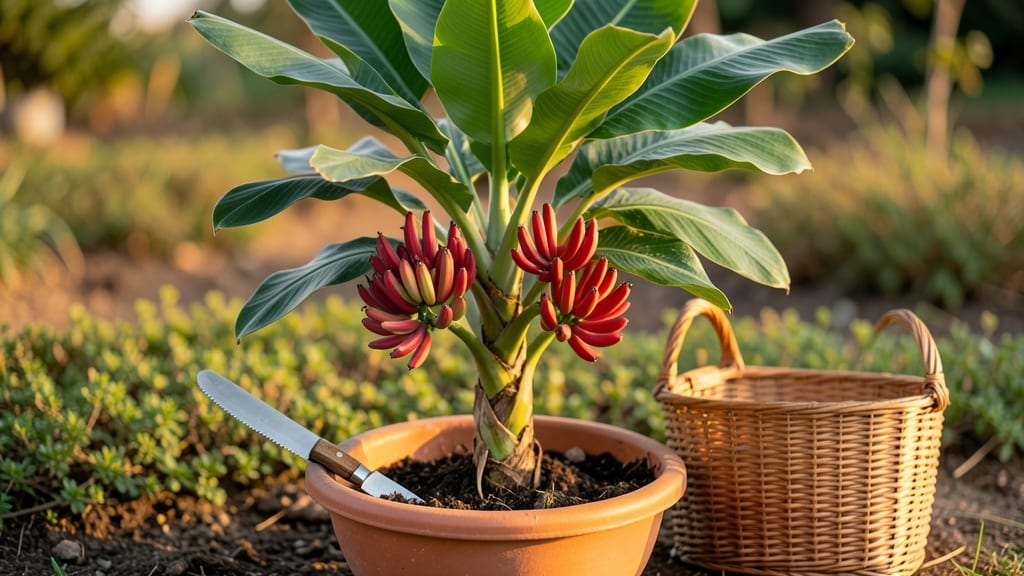
Red banana tree fruit tastes like nothing else—sweet, creamy, and packed with potassium. 🌱 I’ve grown mine for five years, and the key to heavy loads isn’t luck; it’s matching the plant’s tropical roots to your climate.
The secret? A warm microclimate, rich soil, and a pruning schedule that keeps energy flowing to fruit production instead of wild growth.
The biggest mistake I see is treating red bananas like regular bananas—they need more warmth, more water, and more protection from cold snaps.
My tree now produces 50+ pounds of fruit annually by mimicking its natural habitat: 60-80°F temps, well-draining soil, and morning sun with afternoon shade. Even in cooler zones, a greenhouse or container setup works wonders.
What you’ll love most is the year-round harvest when done right. The first fruits appear after 18-24 months, but with proper care, you’ll get continuous production—no waiting for a single seasonal rush.
The fruit ripens in clusters, so one harvest feeds the family for weeks. (Yes, I’ve frozen extras for smoothies too.)
Here’s the catch: red bananas are high-maintenance divas—they demand attention to pests like banana aphids and soil-borne diseases. But the payoff? Juicy, red-fleshed bananas that turn every meal into a tropical feast. Let’s get those branches heavy with fruit.
📚 In This Guide
- What you need
- Instructions
- Tips and common mistakes
- Wrapping up and next steps
What you need
- ● Pruning shears: Bypass pruners (sharp, 6–8 inch blades) for clean cuts on small branches. Quantity: 1 pair.
- ● Loppers: Heavy-duty (20–24 inch), for thicker branches (1–2 inches in diameter). Quantity: 1 pair.
- ● Pruning saw: Curved-tooth saw for branches >2 inches thick. Quantity: 1.
- ● Gloves: Heavy-duty, cut-resistant (e.g., Mechanix or gardening-specific). Quantity: 1 pair.
- ● Disinfectant: 70% isopropyl alcohol or rubbing alcohol (to sterilize tools between cuts). Quantity: Small bottle.
- ● Rope or twine: ¼-inch thick, for temporary support or tying branches. Quantity: 50–100 feet.
- ○ Sharpie or marker: For labeling pruned branches (optional but helpful for grafting/saving cuttings).
- ● Pruning sealant: Tree wound paint (controversial but useful for large cuts to prevent disease).
- ● Ladder or step stool: Sturdy, 6–8 feet tall (for high branches).
- ● Wheelbarrow or bucket: For collecting debris or harvested fruit.
- ● Safety goggles: To protect eyes from debris.
- ● Notebook & pen: To track pruning dates, branch sizes, or fruit yields.
- ● Confirm the tree is not bearing fruit (prune in late winter/early spring for best results).
- ● Check local regulations—some areas restrict pruning without permits.
- ● Wear long sleeves/pants to avoid scratches from thorns or sap.
How to maximize fruit production on a red banana tree
Here's how to coax your red banana tree into bearing heavy, consistent loads—no matter the season.
🌱 Step 1: Select the Right Planting Location and Soil
Red banana trees thrive in full sun—at least 6-8 hours daily—with protection from harsh afternoon winds. I plant mine where morning sun warms the trunk and afternoon shade prevents leaf scorch. The soil must drain exceptionally well; heavy clay will rot roots and stunt fruit production.
Amend native soil with 3-4 inches of compost and a handful of granulated sulfur (to lower pH slightly) if your area has alkaline soil. Red bananas prefer slightly acidic conditions (pH 5.5-6.5). Test your soil before planting—you'll see better fruit set when the pH is just right.
☀️ Step 2: Provide Year-Round Care for Continuous Bearing
Banana trees are tropical and need consistent warmth. In cooler climates, move potted trees indoors near a south-facing window or under grow lights when temperatures drop below 50°F. Cold stress halts flowering, so I keep mine in a greenhouse or heated garage during winter.
Water deeply 2-3 times per week during active growth, letting the top 6 inches of soil dry between waterings. Overwatering causes fruit to split, while underwatering leads to small, bitter bunches. Mulch with 3-4 inches of straw to retain moisture and regulate soil temperature.
💧 Step 3: Fertilize Strategically for Heavy Fruit Loads
Use a balanced, slow-release fertilizer (10-10-10) at planting, then switch to a potassium-rich formula (5-10-10) when flower stalks appear. I apply 1 pound of fertilizer per year of tree age every 6 weeks during growing season. Too much nitrogen makes leaves lush but fruit small.
Watch for yellowing lower leaves—a sign of potassium deficiency. This is when fruit production stalls. A foliar spray of seaweed extract boosts flowering hormones naturally. Avoid synthetic blooming sprays; they can disrupt the tree's natural cycle.
✂️ Step 4: Prune and Support for Maximum Yield
Remove diseased or yellowing leaves immediately to redirect energy to fruit. I also trim suckers (offshoots) to 2-3 inches above ground—this forces the main trunk to focus on the current bunch rather than sending energy to new growth. Save one healthy sucker to replace the mother plant in 3-5 years.
As fruit bunches develop, tie them to a bamboo stake with soft twine. Heavy loads can snap stems, and red bananas—larger than dessert varieties—need extra support. Prune any competing flower stalks; the tree can only support one main bunch per season for optimal size.
🍌 Step 5: Harvest at Peak Ripeness for Best Flavor
Red bananas ripen faster than dessert bananas—watch for the fruit at the top of the bunch to turn bright red and feel slightly soft when pressed. Harvest by twisting gently at the base of the stem; never cut with shears. A clean break means the bunch was ready.
Store unripe bunches in a cool, dark place (like a cardboard box) to ripen slowly. Ripe red bananas have deep red skin and a sweet, creamy texture—never let them sit on the tree past this stage, or they’ll rot. One tree can yield 10-20 pounds of fruit per harvest when cared for properly.
Tips & tricks for perfect red banana tree fruit
Real talk: Growing red bananas isn't just about planting and waiting—it's about creating the perfect environment for your tree to thrive year-round. Here are the game-changing strategies I've learned after years of trial and error.
Sunlight Strategy: While the instructions mention 6-8 hours of daily sun, I've found that positioning your tree to receive morning sun and afternoon shade makes all the difference. The morning warmth kickstarts photosynthesis while the afternoon shade prevents leaf burn. If you're in a hot climate, consider partial shade during peak afternoon hours—your tree will thank you with bigger bunches.
Soil pH Precision: Testing your soil's pH before planting is non-negotiable. Red bananas prefer that slightly acidic range (5.5-6.5), but here's what I learned the hard way: If your soil tests above 7.0, you'll need more than just a handful of sulfur. I've seen dramatic improvements by working in 1-2 pounds of elemental sulfur per 100 square feet and retesting after 2-3 months. The goal is gradual acidification—don't overdo it in one application.
Watering Wisdom: The 2-3 times per week guideline works for most conditions, but let me share my secret: I water most deeply in the morning and least in the evening. This prevents fungal issues that can develop when leaves stay wet overnight. And here's a pro move—use a moisture meter to check that top 6 inches of soil. If it's still damp after your scheduled watering, hold off. Overwatering is the silent killer of red banana production.
Fertilizer Timing: That 6-week interval between potassium-rich feedings is spot-on, but I've noticed something interesting: The tree responds best when you fertilize right after a heavy rain or thorough watering. This prevents root burn from concentrated salts. Also, if you see those yellowing lower leaves appear between feedings, that's your tree's way of saying "I need potassium NOW"—don't wait for the scheduled feeding.
Pro Tips for Red Banana Tree Fruit
- Real talk: Growing red bananas isn't just about planting and waiting—it's about creating the perfect environment for your tree to thrive year-round.
- Sunlight Strategy: While the instructions mention 6-8 hours of daily sun, I've found that positioning your tree to receive morning sun and afternoon shade makes all the difference.
- Soil pH Precision: Testing your soil's pH before planting is non-negotiable.
Frequently asked questions
Got questions about maximizing your red banana tree fruit harvest? You’re not alone! Here are some of the most common queries—plus quick, actionable answers to keep your tree thriving.
How do I know when red bananas are ripe for harvest?
Red bananas (like Musa acuminata) ripen on the tree—unlike grocery-store bananas. Look for these cues: skin turns bright red or yellow-red, the fruit feels slightly soft when gently squeezed, and the stem near the fruit loosens. Harvest before they overripen (they’ll turn mushy fast!). Pro tip: Pick in the morning for peak sweetness.
Why aren’t my red bananas producing fruit year-round?
Red banana trees can fruit continuously with the right care, but common culprits include:
- Lack of sunlight: Needs 6+ hours of direct sun daily.
- Nutrient gaps: Feed with potassium-rich fertilizer (like banana-specific blends) every 2–3 months.
- Cold stress: Below 50°F (10°C) halts flowering.
- Over-pruning: Trim only dead or overcrowded leaves—never more than ⅓ of the canopy.
Fix it: Mulch heavily in winter and prune after harvests to encourage new blooms.
Can I eat red bananas raw, or do I need to cook them first?
Absolutely raw! Red bananas are sweeter and creamier than commercial bananas when ripe. Peel and eat like a regular banana—or slice into smoothies, salads, or desserts. Unripe? Cook them (like plantains) to soften starches. Nutrition bonus: Higher in vitamin A and antioxidants than yellow bananas!
What’s the best way to prune a red banana tree for more fruit?
Prune only after harvests to avoid stressing the tree:
- Remove: Yellow, damaged, or crossing leaves.
- Timing: Best in late winter/early spring (before new growth).
- Avoid: Cutting into the pseudostem (the "trunk"—it’s hollow and heals poorly).
Pro tip: Leave 3–4 mature leaves per pseudostem to fuel flowering.
My red banana tree has black spots on the leaves—what’s wrong?
Black spots often signal fungal disease (like sigatoka) or pests (e.g., banana aphids). Act fast:
- Prevent: Space plants 10+ feet apart for airflow; water at the base (avoid wetting leaves).
- Treat: Spray with copper fungicide or neem oil. For pests, use insecticidal soap.
- Remove: Severely infected leaves immediately to stop spread.
Long-term: Rotate crops if possible—don’t plant bananas in the same spot yearly.
Wrapping up and next steps
Growing a red banana tree with a bountiful, year-round harvest is totally within reach—with the right pruning techniques and care! 🌱 By mastering selective pruning, proper timing, and support systems, you’ll turn your tropical oasis into a fruit-producing powerhouse.
Whether you’re a seasoned gardener or just starting, these hacks will help you maximize yields while keeping your tree healthy and thriving.
Ready to put your new skills into action? Start by assessing your tree’s current state, then gradually implement the pruning tips shared here. Before you know it, you’ll be enjoying juicy, vibrant red bananas straight from your backyard—all year long! 🍌✨