
Pruning
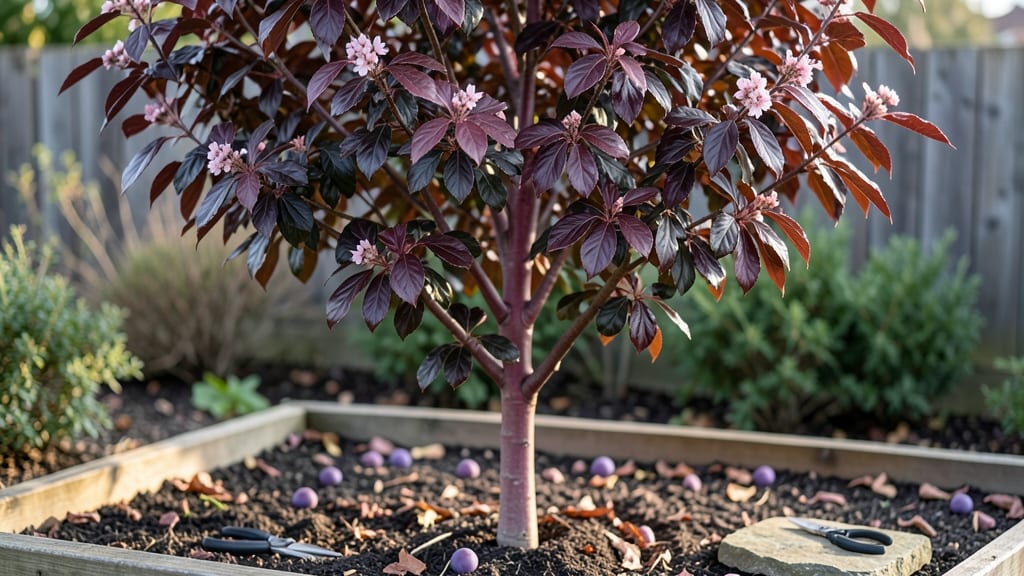
The Prunus cerasifera tree transforms your yard into a living painting with its deep purple leaves and delicate spring blooms. I planted mine three years ago after seeing one in a neighbor’s yard—now it’s the centerpiece of my front garden, offering seasonal interest without fuss.
The secret isn’t complicated: this tree thrives on neglect once established, but those three strategic cuts I make each year keep it healthy and showstopping.
This purple-leafed plum handles everything from full sun to partial shade and tolerates poor soil better than most ornamentals. My tree survived last winter’s 15°F dips without a single browning leaf, and it rarely gets pests—just an occasional aphid that washes away in the hose.
The real magic happens in spring when pink blossoms cover the branches, followed by tiny, edible plums that birds love (but you can leave them for the wildlife).
With just 15 minutes every spring, summer, and fall, you’ll maintain its shape and encourage dense foliage. The cuts are simple—no ladder required—and the results are immediate: fuller branches, more blooms next year, and a tree that looks stunning in every season.
Even my black thumb can’t kill this one.
Works in zones 5-9, urban courtyards, or large landscapes alike. Once you’ve pruned it once, you’ll wonder why you didn’t start sooner. Let’s get those shears out—your tree’s transformation begins with three easy cuts.
📚 In This Guide
- What you need
- Instructions
- Tips and common mistakes
- Wrapping up and next steps
What you need
- ● Pruning shears: Bypass pruners (sharp, 10-12 inch blades) – 1 pair (for small branches).
- ● Loppers: 16-20 inch reach – 1 pair (for thicker branches, ½–1 inch diameter).
- ● Pruning saw: Curved-tooth saw – 1 (for branches 1+ inch thick).
- ● Gloves: Heavy-duty, cut-resistant – 1 pair (protects from thorns and sap).
- ● Disinfectant: 70% isopropyl alcohol or bleach solution (1 part bleach to 9 parts water) – small bottle (sanitizes tools between cuts).
- ○ Pruning sealant: Optional but recommended (e.g., Tanglefoot Tree Wound Pruning Sealer) – small tube (prevents disease entry).
- ● Ladder: Sturdy, extendable – 1 (if tree exceeds 6–8 feet).
- ● Trash bags: Heavy-duty – 2–3 (for debris cleanup).
- ● Timing: Prune during dormant season (late winter/early spring) or right after flowering (avoid summer cuts).
- ● Weather: Choose a dry, overcast day (reduces stress on the tree).
- ○ Safety gear: Safety glasses (optional but wise for debris protection).
- ● Tree health check: Inspect for diseased or dead branches before starting.
How to prune a Prunus cerasifera tree for year-round beauty
Here's the simple pruning system I use to keep my cherries looking stunning all year.
✂️ Step 1: Late Winter Dormant Season Pruning
Start in late winter, just before buds swell but before new growth begins. This is the best time to remove dead, diseased, or crossing branches—your tree will thank you with vigorous spring growth. I always begin by removing any branches that are completely dead (they'll be brittle and snap easily when bent).
Next, cut out any branches that cross or rub against each other. These create wounds that invite disease. Make clean cuts just outside the branch collar—the swollen area where the branch meets the trunk. Use sharp pruning shears to avoid tearing the bark, which slows healing. Remember to sterilize your tools between cuts with rubbing alcohol to prevent spreading any potential infections.
For larger branches over ½ inch thick, use pruning saws instead of shears. The goal here is to open up the center of the tree for better airflow and sunlight penetration. You'll see new buds forming along the remaining branches—these will become your fresh spring growth.
☀️ Step 2: Post-Bloom Summer Light Pruning
After your tree finishes flowering but before summer heat sets in, do a light pruning to maintain shape and encourage air circulation. This is when I focus on thinning out some of the new growth that emerged after winter pruning. Look for branches that are growing too densely or are growing inward toward the center.
Remove about one-third of the new growth from the previous season. This keeps your tree's shape balanced and prevents overcrowding. I like to make these cuts just above an outward-facing bud to encourage growth in the direction I want. You'll notice the tree's canopy will look more open and airy after this pruning.
During this time, also remove any suckers that appear at the base of the tree. These are vigorous shoots that grow from the roots and compete with your main tree for nutrients. Cut them off at the base with clean shears. This step might seem small, but it prevents your tree from becoming overrun with unwanted growth.
✂️ Step 3: Light Fall Cleanup Pruning
In early fall, do a final light pruning to remove any dead or diseased branches that may have appeared during the growing season. This is also when I remove any branches that are growing in directions I don't want—like those growing straight up or rubbing against other branches. The goal here is to maintain the shape you've established while keeping the tree healthy.
Pay special attention to any branches that have produced fruit. After harvesting, these branches can be pruned back by about one-third to encourage next year's fruit production. Make your cuts just above a bud that's facing outward. You'll see the tree's structure become more defined and balanced after this final pruning.
This is also the time to remove any water sprouts—those fast-growing, vertical shoots that appear on the trunk or branches. These use up energy that could be going toward fruit production and strong structure. Cut them off at their base with clean shears. This final pruning sets your tree up for a healthy winter and prepares it for next year's growth cycle.
Tips & tricks for pruning your Prunus cerasifera tree
Mastering this three-step system transforms your cherry tree into a year-round showstopper. Here's what I've learned after years of pruning mine.
Timing is Everything: The late winter dormant season is your golden window—buds should still be tightly closed, but new growth hasn't started yet. I mark my calendar for late February to early March in most climates. If you miss this window, you risk encouraging new growth that can't harden off before winter. For southern regions, wait until late March to avoid early spring warmth.
Tool Prep Prevents Problems: Sterilizing your pruning shears with rubbing alcohol between cuts is non-negotiable. I keep a small spray bottle of 70% isopropyl alcohol in my tool bag. Sharp tools matter too—dull blades tear bark, creating wounds that take forever to heal. I sharpen my shears annually and replace blades every 3-4 years. For branches over ½ inch thick, I always switch to a pruning saw to avoid crushing the branch collar.
Shape Matters More Than You Think: When thinning branches in Step 2, aim for an open vase shape that lets sunlight reach the center. I visualize light streaming through the canopy when making cuts. For fruit-bearing branches, I look for the strongest buds facing outward—these will produce the most vigorous growth next season. Remember, you're sculpting a living work of art, not just hacking away branches.
Fall Cleanup Sets Up Next Year: The final pruning in early fall isn't just about tidying up—it's about preparing your tree for winter dormancy. I focus on removing any branches growing straight up (water sprouts) as these divert energy from fruit production. For branches that produced fruit this season, cutting back by one-third encourages next year's harvest. This is also when I do my final shape assessment—adjusting any branches that have grown out of balance during the summer.
Pro Tips for Prunus Cerasifera Tree
- Mastering this three-step system transforms your cherry tree into a year-round showstopper.
- Timing is Everything: The late winter dormant season is your golden window—buds should still be tightly closed, but new growth hasn't started yet.
- Tool Prep Prevents Problems: Sterilizing your pruning shears with rubbing alcohol between cuts is non-negotiable.
Frequently asked questions
Got questions about your Prunus cerasifera tree?
You’re not alone! Here are the most common queries—plus quick, actionable answers to keep your tree thriving year-round.
When is the best time to prune a Prunus cerasifera?
Prune your Prunus cerasifera in late winter or early spring (before buds swell) for optimal growth. Avoid heavy pruning in summer—it stresses the tree. Pro tip: If you must trim later, do light shaping in fall but avoid winter cuts (dormant season = higher disease risk).
How do I know if I’m over-pruning my Prunus cerasifera?
Watch for yellowing leaves, sparse blooms, or stunted growth—signs of over-pruning. A healthy tree should retain 60-70% of its foliage after cuts. Rule of thumb: Never remove more than 25% of the canopy in one session.
Why are my Prunus cerasifera leaves curling or spotted?
Curling/spotted leaves often signal pests (aphids, spider mites) or fungal issues (like powdery mildew). Solution: Spray with neem oil or insecticidal soap for pests; improve airflow and avoid overhead watering for fungi. Act fast! Prune infected branches immediately to prevent spread.
Will pruning my Prunus cerasifera reduce its flowers?
Not if done right! Strategic cuts (removing dead/diseased wood) enhances blooms. Avoid top-heavy pruning—focus on opening the canopy for sunlight. Bonus: Prune after flowering (late spring) to preserve next year’s blossoms.
Can I grow a Prunus cerasifera in a container?
Yes! Dwarf varieties (like ‘Nigra’) thrive in 15-20 gallon pots with well-draining soil. Key tips: Prune roots annually, water deeply, and move indoors if temps drop below 10°F. Container life = 5-10 years with proper care!
Wrapping up and next steps
The Prunus cerasifera—or cherry plum tree—is a year-round showstopper when pruned with intention. With just three strategic cuts, you can enhance its shape, boost fruit production, and keep it thriving for decades.
Whether you're a pruning pro or a curious beginner, this tree rewards effort with stunning blooms, lush foliage, and even edible fruit!
Ready to transform your landscape? Grab your tools, mark your calendar, and start pruning! 🌿✂️ Your Prunus cerasifera will thank you with vibrant beauty all year long.