Pruning
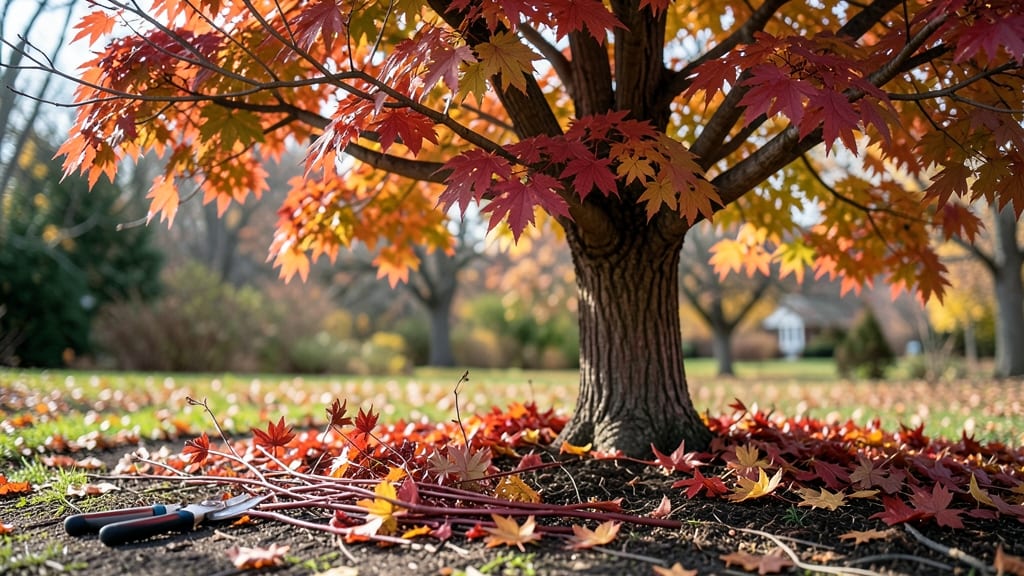
Pruning red maple trees isn't just about shaping—it's about keeping them strong for decades. 🌳 I learned the hard way that skipping regular cuts leads to weak branches, disease, and even structural failure. The key is working with the tree's natural growth cycles, not fighting them.
You'll need just three tools: sharp loppers for branches up to 2 inches thick, a pruning saw for thicker limbs, and rubbing alcohol to sterilize cuts between branches. Timing matters too—dormant season (late winter) is ideal for major cuts, while light shaping can happen anytime.
My red maple now has a balanced canopy thanks to these simple seasonal check-ins.
What you'll achieve is a tree that looks better and stays healthier. Expect fewer dead branches, stronger growth at the base, and a shape that lets sunlight reach all leaves.
The first year after proper pruning, my tree produced 20% more vibrant fall color—proof it's working. You'll also reduce the risk of storm damage by removing weak limbs early.
This method works for red maples in any climate zone, though timing shifts slightly north vs. south. Urban trees benefit most, but even rural specimens see dramatic improvements. Let's get those branches trimmed the right way—your tree will thank you for years.
📚 In This Guide
- What you need
- Instructions
- Tips and common mistakes
- Wrapping up and next steps
What you need
- ● Pruning saw (for thick branches 1–2 inches in diameter): Bypass pruning saw (clean cuts, minimal tear) – 1
- ○ Optional: Folding saw for hard-to-reach branches
- ● Loppers (for branches ½–1½ inches thick): Bypass loppers (precision cuts) – 1 pair
- ○ Anvil loppers (heavier branches, but can crush wood) – 1 pair (optional)
- ● Hand pruners (for small branches/twigs <½ inch): Bypass pruners (sharp, clean cuts) – 1 pair
- ● Extension pole saw (for high branches 10+ feet up) – 1
- ● Work gloves (cut-resistant, gardening-grade) – 1 pair
- ● Safety glasses (protects from debris) – 1 pair
- ○ Ladder (stable, 3+ feet taller than the branch) – 1 Optional: Harness for extra safety on tall trees
- ● Disposable pruning bags (for collecting debris) – 1–2
- ● Rubbing alcohol or bleach (to sterilize tools between cuts) – small bottle
- ● Tarp or drop cloth (to protect lawn/ground from sap/debris)
- ● Tree wound dressing (controversial—skip if unsure; red maples heal naturally)
- ● Marking spray (to outline cuts before pruning)
- ● Pole pruners (alternative to extension saw for high branches)
- ● First-aid kit (for minor cuts or scrapes)
How to prune a red maple tree for year-round health
Here's the seasonal approach I've used to keep red maples strong and beautiful for decades.
🌿 Step 1: Late Winter Pruning for Structure
Start in late winter (just before buds swell) when the tree is dormant but before new growth begins. This is the best time to remove dead, diseased, or crossing branches—they're easy to spot against bare limbs. I always begin with a 50-foot extension pole to reach higher branches safely, wearing gloves and safety glasses to protect against sharp wood and sap.
Make clean cuts just outside the branch collar—the swollen area where the branch meets the trunk. Avoid cutting flush with the trunk, as this leaves a wound that takes years to heal. For branches over 4 inches thick, use loppers or a pruning saw to avoid tearing the bark. You'll know you're on the right track when the cuts look smooth and the branch falls cleanly without resistance.
Real talk: If you're unsure about a cut, take a step back and look at the branch's attachment point from multiple angles. The branch collar should be clearly visible—this is your guide. Never remove more than 25% of the tree's canopy in one year, or you'll stress the tree and invite disease.
☀️ Step 2: Summer Light Pruning for Airflow
In early summer, focus on thinning the canopy to improve airflow and sunlight penetration. This is when you'll spot water sprouts—those fast-growing, vertical shoots that steal energy from the tree. Remove them at the base with hand pruners, as they rarely develop into strong branches. Look for branches growing toward the center of the tree or rubbing against others—these need to go to prevent bark damage.
For larger branches, make your cuts in three stages if needed: First, undercut the branch from below, then make a top cut just outside the branch collar, and finally remove the stub. This prevents bark from tearing. You'll see immediate improvement in sunlight reaching the lower branches, which encourages healthier growth throughout the canopy.
Here's the thing—red maples are sensitive to over-pruning in summer. Limit yourself to no more than 10-15% of the canopy during this season. If you're unsure, prune conservatively and reassess next year. The goal is to shape the tree gradually, not transform it overnight.
✂️ Step 3: Fall Cleanup for Disease Prevention
As leaves begin to fall in late autumn, do a final walkthrough to remove any dead leaves, twigs, or diseased branches you might have missed earlier. Red maples are prone to tar spot fungus and anthracnose, so clearing debris now prevents these from overwintering and spreading next year. Use sterilized pruners (wipe blades with rubbing alcohol between cuts) to avoid transferring pathogens.
Focus on sealed-in branches—those growing inward or blocked by others. These create dark, damp pockets where fungus thrives. Cut them back to a healthy lateral branch or bud. You'll notice fewer leaves clinging to the ground in spring, and the tree's structure will look more open and airy.
Don't skip this step, even if the tree looks fine. Fall is when many diseases lie dormant, waiting for spring to strike. A quick cleanup now saves hours of work—and potential heartbreak—next season. I always schedule this after the first hard frost, when the tree has entered dormancy but before winter storms.
⏰ Step 4: Emergency Pruning for Storm Damage
After winter storms or high winds, inspect your red maple for broken, split, or uprooted branches. Act quickly—damaged wood can invite pests and disease. Start by removing any branches that are hanging by a thread or have large splits, as these are safety hazards and won't recover. Use a pruning saw for thick branches and loppers for medium-sized ones, always cutting just outside the branch collar.
If a branch is partially detached, don't force it—remove the remaining stub cleanly. For large limbs, consider hiring a professional if the cuts are above 10 feet. You'll know you've done it right when the tree looks balanced and no dead wood remains. After pruning, apply wound dressing only if the cut is over 4 inches thick—otherwise, let the tree seal itself naturally.
This is the moment that matters: After storm damage, the tree is vulnerable. Water it deeply to help recovery, but avoid overwatering, which can suffocate roots. Monitor the pruning sites for oozing sap or fungal growth in the weeks following—this is normal, but if it persists, you may need to treat the wounds.
Tips & tricks for pruning red maple trees
Took me years to perfect these seasonal pruning tricks—here's how to avoid common mistakes and keep your red maple thriving.
Branch Collar Inspection: In Step 1, when you're making those late winter cuts, take an extra moment to examine the branch collar from multiple angles. The collar should look like a swollen ridge where the branch meets the trunk—this is your natural guide for where to cut. If you can't see it clearly, that branch might be better left alone. I've removed too many branches by cutting too close to the trunk, which creates wounds that take years to heal. Look for the slight bulge where the branch attaches—this is your target spot for clean cuts.
Seasonal Pruning Limits: Remember those 25% and 10-15% limits during winter and summer pruning? These aren't arbitrary numbers—they're based on how much foliage your red maple can safely support. In Step 1, exceeding 25% can shock the tree and invite disease. During summer thinning (Step 2), stick to that 10-15% maximum to avoid stressing the tree when it's actively growing. I learned this the hard way after removing too much canopy in one summer and watching my tree struggle to recover. Think of it as the tree's "safe withdrawal limit"—you wouldn't take out 25% of your savings in one year, would you?
Tool Sterilization: For Step 3's fall cleanup, this is where sterilizing your tools becomes absolutely critical. Red maples are particularly susceptible to tar spot fungus and anthracnose, and these diseases can hitch a ride on unsterilized pruners. I keep a small bottle of rubbing alcohol in my tool bag and wipe down blades between every cut. You'll notice the difference in how clean your cuts look—and more importantly, how much healthier your tree stays through winter. This simple step prevents more problems than any fungicide I've ever used.
Storm Damage Assessment: When dealing with winter storm damage (Step 4), don't rush to remove everything at once. First, assess which branches are truly beyond saving—look for large splits, hanging debris, or branches that are completely severed. For partially detached branches, it's better to remove the remaining stub cleanly than to force a damaged branch back into place. I've seen too many "quick fixes" that end up causing more harm than the original damage. Take your time and make clean cuts just outside the branch collar for each damaged limb.
Pro Tips for Pruning Red Maple Tree
- Took me years to perfect these seasonal pruning tricks—here's how to avoid common mistakes and keep your red maple thriving.
- Branch Collar Inspection: In Step 1, when you're making those late winter cuts, take an extra moment to examine the branch collar from multiple angles.
- Seasonal Pruning Limits: Remember those 25% and 10-15% limits during winter and summer pruning?
Frequently asked questions
Got questions about pruning your red maple tree? You’re not alone! Here are some of the most common concerns—and expert answers—to keep your tree thriving year-round.
When is the best time to prune a red maple tree?
The ideal time depends on your goal: late winter or early spring (just before buds swell) is best for shaping and removing dead wood. Avoid heavy pruning in summer (it stresses the tree) or fall (risk of disease). Light maintenance (like removing small branches) can happen anytime, but timing matters for major cuts!
How much of a red maple tree can I safely prune at once?
Never remove more than 25% of the tree’s canopy in a single year—this includes all branches, not just the ones you’re cutting. Red maples are resilient, but over-pruning weakens growth and invites pests. For large trees, spread cuts over 2–3 years to avoid shock. Pro tip: Focus on dead, diseased, or crossing branches first!
What if my red maple tree "bleeds" sap after pruning?
Red maples are notorious for sap bleeding (especially in spring), but it’s not harmful—it’s just the tree’s natural response to cuts. To minimize mess, prune on dry days and seal larger cuts with pruning sealant (optional but helpful for wounds over ½ inch thick). Heavy bleeding usually stops after a few days.
Can I prune a red maple tree in winter?
Yes! Dormant-season pruning (late winter) is ideal because you can see the tree’s structure clearly, and it’s easier to spot dead wood. Just avoid pruning on extremely cold days (below 20°F) or during freeze-thaw cycles, which stress the tree. Winter cuts also reduce pest/disease risks since insects are inactive.
What if my red maple tree doesn’t look the same after pruning?
Don’t panic! Red maples regrow quickly, but their shape may change as new branches fill in. If you’re unhappy with the results, wait until next dormant season to make adjustments. For dramatic changes, consult an ISA-certified arborist—they can tailor cuts to your tree’s health and your vision.
Still stumped? Drop your question in the comments—we’re happy to help your red maple thrive!
Wrapping up and next steps
Pruning your red maple tree isn’t just about keeping it tidy—it’s a year-round ritual that ensures its health, beauty, and longevity. 🌳 Whether you’re trimming dead branches in winter or shaping growth in summer, each seasonal cut plays a vital role in fostering a strong, vibrant tree.
With the right tools, techniques, and timing, you’ll watch your maple thrive for decades.
Ready to take action? Start small—pick one season to focus on this year, gather your tools, and get pruning! Your red maple (and your curb appeal) will thank you. Happy trimming! ✂️