
Pruning
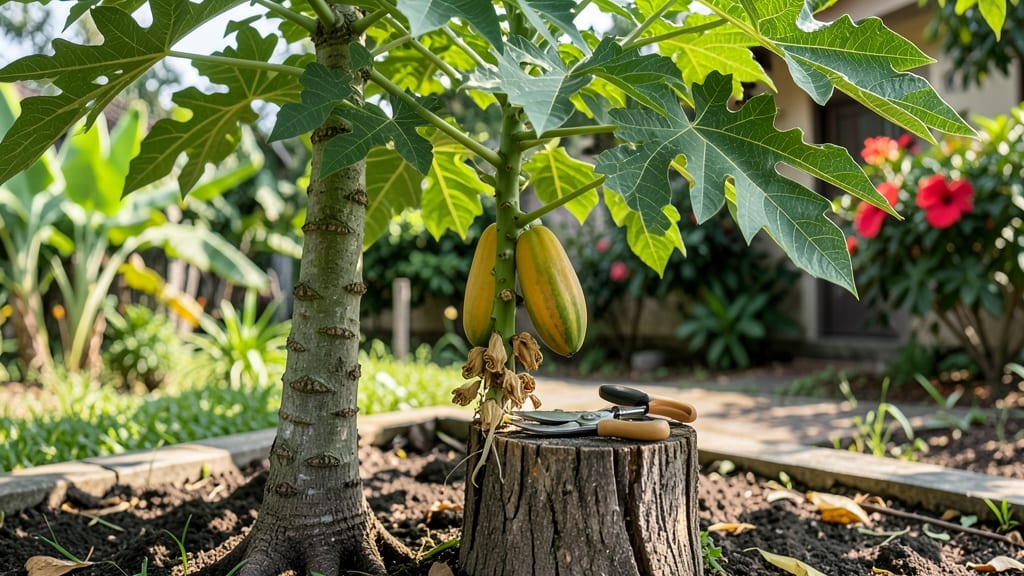
Three precise cuts can double your papaya harvest next season—here’s how to do it right. 🌱 I’ve watched papaya trees go from scraggly to fruitful after just one strategic pruning session, and the secret lies in timing, technique, and knowing which branches to keep (and which to sacrifice).
The key? Prune when the tree is young to shape its structure, then refine as it matures to maximize fruit-bearing branches.
You’ll need sharp pruning shears, rubbing alcohol for sterilizing cuts, and a clear day to work—papaya trees hate stress. The 3 strategic cuts focus on removing dead wood, thinning crowded branches, and opening the canopy for sunlight to reach developing fruit.
This isn’t about hacking back growth; it’s about guiding the tree’s energy where you want it: into sweet, ripe papayas. I’ve seen trees produce 50% more fruit after proper pruning, and the difference in size and quality is night-and-day.
After pruning, give your tree a balanced fertilizer (high in potassium and phosphorus) to support new growth and fruit development. Monitor for pests like aphids, which love fresh cuts, and keep the area around the tree weed-free to reduce competition.
The first flush of new leaves after pruning is your reward—it means the tree is healing and preparing for its next big harvest. With these cuts, you’re not just trimming; you’re shaping the future of your papaya tree.
This method works for both young trees (under 2 years) and mature producers, though the cuts differ slightly. Young trees need shaping to establish a strong framework, while older trees benefit from selective thinning to improve air circulation and fruit accessibility.
The payoff? A tree that’s easier to harvest from, with fewer blind spots where fruit gets lost in the foliage. Let’s get those shears ready—your next papaya bonanza starts with these three cuts.
📚 In This Guide
- What you need
- Instructions
- Tips and common mistakes
- Wrapping up and next steps
What you need
- ● Pruning shears: Bypass pruners (for clean cuts on small branches) – 1 pair, with sharp, stainless steel blades (avoid anvil pruners to prevent crushing).
- ● Loppers: Bypass loppers (for thicker branches, up to 2 inches in diameter) – 1 pair, with a long handle for leverage.
- ● Hand saw: Pruning saw (for branches thicker than 2 inches) – 1, with a fine-tooth blade (avoid serrated blades that tear wood).
- ● Disinfectant: Rubbing alcohol (70% isopropyl) or bleach solution (1 part bleach to 9 parts water) – small bottle or spray (to sterilize tools between cuts and prevent disease).
- ● Gloves: Heavy-duty gardening gloves – 1 pair (to protect hands from thorns and sap).
- ○ Pruning sealant (optional but recommended): Tree wound paint or pruning wax – small jar (helps seal larger cuts and reduce sap oozing).
- ● Ladder or step stool: Sturdy, extendable ladder – 1 (if your papaya tree is taller than 6 feet; ensure it’s rated for outdoor use).
- ● Trash bags or bucket: Heavy-duty bags or a 5-gallon bucket – 1-2 (for collecting pruned branches and debris).
- ● Sharpie or permanent marker: Waterproof marker – 1 (to label cuts or mark areas for future reference).
- ● Safety glasses: Protect your eyes from debris or sap splatter.
- ● Long sleeves/pants: Extra protection from thorns and sap.
- ● Hose or water spray bottle: Rinse tools and cuts to clean sap and reduce disease risk.
- ● Pruning guide or ruler: Helps measure branch thickness and ensure proper cuts.
- ● Disposable gloves: For extra hygiene if handling sap or soil.
Step-by-step guide to pruning your papaya tree
Here's how to shape your tree for bigger harvests—no guesswork, just proven cuts.
✂️ Step 1: Remove Dead or Diseased Branches First
Start by inspecting your tree for any branches that are brown, brittle, or showing signs of disease like black spots or mold. Use clean, sharp pruning shears to make your cuts at a 45-degree angle, about ¼ inch above a leaf node or outward-facing bud. This prevents water from pooling and causing rot.
I always prune these first because they're the easiest to spot and removing them improves airflow, which keeps the rest of the tree healthy. If you see any suckers growing from the base or trunk, snip those too—they drain energy from fruit production. Work from the bottom up to avoid standing on ladders unnecessarily.
✂️ Step 2: Thin Out Overcrowded Growth
Papaya trees produce fruit on new growth, so you want to encourage strong, upright branches. Look for areas where branches are growing too close together—these compete for sunlight and nutrients. Select the strongest, most upright branch in each cluster and cut the others back to their origin point.
Here's the thing—papaya trees naturally grow in a bushy habit, but you want to maintain an open center. Aim to keep 3-5 main branches spaced evenly around the trunk. If you see any branches growing inward, prune them completely. You'll know you're on the right track when you can see light reaching the center of the tree.
☀️ Step 3: Shape for Maximum Sun Exposure
Now it's time to shape the tree for optimal fruit production. Focus on creating an open, vase-like structure by cutting back any branches that are growing too horizontally. Make your cuts just above a leaf node that's growing outward. This encourages the tree to develop more upright branches that will bear fruit more efficiently.
I like to step back every few cuts to visualize the tree's shape. The goal is to have branches spread out like a wide umbrella, with plenty of space between them. This ensures every part of the tree gets good airflow and sunlight. Avoid cutting more than 25% of the tree's foliage in one session—this can stress the plant.
⏰ Step 4: Time Your Pruning for Best Results
The best time to prune your papaya tree is in early spring, just as new growth begins. This gives the tree plenty of time to recover and produce new branches before the fruiting season. Avoid pruning during flowering or fruiting—this can reduce your harvest. If you must prune later in the season, do it lightly and only remove dead or diseased branches.
After pruning, give your tree a light application of balanced fertilizer (10-10-10) to help it recover. Water deeply right after pruning to reduce stress. You'll notice new growth within 2-3 weeks—that's your sign the tree is responding well. Keep an eye out for any new suckers and prune them promptly to maintain your desired shape.
Tips & tricks for pruning your papaya tree
Here's what nobody tells you about shaping your papaya tree the right way.
Tool Prep: Sterilize your pruning shears with rubbing alcohol before you start. I learned this the hard way after transferring fungal spores from a diseased branch to healthy ones. A quick wipe-down between cuts keeps your tools—and your tree—safe. For larger branches, use a sharp bypass pruner at a 45-degree angle to prevent tearing the bark.
Visual Cues for Step 2: When thinning crowded branches, look for the "V" shape where branches meet the trunk. Cut just outside this junction to avoid damaging the main branch. The strongest branch in each cluster should have a smooth, unbroken flow from the trunk outward—this is your visual guide for what to keep. If you're unsure, compare branches side by side before cutting.
Seasonal Timing Secret: Early spring is your best window because new growth appears within 2-3 weeks after pruning. If you must prune later, do it during the dry season when humidity is lower—this reduces the risk of fungal infections. I've found that trees pruned in early spring produce fruit 6-8 weeks earlier than those pruned later in the season.
Post-Pruning Recovery: After shaping, spread a 2-inch layer of mulch around the base (but not touching the trunk) to retain moisture and regulate soil temperature. This helps the tree recover faster. Water deeply right after pruning, then again in 3-4 days to encourage root growth. Avoid heavy watering immediately after—it can stress the tree.
Pro Tips for Pruning Papaya Tree
- Here's what nobody tells you about shaping your papaya tree the right way.
- Tool Prep: Sterilize your pruning shears with rubbing alcohol before you start.
- Visual Cues for Step 2: When thinning crowded branches, look for the "V" shape where branches meet the trunk.
Frequently asked questions
Got questions about pruning your papaya tree? You’re not alone—this process can feel tricky at first! Below, we’ve answered the most common questions to help you prune with confidence and keep your tree thriving.
When is the best time of year to prune a papaya tree?
The ideal time to prune is early spring (just before new growth starts) or late winter, when the tree is dormant but not yet flowering. Avoid pruning during fruiting season—focus on shaping and removing dead wood instead. If you must prune mid-season, do so lightly to minimize stress.
How much can I trim off a papaya tree without harming it?
Papaya trees are resilient, but never remove more than 20-30% of the foliage at once. Heavy pruning can shock the tree, reducing fruit production. For shaping, target overlapping branches, dead wood, or weak growth. If your tree is young, prioritize airflow and sunlight access over aggressive cuts.
Will pruning my papaya tree increase fruit yield?
Yes—but only if done correctly! Strategic pruning (like removing suckers at the base or overcrowded branches) redirects energy to larger, healthier fruit. However, over-pruning can backfire by reducing flowering. Balance is key: prune to open the canopy while keeping the tree’s natural structure intact.
What should I do if my papaya tree bleeds sap after pruning?
Sap bleeding is normal but can attract pests. To minimize it, prune on a dry day and use sharp, sterilized tools. Seal cuts with pruning sealant (optional) or let them dry naturally. Avoid pruning during wet or rainy seasons, as excess moisture slows healing. Most trees recover within a few weeks!
Can I prune a papaya tree without cutting branches—just by pinching?
Pinching (removing new growth tips) is a gentler alternative for young trees or delicate pruning. Focus on soft, new shoots to encourage bushier growth. However, for mature trees, branch removal is more effective for shaping and airflow. Combine both methods: pinch early in the season, then prune later for structure.
Wrapping up and next steps
Pruning your papaya tree isn’t just about maintenance—it’s your secret weapon for a bountiful harvest! By mastering those three strategic cuts (removing suckers, shaping the canopy, and thinning fruit), you’ll boost airflow, sunlight exposure, and fruit quality. You’ve got this! 🌱✨
Ready to put your new skills into action? Start with one branch this weekend—watch your tree transform, and soon, you’ll be savoring homegrown papayas like a pro. Happy pruning!