
Pruning
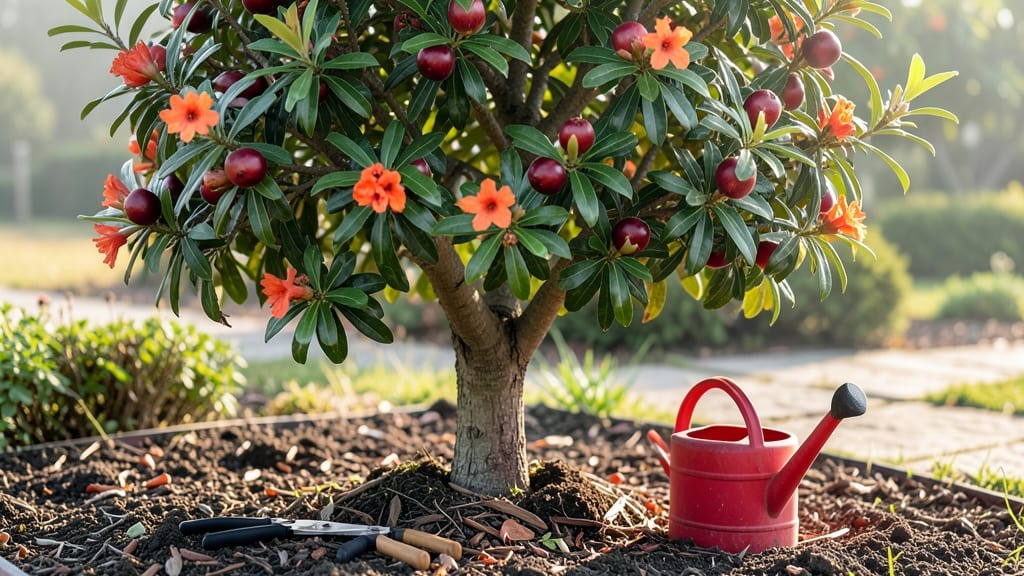
Pomegranate tree maintenance starts with understanding how these heavy-fruit producers need different care than most fruit trees. ✨ I’ve watched my own tree go from a struggling sapling to a bursting-with-fruit powerhouse by following a few key seasonal rules—pruning at the right time, watering deeply but not drowning the roots, and fertilizing just enough to fuel growth without sugar overload.
The biggest mistake? Treating it like an ornamental tree instead of a fruit-bearing workhorse.
Your toolkit is simple: sharp pruners, a 5-gallon bucket for clippings, and a notebook to track growth. The real work happens in late winter when you remove dead or crossing branches—this opens airflow and lets sunlight penetrate to the center where fruit forms.
Summer’s job is lighter: just trim any suckers at the base and thin out overcrowded fruit clusters so the tree doesn’t get bogged down trying to support too many.
By mid-fall, you’ll see the payoff: deep red fruit hanging heavy on the branches, branches that stay sturdy because you’ve been pruning for structure, not just aesthetics.
The tree lives longer, produces more, and handles winter better because you’ve been training it to focus energy where it counts—on next year’s harvest. Here’s exactly how to make it happen, step by step.
This works whether you’re in Zone 7-10 or a container in a sunny patio—just adjust watering for your climate. The key is consistency: prune the same way every year, and your pomegranate will reward you with juicy, seed-packed bounty for decades.
Let’s get started with the seasonal blueprint that actually works.
📚 In This Guide
- What you need
- Instructions
- Tips and common mistakes
- Wrapping up and next steps
What you need
- ● Pruning shears: Bypass pruners (sharp, 6–8" blade) for small branches.
- ● Loppers: 1–2 pair (16–24" blade) for medium branches (½"–1" thick).
- ● Pruning saw: 1 (8–10" curved blade) for thick branches (1"–2" diameter).
- ● Disinfectant: 70% isopropyl alcohol or 10% bleach solution (1 part bleach to 9 parts water) to sterilize tools between cuts.
- ● Gloves: Heavy-duty work gloves (cut-resistant) to protect hands from thorns.
- ● Rake: 1 (for clearing debris after pruning).
- ● Buckets/bags: 2–3 (for collecting pruned branches and fruit).
- ○ Tree wound sealant (optional but recommended): Pruning paste or beeswax to coat large cuts (2–3" diameter).
- ● Extension pole: For high branches (10–12 ft).
- ● Ladder: Sturdy, 12–15 ft tall (if tree exceeds reach).
- ● Hose with nozzle: For rinsing tools and cleaning sap off branches.
- ● Pomegranate fertilizer: Balanced 10-10-10 or citrus-specific blend (apply post-pruning).
- ● Mulch: Organic mulch (wood chips or straw) to retain moisture and suppress weeds.
Step-by-Step guide to seasonal pomegranate tree care
Here's how to keep your fruit-bearing tree thriving year-round with minimal effort.
🌱 Step 1: Late Winter Pruning for Structure and Airflow
When new growth appears—typically in late February or early March—you'll know it's time to prune. Focus on removing dead, crossing, or diseased branches first, cutting back to the nearest outward-facing bud. This prevents future rot and improves light penetration to the center of the tree.
Next, shape the tree by thinning out excessive vertical growth that crowds the canopy. Aim to maintain an open vase shape with branches spaced 12-18 inches apart. Pomegranates naturally grow bushy, but overcrowding leads to smaller fruit and increased pest pressure. Make cuts just above a leaf node where new growth will emerge.
Here's the thing—pomegranates bloom on both old and new wood, so avoid heavy pruning that removes too many flower buds. Limit structural cuts to no more than 25% of the canopy in any single season. If you see water sprouts (thin, fast-growing shoots), remove them entirely—they sap energy from fruit production.
☀️ Step 2: Summer Maintenance During Fruit Development
Once flowers appear in late spring, switch to light maintenance. Remove only diseased or broken branches—no major pruning now. The tree is directing energy to fruit development, and sudden cuts can stress it. Watch for suckers at the base and trim them immediately to prevent competition with the main trunk.
Thin developing fruit clusters to 3-4 inches apart when they're golf-ball sized. This ensures larger, sweeter pomegranates rather than a heavy load of small ones. Use clean, sharp pruners to avoid crushing stems. You'll know you've done it right when sunlight reaches the center of the tree—this prevents fungal issues and improves ripening.
Real talk: If your tree gets powdery mildew (white fuzzy spots), prune affected leaves immediately and apply neem oil spray at dusk. The fungus thrives in humid conditions, so improve airflow by thinning dense branches. Never prune during wet weather—this spreads spores.
✂️ Step 3: Post-Harvest Cleanup and Winter Prep
After harvest in fall, remove all dead leaves, mummified fruit, and any branches that bore poor-quality fruit. These harbor pests and diseases over winter. Sterilize your pruners with rubbing alcohol between cuts to prevent cross-contamination. The goal is a clean slate for next season's growth.
Apply a 2-3 inch layer of mulch around the base (but not touching the trunk) to insulate roots. Pomegranates tolerate cold but need protection from freezing winds. Wrap young trees in burlap if your winters dip below 15°F. Mature trees handle colder temps, but consistent mulch keeps roots stable.
This is the moment that matters: Before the first frost, give the tree a deep watering to replenish moisture lost during harvest. Even drought-tolerant pomegranates need winter hydration. You'll see healthier spring regrowth if roots stay moist through dormancy.
⏰ Step 4: Year-Round Monitoring for Pests and Disease
Check for pomegranate butterfly caterpillars (green with yellow stripes) in summer—they skeletonize leaves. Handpick them or use BT spray if infestations appear. For aphids, blast them off with water first, then treat with insecticidal soap. Prevention is easier than cure: Keep the area under the tree weed-free to discourage pests.
Watch for bacterial blight (dark spots on leaves) and root rot (yellowing leaves despite watering). Both thrive in wet conditions, so improve drainage if your soil stays soggy. If you notice oozing cankers on branches, prune them out immediately and dispose of infected wood in sealed bags.
I always say this: A well-maintained pomegranate tree rewards you with decades of fruit if you stay consistent. The key is light pruning, strategic thinning, and seasonal checks—not heavy-handed cuts. Your tree will thank you with bigger, sweeter pomegranates every fall.
Tips & tricks for perfect pomegranate tree maintenance
A few strategic adjustments can transform your pomegranate tree from a struggling bush into a fruit-bearing powerhouse. Here's what I've learned after years of trial and error—and the mistakes I made along the way.
Pruning Precision: When shaping your tree in Step 1, use a sharp pair of pruning shears to make clean cuts just above a leaf node. This ensures new growth emerges in the right direction. I used to make jagged cuts that left ragged edges—now I always sterilize my tools with rubbing alcohol between cuts to prevent disease spread. The goal is to create an open vase shape where sunlight can reach the center, but avoid removing more than 25% of the canopy in any single season.
Fruit Thinning Strategy: In Step 2, when thinning fruit clusters to 3-4 inches apart, focus on removing the smallest and least healthy fruit first. This might seem counterintuitive, but it forces the tree to invest energy in fewer, larger pomegranates. I've seen trees with hundreds of tiny fruit that never ripen properly—thinning saves both fruit quality and your back when harvest time comes. Use clean pruners to avoid crushing stems, and always work on dry leaves to prevent fungal spores from spreading.
Seasonal Timing: The timing in Steps 1 and 2 is everything. For late winter pruning, wait until you see new growth in late February or early March—this is your cue that the tree has broken dormancy. In summer, only remove diseased branches and thin fruit when they're golf-ball sized. I made the mistake of pruning too late in summer once, and the tree struggled to recover before winter. The key is working with the tree's natural growth cycles, not against them.
Winter Protection: When preparing for winter in Step 3, pay special attention to young trees. While mature pomegranates handle temperatures down to 15°F, young trees need extra protection. Wrap the trunk in burlap if your winters dip below this threshold, and apply a 2-3 inch layer of mulch around the base—but never touch the trunk itself. This insulation prevents root heaving and keeps the soil temperature stable. I learned this the hard way when a young tree's roots froze after a particularly harsh winter.
Pro Tips for Pomegranate Tree Maintenance
- A few strategic adjustments can transform your pomegranate tree from a struggling bush into a fruit-bearing powerhouse.
- Pruning Precision: When shaping your tree in Step 1, use a sharp pair of pruning shears to make clean cuts just above a leaf node.
- Fruit Thinning Strategy: In Step 2, when thinning fruit clusters to 3-4 inches apart, focus on removing the smallest and least healthy fruit first.
Frequently asked questions
Got questions about keeping your pomegranate tree thriving? Here are answers to the most common ones—so you can prune with confidence and enjoy those juicy fruits!
When is the best time to prune a pomegranate tree?
Prune your pomegranate tree late winter or early spring (just before new growth starts) to avoid damaging dormant buds. Light pruning can also happen in summer after harvest to shape the tree, but avoid heavy cuts then—it stresses the plant.
How much can I prune without hurting the tree?
Remove no more than 20-30% of the tree’s branches in one session. Focus on dead, crossing, or overcrowded branches first. Over-pruning weakens the tree and reduces fruit production. Think of it like a haircut—less is more!
Why aren’t my pomegranates growing after pruning?
Pomegranates need balanced pruning—too much cuts back fruit, too little leads to overcrowding. If fruits are sparse, check for sunlight exposure (they need 6+ hours daily) and water stress. Also, ensure you’re pruning mature wood (2+ years old) for best results.
Can I prune a pomegranate tree in hot or cold weather?
Avoid pruning during heatwaves (above 90°F) or freezing temps (below 32°F). Extreme conditions stress the tree, slowing recovery. Early spring or late winter (when temps are mild) is ideal. If you must prune in summer, do it early morning to reduce shock.
What if my pomegranate tree has no branches to prune?
If your tree is young or leggy, focus on structural shaping—trim back the tips of branches to encourage bushier growth. For mature trees with few branches, check for root damage, pests, or disease. If all else fails, consider grafting or repotting (for container trees) to revive it.
Wrapping up and next steps
With the right tools, timing, and techniques, maintaining a pomegranate tree is totally manageable—and oh-so-rewarding! 🌱 Whether you’re trimming for shape, boosting fruit production, or keeping pests at bay, your efforts will pay off in juicy, vibrant pomegranates for years to come.
Now that you’re armed with seasonal pruning know-how, why not take the next step? Grab those shears, step outside, and give your tree the TLC it deserves—your future harvest will thank you!