
Trees
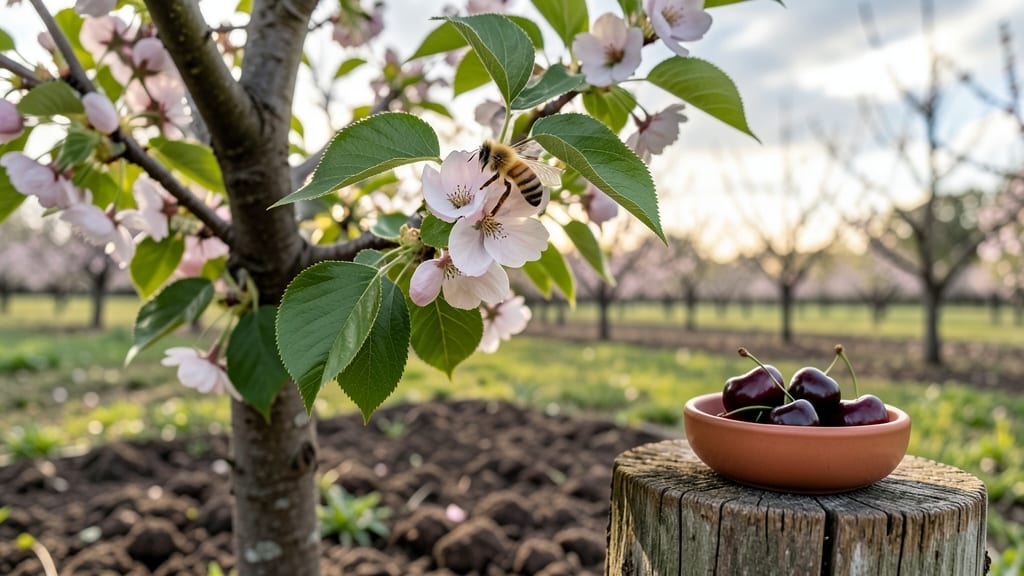
Pollinating Bing cherry trees starts with the right partner—because these sweet, tart fruits need another variety nearby to set fruit. 🌸 I planted a Stella cherry tree alongside mine last spring, and the difference in harvest was night-and-day: instead of a handful of cherries, we’re looking at buckets of them.
The secret lies in choosing the right pollinator and timing everything just right.
Bing cherries need a cross-pollination partner that blooms at the same time, like Stella, Lapins, or Rainier varieties. Plant them within 50 feet of your Bing tree for maximum efficiency—bees and other pollinators will do the rest once the flowers open in early spring.
If your yard is small, consider a dwarf pollinator like the compact Stella, which fits neatly into any landscape.
You’ll know it’s working when the blossoms fall and tiny green cherries appear within 4-6 weeks. A successful pollination means fewer dropped flowers and more fruit developing into full-sized cherries by summer.
The payoff? A harvest so abundant, you’ll need friends to share the bounty—or a freezer full of jam.
For gardeners in cooler climates, watch for late frosts that can damage early blooms. If your trees are isolated, hand-pollination with a small paintbrush can give flowers a helping hand on cloudy days.
The key is patience—cherry trees take 2-3 years to fully mature, but once they do, your pollination strategy will reward you for decades.
📚 In This Guide
- What you need
- Instructions
- Tips and common mistakes
- Wrapping up and next steps
What you need
- ● Pollinizer Cherry Trees: At least one compatible variety (e.g., Stella®, Lapins®, or Royal Ann®) planted within 50 feet of your Bing cherries.
- ● Handheld Pruners: Sharp, bypass pruners (for trimming excess blooms if needed).
- ● Soft Paintbrush or Cotton Swab: For manual pollination (if bees are scarce).
- ● Honey or Sugar Syrup: A small bowl of diluted honey (1:1 with water) to attract pollinators.
- ● Watering Can or Hose: For post-pollination hydration (cherry trees thrive with 1–1.5 inches of water weekly).
- ○ Pollinator-Friendly Plants: Optional but helpful—lavender, sunflowers, or clover near the trees.
- ● Timing: Act during peak bloom (late April–early May, depending on climate).
- ● Weather Check: Pollinate on dry, sunny days (55–85°F)—rain or wind can hinder bees.
- ● Tree Health: Ensure trees are disease-free and well-nourished (test soil pH: 6.0–6.5 is ideal).
Step-by-step guide to cross-pollinating Bing cherry trees
Here's how to ensure your Bing cherries set fruit like crazy—no guesswork involved.
🌱 Step 1: Identify Your Bing Cherry's Pollination Requirements
Bing cherries are self-unfruitful, meaning they need a compatible partner to produce heavy crops. The key is pairing them with another variety that blooms at the same time. Look for trees labeled as early to mid-season bloomers—these align best with Bing's late April to early May flowering window. Popular pairings include Stella, Lapins, or Royal Ann, all of which share similar bloom times and attract the same pollinators.
If you're planting from scratch, check the USDA Plant Hardiness Zone compatibility of your chosen pair. For example, Bing thrives in Zones 5-7, but Stella extends that range to Zone 8. I always verify this before buying—mismatched zones mean one tree might bloom weeks before the other, leaving your Bing cherries pollination-less.
☀️ Step 2: Position Trees for Optimal Pollinator Access
Plant your Bing cherry and its pollinator partner 30-50 feet apart—close enough for bees to travel between them but far enough to avoid root competition. I like to place them on opposite sides of the yard, facing each other, so wind can carry pollen efficiently. Avoid planting them in a sheltered spot where bees rarely visit; a slight breeze and open exposure maximize pollination success.
Bees prefer full sun (6+ hours daily) and need easy access to both trees. If your yard has a dominant wind direction, position the trees so pollen isn't blown away. I've seen orchards where trees were planted in a north-south line—this creates a natural pollen corridor that works beautifully.
💧 Step 3: Time Watering and Fertilizing for Peak Bloom
Consistent moisture and balanced nutrients are critical during the 6-8 weeks before bloom. Water deeply once a week (more in drought) to encourage strong root growth, but avoid overwatering—soggy soil stresses trees and delays flowering. I use a 5-gallon bucket with a slow-release fertilizer applied in early spring to support bud development without burning the roots.
Skip heavy nitrogen fertilizers during bloom—too much leafy growth at the expense of flowers means fewer cherries. Instead, switch to a low-nitrogen, high-phosphorus blend to boost flowering. You'll see the difference in tighter clusters of blossoms and more consistent fruit set across the tree.
⏰ Step 4: Monitor Bloom Overlap and Pollinator Activity
Watch for full bloom (when 75% of flowers are open)—this is your cue that pollination is critical. If your Bing and its partner don't bloom simultaneously, you'll notice one tree covered in bees while the other sits bare. In this case, hand-pollinate by gently shaking branches during peak bee activity (early morning on sunny days). I use a small paintbrush to transfer pollen between trees if bees aren't doing the job.
Keep an eye out for pollen-covered bees buzzing between trees. If you see them, your setup is working. Lack of bee activity? Check for pesticides (even residual ones from last season) or competing flowering plants that might be distracting them. A small dish of water with pebbles for bees to land on can help too.
🌿 Step 5: Thin Fruit for Quality and Prevent Overburdening
Once fruit sets, thin clusters to 6-8 inches apart when cherries are ½ inch in diameter. Overloaded branches can snap under the weight, and thin fruit grows larger. I use sterilized pruning shears to remove excess fruit at the base, leaving only the healthiest cherries. This step might feel cruel, but it ensures you get bigger, sweeter Bing cherries instead of a mess of small, tart ones.
Thinning also improves air circulation, reducing the risk of fungal diseases like brown rot. If you skip this, you'll end up with mushy, underripe cherries or even branch breakage. Trust the process—your future harvest will thank you.
Tips & tricks for perfect cherry tree pollination
Real talk: Even with the right pairings, small details make the difference between a handful of cherries and a tree bending under fruit. These are the nuances that separate good pollination from great harvests.
Bloom Timing is Everything: The 6-8 week window before bloom is your golden opportunity to set the stage. During this time, focus on consistent moisture—deep watering once a week—but don't let the soil stay soggy. I've seen orchards where trees were overwatered during this period, and the buds simply refused to open properly. The key is maintaining evenly moist soil without waterlogging. Think of it like preparing a tree for its big debut: you want it rested, nourished, and ready to perform.
Hand-Pollination Hack: If you notice your trees aren't blooming simultaneously, don't panic. On calm, sunny mornings when bees are sluggish, take a small paintbrush and gently transfer pollen from the blooming partner to your Bing's flowers. I do this between 7-9 AM when dew is still present—it creates the perfect sticky surface for pollen to adhere. This technique saved my first Bing tree when Stella bloomed a week late. Just be gentle—you're not painting a masterpiece, you're helping nature along.
Pest Prevention During Bloom: The most common mistake I see during bloom season is underestimating residual pesticides. Even if you didn't spray this year, old pesticides in the soil can linger for years. If you notice bees avoiding your trees or flowers looking wilted, do a quick check of your yard for recent pesticide use or neighboring properties that might be treating lawns. A simple bee water station (just a shallow dish with pebbles) can make a huge difference in attracting pollinators to your orchard.
Thinning Technique: When it comes time to thin those cherries to 6-8 inches apart, I've found that timing is everything. Wait until they're exactly ½ inch in diameter—any smaller and you risk stunting growth, any larger and you're removing potential fruit. Use sterilized pruning shears and make clean cuts at the base of the fruit cluster. The goal isn't just quantity control; it's about giving each remaining cherry room to develop its full sweet potential. I always thin on a cloudy day to reduce stress on the tree.
Pro Tips for Pollinating Bing Cherry Trees
- Real talk: Even with the right pairings, small details make the difference between a handful of cherries and a tree bending under fruit.
- Bloom Timing is Everything: The 6-8 week window before bloom is your golden opportunity to set the stage.
- Hand-Pollination Hack: If you notice your trees aren't blooming simultaneously, don't panic.
Frequently asked questions
Got questions about pollinating your Bing cherry trees? Here are some common ones—and their answers—to help you grow a bountiful harvest!
Why do Bing cherry trees need cross-pollination?
Bing cherries are self-unfruitful, meaning they need pollen from a different cherry tree to produce fruit. Without a compatible pollinator nearby, you’ll get beautiful blossoms but no sweet cherries! Planting a second variety (like Stella or Lapins) within 50 feet ensures successful pollination.
When is the best time to plant a pollinator tree?
Fall or early spring (before buds swell) is ideal. This gives roots time to establish before the next blooming season. If planting in spring, water deeply and mulch to retain moisture—your tree will thank you with better pollination (and fruit!) next year.
Can I use bees or other insects to help pollinate?
Bees are nature’s perfect pollinators. Plant bee-friendly flowers (like lavender or sunflowers) near your trees to attract them. Avoid pesticides during bloom time, and consider installing a bee house if your area lacks natural pollinators.
What if my Bing cherry tree has flowers but no fruit?
Check for these issues: No pollinator tree nearby? Add one! Late frost? Protect blossoms with frost cloth. Pests/disease? Inspect leaves for signs (like holes or spots). If all else fails, hand-pollinate with a paintbrush—dip in pollen from another tree and transfer to Bing blossoms!
Do Bing cherries need a specific climate for pollination?
Bing cherries thrive in USDA Zones 5-7 with cold winters (to break dormancy) and warm springs for blooming. Pollination works best in 50–70°F temps with active bees. If your area is too hot/cold, consider microclimate adjustments (like windbreaks) or shade cloth for blossoms.
Wrapping up and next steps
Pollinating your Bing cherry trees is the secret ingredient for a bountiful harvest—just like pairing the right ingredients in a recipe! 🍒 With the right cross-pollination partners (like Stella or Lapins), you’ll ensure sweet, juicy cherries that’ll make your neighbors jealous.
Now that you’re armed with the know-how, take action: plant a compatible variety today and watch your orchard thrive!
💡 Next step: Research local nurseries or online suppliers to find your perfect pollinator match—your future cherry pies won’t wait!