
Trees
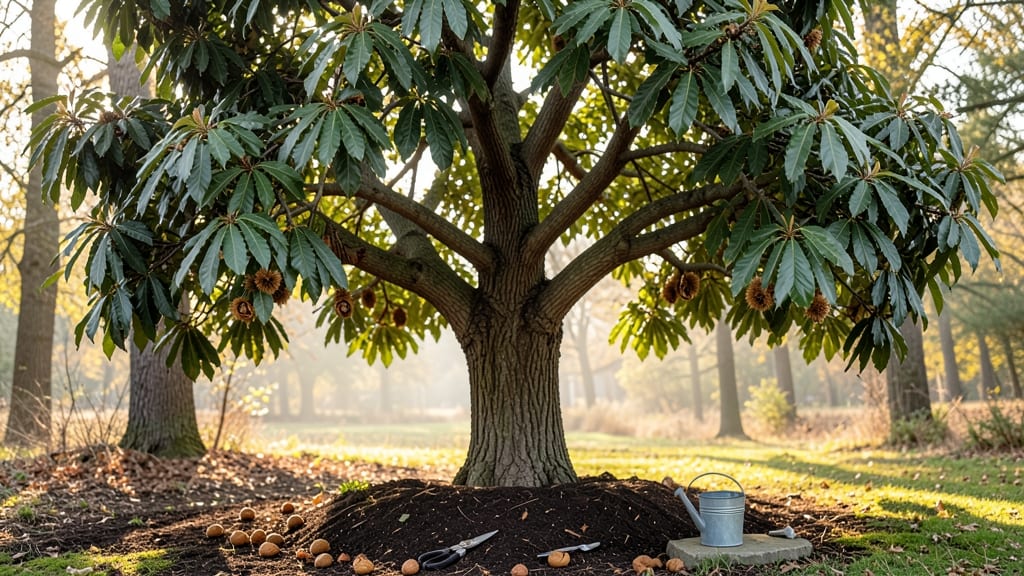
Indiana’s cold winters shouldn’t stop you from growing your own nut trees—black walnut, butternut, and hazelnut thrive here with the right care. 🌱 I’ve planted all three in my backyard, and the butternut trees now produce enough nuts to share with neighbors every fall.
The key is choosing varieties that handle Indiana’s sharp temperature swings and planting them at the right time.
Start with black walnut for hardiness or butternut for sweeter nuts, both of which tolerate Indiana’s Zone 5 and 6 climates. Plant in late fall or early spring when soil is workable but not frozen, spacing saplings 20-30 feet apart for mature growth.
Amend heavy clay soil with compost to improve drainage—this makes all the difference for young trees struggling in wet winters.
Once established, these trees need minimal fuss: water deeply during the first two growing seasons, prune in late winter to remove dead wood, and watch for walnut blight by keeping the area around the base clear of debris.
With proper spacing and care, you’ll see your first harvest in 5-7 years, and the trees will keep producing for decades.
For Indiana-specific help, check with local nurseries like Indiana Native Plant Society or the Purdue Extension Service for soil tests and disease-resistant varieties. Your backyard could become the talk of the neighborhood—just imagine the satisfaction of cracking open a butternut straight from your own tree in November.
📚 In This Guide
- What you need
- Instructions
- Tips and common mistakes
- Wrapping up and next steps
What you need
- ● Nut Tree Saplings: Choose cold-hardy varieties like black walnut (Juglans nigra), butternut (Juglans cinerea), or pecan (Carya illinoinensis). Buy 1–3 trees per variety (pollination needs vary—check species requirements!).
- ● High-Quality Soil: 50 lbs of compost or aged manure per tree to improve drainage and fertility.
- ● Mulch: 3–4 inches of wood chips or straw (cover a 3-foot radius around each tree).
- ● Organic Fertilizer: 10-10-10 or 5-10-10 NPK blend (follow label rates for young trees).
- ● Tree Guards: 2–3 wire or plastic tree tubes (6–8 ft tall) to protect saplings from deer and voles.
- ● Shovel & Spade: For digging holes twice as wide as the root ball and 12–18 inches deep.
- ● Pruning Shears: Bypass pruners (sharp, 6–8 inch blades) for shaping and cleanup.
- ● Wheelbarrow: For hauling soil, mulch, or tools.
- ● Watering Can or Hose: With a gentle spray nozzle (avoid blasting roots).
- ● Gloves & Safety Gear: Heavy-duty gardening gloves (nut trees have sticky sap!).
- ● Site Selection: Choose a spot with full sun (6+ hours/day) and well-draining soil. Avoid low areas where water pools.
- ● Spacing: Plant trees 30–50 ft apart (varies by species—check maturity size!).
- ● Permits: Check with your local county extension office—some areas regulate large tree planting.
- ● Patience: Nut trees take 5–10 years to bear fruit! Plan for long-term growth.
- ● Soil Test Kit: Test pH (ideal: 6.0–7.5) and nutrient levels before planting.
- ● Drip Irrigation System: Automate watering for young trees (especially in Indiana’s dry summers).
- ● Bird Netting: Protect nuts from squirrels and birds once trees mature.
- ● Tree Stake & Ties: Use for first 2 years to support saplings in windy areas.
Step-by-step guide to planting nut trees in Indiana’s climate
Indiana’s cold winters and hot summers demand nut varieties that thrive in extremes.
🌱 Step 1: Select Cold-Hardy Nut Varieties for Indiana
Black walnut (Juglans nigra) and butternut (Juglans cinerea) are your best bets—they handle Indiana’s -20°F winters and produce abundant nuts. Avoid pecans (Carya illinoinensis), which need warmer climates. Nursery-grown 1- to 2-year-old saplings establish faster than seeds, which can take 5+ years to mature.
Check rootstock compatibility: grafted trees (like 'Thomas' black walnut) yield better than seed-grown ones. I always verify with local Indiana nurseries—they stock varieties tested for your zone. Plant in early spring or fall to avoid transplant shock during summer heat.
🪴 Step 2: Prepare the Planting Site for Long-Term Growth
Choose a location with full sun (6+ hours daily) and well-drained soil—nut trees hate soggy roots. Test your soil’s pH (ideal: 6.0–7.5); amend with compost if needed. Dig a hole twice as wide as the root ball but no deeper—planting too deep suffocates roots.
Spread the root ball’s roots outward gently to encourage outward growth. Mix in a handful of bone meal (for phosphorus) into the backfill soil—this jumpstarts root development. Water deeply after planting to eliminate air pockets, but avoid overwatering, which causes rot.
☀️ Step 3: Establish Proper Spacing and Mulching
Space trees 30–50 feet apart—mature nut trees spread wide. Smaller varieties like hazelnuts (Corylus) can go 15–20 feet apart. Mulch with 3–4 inches of wood chips (not fresh mulch) to retain moisture and suppress weeds, but keep mulch 6 inches away from the trunk to prevent rot.
Water deeply once a week for the first year, then taper to every 2–3 weeks once established. Young trees need consistent moisture, but drought-tolerant varieties like black walnut can handle dry spells once rooted. Watch for wilting leaves—this is your cue to water immediately.
✂️ Step 4: Prune for Structure and Nut Production
Prune in late winter (before buds swell) to remove dead, crossing, or diseased branches. Focus on creating an open canopy to improve air circulation—this reduces fungal diseases like anthracnose. Use sharp pruners to make clean cuts just outside the branch collar.
Thin out crowded branches to 12–18 inches apart on the main scaffold. Nut production increases with proper airflow and sunlight penetration. Avoid heavy pruning after mid-summer—new growth won’t harden off before winter, leaving it vulnerable to frost damage.
Tips & tricks for planting hardy nut trees in Indiana’s climate
Indiana’s climate isn’t forgiving, but these proven strategies will give your nut trees the best shot at thriving—and producing abundant harvests.
Variety Selection: When choosing between black walnut and butternut, prioritize grafted 'Thomas' black walnut for superior yield and disease resistance. I learned this the hard way after planting seed-grown trees that took years to mature—grafted trees produce nuts in just 3-5 years. For smaller spaces, consider hazelnuts (Corylus), which tolerate Indiana’s -20°F winters and produce edible nuts in half the space.
Soil Preparation: That ideal soil pH of 6.0-7.5 is non-negotiable for nut trees—test your soil before planting. I always add a handful of bone meal to the backfill soil during planting; this phosphorus boost jumpstarts root development. For clay-heavy Indiana soils, mix in 20% compost by volume to improve drainage without suffocating roots. The key is creating a loose, aerated medium that mimics the tree’s natural forest floor environment.
Watering Strategy: The critical first-year watering schedule of once weekly needs adjustment based on rainfall. In Indiana’s unpredictable climate, I recommend installing a 5-gallon watering can with a soaker hose attachment—this delivers consistent moisture without over-saturating. For established black walnut trees, let nature take over; their deep taproots make them remarkably drought-tolerant once established.
Pruning Insight: When pruning in late winter, focus on creating a "cage-like" scaffold with branches spaced 12-18 inches apart. This open structure prevents disease by improving airflow while maximizing sunlight penetration to the lower canopy. I always carry a small magnifying glass to inspect branch collars for signs of fungal infection before making cuts—early detection prevents anthracnose from spreading.
Pro Tips for Nut Trees Indiana
- Indiana’s climate isn’t forgiving, but these proven strategies will give your nut trees the best shot at thriving—and producing abundant harvests.
- Variety Selection: When choosing between black walnut and butternut, prioritize grafted 'Thomas' black walnut for superior yield and disease resistance.
- Soil Preparation: That ideal soil pH of 6.0-7.5 is non-negotiable for nut trees—test your soil before planting.
Frequently asked questions
Got questions about growing nut trees in Indiana’s chilly climate? You’re not alone! Here are answers to the most common queries—from planting tips to troubleshooting—so you can confidently grow your own nut harvest.
What are the best nut trees for Indiana’s cold winters?
Indiana’s USDA Hardiness Zones 5-6 favor cold-hardy varieties like black walnut, butternut, hickory, and pecan. Look for cultivars like ‘Thomas’ hickory (Zone 4) or ‘Contena’ pecan (Zone 6) for reliability. Always check the label for cold tolerance and space needs—some trees grow huge!
When is the best time to plant nut trees in Indiana?
Plant in early spring (April) or fall (October) when soil is workable but not frozen. Avoid summer heat stress. For bare-root trees, plant as soon as possible after purchase. Pro tip: Water deeply weekly for the first year to establish roots!
Why aren’t my nut trees producing nuts?
Common culprits: young age (most trees take 5–10 years to bear), poor pollination (some need cross-pollination), or nutrient deficiencies. Check for pests (like juglone toxicity from walnut roots) or environmental stress (drought, extreme temps). Try fertilizing with low-nitrogen, high-phosphorus blends in early spring.
Can I grow nut trees in containers or small spaces?
Yes! Dwarf varieties like ‘Dwarf English Walnut’ or ‘Contena’ pecan thrive in large containers (20+ gallons). Use well-draining soil and repot every 2–3 years. Warning: Container trees may produce smaller yields than in-ground plants. Ideal for patios or urban gardens!
How do I protect my nut trees from pests and diseases?
Indiana’s top threats: walnut husk fly, pecan scab, and hickory shuckworm. Preventative tips:
- Apply neem oil or insecticidal soap early in the season.
- Remove fallen nuts/husks to break pest cycles.
- Prune for airflow (avoid dense canopies).
- Water at the base never overhead to reduce fungal diseases.
Wrapping up and next steps
Indiana’s cold climate doesn’t have to limit your nut harvest—hardy varieties like black walnut, hickory, and butternut thrive with the right care! Whether you’re planting for shade, wildlife, or delicious snacks, these trees offer reliable yields and year-round benefits. 🌳✨
Ready to grow your own? Start small with a single tree or expand your orchard—your future harvest (and hungry squirrels!) will thank you. Next step: Research local nurseries, test your soil, and pick the perfect spot to plant this fall!