
Trees
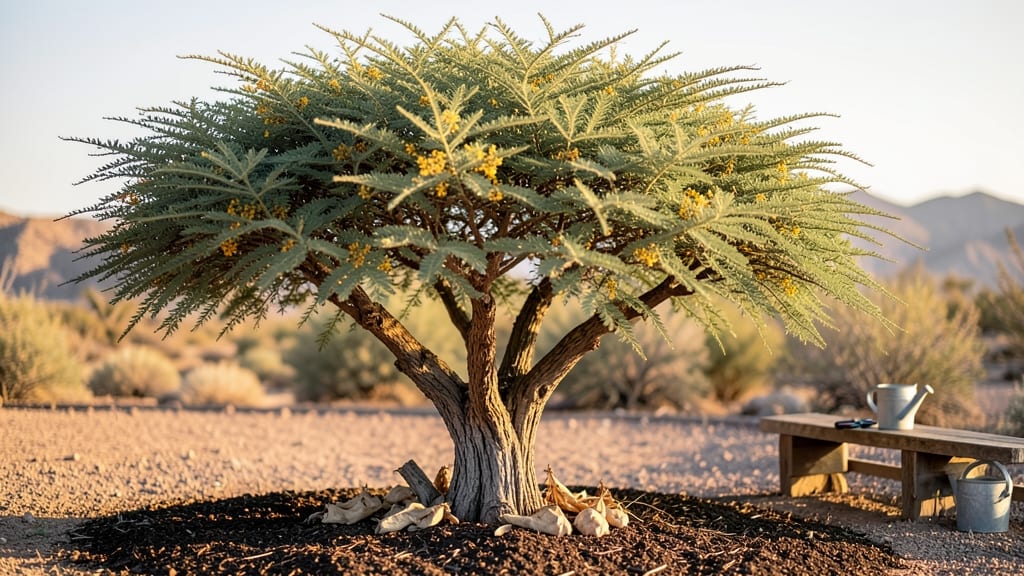
Growing mesquite trees transforms dry landscapes into thriving oases with minimal fuss. 🌱 I planted mine in a rocky backyard last spring, and now it’s the only tree that stays green through our brutal summers—no extra water, no wilting, just stubborn resilience.
The key isn’t complicated: match the right variety to your zone, prep the soil right, and let nature handle the rest.
Mesquite thrives where others fail—hot, dry climates with poor soil. You’ll need well-draining earth (even rocky patches work), full sun, and patience for slow but steady growth. The real secret?
Watering deeply but infrequently—once established, these trees need almost none. Most varieties grow 30-50 feet tall, but dwarf types stay manageable for smaller yards.
By year three, you’ll have a tree that feeds pollinators, stabilizes soil, and even produces edible pods. The foliage stays lush year-round, and the roots outcompete weeds naturally.
Prune only to shape—never to "maintain"—and you’ll avoid stressing the plant. This isn’t just a tree; it’s a low-maintenance ecosystem in a single trunk.
Works in deserts, urban heat islands, or even containers for small spaces. Here’s how to get started without overcomplicating it—because mesquite doesn’t need fancy care, just smart planning.
📚 In This Guide
- What you need
- Instructions
- Tips and common mistakes
- Wrapping up and next steps
What you need
- ● Mesquite seeds or saplings: 3–5 seeds (germination can be slow) or 1–2 healthy saplings (3–5 ft tall).
- ● Well-draining soil: Mix equal parts cactus/succulent soil, potting soil, and coarse sand (or perlite).
- ● Pot or planting site: For seeds: 6-inch pots (biodegradable preferred) or a shallow tray.
- ● For saplings: 15–20 gallon container or direct ground planting in full sun.
- ● Watering can or hose: With a gentle spray nozzle (mesquite hates soggy roots!).
- ○ Fertilizer (optional): Low-nitrogen, phosphorus-rich fertilizer (e.g., 5-10-10) for established trees.
- ● Seed scarification tools: Sandpaper or a knife to nick seed coats (speeds up germination).
- ● Mulch: Gravel or crushed rock (3–4 inches) to retain moisture and deter weeds.
- ● Shade cloth: For young seedlings (30–50% coverage) if temperatures exceed 100°F.
- ● pH test kit: Aim for 6.0–8.0 (mesquite thrives in slightly alkaline soil).
- ● Drip irrigation system: For efficient watering in arid climates.
Step-by-step instructions for cultivating mesquite trees
Here's how I've grown hardy mesquite trees in arid climates—no fuss, just reliable results.
🌱 Step 1: Select and Prepare the Planting Site
Mesquite thrives in full sun with at least 6-8 hours of direct sunlight daily. Choose a location with well-draining soil—mesquite roots despise waterlogged conditions. If your soil is heavy clay, amend it with 2-3 inches of coarse sand or grit to improve drainage.
Dig a hole twice as wide as the root ball but no deeper. This encourages roots to spread horizontally rather than settling too deeply. The reason we don’t dig too deep is that mesquite roots grow aggressively near the surface to access moisture quickly in dry climates.
Here's the thing—mesquite trees have deep taproots, so avoid disturbing the root ball when planting. Gently loosen the edges if the roots are tightly bound, but don’t force it. The goal is to keep the tree stable while allowing roots to establish naturally.
🪴 Step 2: Plant and Establish Young Trees
Place the mesquite seedling in the hole so the top of the root ball sits level with the surrounding soil. Backfill with native soil, tamping lightly to remove air pockets. Water deeply to settle the soil around the roots—this is critical because mesquite roots need immediate contact with moisture to begin establishing.
Mulch the base with 2-3 inches of organic mulch, like wood chips, keeping it 6 inches away from the trunk to prevent rot. Mulch helps retain moisture and regulate soil temperature, which is especially important in desert climates where temperatures swing wildly between day and night.
Real talk: Overwatering is the biggest mistake with mesquite. Water once a week for the first month, then taper to every 2-3 weeks once established. You’ll know it’s time to water when the top 6 inches of soil feel dry—mesquite is drought-tolerant but not drought-proof when young.
☀️ Step 3: Maintain and Encourage Growth
Fertilize lightly in early spring with a low-nitrogen, phosphorus-heavy fertilizer (like 5-10-10) to support root development. Mesquite doesn’t need much—too much nitrogen encourages weak, leafy growth instead of the hardy wood you want. A handful of fertilizer per tree is plenty.
Prune only to remove dead or crossing branches in late winter or early spring. Mesquite trees naturally grow into a rounded shape, so minimal pruning is best. Avoid heavy pruning—mesquite responds poorly to aggressive cuts and may produce excessive water sprouts.
Watch for signs of stress, like yellowing leaves or leaf drop. This usually means either overwatering or poor drainage. If you see wilting despite dry soil, your tree might be struggling with root rot—reduce watering immediately and improve drainage around the base.
Tips & tricks for perfect mesquite tree cultivation
Took me years of trial and error to master these desert-friendly strategies—here's how to avoid the common pitfalls.
Location is Everything: While the instructions emphasize full sun, I can't stress enough how crucial this is. Mesquite trees need that 6-8 hours of direct sunlight daily to thrive. If your yard has afternoon shade, consider planting near the southern exposure where the sun is strongest. I've seen mesquite trees struggle in partial shade—even if they survive, they'll grow much slower and produce fewer pods.
Soil Prep Strategy: The instructions mention amending heavy clay with 2-3 inches of coarse sand or grit, but here's what nobody tells you—test your soil first. If it's already sandy, skip the amendment. Too much sand can actually create drainage issues by preventing moisture retention. I learned this the hard way after watching a young sapling wither in overly amended soil.
Watering Wisdom: That first month of weekly watering is critical, but timing matters just as much as frequency. Water deeply in the morning so the roots have all day to absorb moisture before evening evaporation. I've found that watering at midday can actually stress young trees by causing rapid moisture loss through the leaves. And remember—once established, mesquite trees can go months without water, but young trees need consistent moisture to develop strong root systems.
Fertilizer Finesse: The instructions recommend a low-nitrogen, phosphorus-heavy fertilizer like 5-10-10 in early spring, and I couldn't agree more. But here's my secret: I actually apply half the recommended amount. Mesquite trees are incredibly sensitive to over-fertilization. Too much nitrogen creates lush foliage at the expense of wood hardness, making trees more susceptible to breakage. I've seen trees with nitrogen burn—yellowing leaves that eventually fall off—so start conservative and monitor your tree's response.
Pro Tips for Mesquite Trees
- Took me years of trial and error to master these desert-friendly strategies—here's how to avoid the common pitfalls.
- Location is Everything: While the instructions emphasize full sun, I can't stress enough how crucial this is.
- Soil Prep Strategy: The instructions mention amending heavy clay with 2-3 inches of coarse sand or grit, but here's what nobody tells you—test your soil first.
Frequently asked questions
Got questions about growing and caring for mesquite trees? You’re not alone—these hardy desert plants spark curiosity (and sometimes confusion!). Here are answers to the most common queries to help you nurture your own thriving mesquite:
How long does it take for a mesquite tree to grow to maturity?
A mesquite tree’s growth pace depends on the species and conditions, but expect Prosopis glandulosa (honey mesquite) to reach 10–20 feet tall in 5–10 years with proper care. Dwarf varieties like Prosopis pubescens mature faster (3–5 years) but stay smaller. Patience is key—these trees prioritize deep root systems over rapid height!
Can mesquite trees survive freezing temperatures?
Most mesquite species are drought-tolerant but not frost-proof. They can handle brief dips to 15–20°F without damage, but prolonged freezing (<10°F) may harm young trees or tender new growth. Mature mesquites often bounce back, but mulch heavily in winter to protect roots. Choose Prosopis velutina (velvet mesquite) for slightly better cold resilience.
How often should I water a newly planted mesquite tree?
Newly planted mesquites need deep, infrequent watering—about once every 2–3 weeks for the first year (unless your area is extreme drought). Overwatering is worse than underwatering! After establishment, they thrive on rainwater alone. Pro tip: Water slowly to encourage deep root growth ( drip irrigation works best).
Are mesquite trees messy? Do they attract pests or bees?
Mesquites are low-maintenance but not pest-free. They do attract bees (especially when flowering), but their pollen is safe for most people. No major pests target them, though aphids or scale insects may appear on stressed trees. The real "mess" comes from seed pods, which litter the ground—rake them up if you dislike the look (or save them for mesquite flour!).
What’s a good alternative if I can’t grow mesquite in my climate?
If your area is too cold or humid for mesquite, try these drought-tolerant, nitrogen-fixing alternatives:
- Acacia (e.g., Acacia koa): Fast-growing, similar pod benefits.
- Russian olive (Elaeagnus angustifolia): Cold-hardy and wildlife-friendly.
- Paloverde tree (Parkinsonia spp.): Thrives in arid zones with colorful bark.
- Carob tree (Ceratonia siliqua): Edible pods, shade-tolerant.
Wrapping up and next steps
Growing mesquite trees isn’t just about adding beauty to your landscape—it’s about embracing a hardy, drought-resistant powerhouse that thrives where others falter.
From selecting the right variety to nurturing its growth with patience, you’ve now got the tools to cultivate a resilient desert staple that benefits both your yard and the ecosystem. 🌵✨
Ready to take the next step? Start small—whether it’s planting a single seedling or planning a larger grove. Watch as your mesquite tree grows into a symbol of sustainability and strength, proving that even in the driest climates, life flourishes with the right care!